

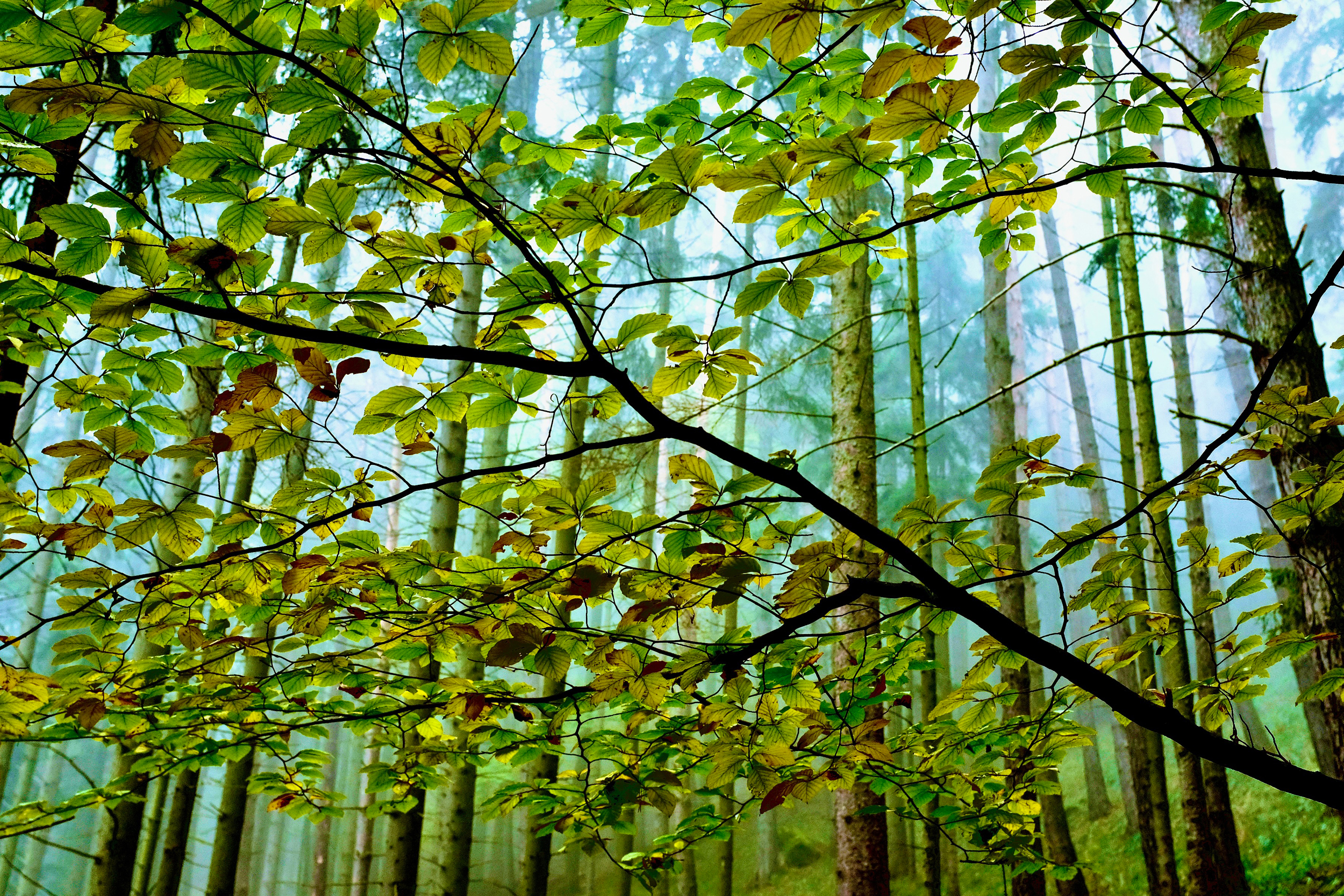
In spring and summer, the canopies of oak and beech forest gather into layers of green. Leaves flicker, shaping the flow of light and air. The effect is almost effortless, a shaded world held in balance. But as heatwaves and droughts intensify, that balance is starting to slip, and the first signs of stress often first appear in leaves before spreading across entire forests.
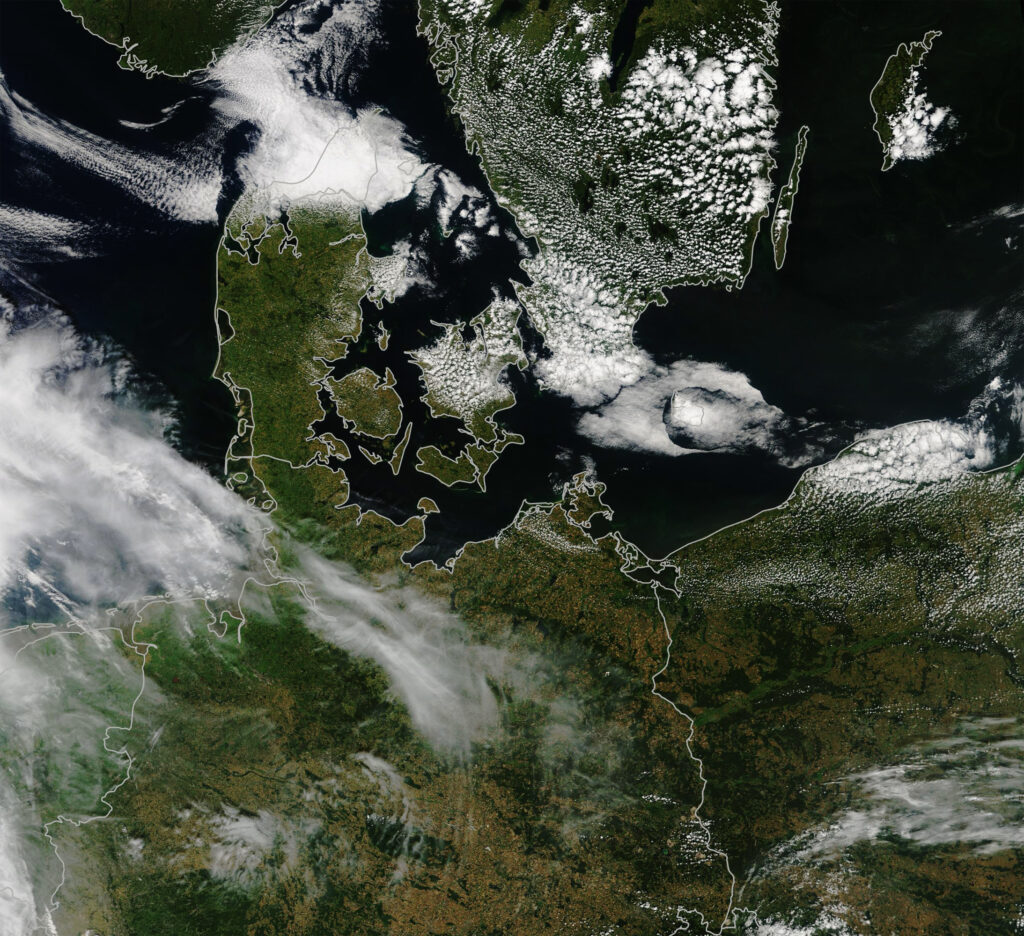
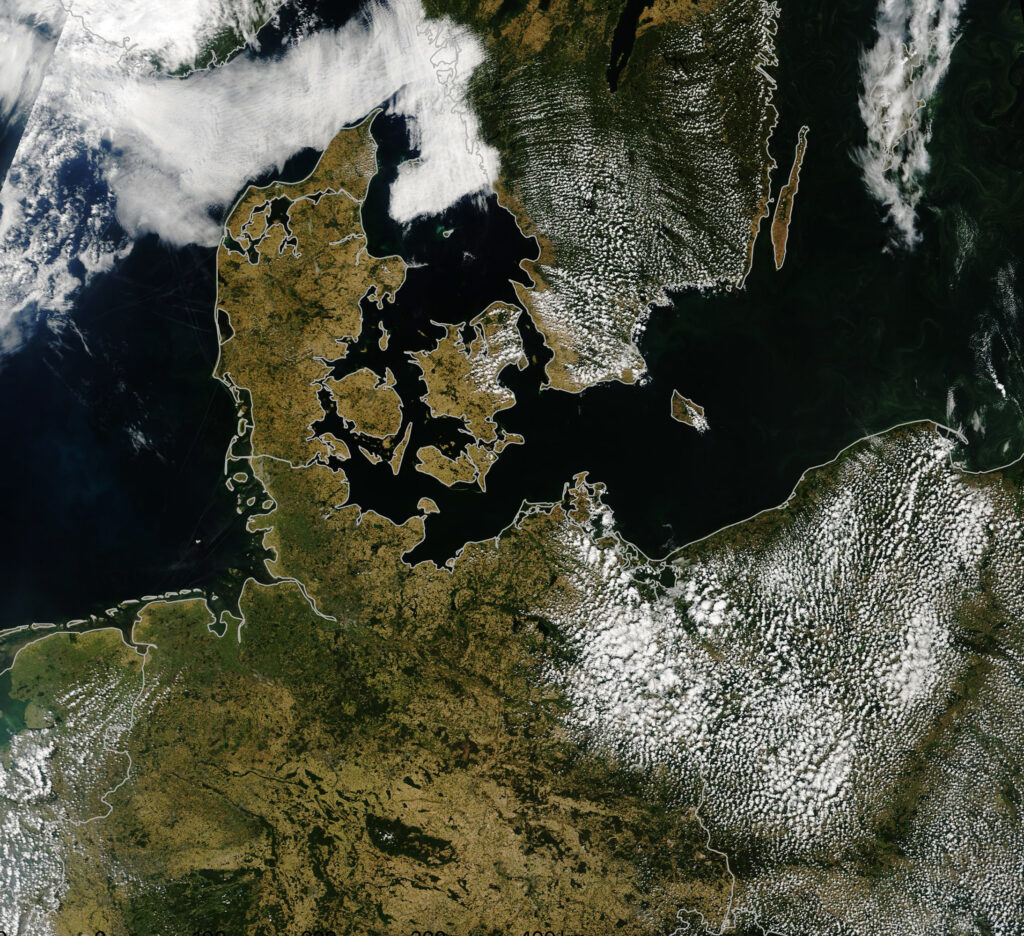
Recent hot and dry summers have damaged forests on a scale visible from space. Leaves dried, scorched, faded and even died weeks or months ahead of schedule, and in a new study published Monday, scientists identified climate thresholds beyond which leaves are irreversibly damaged.
The researchers closely examined how individual leaves of beech and oak trees respond to warming. The findings suggest some fundamental limits to how some deciduous trees and leaves cope with climate stress, said lead author Alyssa T. Kullberg, a postdoctoral researcher in the plant ecology research lab of the Swiss Federal Institute for Forest, Snow and Landscape Research.
Many important tree species may be able to adapt to the additional 4 to 5 degrees Celsius heating expected by 2100—if they have enough water. “But when heat and drought come together, that’s when the system breaks down,” Kullberg said.
Growth Zones
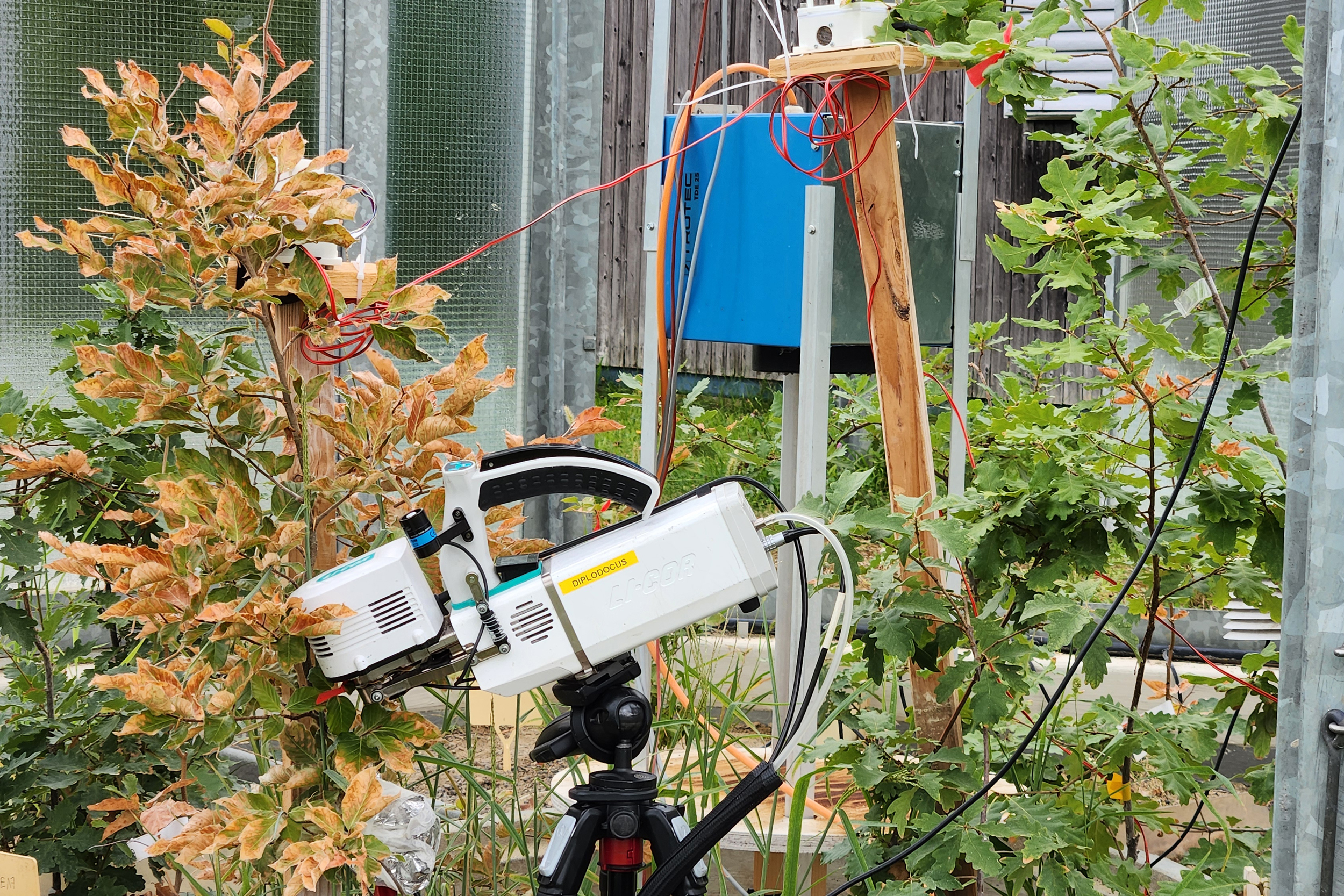
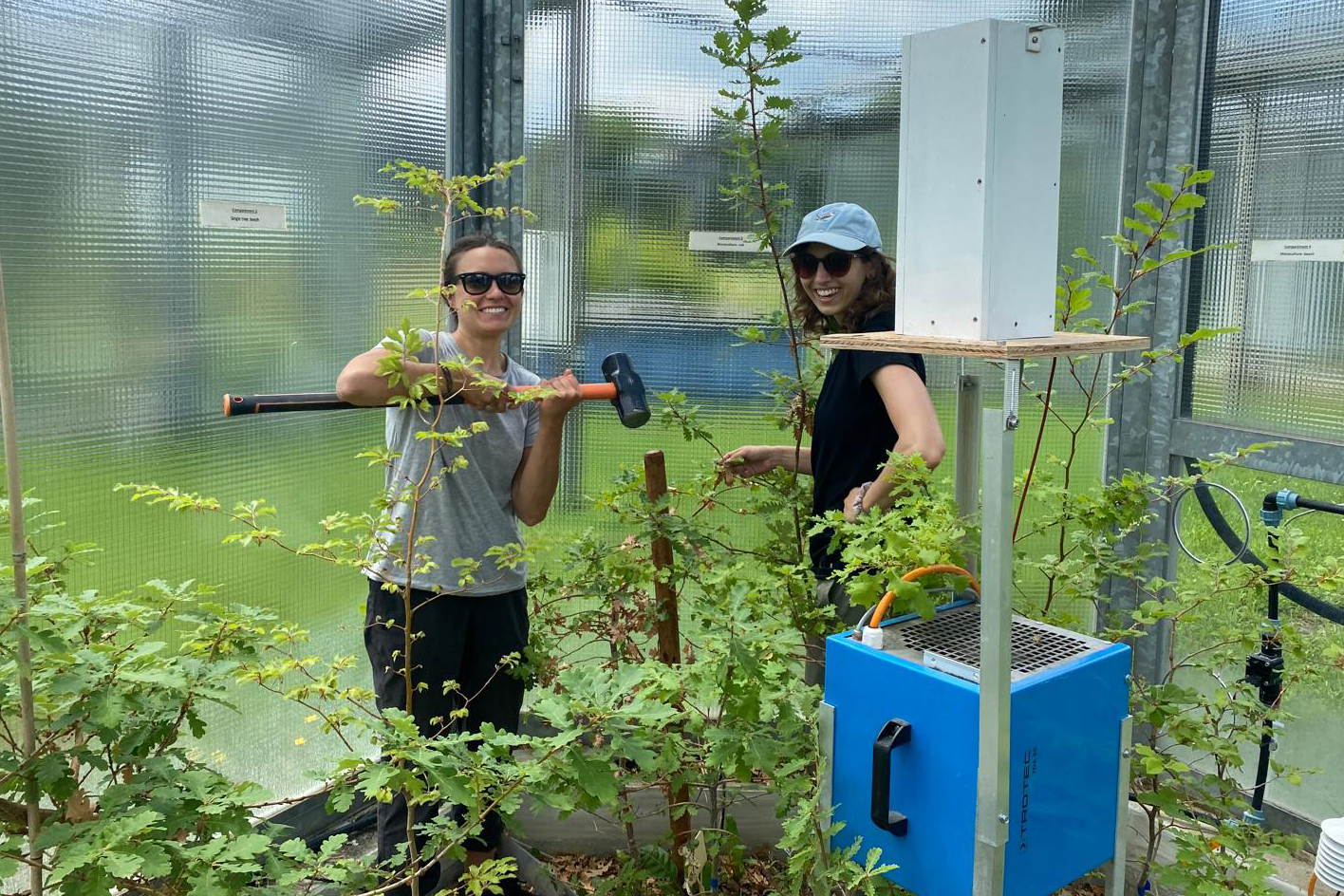
The researchers used an open-air forest lab near Zürich, Switzerland, to grow young trees in rows of glass chambers. Both oak and beech are economically and culturally valuable in Europe. Conditions in some containers tracked the natural environment, while others were warmed by about 5 degrees Celsius, with water regulated to simulate drought or normal conditions.
Sensors and cameras mounted above tracked leaf temperatures all summer while the scientists moved from tree to tree, measuring how water flows through the leaves and how much strain they could tolerate. Custom-built cameras zoomed in on small patches of leaf surface to capture the exact moment they “scorched,” when green tissue suddenly turns brown.
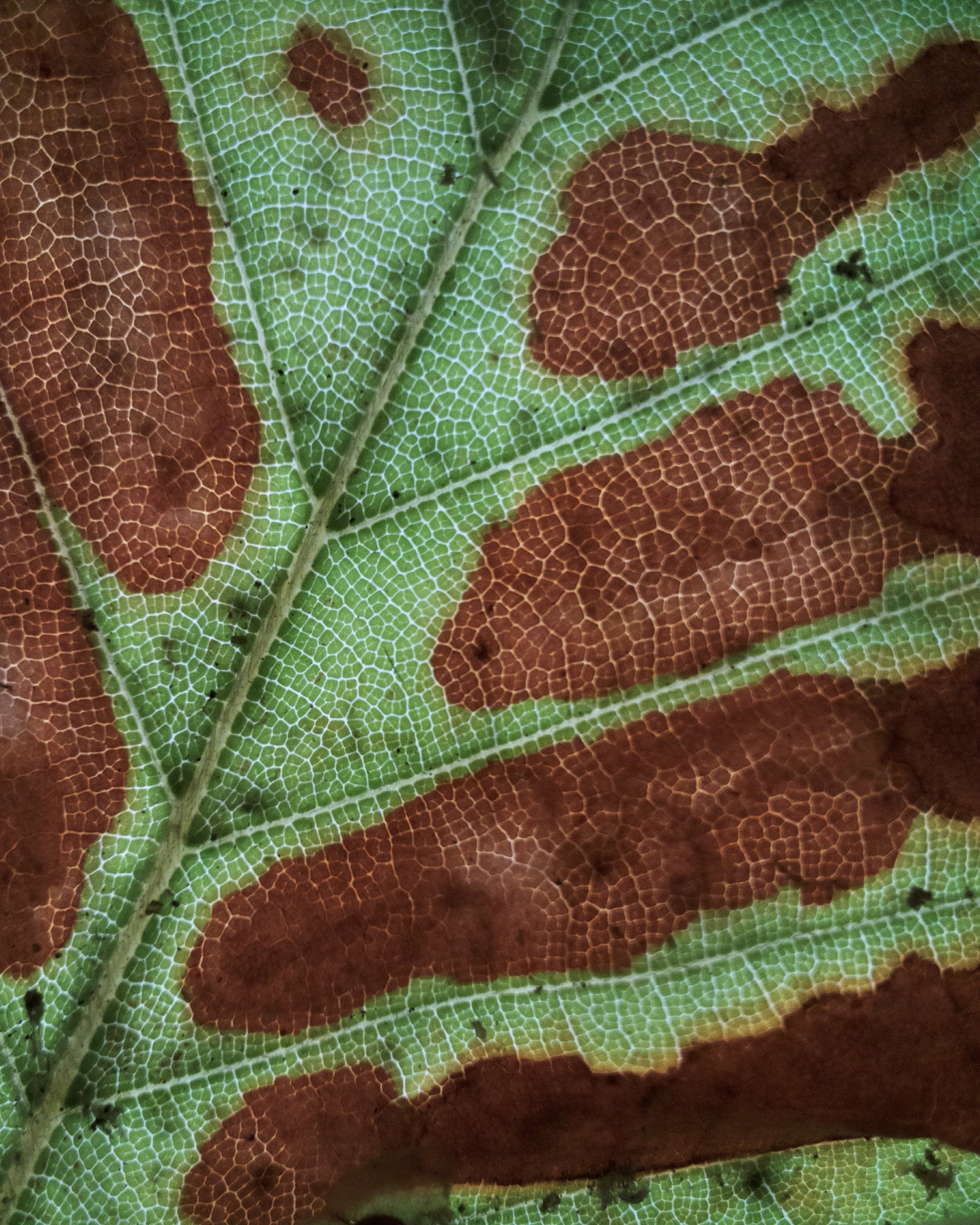
Kullberg said the scientists wanted to track every aspect of leaf responses to the controlled heating, from how leaves cool themselves to the point at which visible damage begins. One of the goals was to determine whether early exposure to extreme heat and drought might help young trees toughen up over time. And in some ways, they did. The beech and oak adjusted their physiology and even raised the maximum temperatures their leaves could survive, Kullberg said.
“They increased their thermal tolerance, but it was still not enough,” Kullberg said. The combination of heat and drought in the warmed chambers still pushed leaf temperatures well beyond those new limits, she added.
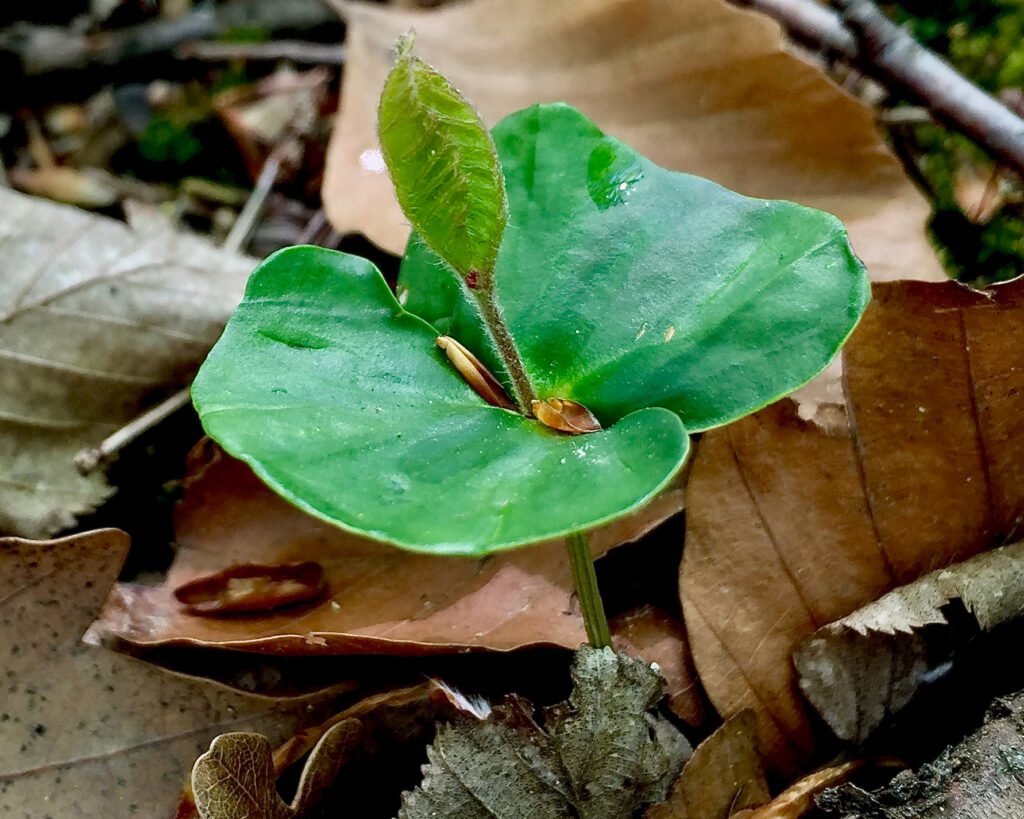
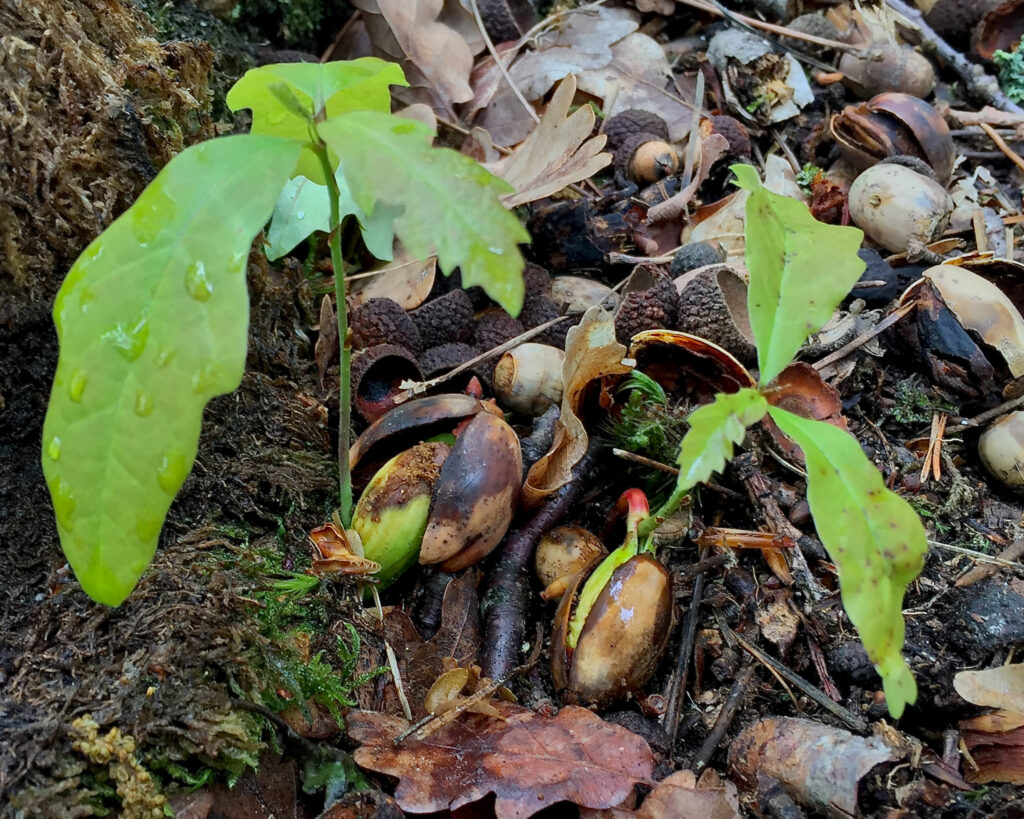
Beech and oak seedlings sprout from the forest floor in Austria. Credit: Bob Berwyn/Inside Climate News
The study shows that even moderate water shortages can trigger a “downward spiral” in how leaves and trees respond to heat, said plant physiologist Kevin Hultine, director of research in the Department of Research, Conservation and Collections at the Desert Botanical Garden in Phoenix. When drought and heat coincide, he said, trees can quickly lose their ability to regulate temperature, reducing growth and increasing the risk of dieback.
“Unfortunately, these results tell us that in the short-term, forest ecosystems will likely fall into an altered state with climate change,” said Hultine, who was not an author of the new paper. “That will result in reduced biodiversity, reduced carbon sequestration and increased risk of megafires.”
He said the new research is valuable because long-term experimental studies of climate stress are rare. The impacts of chronic, overlapping stress can take years to develop, so the study helps explain how climate change is reshaping forest function and analyzes patterns already emerging at larger scales.
This story is funded by readers like you.
Our nonprofit newsroom provides award-winning climate coverage free of charge and advertising. We rely on donations from readers like you to keep going. Please donate now to support our work.
Donate NowClimate Shocks Threaten Carbon Sinks
Climate shocks don’t act in isolation; they can cascade through forest systems and amplify one another, as weaker trees and leaves become more vulnerable to insects and wildfires. A study published last month projected that disturbances across Europe’s forests could potentially double by the end of this century.
Forests currently absorb about 25 to 30 percent of the carbon dioxide emitted by human activities each year, making them one of the planet’s most important natural climate buffers. But scientists warn that heat, drought and deforestation are weakening that role in many regions, as damaged trees grow more slowly, die back or burn.
Many overheated forests are starting to release more carbon than they absorb, and that shift often begins with a breakdown in the flow of water through trees. As drought intensifies, the tension pulling water upward can become so great that the liquid column snaps, allowing air bubbles to form and spread into individual cells in different parts of trees, including leaves.
Studying how leaves respond to warming and drought is critical because a forest die-back is not a single event. It’s a series of small shifts in living processes that are often invisible at first, until they cross a sudden and physical threshold. Knowing those limits can help guide future forest management, from choosing more resilient tree species to improving soils and managing water more carefully, Hultine said.
Kullberg cautioned that, since the study used young trees under controlled conditions, the results may not fully represent the response to warming across entire forest landscapes. But she said the simulated warming in the growth chambers matches the projections for 2100.
“If real-world heat and drought extremes become as intense as projected,” she said, “we might have to really start thinking about changing the species that we’re growing in these areas.”
Correction: This story has been updated to correct the projected global warming expected by the year 2100. It is 4 to 5 degrees Celsius, not Fahrenheit.
About This Story
Perhaps you noticed: This story, like all the news we publish, is free to read. That’s because Inside Climate News is a 501c3 nonprofit organization. We do not charge a subscription fee, lock our news behind a paywall, or clutter our website with ads. We make our news on climate and the environment freely available to you and anyone who wants it.
That’s not all. We also share our news for free with scores of other media organizations around the country. Many of them can’t afford to do environmental journalism of their own. We’ve built bureaus from coast to coast to report local stories, collaborate with local newsrooms and co-publish articles so that this vital work is shared as widely as possible.
Two of us launched ICN in 2007. Six years later we earned a Pulitzer Prize for National Reporting, and now we run the oldest and largest dedicated climate newsroom in the nation. We tell the story in all its complexity. We hold polluters accountable. We expose environmental injustice. We debunk misinformation. We scrutinize solutions and inspire action.
Donations from readers like you fund every aspect of what we do. If you don’t already, will you support our ongoing work, our reporting on the biggest crisis facing our planet, and help us reach even more readers in more places?
Please take a moment to make a tax-deductible donation. Every one of them makes a difference.
Thank you,

Bob Berwyn
Reporter, Austria
Bob Berwyn is an Austria-based reporter who has covered climate science and international climate policy for more than a decade. Previously, he reported on the environment, endangered species and public lands for several Colorado newspapers, and also worked as editor and assistant editor at community newspapers in the Colorado Rockies.