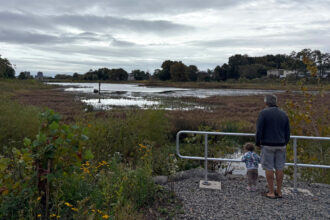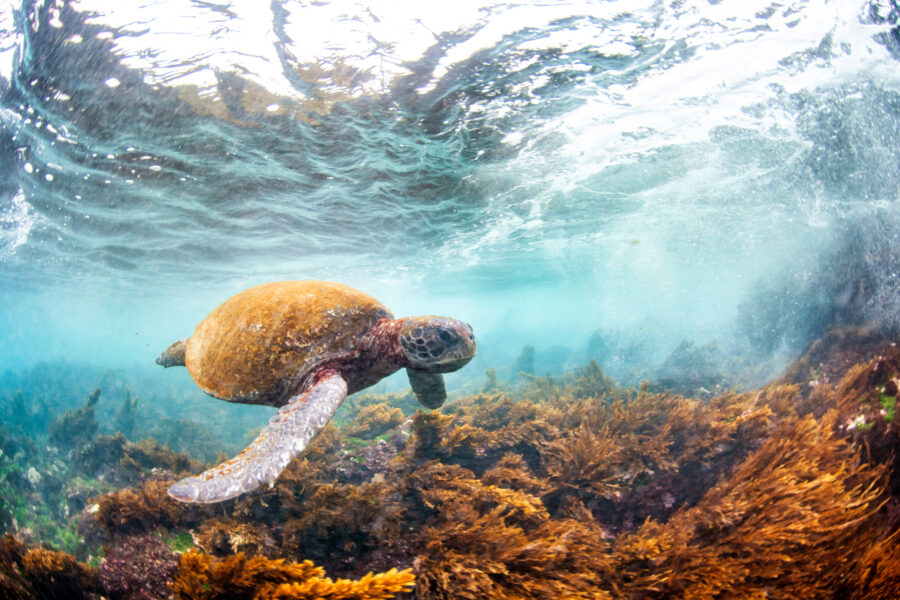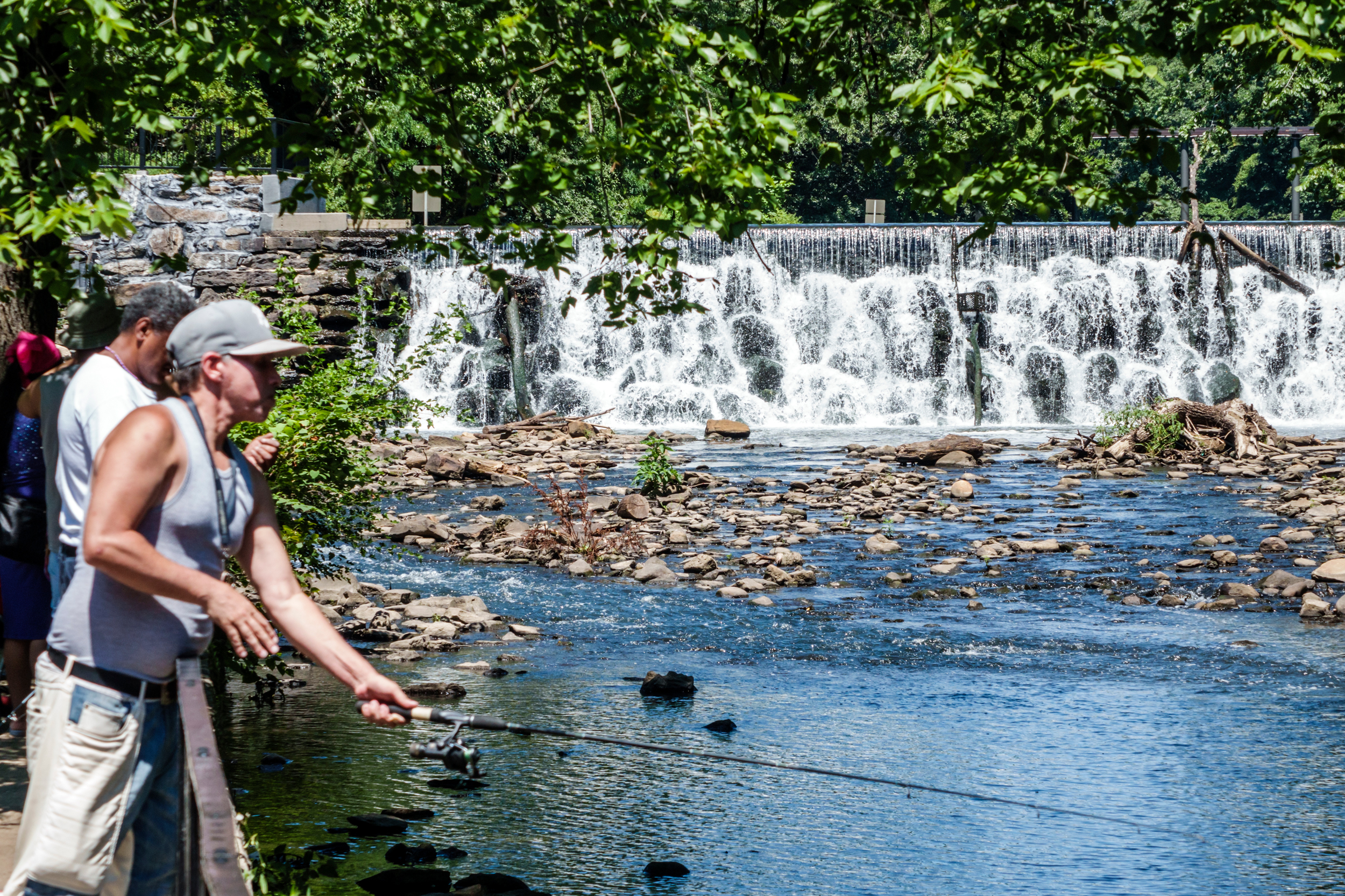


The Bronx River was once a curvy waterway that ran through vast forests and flowed into networks of tidal marshland. For centuries, river herring have swum up the waterway from the East River and the Long Island Sound to lay their eggs.
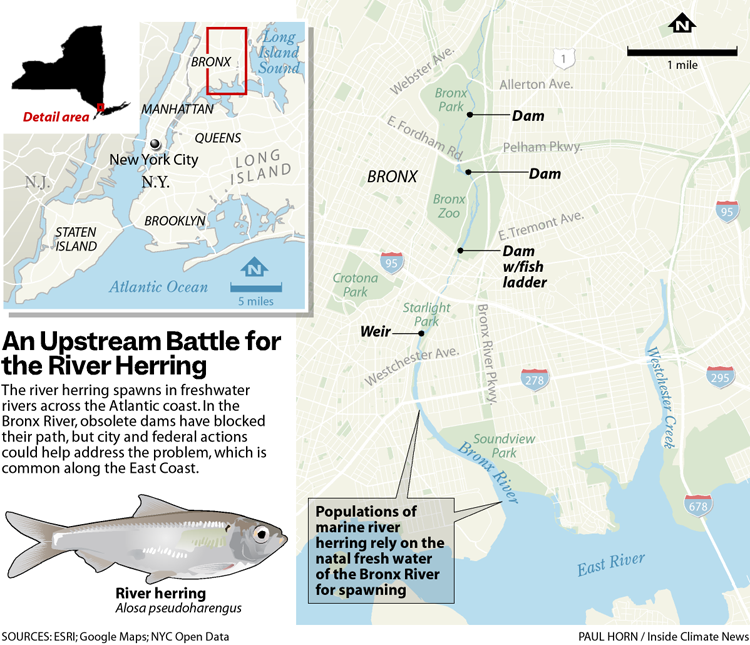
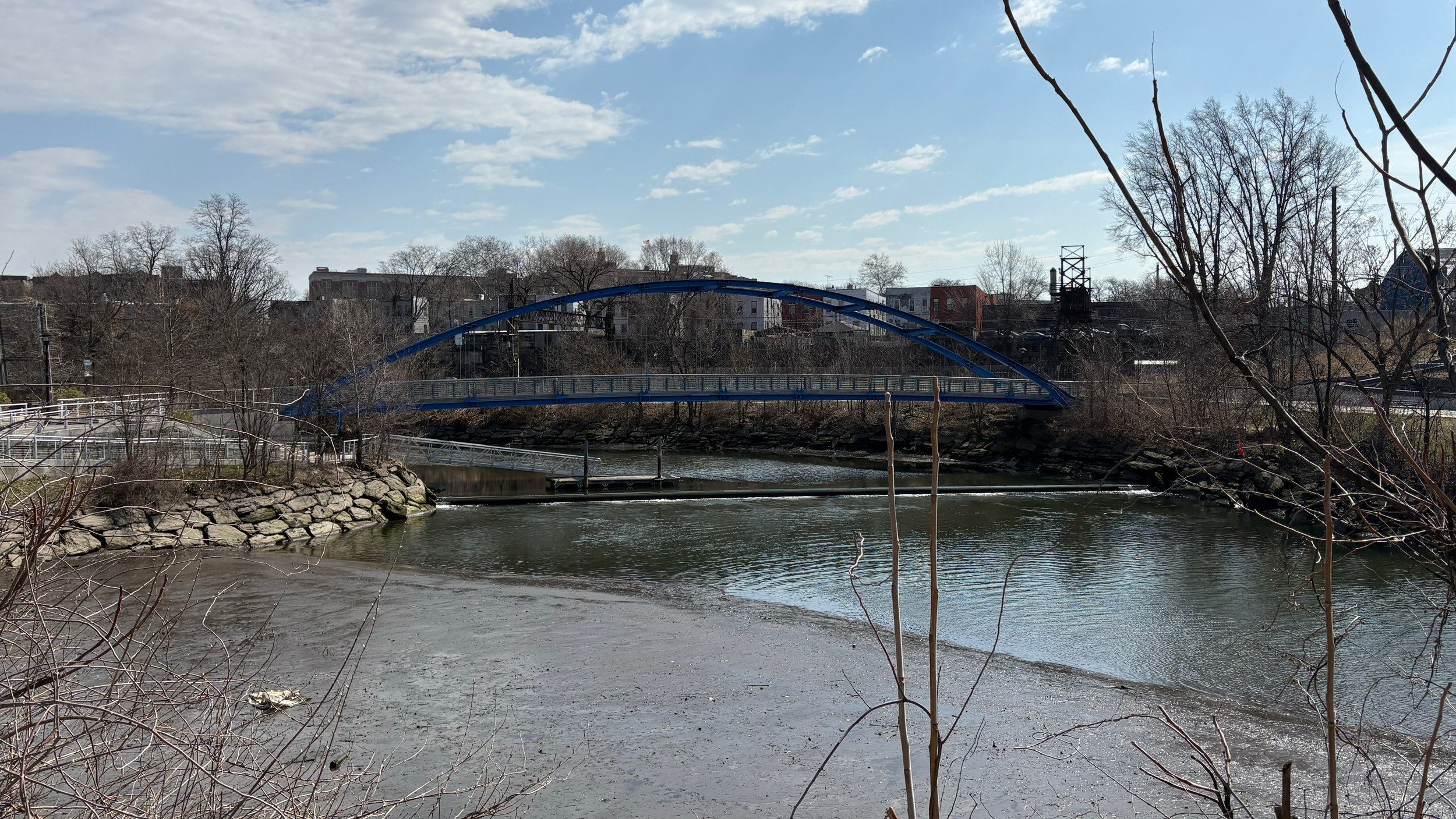
But the river they traverse looks far different now. The waterway has been straightened, its floodplains filled and its banks hardened. And then there are the dams. Now useless but once integral to industrial activities, three dams and a weir—a low-lying barrier that disappears beneath the water during high tide—remain.
River herring can swim past the weir at high tide and sometimes make it up a fish ladder at the second dam on 182nd Street. But they will eventually encounter two more dams, which are insurmountable obstacles for many fish.
Now, New York City’s Department of Parks and Recreation has received a state grant to study how to remove the weir near the bottom of the Bronx River. For the two upper dams, the U.S. Army Corps of Engineers was developing a removal plan until the Trump administration put the project on hold.
Meanwhile, river herring populations continue to fluctuate—last year was promising but the years before saw steep declines, said Sara Donatich, the Parks Department’s senior project manager and hydrologist.
A Depleted Species
River herring is the colloquial term for two fish species—alewife and blueback herring. They were once abundant, spawning in most rivers along the Atlantic Coast.
Today, the populations are dwindling. There are stringent limits on fishing to get their numbers back up.
Bill Lucey has worked with the nonprofit Save the Sound for nearly a decade—advocating for the protection and preservation of the Long Island Sound region in New York and Connecticut. He has watched river herring on the East Coast reach “historic lows.”
In Connecticut, fishing for river herring has been prohibited every spring since at least 2018.
On April 1, the state commissioner for energy and environmental protection closed the fishing season for river herring because the population is “threatened with undue depletion.”
River herring fishing is also restricted in the Hudson River and its tributaries, with policies that include gear limitations and bans in some waterways.
Since 2013, recreational and commercial fishing for river herring has been closed in the Bronx River, said a spokesperson for the New York State Department of Environmental Conservation.
“The number one reason that river herring has declined historically is because of dams,” said Rebecca Swadek, the director of wetlands management for the city Parks Department.
Dams block the river herrings’ passage to their preferred spawning location. The slow-moving, warmer water above dams fosters the growth of harmful algal blooms and lowers dissolved oxygen, harming wildlife habitats and overall river health.
But dams are not the only reason for the declining population. Bycatch, when river herring are accidentally caught instead of other species, is poorly monitored, Lucey said.
“We need to know the areas where they’re concentrated at sea, and take the … bycatch pressure off of those areas to allow them to rebuild,” he said.
These can all affect the river’s ability to serve as a good habitat for other wildlife that live in it, impacting aspects of the local food chain.
Blocking the Circulatory System
When river herring eggs hatch, the young fish eventually make their way out to the sea, where they spend most of their lives. In the spring, many return to their native stream to lay their own eggs, but they encounter obstacles—the weir in Starlight Park, the 182nd Street Dam, the Bronx Zoo Dam and the Stone Mill Dam at the New York Botanical Garden.
The New York City Parks Department, in partnership with Connecticut, moves river herring stock from some Connecticut rivers, where they are plentiful, to the waters above the 182nd Street Dam.
More than 1,000 fish have been introduced to the Bronx River since 2006 to encourage them to return for reproduction, according to a Parks Department spokesperson.
In 2014, construction of a fish ladder ended, allowing herring to spawn in the waters above the 182nd Street Dam. It wasn’t cheap—between grants and contributions from various federal, state and local offices, the fish passage cost around $1.5 million. Last year, 85 river herring used it, according to a spokesperson for the city’s Parks Department.
Isabelle Stinnette, a senior restoration ecology scientist at the Hudson River Foundation, called fish ladders a “good option,” but they have been shown to work “not nearly as well as just removing the dam.”
“If you have a fish ladder, you’re concentrating all these species. … They’re not able to spread out,” said Megan Lung, the New York ecological restoration project manager at Save the Sound, which consults on dam removals across the region. “That’s essentially ringing a dinner bell for some creatures.”
Lung described rivers as circulatory systems. She said dams, particularly those that do not have a purpose, are blood clots that need to be removed.
This story is funded by readers like you.
Our nonprofit newsroom provides award-winning climate coverage free of charge and advertising. We rely on donations from readers like you to keep going. Please donate now to support our work.
Donate NowThough the cost of that removal may seem high, she said, it eradicates the need for constant dam or fish ladder maintenance. Most dams in this country are old and face harsher conditions than they did when they were built, such as heavy rain, due to climate change.
Donatich, from the Parks Department, said some dams in the city have already been overwhelmed by heavy rain, causing water to flow over some barriers.
“We either can spend money fixing a dam, if it needs fixing, or you can remove it—so dam removal in that way is a more sustainable solution,” she said.
A parks department spokesperson could not specify how much the agency spends on dam maintenance.
It could take multiple years to remove the weir in Starlight Park—the first barrier the fish come up against—because the Parks Department has never removed a dam before, Donatich said. So far, the department has received funds only for the design phase, not for the removal itself.
The Army Corps of Engineers had a tentative plan to start removing the two northernmost dams in 2028. A spokesperson confirmed the pause but did not answer questions about why the Trump administration shelved the project.
It could take at least five years for river herring to start returning to the river consistently and repopulating in large numbers, especially because the youngest ones are not immediately capable of reproducing, Lucey said.
Lucey has seen firsthand the impact that barrier removal can have on river herring populations. A decade ago, he worked to restore a culvert that was partially blocking a stream’s flow into the Long Island Sound, he said.
“The numbers of alewife just went way up because they were able to access this habitat,” said Lucey. “That became the best run [of river herring] in the state.”
About This Story
Perhaps you noticed: This story, like all the news we publish, is free to read. That’s because Inside Climate News is a 501c3 nonprofit organization. We do not charge a subscription fee, lock our news behind a paywall, or clutter our website with ads. We make our news on climate and the environment freely available to you and anyone who wants it.
That’s not all. We also share our news for free with scores of other media organizations around the country. Many of them can’t afford to do environmental journalism of their own. We’ve built bureaus from coast to coast to report local stories, collaborate with local newsrooms and co-publish articles so that this vital work is shared as widely as possible.
Two of us launched ICN in 2007. Six years later we earned a Pulitzer Prize for National Reporting, and now we run the oldest and largest dedicated climate newsroom in the nation. We tell the story in all its complexity. We hold polluters accountable. We expose environmental injustice. We debunk misinformation. We scrutinize solutions and inspire action.
Donations from readers like you fund every aspect of what we do. If you don’t already, will you support our ongoing work, our reporting on the biggest crisis facing our planet, and help us reach even more readers in more places?
Please take a moment to make a tax-deductible donation. Every one of them makes a difference.
Thank you,

Lauren Dalban
Reporter, New York City
Lauren Dalban is a New York City-based reporter with a background in local journalism. A former ICN fellow, she now covers environmental issues in all five boroughs. Originally from London, she earned a B.A. in History and English from the University of Virginia, and an M.S. from Columbia Graduate School of Journalism.