

As local tech groups predict that Pennsylvania will outpace its region for data-center growth in the next 10 years, another organization warned that some legislative proposals in play this session would weaken municipalities’ ability to say no.
“Local authority remains one of the few meaningful tools communities have to push back against large-scale data center and AI development,” Data & Society, a nonprofit that studies the social implications of data, automation and AI, said in a new policy brief. “State government should support, not override, local decision-making, especially with infrastructural decisions as consequential as this.”
It named several bills in the Pennsylvania legislature that it said would reduce local authority over siting decisions for major industrial facilities, centralizing that power within the state.
The bills include HB 502, a Democrat-led measure that’s part of Gov. Josh Shapiro’s “Lightning Plan” to speed the permitting of energy projects. The bill would set up a statewide board to make decisions on whether to approve large-scale energy projects, which data centers will need.
Among the other bills the group flagged are two Republican-led measures: SB 939, which would create a standardized “sandbox” to write statewide regulation for the industry, and SB 991, which would provide faster permits for data-center developers who commit to meet or exceed federal environmental standards.
Pennsylvania communities are “vastly different,” Data & Society said in a statement. “This group of bills erases that diversity and assumes that the same solution will work for all.”
The bills remain in committee.
Meanwhile, an industry report released in late March by the Pittsburgh Technology Council and the Philadelphia Alliance for Capital and Technologies projected Pennsylvania will see data-center capacity growth of more than 4,000 percent in the next decade. The report, written by Mangum Economics, says that growth will outpace any other place on the regional electric grid PJM Interconnection, which serves 12 other states and Washington, D.C.
Neither Mangum Economics nor the Data Center Coalition, an industry group, responded to requests for comment.
The report said Pennsylvania is especially attractive to data-center developers because it is courting data centers and has major attractions for the electricity-hungry industry. The state is the biggest exporter of electricity in the nation’s largest electric grid. And it’s the second-largest producer of natural gas, a major way that developers plan to power the new hyperscale complexes.
The state also has manufacturing that can supply the new infrastructure needed by the AI industry, the report said.
“While some states excel in hosting data centers, others in energy production, and others in advanced manufacturing, Pennsylvania is on track to uniquely possess all three advantages at scale,” said the report.
It predicted that by 2036, the data center industry will support 19,400 jobs in manufacturing, energy and other sectors. The capacity of new data centers—the maximum amount of electricity they need—is expected to exceed 7,196 megawatts by 2036, up from 186 megawatts now.
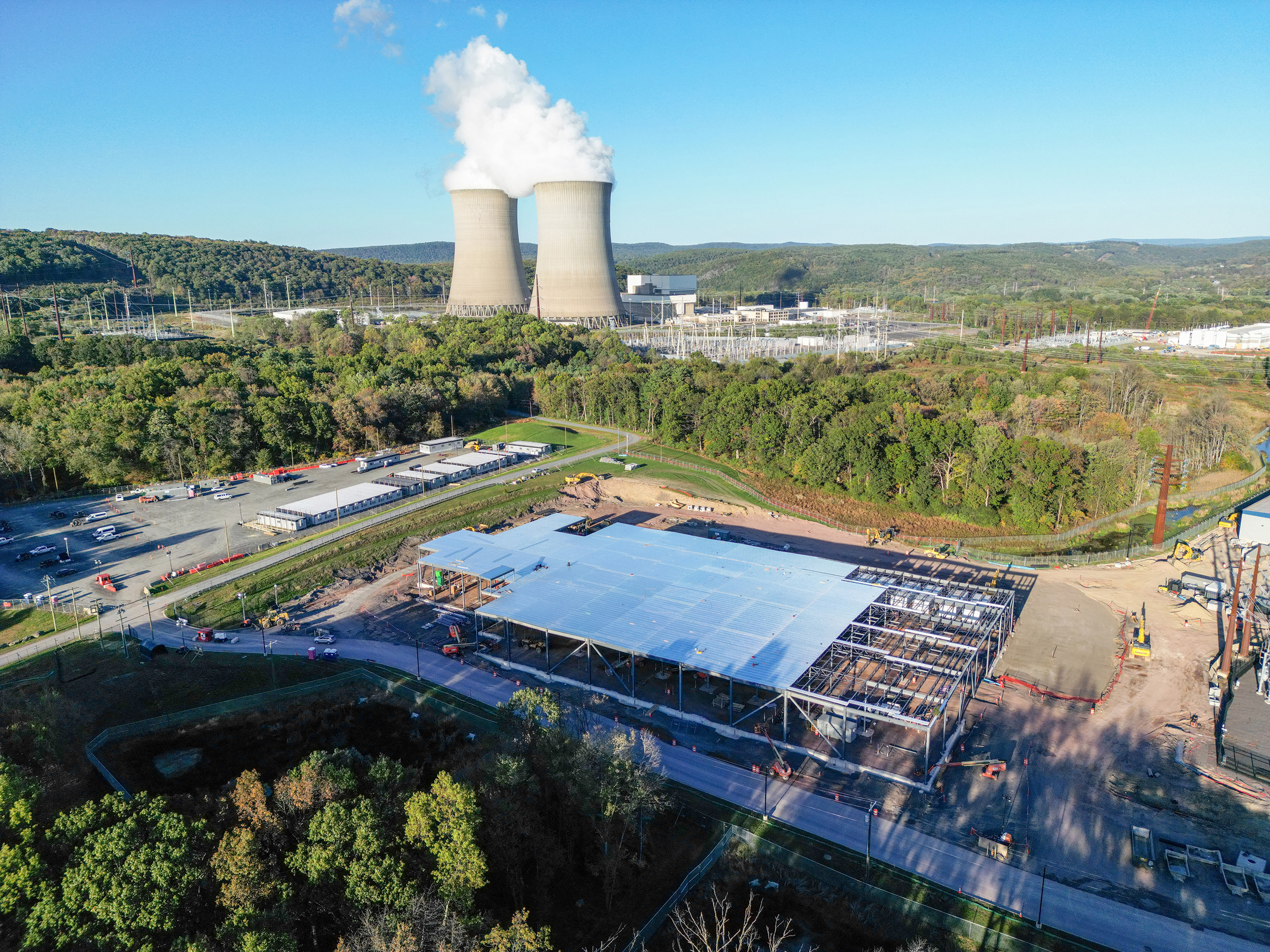
More than 50 data centers are currently planned or under construction in Pennsylvania, according to Data Center Proposal Tracker, a website that monitors planned or actual data center construction throughout the U.S.
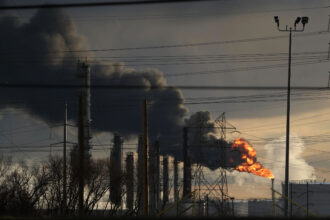
Environmentalists say the expected surge in data center construction will worsen climate change by stimulating the production of natural gas. There’s also growing bipartisan concern about the impact on local water supplies and residential electric bills, which have already risen in anticipation of big new data center demand.
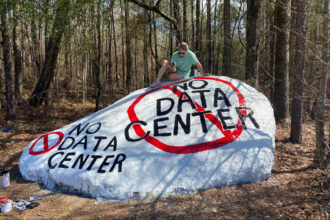
Some communities are pushing back. In February, for instance, commissioners of Montour County in central Pennsylvania rejected a plan by Talen Energy and Amazon to rezone land to build a data center.
Quentin Good, an analyst at Frontier Group, which does research for environmental groups including PennEnvironment, said the industry hasn’t yet provided evidence that there will be enough demand to justify all the data centers in the works. There is a danger of over-investing, especially in additional energy infrastructure, he said.
“That’s going to cost a lot of money,” he said. “But we might not even need it all.”
Good said the prediction of 4,000 percent growth in Pennsylvania’s data center capacity ignores state or local regulation that could have a significant effect. “The report doesn’t consider any of those competing factors,” he said.
In the legislature, state Sen. Katie Muth said she will introduce a bill that would place a three-year moratorium on data center development to give local governments time to evaluate its impacts on their communities.
Muth, a Democrat from the Philadelphia suburbs, said she didn’t expect any co-sponsors before the bill was published but now has four, including two Republicans. She said the unexpected support is probably because some members are hearing complaints from their constituents about the impact on their electric bills.
“People are rightfully upset about that,” she said. “I think that might be the reason why this has moved—public outrage.”
About This Story
Perhaps you noticed: This story, like all the news we publish, is free to read. That’s because Inside Climate News is a 501c3 nonprofit organization. We do not charge a subscription fee, lock our news behind a paywall, or clutter our website with ads. We make our news on climate and the environment freely available to you and anyone who wants it.
That’s not all. We also share our news for free with scores of other media organizations around the country. Many of them can’t afford to do environmental journalism of their own. We’ve built bureaus from coast to coast to report local stories, collaborate with local newsrooms and co-publish articles so that this vital work is shared as widely as possible.
Two of us launched ICN in 2007. Six years later we earned a Pulitzer Prize for National Reporting, and now we run the oldest and largest dedicated climate newsroom in the nation. We tell the story in all its complexity. We hold polluters accountable. We expose environmental injustice. We debunk misinformation. We scrutinize solutions and inspire action.
Donations from readers like you fund every aspect of what we do. If you don’t already, will you support our ongoing work, our reporting on the biggest crisis facing our planet, and help us reach even more readers in more places?
Please take a moment to make a tax-deductible donation. Every one of them makes a difference.
Thank you,