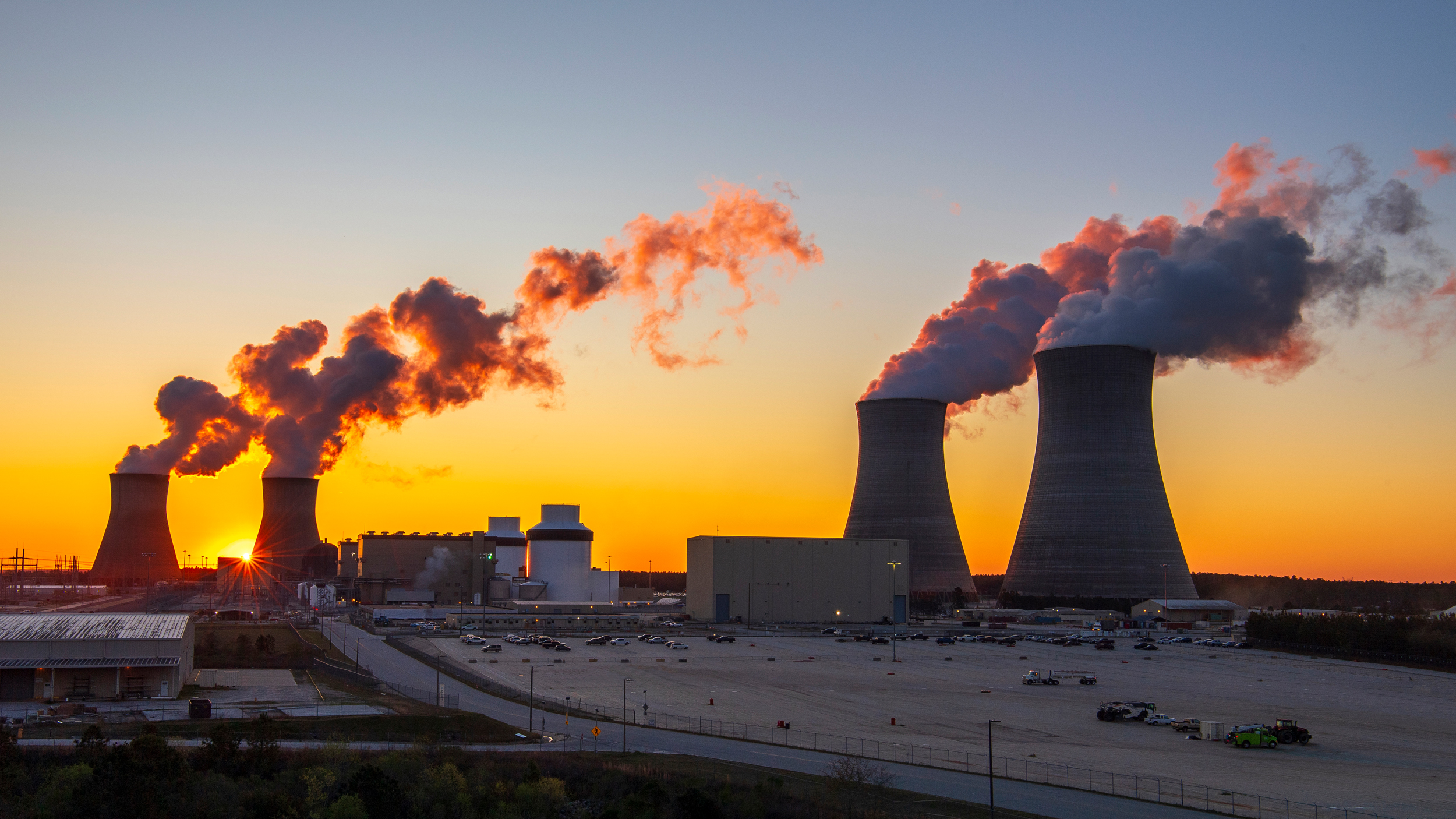


As states across the country weigh a new wave of nuclear energy, many in Georgia are urging caution. Two years after Plant Vogtle’s newest reactors came online there, customers are still paying for the project—and many say they are not getting their money’s worth.
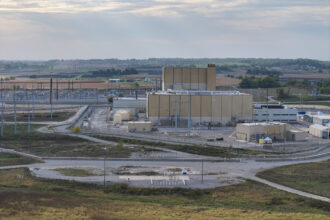
Construction on Plant Vogtle in eastern Georgia began in 2009, marking the first new U.S. nuclear project in decades. It was expected to be completed by 2017 at a cost of about $14 billion. Instead, it became a case study in delays and cost overruns.
The expansion, led by Georgia Power and a group of smaller utilities, was meant to meet rising electricity demand while diversifying the state’s energy mix. Nuclear power, unlike fossil fuels, generates electricity without direct carbon emissions.
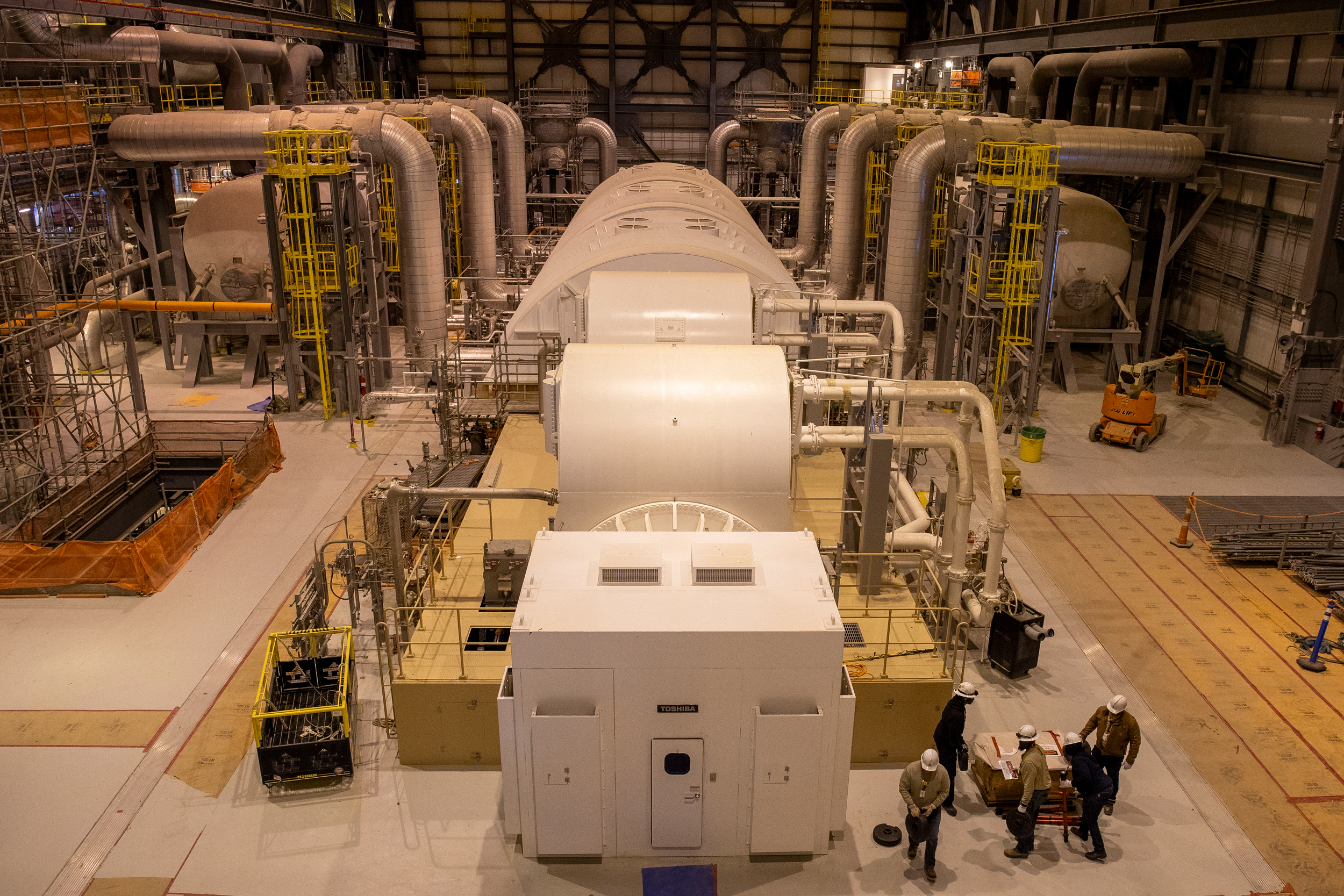
But from the start, the project faced setbacks. The utilities hired Westinghouse Electric Co. to design and build the reactors using its new AP1000 technology—an untested design at the time in the United States. Construction was plagued by wiring problems, faulty components and defects in parts built offsite, driving up costs and pushing back timelines. In 2017, with overruns mounting, Westinghouse filed for bankruptcy protection.
Afterward, Georgia Power and its partners took over construction. The project was ultimately completed in 2024—seven years behind schedule—at a final cost of $36.8 billion, making it the most expensive power project in U.S. history.
Much of that cost has fallen on ratepayers. Between 2009 and 2024, Georgia Power customers paid a monthly construction surcharge that added up to more than $1,000 all told for some households. While that fee ended when the reactors entered service, the financial burden did not. Regulators later approved base rate increases—about $15 per month for a typical residential customer—to allow the utility to recover remaining costs over decades.
For many customers and advocates, the question now is whether the benefits will ever outweigh the price.
Because the project came online years late, its ability to offset costs was delayed. And while Units 3 and 4 are still ramping up, early data since 2023 from the U.S. Energy Information Administration shows they are underperforming compared to the site’s older reactors, which have been operating since the 1970s.
At the same time, electricity bills have risen far faster than generating capacity. The two new units increased Georgia Power’s capacity by just over 7 percent, but residential and small commercial rates have climbed by more than 20 percent, according to a watchdog report.
Georgia was not the only state to attempt the AP1000 buildout. In South Carolina, a similar project was abandoned in 2017 after billions had already been spent and no reactors were completed. Georgia regulators had a chance to halt Vogtle that same year, but chose to continue.
That decision has had lasting consequences. As Vogtle-related rate increases took effect, disconnections among Georgia Power customers rose, with Black households disproportionately affected.
“The biggest failure was not the construction—it was the failure to protect ratepayers,” said Kim Scott, executive director of Georgia WAND, a women-led group fighting nuclear buildout. “Georgia regulators had multiple chances to stop runaway costs, yet ordinary Georgians were left paying the price through higher bills.”
Georgia Power did not respond to requests for comment.
This story is funded by readers like you.
Our nonprofit newsroom provides award-winning climate coverage free of charge and advertising. We rely on donations from readers like you to keep going. Please donate now to support our work.
Donate NowIn the wake of Vogtle’s troubles, many in the industry expected a shift toward smaller, next-generation reactors designed to be cheaper and easier to build. Recent projects reflect that approach. In Wyoming and Tennessee, developers are pursuing advanced reactors at a smaller scale, including a project led by Kairos Power expected to generate about 50 megawatts.
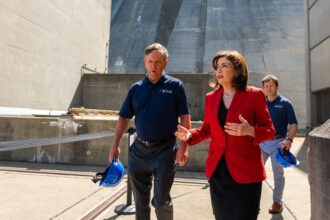
Still, interest in nuclear energy is growing broadly—not just in smaller designs. More than a dozen states are reconsidering nuclear power as they try to meet climate goals and rising electricity demand driven by electrification and data centers. In New England, governors have agreed to explore nuclear energy as part of a regional strategy. In New York, Gov. Kathy Hochul has directed state agencies to plan for expanded nuclear development. And states including Illinois, New Jersey and West Virginia have moved to lift longstanding bans on new construction.
“We’re seeing a lot of interest in all types of nuclear energy right now,” said John Kotek, senior vice president for policy at the Nuclear Energy Institute. “The growth in demand we’ve seen in recent years is increasing interest in larger projects, including AP1000 units.”
Kotek and others argue that costs could come down as the industry rebuilds its workforce and supply chains. “The first submarine in the water is never as cheap as the last,” he said.
Nuclear advocates also point to global competition, particularly in China, where more than 30 reactors are under construction and costs are significantly lower—eight times cheaper than Plant Vogtle units 3 and 4.
But for many in Georgia, those comparisons offer little comfort.
Patty Durand, founder of Georgians for Affordable Energy, said the lessons of Vogtle should give other states pause. “Cheap nuclear power is always 10 years away,” she said. Even at lower projected costs, she added, nuclear continues to struggle to compete with alternatives like solar and wind.
Units 3 and 4 brought just over 2 gigawatts of new capacity. In the same period, Texas added more than 40 gigawatts of solar for roughly $50 billion in investment.
Durand and Scott have both spent years opposing nuclear expansion in the state and have also traveled to New York in recent months to warn policymakers there against repeating Georgia’s experience.
“Don’t do it,” Scott said. “When energy policy ignores ratepayer protections, public health and community safety, families pay more and communities bear the risk.”
About This Story
Perhaps you noticed: This story, like all the news we publish, is free to read. That’s because Inside Climate News is a 501c3 nonprofit organization. We do not charge a subscription fee, lock our news behind a paywall, or clutter our website with ads. We make our news on climate and the environment freely available to you and anyone who wants it.
That’s not all. We also share our news for free with scores of other media organizations around the country. Many of them can’t afford to do environmental journalism of their own. We’ve built bureaus from coast to coast to report local stories, collaborate with local newsrooms and co-publish articles so that this vital work is shared as widely as possible.
Two of us launched ICN in 2007. Six years later we earned a Pulitzer Prize for National Reporting, and now we run the oldest and largest dedicated climate newsroom in the nation. We tell the story in all its complexity. We hold polluters accountable. We expose environmental injustice. We debunk misinformation. We scrutinize solutions and inspire action.
Donations from readers like you fund every aspect of what we do. If you don’t already, will you support our ongoing work, our reporting on the biggest crisis facing our planet, and help us reach even more readers in more places?
Please take a moment to make a tax-deductible donation. Every one of them makes a difference.
Thank you,