

For the first time in four years, regional grid operator PJM Interconnection is adding new generation projects to its interconnection queue.
PJM, which serves 67 million people across portions of 13 states and the District of Columbia, announced last week that 811 new generation projects that can generate 220 gigawatts of electricity have applied to connect to the grid through the first cycle of its “reformed” interconnection process.
But advocates and legislators Inside Climate News interviewed warned that the reopening of the queue offers no near-term relief for consumers. They also say the yearslong delay has already done irreversible damage to states such as Maryland that were counting on renewable energy projects for mandated emissions reduction and decarbonization targets.
For Maryland, which has a legally binding target of 100 percent clean electricity by 2035 and must reach net zero by 2045, the interconnection logjam coincided with the Trump administration’s aggressive dismantling of federal clean energy policy architecture, revoking of offshore wind projects’ permits and prioritizing new fossil fuel drilling and nuclear power. The political headwinds and funding cuts stripped states of key incentives they were banking on for the clean energy transition.
PJM closed the queue in 2022 after a rush of clean energy applications led to a crippling backlog, with more than 300 gigawatts stuck in a snarl. The grid operator suspended new application reviews while it streamlined its review process.
The interconnection queue is a process of reviews each new generation project must pass before it can deliver electricity to the grid. The process is strewn with technical studies PJM conducts along the way to determine the necessary upgrades for the transmission system to handle the new generation. Historically, it could take two years or more for projects to move through the queue.
After the 2022 closure, PJM began implementing reforms to study projects in clusters rather than individually. Despite the four-year suspension, developers continued submitting project applications but PJM declined to study them. Ahead of the April 27 deadline, PJM asked those developers to resubmit their applications to be studied under the reformed process, called Cycle 1.
PJM announced it received 811 new generation projects with 220 gigawatts total capacity. Natural gas dominates by capacity, at 105.8 gigawatts across 157 projects, while storage leads by project count at 349 projects and 66.5 gigawatts. Solar accounts for 14.8 gigawatts and wind just 4.7 gigawatts. With gas and nuclear accounting for roughly 55 percent of total capacity, this reflects a dramatic shift from the renewable-dominated queue PJM spent four years clearing.
Renewable energy advocates are dismayed by the scale of what was lost during those four years when the queue remained frozen.
Jon Gordon, a senior director with Advanced Energy United, an industry group, called the interconnection logjam “a lost opportunity,” noting that out of the roughly 300 gigawatts of backlogged generation in 2022, 95 percent was renewables and storage. But 74 percent of those projects withdrew over the four years the projects stayed stuck in the PJM queue.
“There was so much renewable energy in that queue that was proposed so long ago, when they were less costly to build, that just died on the vine because PJM was unable to give them permission to interconnect,” Gordon said. “It’s one of the reasons we’re in the predicament we’re in today.”
Gordon attributed the change to data center demand that in turn drives new gas plant proposals. “Fast-tracking natural gas is a travesty on multiple levels,” he said, adding that PJM’s preference for processing large single interconnection studies over numerous smaller clean energy projects had been “the bias all along.” Utility shareholders, he noted, carry significant weight in PJM’s voting structure.
In emailed comments, PJM spokesperson Jeffrey Shields said the reformed interconnection process represents a “shift from a first-come-first-served model to a first-ready-first-served construct that studies projects in clusters” with stricter requirements meant “to screen out speculative projects.” He pushed back on the criticism that the interconnection closure killed renewables, arguing that the grid operator has processed interconnection agreements for 103 gigawatts of projects since 2020, most of them renewables.
In Maryland, he said, 1.6 gigawatts of projects with signed agreements could begin construction immediately, with another 1.8 gigawatts currently under study. Projects failing to get built are factors beyond PJM’s control, Shields said, referring to permitting and siting hurdles, financing constraints and supply chain backlogs. “If we can all figure out how to get those built, we would not be having this conversation,” he said.
Maryland Del. Lorig Charkoudian (D-Montgomery County), a fierce PJM critic, offered a blunt assessment.
“Every structure that PJM ever puts into place clearly demonstrates their bias towards fossil fuels and against renewables—consistently,” she said. According to her, PJM claims to take state clean energy policies into account, but the record across Maryland, Virginia, New Jersey and other PJM states with renewable portfolio standards and offshore wind mandates shows otherwise.
Charkoudian also pointed out that PJM’s queue was clogged and closed precisely during the years when federal tax credits for solar and wind were available.
“They finally came around and fixed their queue as those tax credits are going away,” she said. The timing compounds the damage, she added, because of federal policies that now prioritize fossil fuels, leaving clean energy behind for the second time, a consequence of the queue’s failure she said no reform can reverse.
She acknowledged that the reformed queue represents a genuine improvement, adding that the first-ready-first-served structure, site control requirements, batch analysis and potential use of artificial intelligence in processing are meaningful steps forward. But Charkoudian said the next critical test is how PJM determines which of the 800-plus projects are actually ready to proceed.
With gas turbines facing years-long supply chain backlogs, Charkoudian noted, a neutral process would prioritize storage and solar, which can be built more quickly. “That’s how they’re saying they’re going to implement it,” she said, “but because every other system has turned out to be biased towards fossil fuels and against renewables, that remains to be seen.”
This story is funded by readers like you.
Our nonprofit newsroom provides award-winning climate coverage free of charge and advertising. We rely on donations from readers like you to keep going. Please donate now to support our work.
Donate NowMaryland’s People’s Counsel, David Lapp, pushed back on what he called PJM’s habit of deflecting blame onto developers when clean energy projects fail to advance after receiving interconnection approval. The real problem, he said, is that studies take so long that by the time PJM completes them, a developer’s financing has collapsed and the project effectively has to start over.
“No smart financer is going to agree to finance something indefinitely into the future,” Lapp said, adding that PJM blames developers for not moving forward when the delay originates with the grid operator itself.
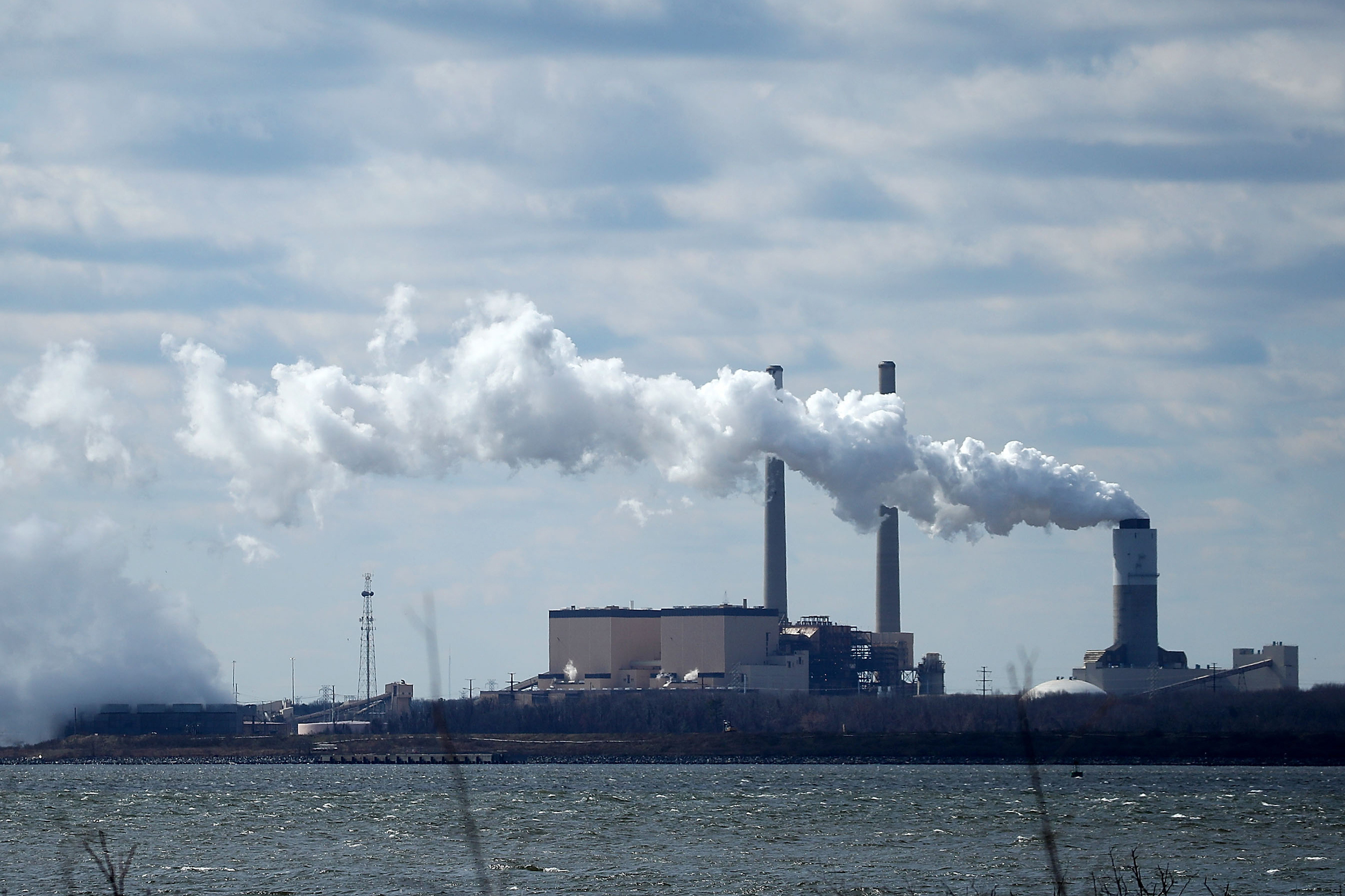
On whether PJM’s interconnection failures contributed to Maryland ratepayers being locked into hundreds of millions of dollars in reliability must-run (RMR) payments to keep the Brandon Shores coal plant running past its retirement date, Lapp was unequivocal. “Certainly it’s a factor,” he said.
He pointed to PJM’s 2025 Regional Transmission Expansion Plan, released on April 17, showing more than 5,000 megawatts of queued generation for Maryland and D.C. driven almost entirely by solar, storage and hybrid projects, far exceeding the combined capacity of Brandon Shores and Wagner, another coal plant outside Baltimore. Better queue management, he said, could at minimum have shortened how long those RMR plants operate, with costs currently projected to continue at least through 2028 and potentially longer if a related transmission project isn’t completed on time. “Having more renewable energy on the system significantly reduces customers’ vulnerability to those higher energy prices,” Lapp said, noting that the years of interconnection delay is not just a climate failure, but a ratepayer one.
Shields, the PJM spokesperson, rejected that queue delays locked ratepayers into keeping expensive and polluting coal generation alive. “Maryland did not have projects planned to replace Brandon Shores,” he said. “PJM accepts responsibility for keeping the lights on for 67 million people, including everyone in Maryland.”
Tom Rutigliano, a senior advocate at the Natural Resources Defense Council’s Sustainable FERC Project, called the queue reopening a positive development, particularly in view of the significant volume of storage in Cycle 1.
He agreed that the fast-track interconnection processes are “discriminatory,” and said NRDC’s recent analysis found that transmission delays outside the queue are slowing all projects equally, with network upgrades preventing 26 gigawatts of new power plants from interconnecting and delaying an additional 11.7 gigawatts. Because every project faces the same grid infrastructure constraints, he said, fast-track processes cannot be relied on to actually deliver new supply.
The more productive path, he argued, is for PJM to take advantage of renewables’ and storage systems’ ability to locate near loads and work around transmission bottlenecks rather than continuing to design processes that favor large centralized projects facing the same limitations.
Rutigliano said that even in theory, the new projects could not reduce capacity prices before 2030. Realistically, he said, storage and renewables in this cycle might bring consumers some relief by 2032, with gas plants not coming online until 2034 or 2035.
Gordon agreed with the assessment, saying he could not imagine a natural gas plant in Cycle 1 producing power before 2033, given turbine backlog times, siting, permitting and construction.
To ease costs in the meantime, Rutigliano said, states and PJM will have to pursue parallel strategies such as putting data centers on interruptible service, adding storage to existing sites using surplus interconnection capacity, improving the winter reliability of gas plants and investing in distribution-level storage.
Gordon pointed out that PJM’s reformed process will still take one to two years to complete interconnection studies, far longer than the 150-day benchmark set by the Federal Energy Regulatory Commission. With 811 projects now in the queue, it remains the open question whether the grid operator can meet even its own targets of issuing interconnection agreements under the new framework that will determine if the reform is real or more procedural.
About This Story
Perhaps you noticed: This story, like all the news we publish, is free to read. That’s because Inside Climate News is a 501c3 nonprofit organization. We do not charge a subscription fee, lock our news behind a paywall, or clutter our website with ads. We make our news on climate and the environment freely available to you and anyone who wants it.
That’s not all. We also share our news for free with scores of other media organizations around the country. Many of them can’t afford to do environmental journalism of their own. We’ve built bureaus from coast to coast to report local stories, collaborate with local newsrooms and co-publish articles so that this vital work is shared as widely as possible.
Two of us launched ICN in 2007. Six years later we earned a Pulitzer Prize for National Reporting, and now we run the oldest and largest dedicated climate newsroom in the nation. We tell the story in all its complexity. We hold polluters accountable. We expose environmental injustice. We debunk misinformation. We scrutinize solutions and inspire action.
Donations from readers like you fund every aspect of what we do. If you don’t already, will you support our ongoing work, our reporting on the biggest crisis facing our planet, and help us reach even more readers in more places?
Please take a moment to make a tax-deductible donation. Every one of them makes a difference.
Thank you,

Aman Azhar
Reporter, Washington, D.C.
Aman Azhar is a Washington, D.C.-based journalist who covers environmental justice for Inside Climate News with focus on Baltimore-Maryland area. He has previously worked as a broadcast journalist and multimedia producer for the BBC World Service, VOA News and other international news organizations, reporting from London, Islamabad, the United Arab Emirates and New York. He holds a graduate degree in Anthropology of Media from University of London’s School of Oriental and African Studies (SOAS) and an MA in Political Science from the University of the Punjab, and is the recipient of the Chevening scholarship from the UK government and an academic scholarship for graduate studies from the Australian government.