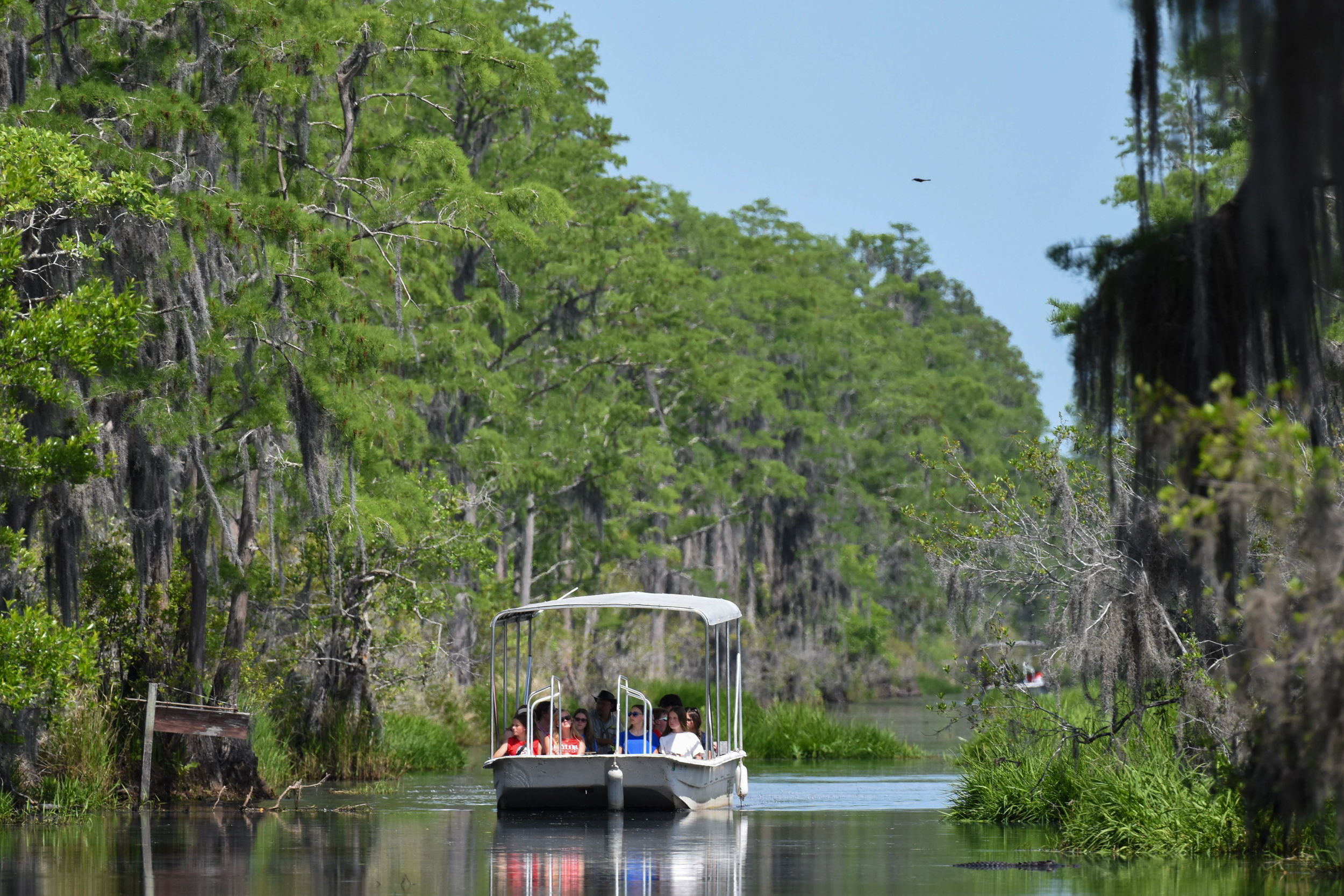


FOLKSTON, Ga.—The world’s smallest heron hops from blade to blade in a patch of tall grass, testing its footing above the dark water as it searches for an evening meal.
“This was already worth the trip out today,” Joshua Howard said earlier this month from a gray flat-bottomed tour boat just a few yards away. The tiny creatures, called Least Bitterns, are secretive birds, not easy to spot.
With one quick movement of its neck, which seems to take up most of its body, the tiny heron plunges into the water and comes up with a fish. Howard and his guide continue down the swamp between walls of Spanish moss-adorned cypress trees and alligators, hoping to find more of the birds and wildlife that call the Okefenokee National Wildlife Refuge home.
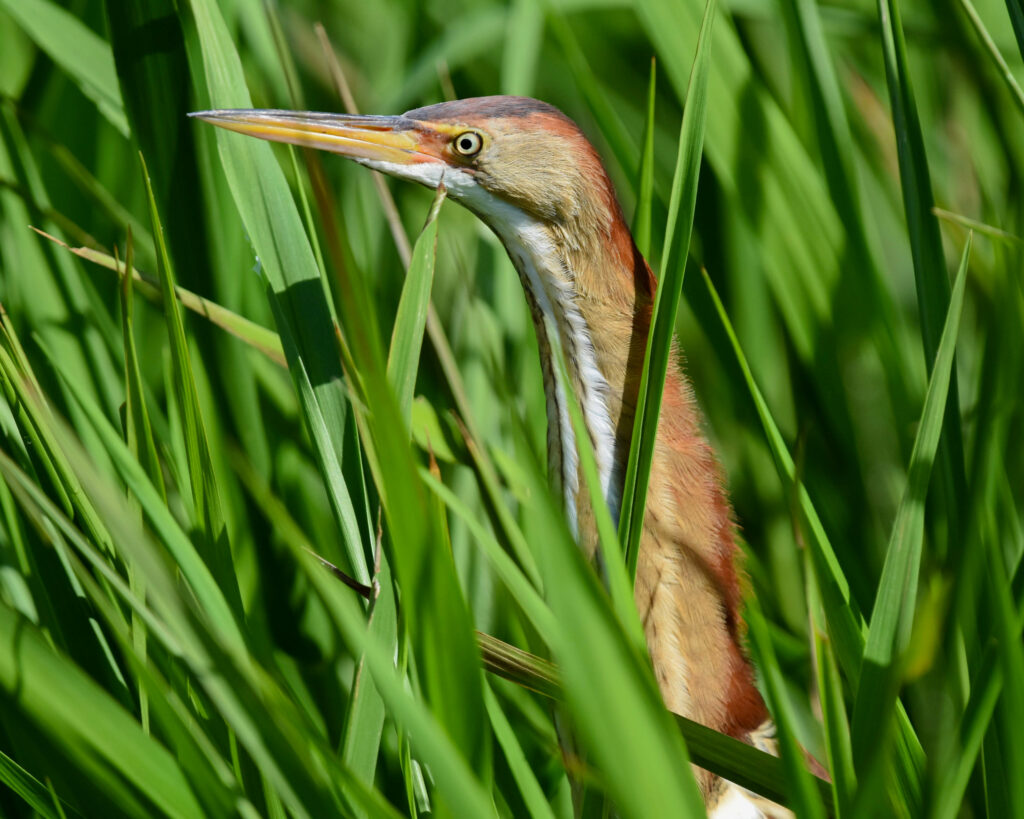
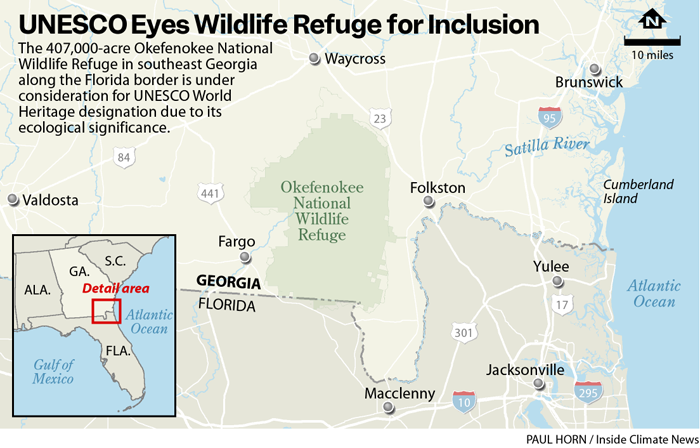
By July, the vast swamp Howard has visited since childhood and still tries to reach at least once a week could be internationally recognized as a United Nations Educational, Scientific and Cultural Organization (UNESCO) World Heritage Site.
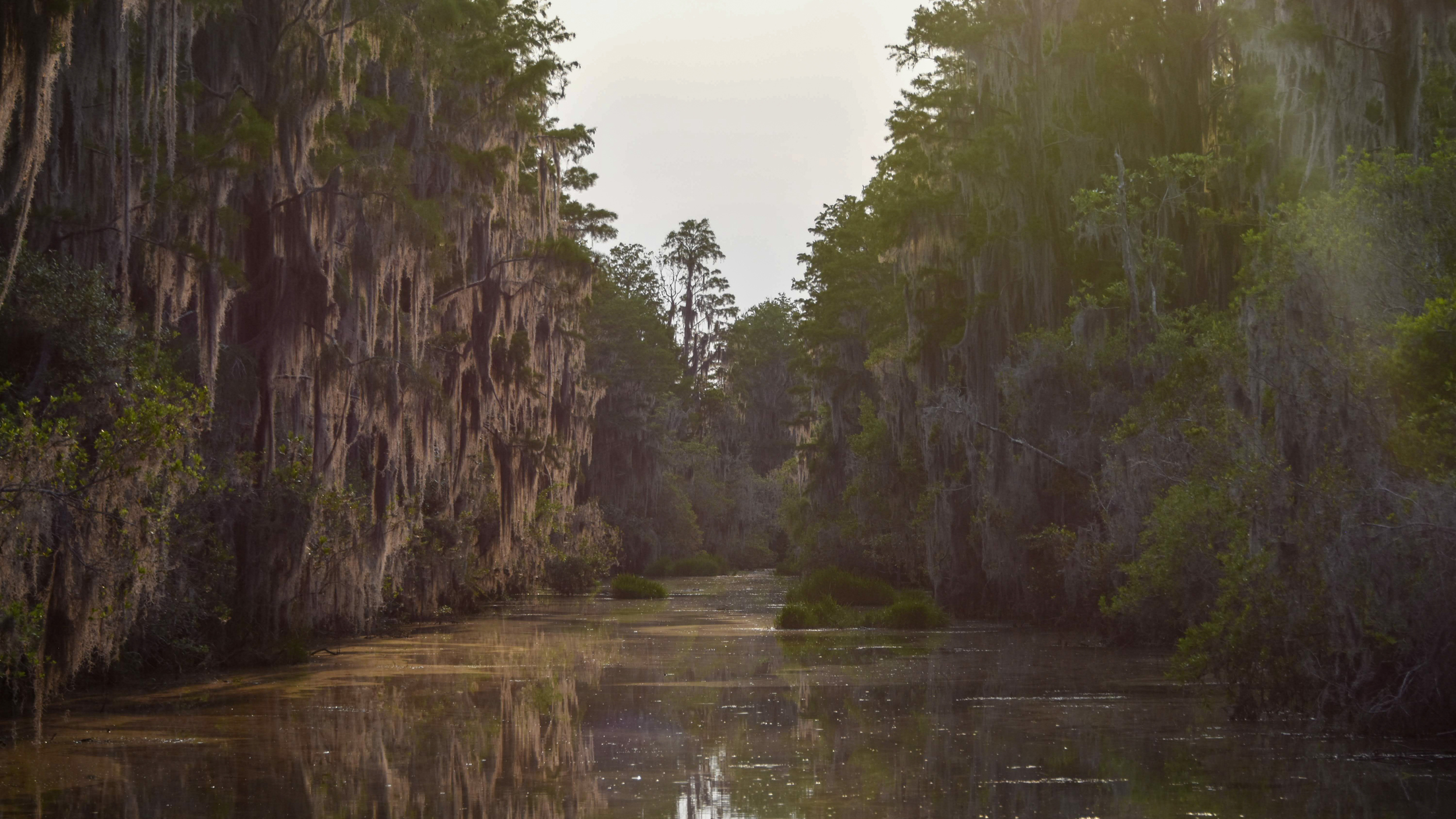
The Okefenokee, on the Florida border in southeast Georgia, hosts the largest blackwater swamp in North America, a slow-moving wilderness roughly five times the size of Atlanta. It began forming hundreds of thousands of years ago, as the Atlantic Ocean retreated and left behind Trail Ridge, a long, low fossilized beach dune, and a shallow depression that trapped water between the ridge and higher uplands to the west.
The Okefenokee is a blackwater swamp, meaning its dark waters are stained by tannins released from decaying vegetation and cypress trees. Beneath the dense canopy, the water takes on the color of steeped tea, reflecting cypress trunks and drifting lily pads like dark glass.
The refuge was established in 1937 by President Franklin D. Roosevelt, following a series of visits from Cornell biologist Francis Harper. Harper had come to admire both the swamp’s landscape and its people, but it was his wife—who had once tutored Roosevelt’s children—who ultimately helped push the president toward protecting the land.
The refuge’s latest conservation effort now depends partly on another layer of federal and international politics. The Okefenokee’s UNESCO nomination comes amid renewed uncertainty over the United States’ relationship with the organization.
Earlier this year, President Donald Trump moved to again withdraw the United States from UNESCO, though the withdrawal would not take effect until December—months after a decision on the Okefenokee nomination is expected. The United States also remains part of the World Heritage Convention, the international agreement governing World Heritage Sites.
In addition, World Heritage designations have continued in the United States during previous periods when the country was formally withdrawn from UNESCO, including under both Trump and President Ronald Reagan. The Okefenokee effort has also received support from prominent Republicans, including former Georgia Gov. Sonny Perdue, who served as Trump’s agriculture secretary.
Still, regardless of shifting politics around UNESCO, the landscape at the center of the nomination remains largely unchanged.
Today, the Okefenokee stands as a protected wilderness of blackwater channels, peat and dense wetland forests, supporting a rich array of wildlife and plant life.
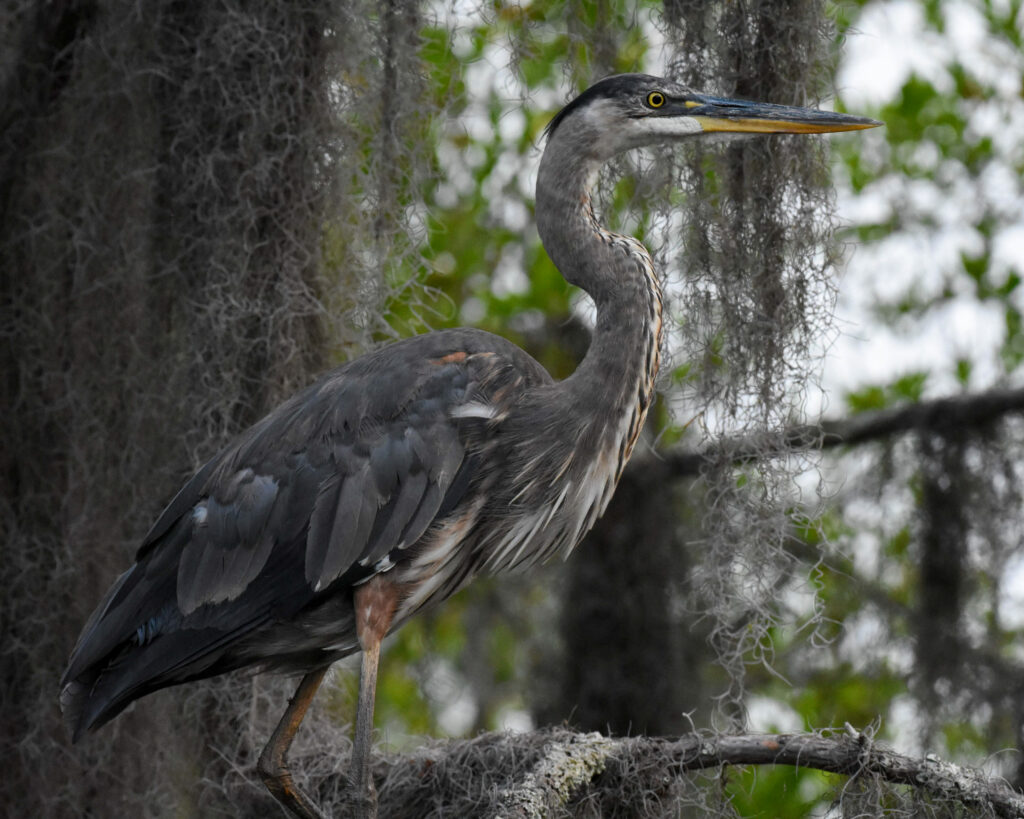
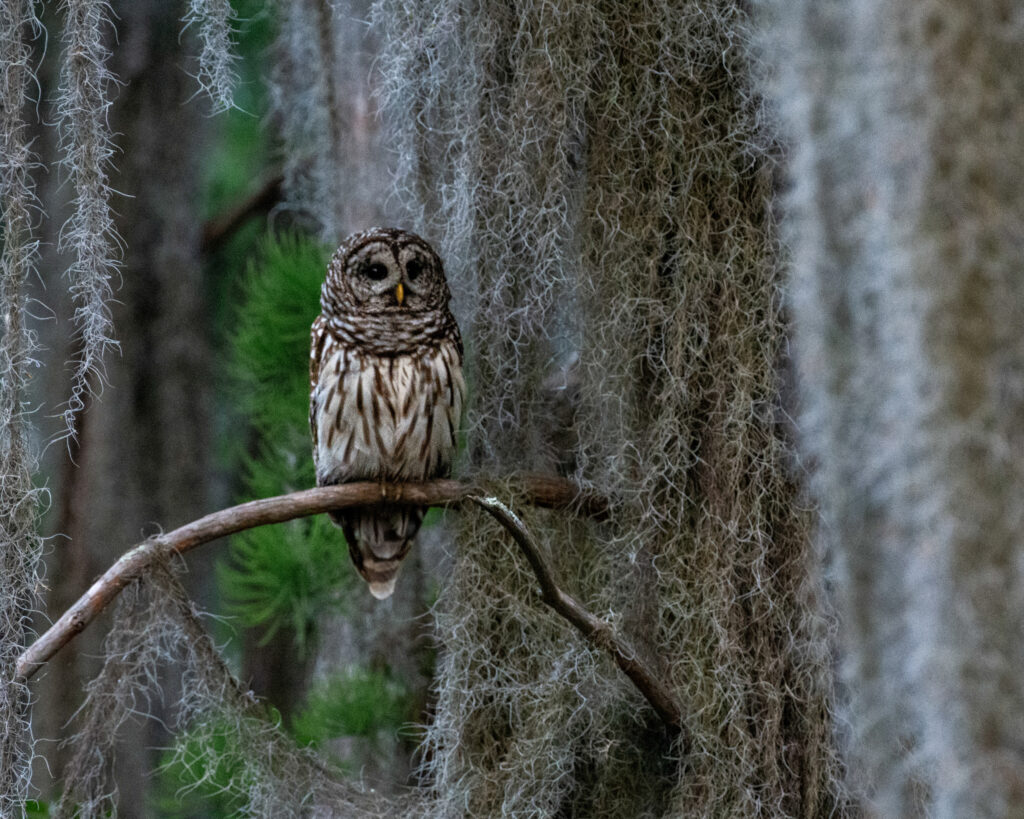
A great blue heron and a barred owl perch among Spanish moss in the Okefenokee National Wildlife Refuge. Credit: Ryan Krugman/Inside Climate News
As Howard floated through the swamp at the refuge’s eastern entrance for about an hour and a half, he saw nearly 200 alligators, owl fledglings, hawks, herons and more. What he somewhat incredulously called an “above average” number of encounters was partly driven by drought conditions that pushed animals toward remaining water, though abundant wildlife sightings are far from unusual.
Across the swamp, an estimated 15,000 alligators inhabit the blackwater alongside almost 250 bird and 64 reptile species. Black bears and bobcats move through the uplands, and there are rumors of Florida panthers wandering the refuge. It is also a stronghold for endangered and threatened species, including red-cockaded woodpeckers, wood storks and eastern indigo snakes.
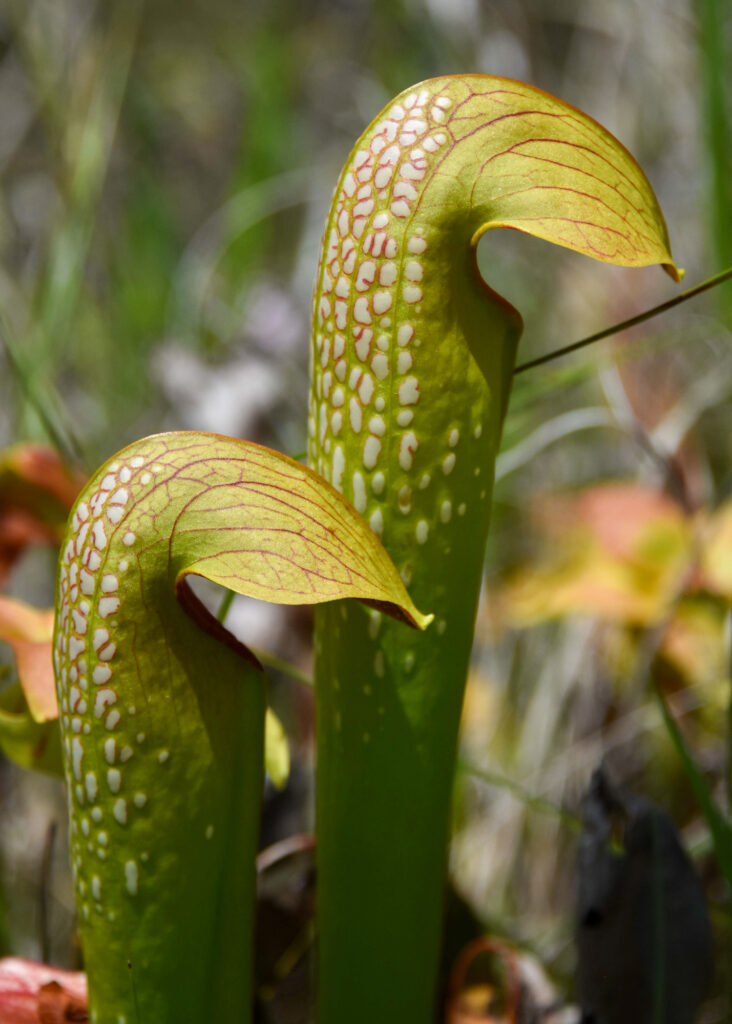
To fully experience the Okefenokee, visitors often paddle deep into the backcountry by canoe or kayak, traveling through areas inaccessible to motorboats. Along the way, they pass open prairies filled with lilies, wildflowers and carnivorous plants, including the Okefenokee giant pitcher plant, which can grow more than four feet tall and traps insects inside its tubular leaves.
Some visitors spend nights on raised wooden platforms scattered throughout the swamp, with multi-day trips carrying paddlers far into the blackwater wilderness. Yet even with those routes, only about 5 percent of the Okefenokee is currently accessible to humans.
Despite being one of the best-preserved wetlands in North America, and especially on the eastern seaboard, the Okefenokee has repeatedly faced pressure from industry and development. Before it became a wildlife refuge and federally designated wilderness area nearly a century ago, logging companies cut through vast cypress forests, disrupting habitats and the natural systems that shaped the swamp.
Later, the Suwanee Canal Company attempted to drain the Okefenokee to clear the way for development. The company planned to carve a canal through Trail Ridge and connect the swamp to the Suwannee River, but water repeatedly flowed back into the basin. The project ultimately collapsed, driving the company into bankruptcy before the canal could be completed.
More recently, the Okefenokee has faced renewed pressure from a high-profile mining dispute near Trail Ridge and continued development across the Florida border. Yet the swamp’s beauty and biodiversity continue to draw roughly 800,000 visitors each year—and now the attention of UNESCO.
The Okefenokee was first placed on the United States’ tentative UNESCO World Heritage list in 1981, but the nomination stalled for decades. In 2023, the Department of the Interior authorized work on a formal nomination, a push driven in large part by advocates including Kim Bednarek, executive director of Okefenokee Swamp Park.
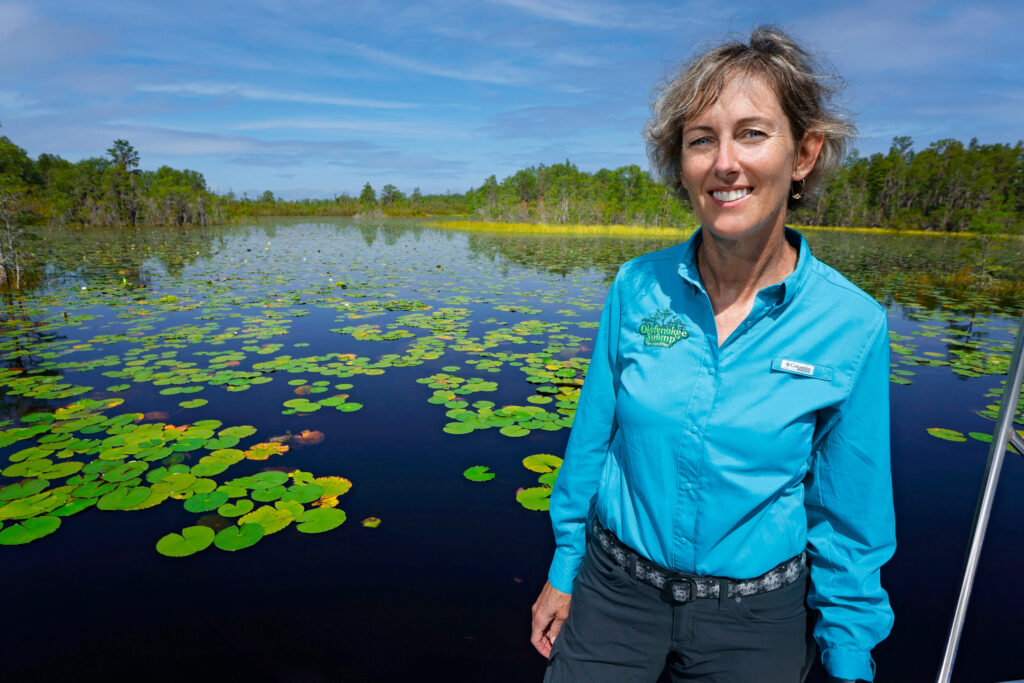
The nonprofit, which runs tours and educational programs near and in the refuge, helped lead the campaign and raise money for the years-long nomination process. To qualify, researchers and advocates had to demonstrate the swamp’s “outstanding universal value,” the central standard for World Heritage designation.
The nomination was formally submitted in January 2025. Later that year, scientists with the International Union for Conservation of Nature, which advises UNESCO on natural sites, visited the swamp as part of the evaluation process. Advocates are now awaiting a recommendation from the organization ahead of a final decision expected this July at the UNESCO World Heritage Committee meeting in Busan, South Korea.
UNESCO’s standard of “outstanding universal value” is reserved for places considered significant not just to one country, but to humanity. Advocates and scientists argue the Okefenokee qualifies because of its biodiversity and the remarkable condition of its peatlands, which have remained largely intact for thousands of years and are a natural carbon sink.
Peatlands form when organic material builds up faster than it decomposes. In the Okefenokee, still blackwater, low oxygen levels and acidic conditions—created largely by tannins from cypress trees—slow decay enough for layers of plant matter to accumulate over thousands of years.
“We do not have a similar peatland in the world in the subtropics,” said Hans Joosten, one of the world’s leading peatland experts. According to Joosten, the swamp’s location—sandwiched between the Gulf of Mexico and the Atlantic—provides the humidity and rainfall needed to sustain this rare subtropical peatland.
An inch of peat can take more than 50 years to form. In parts of the Okefenokee, those layers reach more than 15 feet deep, storing an estimated 124 million tons of carbon and forming one of North America’s most significant peat systems.
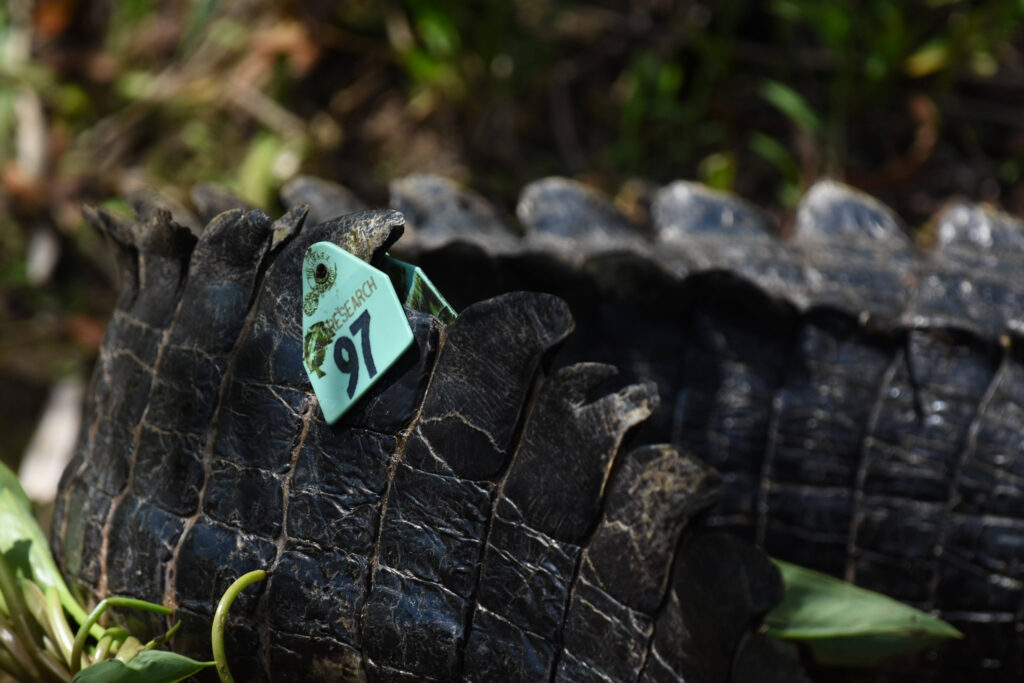
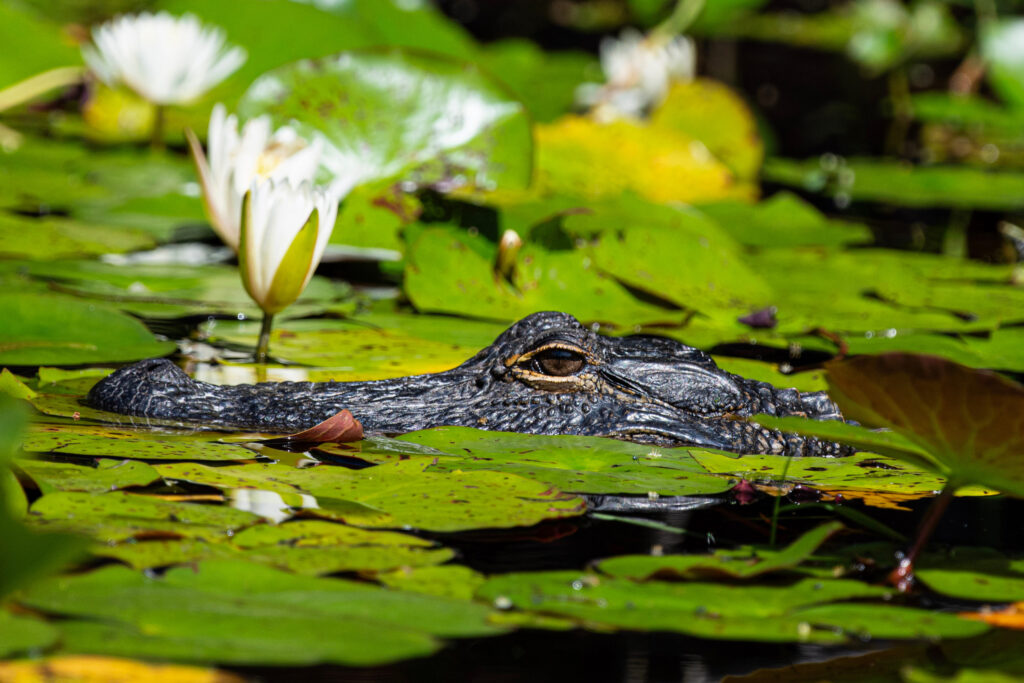
Many of the estimated 15,000 Alligators in the Okefenokee are tagged as part of research initiatives. Credit: Ryan Krugman
The swamp’s Muscogee Creek name, often translated as “land of the trembling earth,” reflects what lies beneath its surface. Deep peat can shift, swell and occasionally rise toward the top, where visitors may see methane bubbles break through the blackwater or floating mats of peat drifting at the surface. Those peat mats can become platforms for new plant growth, reshaping the swamp as they move and settle.
The biodiversity hotspot is supported by another cycle, one much faster than peat formation. The swamp is frequently reshaped and renewed through natural wildfires. The fires clear dense vegetation and invasive species, return nutrients to the soil, and maintain the open conditions needed for fire-dependent ecosystems like the longleaf pine, one of the most endangered forest types in North America.
“To be put on the same list as places like the Grand Canyon and Yellowstone would just be amazing,” Howard said with a Southern drawl as he floated along the remnants of the Suwannee Canal.
This story is funded by readers like you.
Our nonprofit newsroom provides award-winning climate coverage free of charge and advertising. We rely on donations from readers like you to keep going. Please donate now to support our work.
Donate NowHoward, tall and broad with silvering hair and an easy smile, had arrived at the swamp after a long day working as a school administrator in Charlton County. “You want to know why I think this place deserves to be on that list?” he asked. “Because when I got here this evening, I was stressed and now I am not.”
Howard has been coming to the swamp for almost 50 years and has spent the last seven serving as president of Friends of the Okefenokee National Wildlife Refuge, a nonprofit that helps raise money for its preservation. While the group is not directly involved in the UNESCO bid, Howard said its members strongly support the designation.
If approved in July, the designation would make the Okefenokee Georgia’s first UNESCO World Heritage Site and the first national wildlife refuge in the country to receive the status.
For Bednarek, the recognition would do more than honor the swamp’s ecology. It could fundamentally change how the Okefenokee is seen internationally. National wildlife refuges typically operate with far less tourism, funding and global visibility than national parks.
“They have this iconic brand that refuges don’t,” Bednarek said. UNESCO World Heritage status, she said, functions differently. “It’s a global brand that people travel far and wide to see.”
For now, though, the Okefenokee remains what it has long been: a slow-moving wilderness of blackwater, peat and cypress.
As dusk settled over the swamp, Howard’s guide cut the boat motor and the sounds of insects and distant birds filled the blackwater again. Methane bubbles continued rising quietly to the surface, signs of the trembling earth beneath the water.
In July, delegates in South Korea will decide whether the Okefenokee receives World Heritage status. But the swamp itself will keep moving at its own pace.
About This Story
Perhaps you noticed: This story, like all the news we publish, is free to read. That’s because Inside Climate News is a 501c3 nonprofit organization. We do not charge a subscription fee, lock our news behind a paywall, or clutter our website with ads. We make our news on climate and the environment freely available to you and anyone who wants it.
That’s not all. We also share our news for free with scores of other media organizations around the country. Many of them can’t afford to do environmental journalism of their own. We’ve built bureaus from coast to coast to report local stories, collaborate with local newsrooms and co-publish articles so that this vital work is shared as widely as possible.
Two of us launched ICN in 2007. Six years later we earned a Pulitzer Prize for National Reporting, and now we run the oldest and largest dedicated climate newsroom in the nation. We tell the story in all its complexity. We hold polluters accountable. We expose environmental injustice. We debunk misinformation. We scrutinize solutions and inspire action.
Donations from readers like you fund every aspect of what we do. If you don’t already, will you support our ongoing work, our reporting on the biggest crisis facing our planet, and help us reach even more readers in more places?
Please take a moment to make a tax-deductible donation. Every one of them makes a difference.
Thank you,