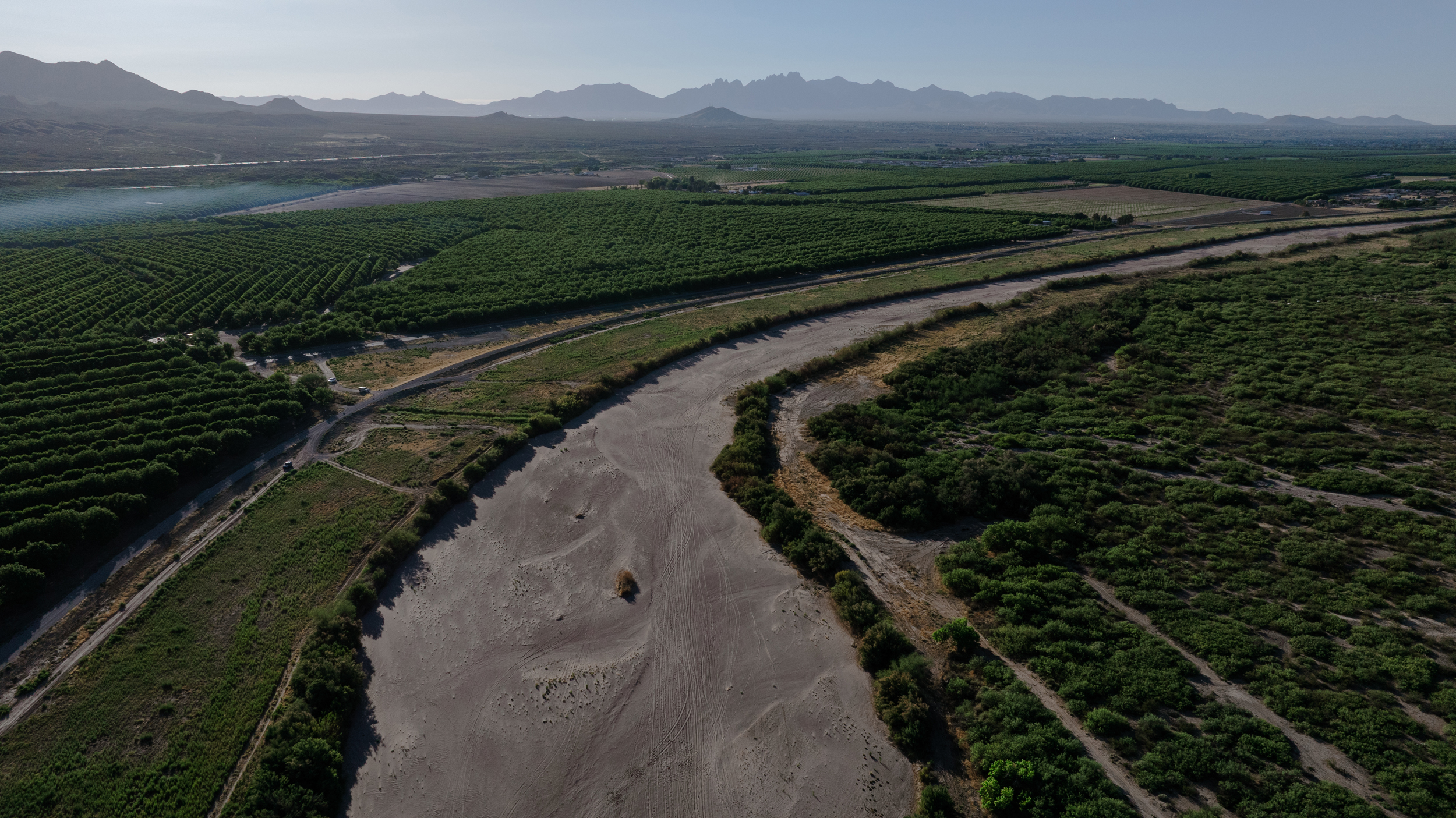


Reporting supported by the Water Desk at the University of Colorado Boulder.
HATCH, N.M.—After 13 years, Texas and New Mexico have finally reached a settlement in a Supreme Court case over Rio Grande water management.
Now comes the hard part.
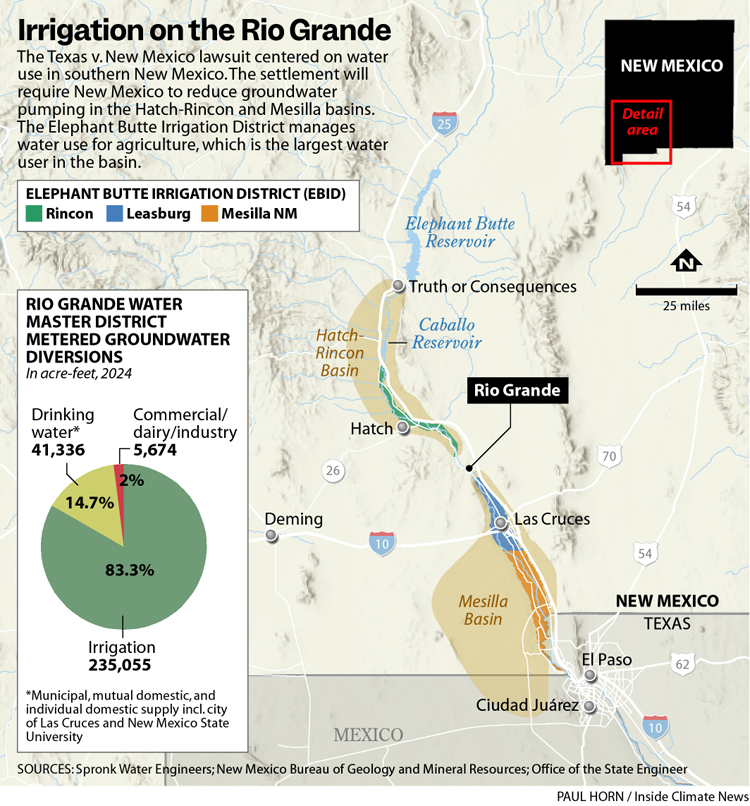
Texas sued New Mexico in 2013, arguing that its upstream neighbor was hogging water on the river that millions depend on for irrigation and drinking water. The settlement requires New Mexico to reduce the amount of water drawn from wells that deplete the flow of Rio Grande water to Texas.
The agreement also introduces a new accounting method to determine how much water New Mexico owes Texas. And for the first time, the volume of water flowing into Texas will be measured at the state line. Compliance will cost New Mexico upward of $150 million. If the state fails to meet the settlement’s requirements, it could face harsh penalties or another taxing lawsuit.
New Mexico officials hope that buying water rights from farmers and shutting off their wells will be enough to comply. But if climate change continues to drive drier conditions in the Rio Grande basin, those initial voluntary measures will likely fall short. The state expects to have 25 percent less water in 50 years because of rising temperatures.
If New Mexico has to make further reductions to water use, the possibility of mandatory water cuts looms over the region. Behind closed doors, major water users, including farmers and the city of Las Cruces, are negotiating contingency plans. The Lower Rio Grande in New Mexico shows how difficult it will be to fairly reduce water use among farmers, industry and residents as the climate gets hotter and drier.
From Hatch to Anthony, New Mexico, farmers are contemplating whether to sell their water rights and turn off their wells permanently. Towns built on agriculture are asking what comes next in a future with more fallow fields. The settlement comes as a hyperscale data center begins construction in the basin, raising further questions about sustainability.
Norm Gaume, a former New Mexico Interstate Stream Commission director who now leads the nonprofit New Mexico Water Advocates, compared the Rio Grande to a company in bankruptcy. He likened the Supreme Court to the bankruptcy judge.
“They’ve issued their recovery plan,” Gaume said in an interview. “And it’s going to be painful.”
The settlement “is going to change the way we view water and use water in the Lower Rio Grande in New Mexico,” he said. “It has huge consequences.”
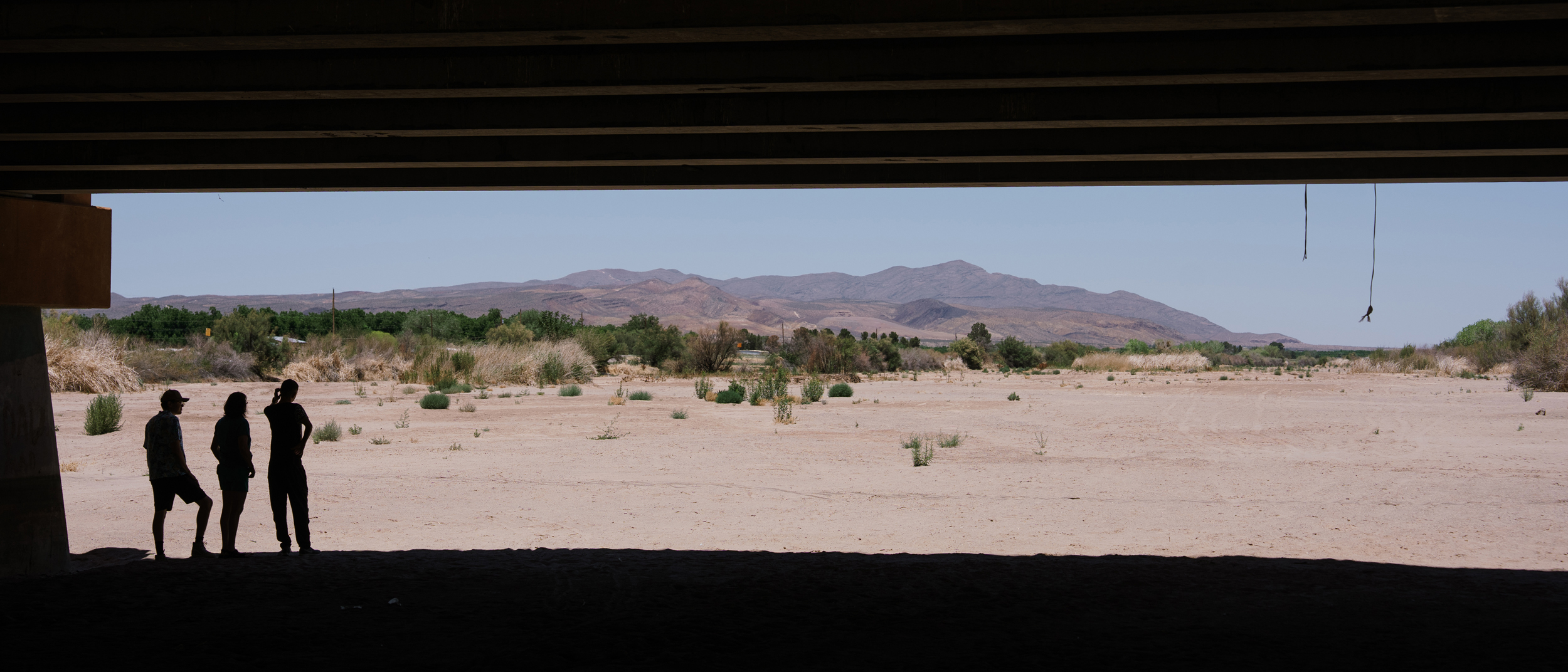
When hydrologists and climatologists reviewed the impacts of climate change on Western water for a 2015 paper in Ecological Applications, they identified the Rio Grande as “the best example of how climate-change-induced flow declines might sink a major system into permanent drought.”
The prognosis hasn’t improved.
Snowmelt runoff, the primary water source for the Rio Grande basin in New Mexico, has decreased 17 percent since 2000. The federal Bureau of Reclamation projects that temperatures in the basin will increase by another four to 10 degrees this century, increasing evaporation and the amount of water needed for crops.
Hard Times in Elephant Butte
The farmers in the Elephant Butte Irrigation District (EBID) had just received their first deliveries of irrigation water when they met for a board meeting in Las Cruces on June 10. The mood was one of excitement as they worked long hours to harness the water flowing into irrigation canals after the dry season. But board secretary Randy Garay opened the meeting on a somber note with an invocation.
“Help us with our watershed this coming year,” he said, head bowed. “We desperately need it.”
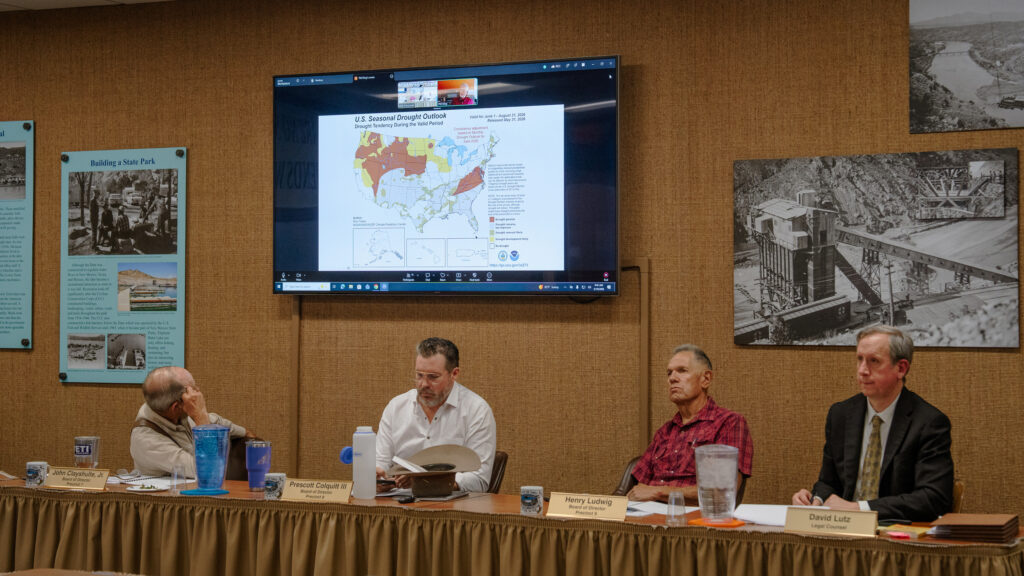
EBID water resources consultant Phil King was blunt when he presented the monthly water report to the board.
“It’s a phenomenal water year,” he deadpanned. “And not in a good way.”
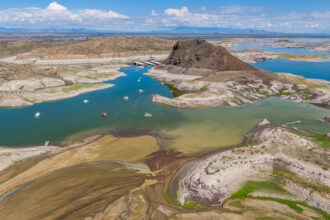
The district relies on Rio Grande water stored at Elephant Butte Reservoir. That supply is shared by southern New Mexico, far West Texas and Ciudad Juárez, Mexico. Two decades of drought in the Southwest have left the reservoir at a fraction of capacity. After a winter with little snowpack in the Colorado headwaters, the reservoir was roughly 13 percent full in May.
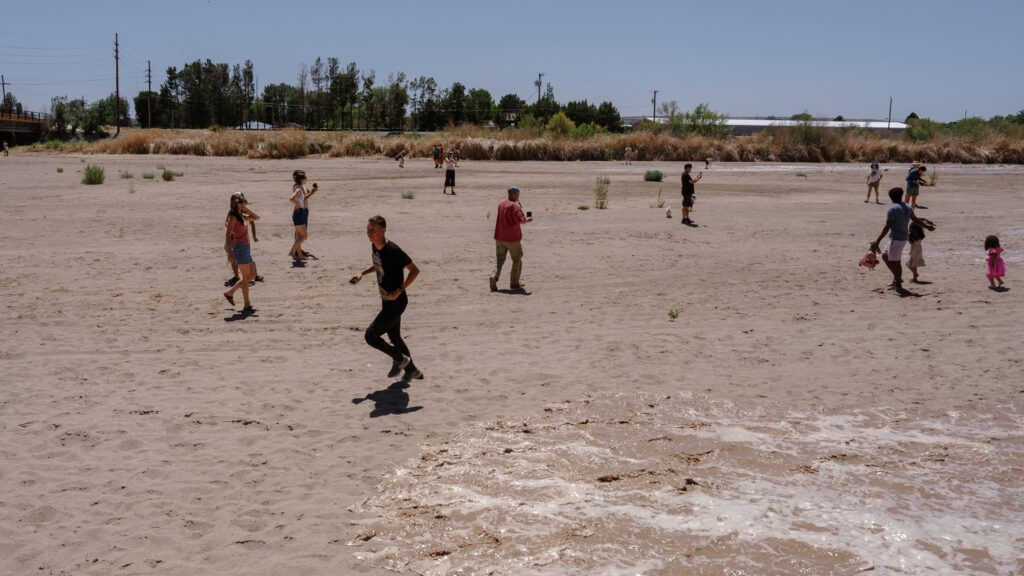
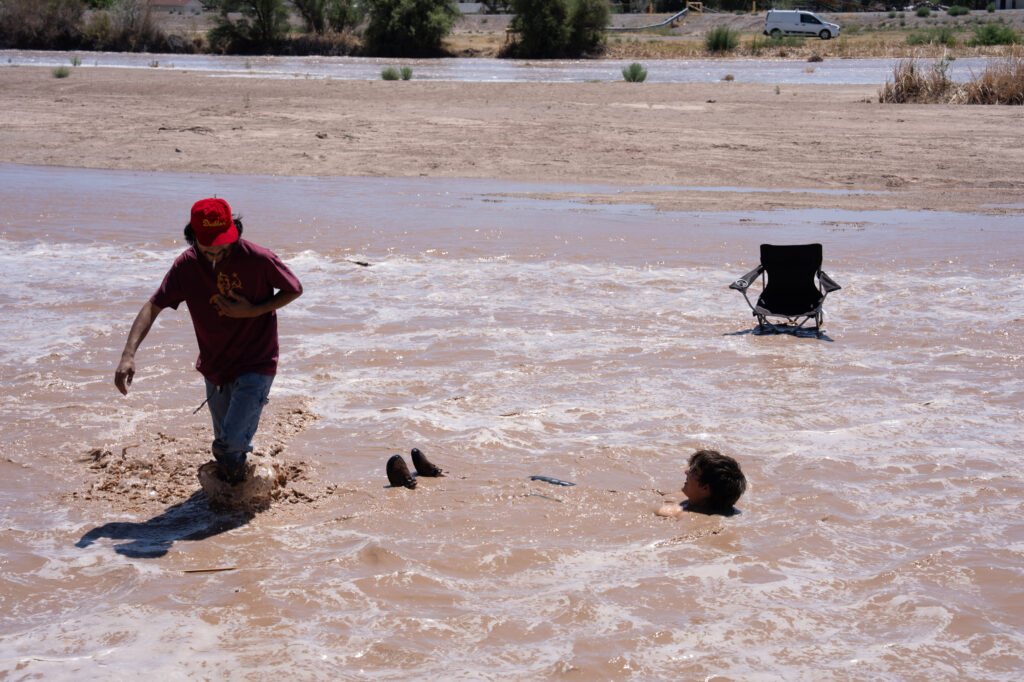
The Rio Grande downstream of Elephant Butte and Caballo reservoirs began to fill with water when the floodgates were opened in late spring. Starting on May 30, muddy, foamy water flowed past the towns of Hatch and Las Cruces before making its way to the Texas and international borders. After the water was released, Elephant Butte fell to 3 percent capacity.
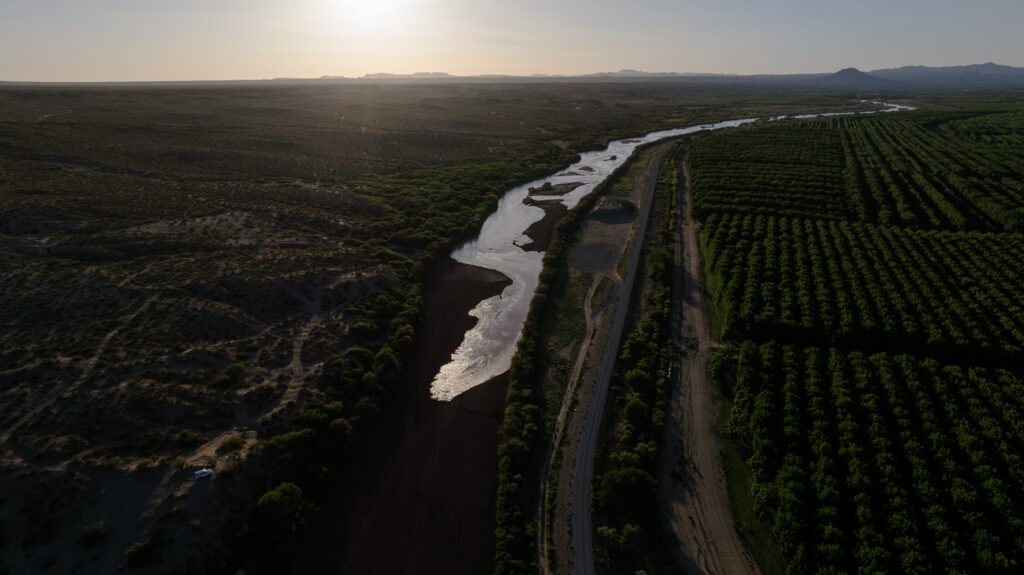
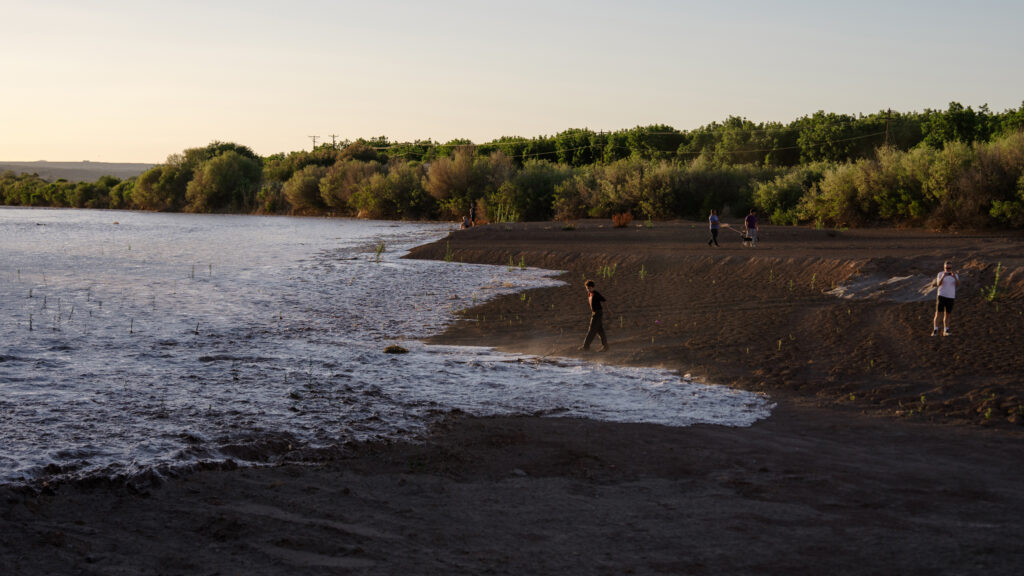
Water begins to refill the Rio Grande channel on May 30 in Mesilla, N.M.
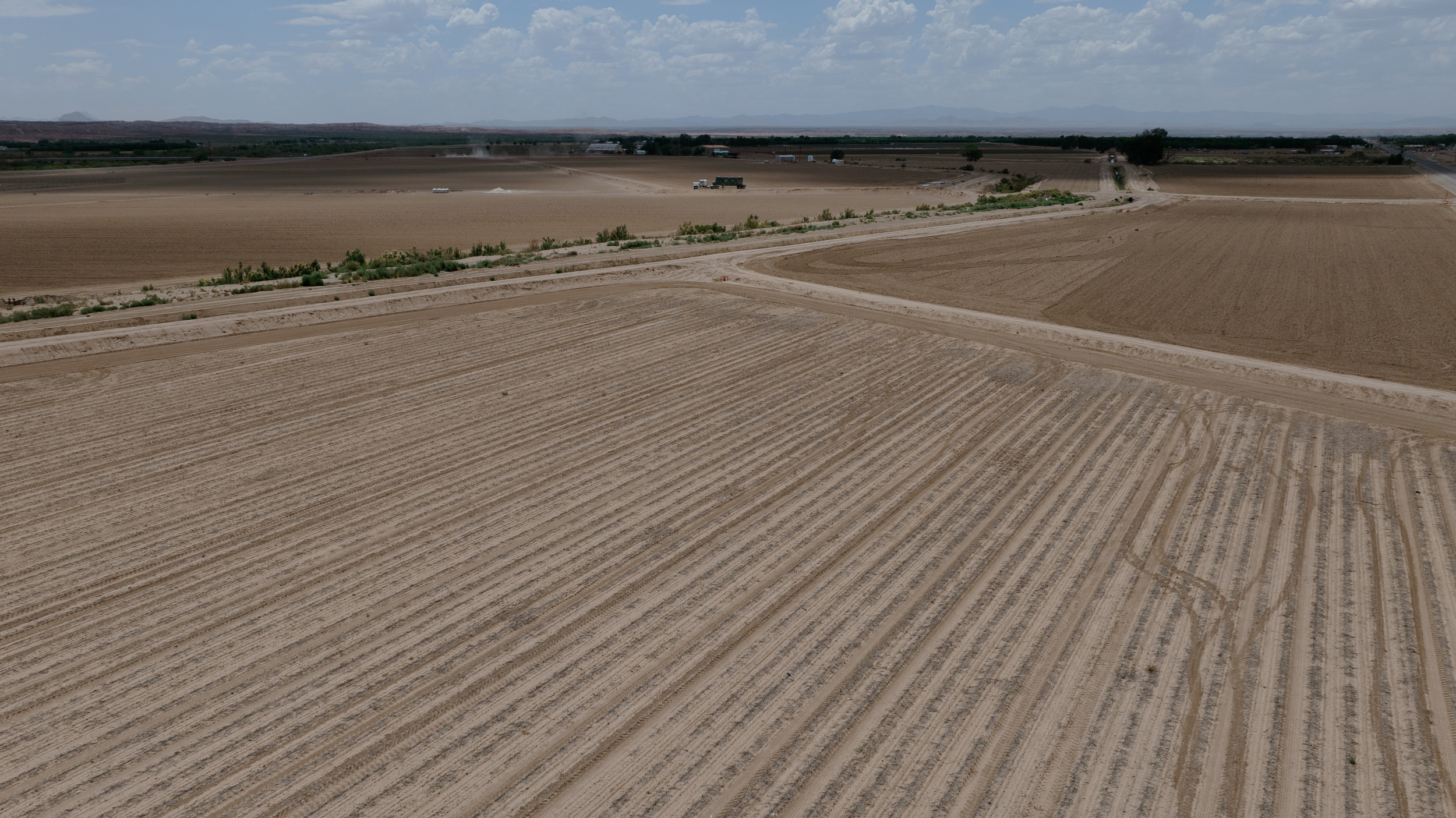
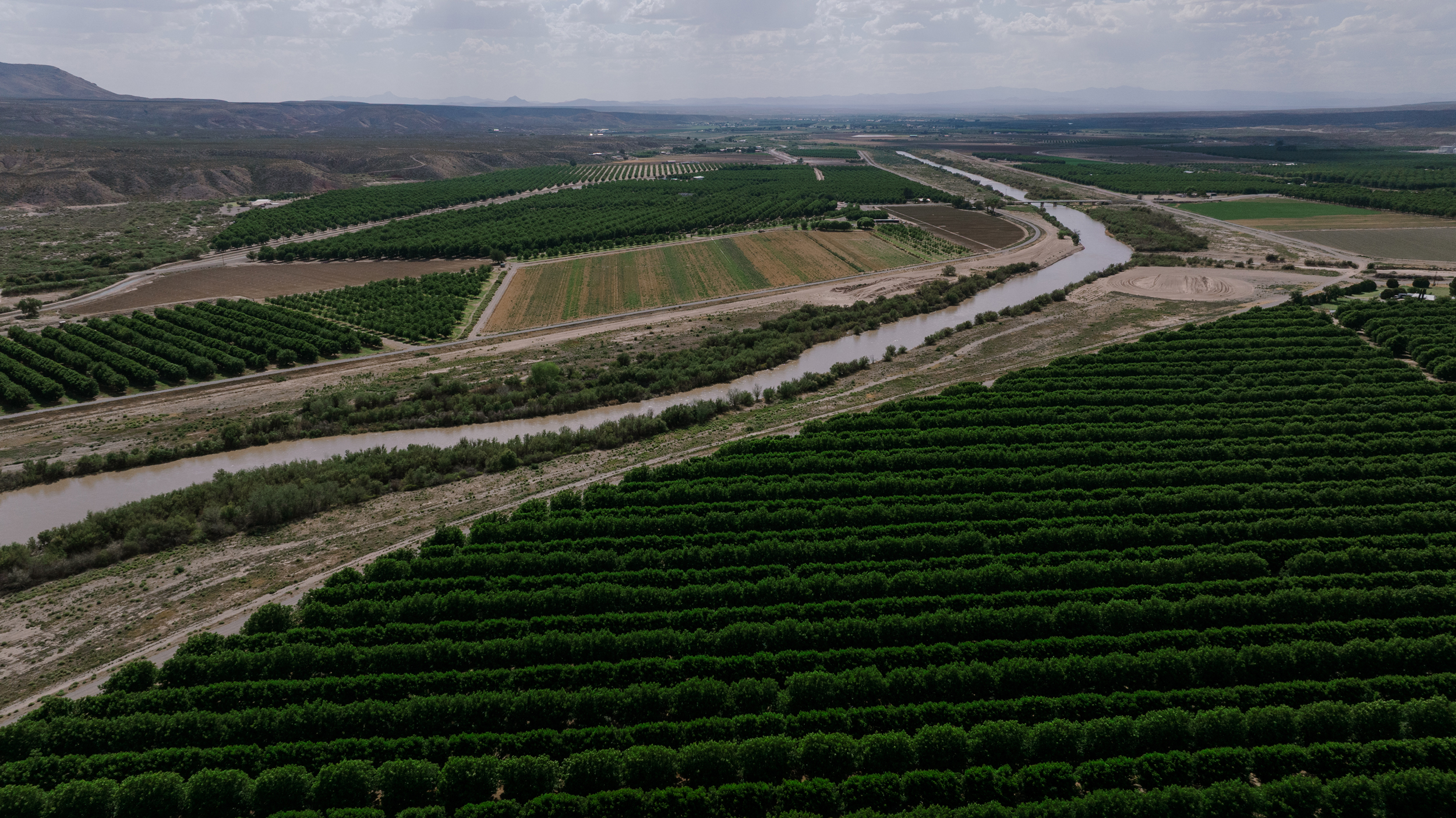
Farmers in the Elephant Butte Irrigation District are entitled to three acre-feet of water per acre—enough to cover each acre in water three feet deep. But this year they only got four inches of water. Pecans, the biggest crop in the district, need between 4 and 5 acre-feet of water, more than 12 times what they received from the river this year.
Farmers make up the difference with well water. But those wells are the root of Texas’ Supreme Court case against New Mexico.
After the Compact, Recurring Droughts
The Rio Grande Compact governs how water is shared between Texas, New Mexico and Colorado. The compact was adopted in 1938 after years of disputes.
Not long after, a deep drought fell over the Rio Grande basin. During the 1950s, water levels at Elephant Butte plummeted. Farmers who had planted chile peppers and pecan orchards along the Rio Grande drilled wells into the aquifer.
Eventually the rains and snowpack returned. The aquifer, depleted during the drought years, replenished. Many good years followed. Cities and towns in the region grew. Cities gradually used more water, but agriculture still consumed the lion’s share.
But drought returned in 2002 and hasn’t left since. With years of low reservoir storage, groundwater pumping has once again depleted the aquifer. The aquifer is now siphoning water out of the Rio Grande that should be flowing to Texas and drawing it underground.
Texas took notice and sued New Mexico for allegedly violating the Rio Grande Compact. Colorado and the United States later joined the suit.
Last August, the three states and the federal government reached a final settlement in the case. The Supreme Court approved it this May. New Mexico will have to reduce groundwater pumping to allow more water to reach Texas.
The problem isn’t limited to New Mexico. A 2025 paper in Discover Water by lead author Brian Richter found that 52 percent of water consumption in the entire Rio Grande basin, across the United States and Mexico, is causing depletion of reservoirs, aquifers and river flows.
Implementing the Settlement
The day the Supreme Court approved the settlement, some two dozen farmers and local residents gathered at a community college in Anthony, New Mexico, to understand what comes next. It was the first of a series of meetings hosted by the Office of the State Engineer, which regulates New Mexico water.
Ryan Serrano, Lower Rio Grande Basin bureau chief, dove into the details of the settlement package. Serrano explained that New Mexico has 10 years to reduce groundwater pumping by 18,200 acre-feet annually in the basin between Caballo Reservoir and the Texas state line. That’s roughly 6 to 7 percent of all groundwater use in the basin, or enough to fill about 9,000 Olympic swimming pools every year. Between 2021 and 2024, more than 80 percent of groundwater used in the basin went to agriculture.
“We’re on the clock now, May 2026,” Serrano said. “We have until May 2036 to get this done.”
He explained that farmers who are actively using their groundwater rights would be eligible to sell those rights to the state. The state would permanently retire the water rights and let the land go fallow. A study was underway to determine fair market price.
New Mexico already has $150 million allocated for the voluntary water rights purchase program. Officials acknowledge there will be further costs to comply with the settlement. But they say it is a better outcome than if the case had gone to trial. Attorneys for the United States were arguing for even steeper cuts to groundwater use than what was ultimately agreed to.
“We really see the state’s investment in this settlement—and it will be expensive—as an investment in the long-term future of the region,” Hannah Riseley-White, New Mexico’s Interstate Stream Commission director, said in an interview.
“We’re very committed to gathering community input on how to shape a program that’s as responsive as possible to community needs and concerns,” she said.
In Hatch, Concern Over Fallowed Fields
After Anthony, the agency hosted subsequent meetings in Hatch and Las Cruces.
Victoria Franzoy, the chief financial officer at Chile River Farms, attended the public meeting in Hatch. She worried that the nascent water rights purchase program will hurt the local economy.
“Up here, farming is a deep family tradition,” she said on a warm afternoon at Chile River’s office and processing plant near Hatch. Victoria’s daughter Lexi, who has her own farm, sat across from her.
Franzoy’s great-grandfather Joseph Franzoy emigrated to Hatch in the early 20th century from Austria. He grew chile peppers to sell at nearby mining camps, eventually becoming the area’s first commercial chile farmer and the patriarch of a large clan of local farmers.
Onions, pecans, alfalfa and cotton are also grown locally, but chile peppers put Hatch on the map. The Hatch Chile Festival each Labor Day brings thousands of visitors to the small town, which pronounces itself the Chile Capital of the World on signs along the interstate.
New Mexico already runs a voluntary groundwater conservation program in which the state pays farmers to temporarily leave their fields fallow. A higher proportion of land in the Hatch area is enrolled in the fallowing program than further downstream in the Mesilla Valley.
Pecan orchards dominate in the Mesilla Valley. Pecan trees must be watered for years to reach maturity, so irrigation cannot be suspended from year to year without jeopardizing pecan production. Meanwhile, farmers in Hatch who grow vegetables have more flexibility to shift production annually.
“Hatch is going to be impacted hard,” Franzoy said. “All the businesses are built around farming in this community.”
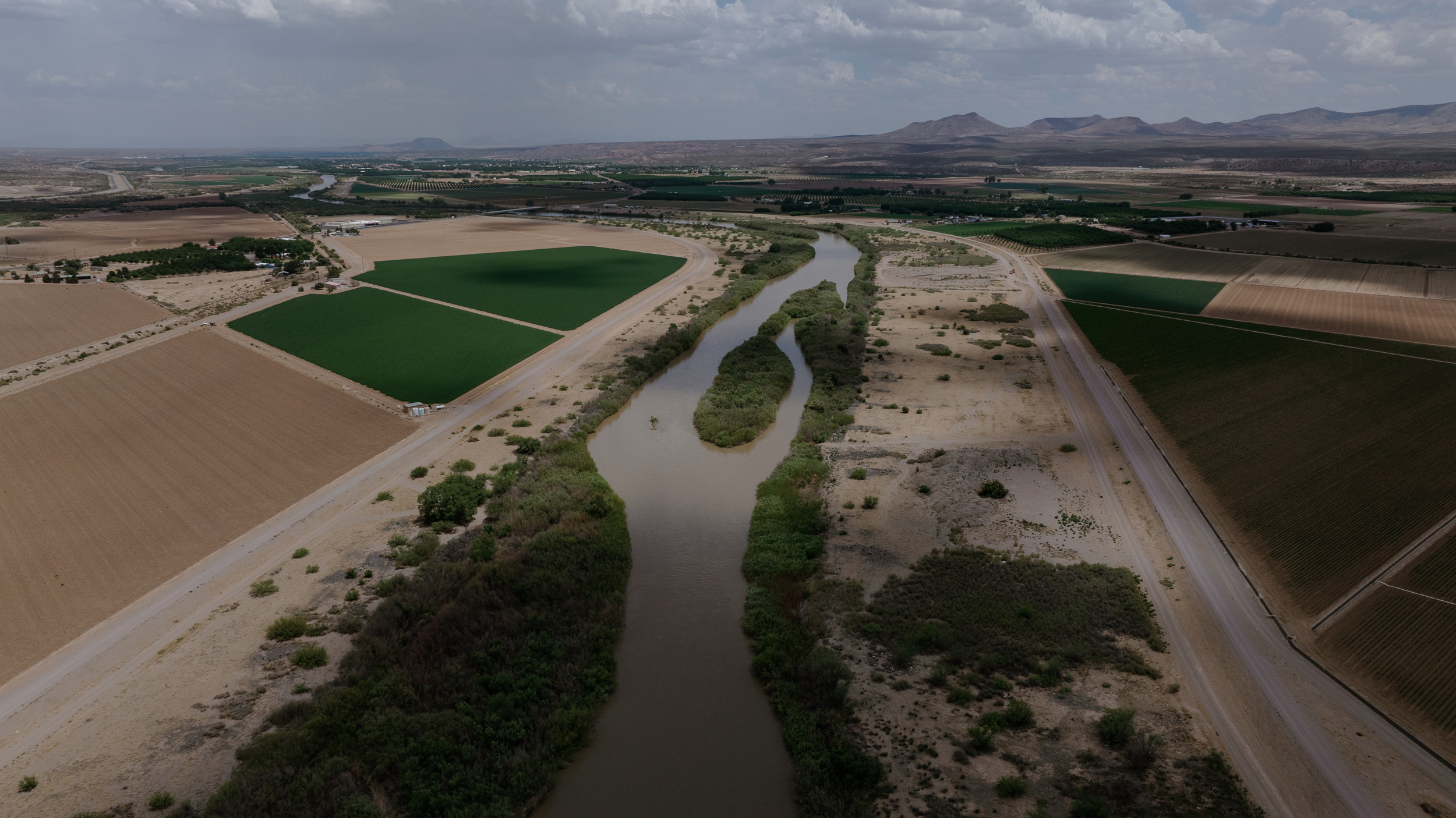
Franzoy said that local businesses will suffer if more land around Hatch is left fallow. She said that it shouldn’t just be farmers who are asked to cut back.
New Mexico officials are considering putting a cap on the volume of water rights that could be sold in the Hatch area to address the disparate impacts.
“We are hearing loud and clear,” Riseley-White said. “And doing a lot of thinking on our end about how to support the lands from which these rights are being acquired to be viable and valuable to the community.”
In the Mesilla Valley, Managing With Less Water
EBID general manager Josh Smith lamented that drought has become “the ordinary” in southern New Mexico.
“We’re in year 24 of a severe drought,” he said. “At this point, most people are used to these dry conditions.”
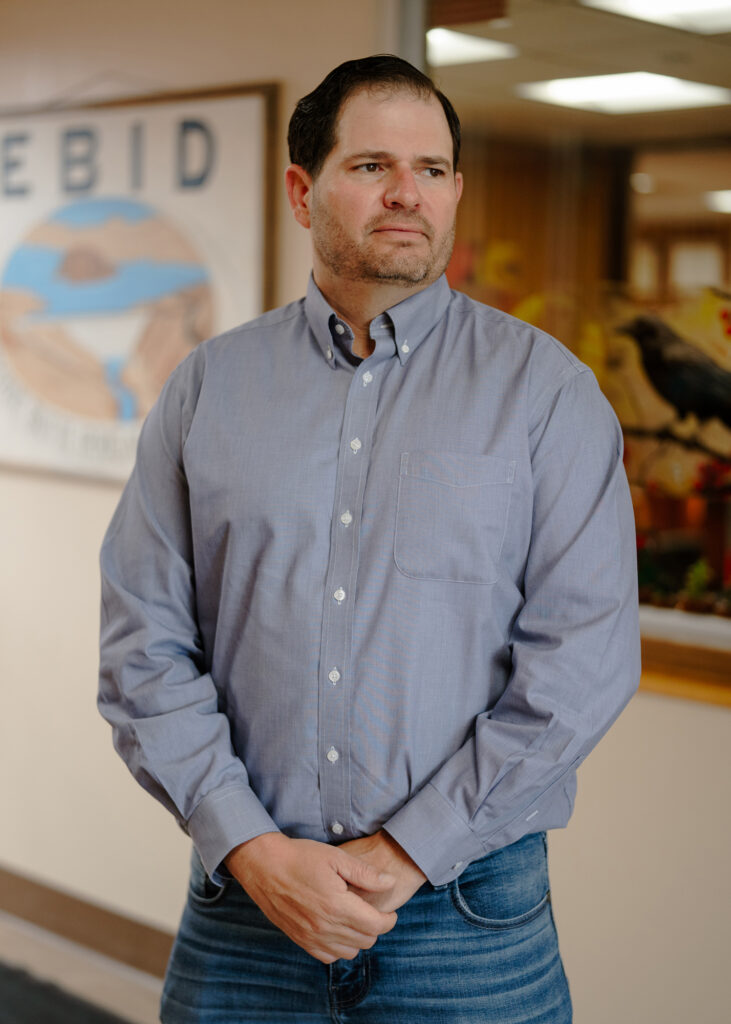
He said that each water right holder is going to have to evaluate their situation and decide whether to take the state’s offer. Farmers with large properties could choose to retire groundwater rights on only a portion of the farm. Others who are struggling to make ends meet could sell all their water rights. The state has not yet determined the payment per acre.
“Statistically, there are going to be people for whom it makes sense,” he said.
Smith hopes that the farmers in his district start to have more certainty in their water supply now that the Texas v. New Mexico case has settled. But he acknowledged that challenges could continue, and didn’t rule out future lawsuits.
“The primary concern is that if our water situation doesn’t change and we don’t receive snowpack in Colorado and northern New Mexico and get flows, we’re going to have big problems,” he said.
Downstream in the Mesilla Valley, pecan farmer Rafael Rovirosa is sober about the challenges facing the region. In the 1930s, his great-grandfather Deane Stahmann was the first local farmer to commercialize pecans, which are native to the Mississippi River basin. He founded Stahmann Farms, which now extends over 3,200 acres.
Rovirosa grew up on the farm and took over as director of operations in 2017. He has managed the farm through a decade of drought, currently as the vice president, and is preparing for more dry years to come.
“I think we need to plan for a future that’s more similar to what we’re seeing now than what we had before,” he said.
This story is funded by readers like you.
Our nonprofit newsroom provides award-winning climate coverage free of charge and advertising. We rely on donations from readers like you to keep going. Please donate now to support our work.
Donate NowRovirosa has installed soil moisture sensors in his orchards to improve irrigation efficiency. By measuring the soil moisture, he is able to irrigate only when necessary. He is experimenting with growing pistachios, which require less water than pecans. But he said more research is needed to identify alternative crops that could do well in the area.
“It’s going to take years to really understand,” he said. “If a more economically feasible crop appears, then people will transition. But we’re not there yet.”
He pointed out that not all of the water diverted for agriculture ends up depleting the aquifer. A portion of that water seeps back underground. “That water is not gone, it hasn’t been depleted,” he explained.
Despite the challenges, Rovirosa still sees agriculture playing an important role in the Mesilla Valley for decades to come.
“Our constraint is not going to be accessible water,” he said. “What’s going to limit our water use is the legality and the constraints that the government puts on it.”
Meanwhile, a new water user is setting up shop in the basin, worrying conservation advocates.
The Project Jupiter data center, backed by Oracle and OpenAI, is under construction in the town of Santa Teresa, within the Rio Grande watershed. The 2.5-gigawatt data center has sparked controversy because of its water demands and massive energy needs. The developers purchased existing water rights that are currently being used by a sod farm.
State officials have said that no new water pumping rights will be issued in the Lower Rio Grande. New water users, whether data centers or any other industry, will have to obtain existing water rights.
New Mexico Seeks a Collaborative Water Management
In early June, irrigation canals have once again filled with water and residents enjoyed the brief window when the Rio Grande flows through their communities. But they sense what’s coming.
Both to comply with the Supreme Court settlement and to assure long-term sustainability, New Mexico will have to reduce water consumption on the Lower Rio Grande. More cuts will be needed if the voluntary water purchases come up short.
States across the West use a prior appropriation system, included in the New Mexico constitution, which protects the rights of those who first put water to beneficial use above those who began using water later. Under this system, known as priority administration, those who started using water more recently would be cut off first.
New Mexico has another tool in its toolbox known as alternative administration, or active water resource management. Riseley-White of the Interstate Stream Commission said this allows the state to decide with stakeholders “how the cuts are made and in what order and with what water users.”
“We’re really lucky that we have that statute here in New Mexico because it allows us to work with communities on plans that more align with their values and concerns,” she said.
The agency is working with major water rights holders to determine what happens if the state needs to curtail water use beyond the voluntary purchase program. The confidential mediation includes EBID, the city of Las Cruces and New Mexico State University, all of which hold extensive water rights. The parties have until October to reach an agreement. New Mexico also has to submit a Rio Grande management plan within two years as part of the settlement.
Amanda Wyatt, a spokesperson for the university, confirmed that it is participating in confidential discussions about water administration but declined to comment further. The city of Las Cruces declined to respond to questions, citing the confidentiality of the negotiations.
The university, Las Cruces and EBID were also amici, or friends of the court, in the Texas v. New Mexico case, which allowed them to file briefs.
“All water users in the [Lower Rio Grande], including the New Mexico Amici, have a direct
interest in how New Mexico will administer water to comply with the Compact Decree and Groundwater Settlement Agreement,” wrote state engineer Elizabeth Anderson in a brief last year. “My hope is that the New Mexico Amici, New Mexico, EBID, and the United States will agree to a plan for alternative administration.”
“The 18,200 acre-feet is only the beginning,” said Gaume, of New Mexico Water Advocates, referring to the amount of water usage New Mexico must reduce over the next decade.
Gaume worries that New Mexico, without presenting a comprehensive plan at the outset, will allow more deficits from groundwater pumping to add up in the meantime. He said the threat of priority administration can be a powerful motivator to get stakeholders to reach a collaborative agreement for reduced groundwater pumping.
“A good outcome in October would be to work together on a plan instead of continuing to litigate their differences,” he said.
About This Story
Perhaps you noticed: This story, like all the news we publish, is free to read. That’s because Inside Climate News is a 501c3 nonprofit organization. We do not charge a subscription fee, lock our news behind a paywall, or clutter our website with ads. We make our news on climate and the environment freely available to you and anyone who wants it.
That’s not all. We also share our news for free with scores of other media organizations around the country. Many of them can’t afford to do environmental journalism of their own. We’ve built bureaus from coast to coast to report local stories, collaborate with local newsrooms and co-publish articles so that this vital work is shared as widely as possible.
Two of us launched ICN in 2007. Six years later we earned a Pulitzer Prize for National Reporting, and now we run the oldest and largest dedicated climate newsroom in the nation. We tell the story in all its complexity. We hold polluters accountable. We expose environmental injustice. We debunk misinformation. We scrutinize solutions and inspire action.
Donations from readers like you fund every aspect of what we do. If you don’t already, will you support our ongoing work, our reporting on the biggest crisis facing our planet, and help us reach even more readers in more places?
Please take a moment to make a tax-deductible donation. Every one of them makes a difference.
Thank you,

Martha Pskowski
Reporter, El Paso, Texas
Martha Pskowski covers climate change and the environment in Texas from her base in El Paso. She was previously an environmental reporter at the El Paso Times. She began her career as a freelance journalist in Mexico, reporting for outlets including The Guardian and Yale E360. Martha has a B.A. in Environmental Studies from Hampshire College and a master’s degree in Journalism and Latin American Studies from New York University. She is a former Fulbright research fellow in Mexico. Martha can be reached on Signal at psskow.33.