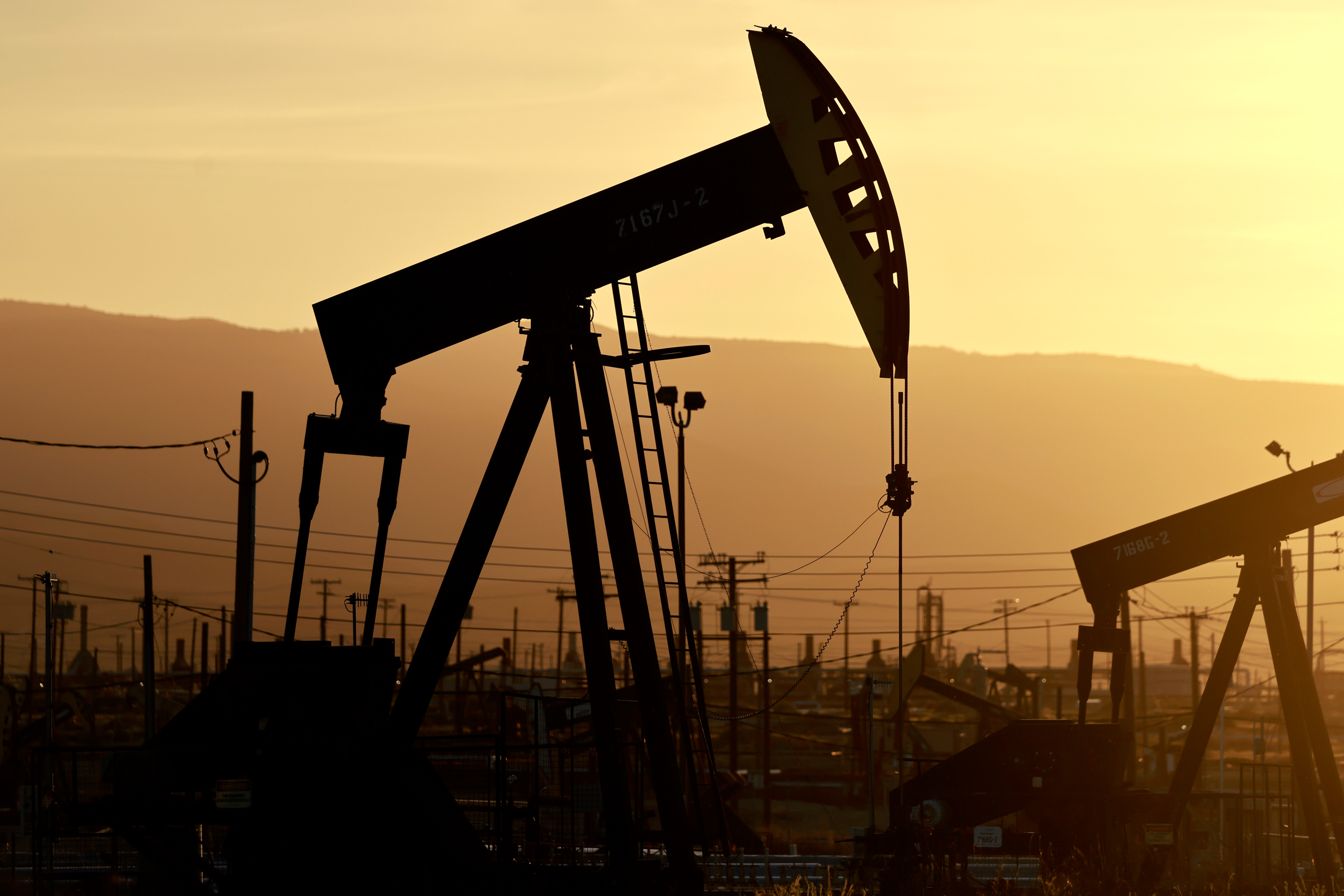


California Resources Corporation, the state’s largest oil company, passed a long-targeted milestone in May: It had finally taken carbon dioxide that would otherwise warm the atmosphere and injected it deep underneath its own oil field. It’s the first such project to become operational in California. This week, the state finalized regulations that could support many more.
The carbon CRC is sequestering at its storage site comes from its own natural gas-processing plant, which strips CO2 out of gas from wells at the nearby Elk Hills oil field. The plant will send up to 100,000 tons of CO2 each year to the so-called Carbon TerraVault I intended to lock up carbon dioxide for millennia.
The project has hurdled obstacle after obstacle to reach this point: years of slow-moving permitting by the U.S. Environmental Protection Agency and Kern County; a new federal administration that has rolled back funding for climate programs and left others in limbo; and an uncertain technological and private market for carbon removal and storage. The project is still caught up in litigation—after its approval, environmental groups sued, arguing that the county’s environmental review was inadequate.
Yet the TerraVault is officially up and running, representing a test case not only for California, which has nearly a dozen similar projects in the works, but also different U.S. regions and other countries. Kern County, where the project is located, is the historic heart of California fossil fuel production. Political leaders there have spent years pitching the area as an attractive base for a fledgling carbon removal industry that they hope will attract new economic benefits, including jobs.
“It’s a good indicator for others in the space that this day will come,” says Steve Whittaker, formerly of the Illinois State Geological Survey and now a senior vice president at Vault 44.01, a developer of carbon capture and sequestration projects that recently received its first permit from the EPA to begin injecting carbon dioxide underground. “It’s been a long time coming for many of us, so to see the actual injection and storage of CO2 in a new project is great news.”
For developers, more good news arrived this week, as California finalized regulations governing carbon pipelines within the state, which were previously banned. The ability to transport carbon around the state should make projects removing the greenhouse gas from the atmosphere feasible in more locations, opening up new potential markets for CRC and other companies planning to store it.
Carbon removal and storage boosters say the developments are much-needed wins for the industry, which has recently been mired in uncertainty.
Many policymakers and scientists consider carbon removal and storage an important element in plans to slow climate change—the UN’s Intergovernmental Panel on Climate Change, for instance, includes it in all scenarios that limit warming to under 2 degrees Celsius by 2100—but it has faced long odds due to technological and financial challenges, along with skepticism from many environmentalists who often view it as an expensive distraction from cheaper and more developed ways to reduce emissions, like renewable electricity. The carbon removal and storage industry would also need to drastically scale up to have a measurable impact on climate change; only about 380 million tons of carbon have been stored underground since the 1990s, while global emissions reached nearly 38 billion tons of carbon dioxide in 2024.
On the ground in Kern County, there are still mixed feelings about CRC’s project and the industry’s expansion in California.
Michelle Ghafar, an Earthjustice attorney representing environmental groups in the suit against CRC and the county, would like to see the project halted until the county and the company resolve the problems she alleges run through the entire environmental assessment of the project.
“It’s a blueprint,” she said. “We want to set an example here so that we’re not seeing a bunch of bad projects move forward.”
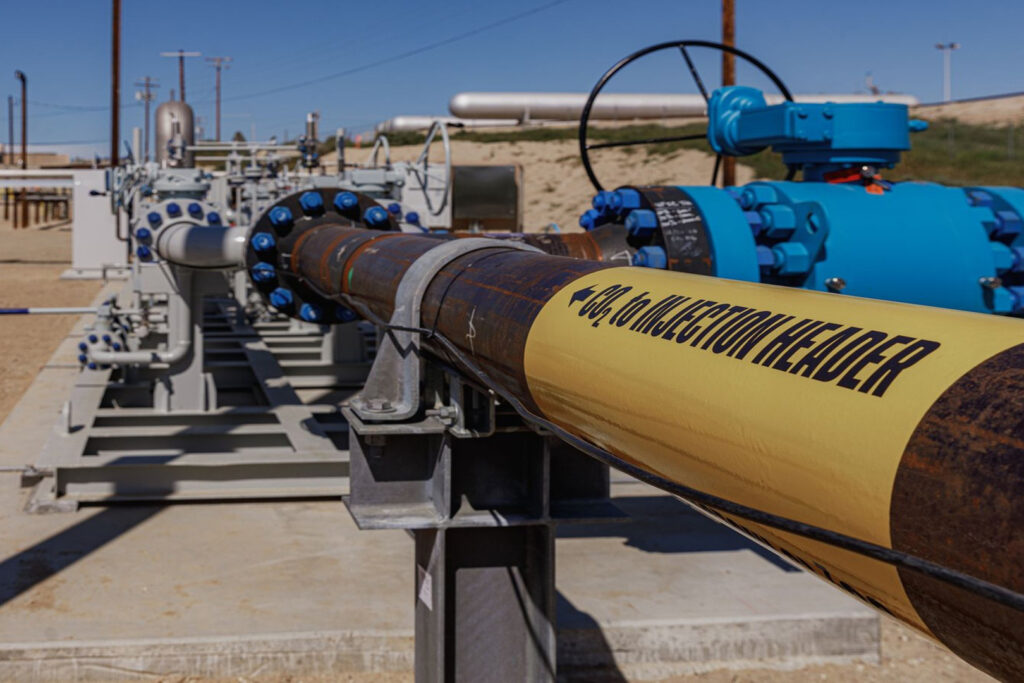
The lawsuit alleges that Kern County did not properly evaluate potential pollution and other environmental impacts from speculative industrial projects that may be built to take advantage of TerraVault’s storage space. The injection underway in Kern County is just the initial phase of CRC’s first project, called CarbonTerraVault I. It is capable of taking roughly 1.5 million metric tons of CO2 per year and storing 38 million tons overall. But CRC has submitted storage applications for sites across the state that would hold a total of 352 million tons of carbon (still only a fraction of what needs to be stored every year to confront climate change, according to the United Nations, and less than what the state of California emits in just one year). The company has signed tentative agreements with emitters of the greenhouse gas, including bioenergy companies and a hydrogen producer, that add up to just a fraction of that total storage amount.
Advocates are also worried that the storage site sits in a century-old oil field riddled with holes that could allow carbon to worm its way free; Elk Hills is punched with thousands of wells and still produces oil and gas.
CRC did not provide a response to an emailed question about the litigation.
As that lawsuit wends its way through the courts, California’s carbon storage market could continue growing. The U.S. Environmental Protection Agency, which regulates carbon dioxide storage wells in California, is currently reviewing 11 more proposed projects with nearly 50 carbon injection wells in the state. The agency expects to finalize approval for those projects in 2026 and 2027. Seven of them would be hosted by CRC or a subsidiary.
Outside of the longstanding challenges of getting more removal projects operational, filling all of that storage space would be exceedingly difficult without the infrastructure to carry carbon dioxide from where it’s emitted to where CRC or other companies plan to lock it away. California’s pipeline regulations fill a vacuum left by a federal rulemaking process that stalled in the transition from the administration of President Joe Biden to the second presidency of Donald Trump. The state rules could open up storage locations to carbon producers in many more parts of California.
The rules, crafted by the Office of the State Fire Marshal in collaboration with a workgroup composed of pipeline operators, local governments, energy regulators and safety advocates, require automatic public notifications in the event of a pipeline rupture or potential rupture, public engagement as pipelines are proposed and constructed and training for emergency responders in nearby jurisdictions, among other conditions.
Amanda McKay, the state policy adviser at the Pipeline Safety Trust, which participated in the workgroup, said the rules “represent a major improvement” in carbon pipeline safety in California, but she hopes the state will strengthen them in future rounds of rulemaking. The rules do not require operators to use an odorant, for example, a substance that would make odorless and colorless CO2 gas detectable if a leak occurred.
The Central California Environmental Justice Network (CCEJN), one of the litigants in the case challenging the TerraVault project, also wants to see odorants required, and in public comments, the organization urged the state to require that operators distribute CO2 monitors and air supply respirators to communities near pipelines. The group also wanted to see regulators explicitly restrict how close pipelines could be routed near schools and homes; the final rules only encourage routes that are “as far as practicable” from sensitive facilities like schools and healthcare centers.
The group generally opposes carbon removal and carbon pipelines and is particularly skeptical of projects spearheaded by the fossil fuel industry. Communities have the right to be leery, says Ileana Navarro, a policy associate at CCEJN, after years of coping with the fossil fuel industry’s pollution. As of 2024, CRC had more than 1,000 wells in the Elk Hills oilfield that hadn’t produced oil or gas in two years or more. Dozens of them have been idled for decades, and it’s unclear when they may be cleaned up and sealed.
“An oil and gas company that has failed to take care of oil wells for many years is now telling the community members, ‘It’s okay, you can trust us with a toxic gas,’” Navarro says.
This story is funded by readers like you.
Our nonprofit newsroom provides award-winning climate coverage free of charge and advertising. We rely on donations from readers like you to keep going. Please donate now to support our work.
Donate NowFor its part, a CRC spokesperson told Inside Climate News that the state “has done a balanced job of crafting a foundational rule” and the company looks forward to working with the office “to ensure the regulations don’t lead to unintended consequences including impeding decarbonization efforts.”
It’s unclear how soon pipeline projects would be proposed in California under the new rules.
More than 5,000 miles of carbon dioxide pipelines currently run through parts of the Midwest and Southeast, in states including Minnesota, Texas and Louisiana. Most existing carbon pipeline infrastructure connects carbon sources with enhanced oil recovery projects, a practice that is banned in California but elsewhere injects CO2 into nearly-tapped wells to dredge up more oil.
More than a dozen states, including California, are approved to assist federal regulators in inspecting and enforcing violations on hazardous liquid pipelines within their state borders, according to McKay. But few have created their own rules on carbon-specific pipelines, she says, even as the federal rulemaking process has stalled.
Though it’s not the most efficient approach to pipeline regulation, creating its own rules means that California can act as a model for other states—as it often does when it comes to climate regulation—amid a lack of federal guidance, says Noah Deich, who served as the deputy assistant secretary for carbon management at the Department of Energy during the Biden administration. “It’s a really important signal that the state move forward and say, ‘Yes, we can do this and here’s how.’”
During the Trump administration, carbon removal policy has been “a messy picture” overall, according to Dan Sanchez, an associate professor who runs the Carbon Removal Lab at the University of California, Berkeley. Federal policymakers clawed back billions of dollars in funding for climate programs but left other funding pots—including some for carbon removal and storage—uncertain or in place. CRC did not respond to an emailed question about the status of federal funding it was awarded in 2023 to support its carbon storage plans.
Amid the Trump administration’s mixed signals, the market for voluntary purchases of carbon credits, which has long been the industry’s main driver, has also taken a hit. In April, reports emerged that Microsoft, which has historically purchased the great majority of carbon removal credits worldwide, planned to pause new investment in carbon removal.
But even if both the private market and federal funding falter, carbon capture and sequestration projects in California are developing on a different landscape than in the rest of the country. In response to spiking oil prices, California has begun considering plans to boost oil production in Kern County. The federal government is pushing more extraction, too. But the state still has a long-term goal to phase out oil drilling by 2045. Most of CRC’s properties are rooted in a state that is planning a future without CO2 emissions.
The company, though, remains optimistic. “CRC is a California-built company,” a spokesperson said via email. “We have every intention to continue to responsibly produce oil and gas as long as Californians need it.” And if the state does wean itself off fossil fuels, CRC points to TerraVault: “We have a state requirement,” president and CEO Francisco Leon said during a March earnings call, referring to California’s decarbonization requirements, “so we are bringing a market solution.”
About This Story
Perhaps you noticed: This story, like all the news we publish, is free to read. That’s because Inside Climate News is a 501c3 nonprofit organization. We do not charge a subscription fee, lock our news behind a paywall, or clutter our website with ads. We make our news on climate and the environment freely available to you and anyone who wants it.
That’s not all. We also share our news for free with scores of other media organizations around the country. Many of them can’t afford to do environmental journalism of their own. We’ve built bureaus from coast to coast to report local stories, collaborate with local newsrooms and co-publish articles so that this vital work is shared as widely as possible.
Two of us launched ICN in 2007. Six years later we earned a Pulitzer Prize for National Reporting, and now we run the oldest and largest dedicated climate newsroom in the nation. We tell the story in all its complexity. We hold polluters accountable. We expose environmental injustice. We debunk misinformation. We scrutinize solutions and inspire action.
Donations from readers like you fund every aspect of what we do. If you don’t already, will you support our ongoing work, our reporting on the biggest crisis facing our planet, and help us reach even more readers in more places?
Please take a moment to make a tax-deductible donation. Every one of them makes a difference.
Thank you,

Emma Foehringer Merchant
Contributor
Emma Foehringer Merchant is a journalist who has covered environmental issues ranging from disasters to wonky energy regulations to air pollution. She’s reported on the environment and energy for publications including The Boston Globe Magazine, The New Republic, Vice News, and Grist. Most recently, Emma covered clean energy as a staff writer for Greentech Media and helped alums of that organization form a new publication called Canary Media. She’s attending MIT’s Graduate Program in Science Writing and holds a bachelor’s degree in environmental analysis from Pomona College, where she lived through a California drought while studying how climate change is impacting the state’s environment and people.