

A new state law limits Florida communities’ aims to offset greenhouse gas emissions that are warming the global climate and intensifying disasters such as hurricanes.
Specifically, HB 1217 prohibits local governments from pursuing net-zero emissions goals. At least 10 cities and counties have implemented such policies, including Fort Lauderdale, Miami, Orlando and Leon County, where Tallahassee, the state capital, is located. But the new law will not necessarily upend these policies, said Bradley Marshall, senior attorney at Earthjustice, an advocacy group.
“It’s certainly meant to scare municipalities and local governments from trying to do things to further net-zero policies,” he said. “Now, its exact impact and what it exactly prohibits is probably up for some debate. Things that are adjacent to it—emissions reductions and even climate change reduction policies—on their face will not run afoul at all of a ban on adopting a net zero policy.”
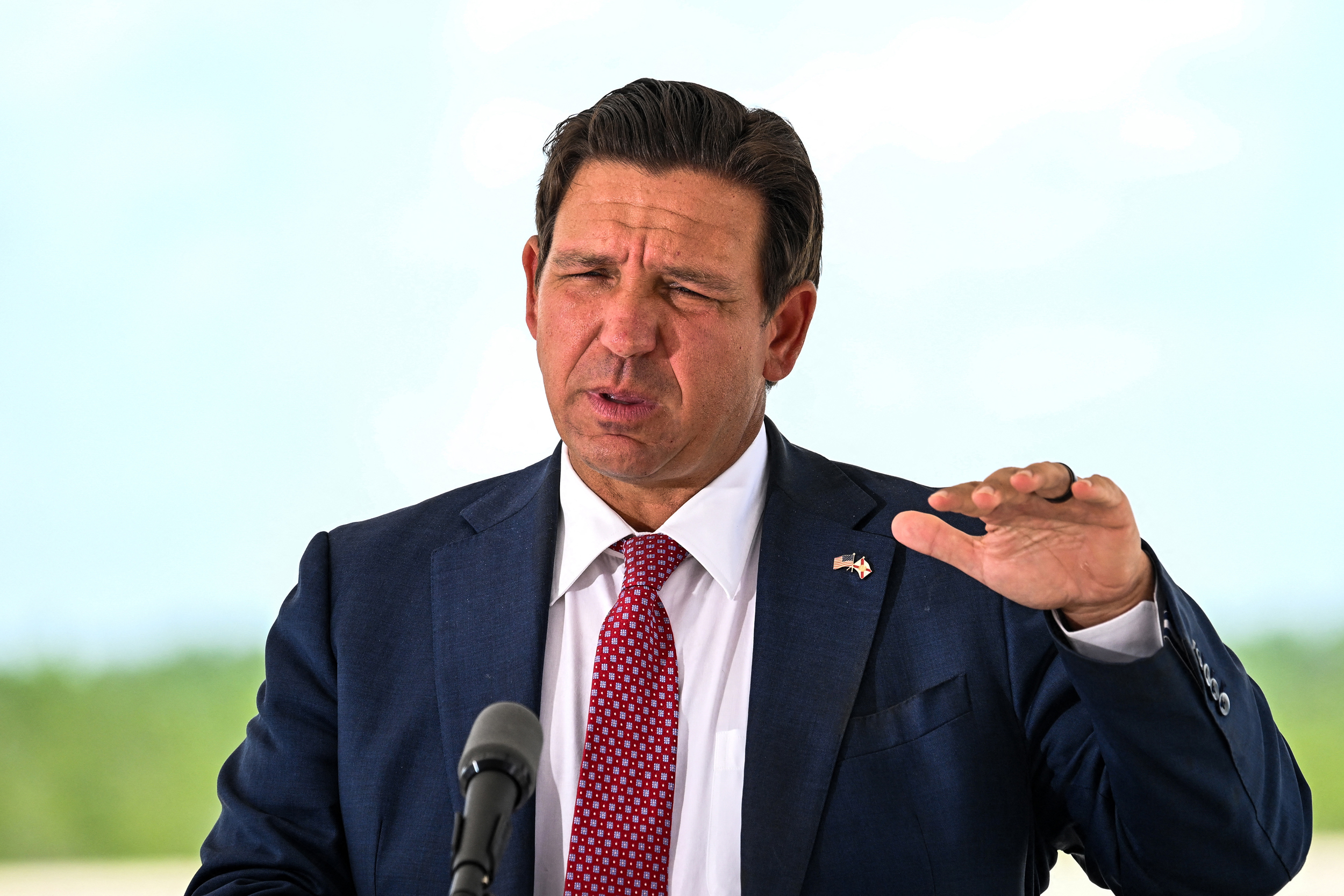
The measure requires local governments to submit an affidavit annually to the state Department of Revenue verifying compliance. Gov. Ron DeSantis, a Republican, signed the measure on April 22, Earth Day, and the law will take effect July 1. It states that “net zero policies, carbon taxes and assessments, and emission trading programs are detrimental to this state’s energy security and economic interests and inconsistent with the energy policy and the environmental policy of this state.”
“I proudly sponsored HB 1217 to fight for jobs and affordability in Florida,” according to a statement provided by the office of Rep. Berny Jacques (R-Clearwater). “This bill protects our residents and businesses from additional costs by ridding our state of Green New Deal policies. Carbon taxes and fees are not welcome in the Free State of Florida.”
DeSantis implemented a law in 2024 erasing several instances of the words “climate change” from the state code and restructuring the state’s fossil fuel-based energy policy around reducing reliance on foreign sources and strengthening the energy infrastructure against “natural and manmade threats.” The measure also nullified goals aimed at enhancing renewable energy use. The goals were initiated in 2022 after 200 Floridians, all under the age of 25, filed a petition for rulemaking calling on the state to move toward 100 percent clean energy by 2050, a benchmark scientists say is necessary to avoid the worst consequences of climate change.
“This bill is definitely part of a larger coordinated push by the political enablers of the fossil fuel industry to obstruct any tools—legal or legislative tools—to hold the industry accountable for its contributions to climate change,” said Laura Peterson, senior analyst at the Union for Concerned Scientists, an advocacy group. “Florida is really on the front lines. So I imagine the governor is taking this step because he sees what’s coming down the pike. It’s not getting better. So I can only assume that this is an effort to satisfy some of the pressures that he’s getting from donors and from his party to protect the industry. And he’s doing it at the expense of his constituents.”
There is overwhelming scientific consensus that fossil fuel emissions have accelerated the planet’s warming since the industrial age, leading to more extreme disasters such as hurricanes. One study concluded it now is scientifically feasible to link individual emitters with specific harms, for the sake of litigation.
HB 1217 also prevents local governments from purchasing items such as vehicles or appliances based on the fuels they use or production of the items. Local governments may not participate in carbon-trading programs or use public funds to support other organizations with net-zero policies. Cities and counties also may not charge a tax or fee tied with carbon emissions.
When the Orlando Utilities Commission (OUC) announced in 2020 its commitment to net zero emissions by 2050, the municipal utility and city were recognized as leaders in a state where most local governments at the time were more focused on climate impacts such as sea level rise and flooding. The commitment set in motion one of the biggest evolutions at the utility in its nearly century-long history, utility leaders said at the time. OUC is the second-largest municipal utility in the state, serving more than 288,000 customers in Orange and Osceola counties.
This story is funded by readers like you.
Our nonprofit newsroom provides award-winning climate coverage free of charge and advertising. We rely on donations from readers like you to keep going. Please donate now to support our work.
Donate Now“We are aware of the legislation regarding net-zero emissions policies,” a statement OUC provided to Inside Climate News says. “Our focus remains on delivering reliable, affordable energy while continuing to reduce our carbon dioxide (CO2) emissions in a responsible and balanced way. Since 2020, we have made meaningful progress in lowering CO2 emissions and remain committed to further reductions including a 50 percent reduction by 2030 and 75 percent by 2040.”
Boca Raton and Fort Lauderdale, and Broward and Miami-Dade counties also have been pursuing goals of net-zero emissions by 2050. Miami, Miramar, Pinellas County and Sarasota have similar goals.
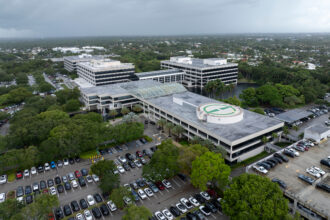
But in Leon County, leaders have taken several steps back in response to HB 1217. They rescinded a 2023 resolution declaring a climate emergency. They also rolled back plans to phase out fossil fuel-powered vehicles and amended a policy to remove a mandate for recycled paper. The Paul Russell Road facility, which the county bills as the nation’s first government retrofit building to achieve net-zero certification, will lose that certification, although the building’s solar and energy efficiency systems will continue operating unchanged.
Susan Glickman, vice president for policy and partnerships at The CLEO Institute, an advocacy group, worried the law could have a chilling effect on other local policies aimed at moving Florida to cleaner energy.
“It means that everyone is going to pay more money on their power bills, and there are plenty of people who can absorb a higher energy bill,” she said. “But there are a lot of people who cannot, and this is coming at a time when housing prices are up, groceries are up and insurance prices are high. And so there are people who are suffering out there.”
About This Story
Perhaps you noticed: This story, like all the news we publish, is free to read. That’s because Inside Climate News is a 501c3 nonprofit organization. We do not charge a subscription fee, lock our news behind a paywall, or clutter our website with ads. We make our news on climate and the environment freely available to you and anyone who wants it.
That’s not all. We also share our news for free with scores of other media organizations around the country. Many of them can’t afford to do environmental journalism of their own. We’ve built bureaus from coast to coast to report local stories, collaborate with local newsrooms and co-publish articles so that this vital work is shared as widely as possible.
Two of us launched ICN in 2007. Six years later we earned a Pulitzer Prize for National Reporting, and now we run the oldest and largest dedicated climate newsroom in the nation. We tell the story in all its complexity. We hold polluters accountable. We expose environmental injustice. We debunk misinformation. We scrutinize solutions and inspire action.
Donations from readers like you fund every aspect of what we do. If you don’t already, will you support our ongoing work, our reporting on the biggest crisis facing our planet, and help us reach even more readers in more places?
Please take a moment to make a tax-deductible donation. Every one of them makes a difference.
Thank you,

Amy Green
Reporter, Florida
Amy Green covers the environment and climate change from Orlando, Florida. She is a mid-career journalist and author whose extensive reporting on the Everglades is featured in the book MOVING WATER, published by Johns Hopkins University Press, and podcast DRAINED, available wherever you get your podcasts. Amy’s work has been recognized with many awards, including a prestigious Edward R. Murrow Award and Public Media Journalists Association award.