

When Antonio Machado Allison assisted with earthquake response efforts in Venezuela’s capital of Caracas in 1967, he felt confident in the way the government mobilized its teams. When he arrived, Allison described immediately seeing a plethora of state agencies onsite organizing rescue and salvage services, executing primary and emergency care and coordinating volunteers and the distribution of items like food and vaccines.
Nearly 60 years later, however, he is disappointed in what he witnessed after a pair of earthquakes rocked the nation on June 24.
“One of the worst feelings one can have is frustration and to see the physical destruction of a country from a natural event but the destruction be so extreme,” Allison said in Spanish. “We are a country that is prone to have these types of natural events, but the government doesn’t do enough to guarantee the strength and resilience that a country should have.”
Allison, a first responder for the Venezuelan Red Cross Relief Brigade and an ecologist affiliated with Wesleyan University, said the biggest difference, for him, between the response after the recent earthquakes was confidence in the government’s systems and infrastructure the country has in place for these seismic events, even with researchers and data available to take the proper precautions.
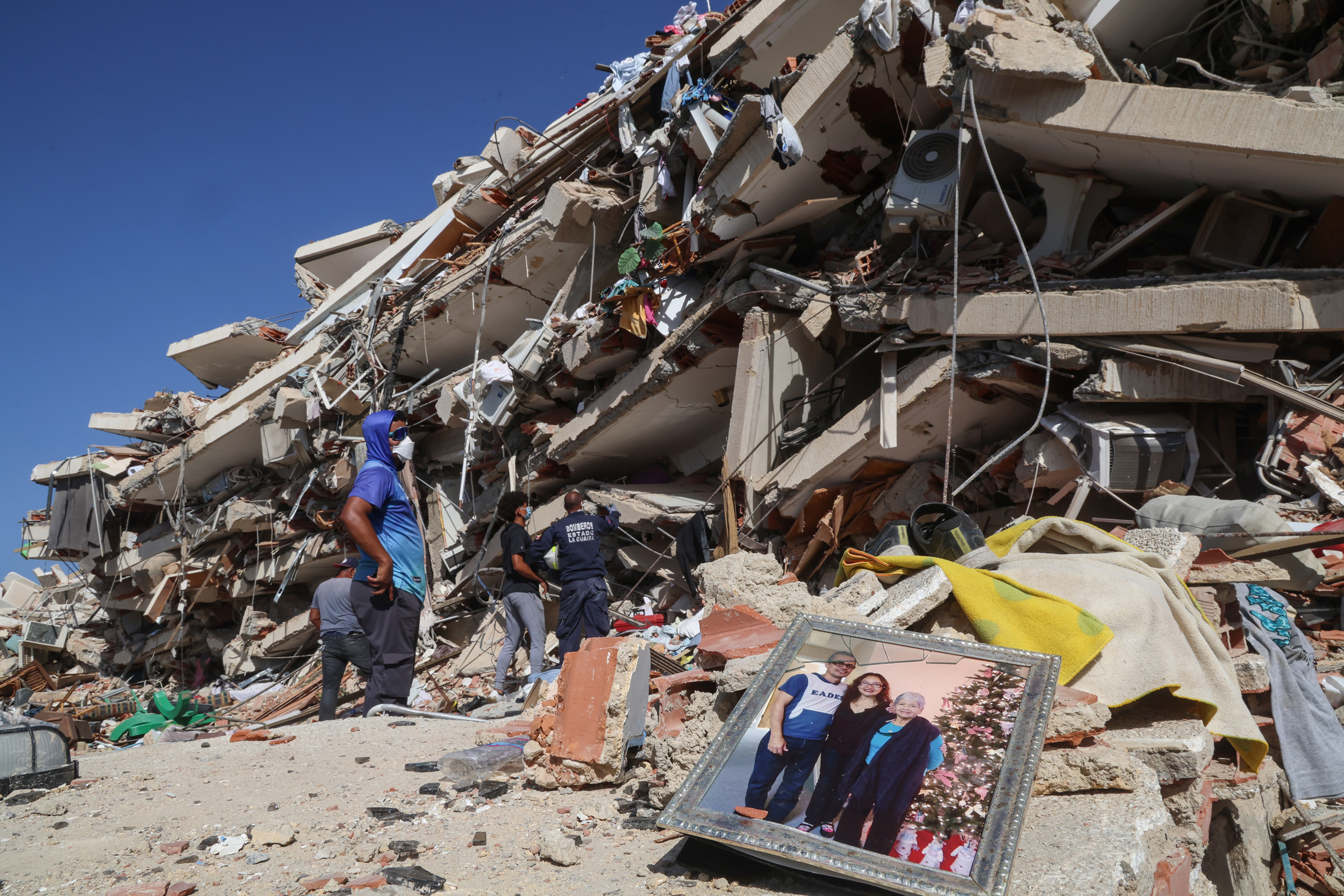
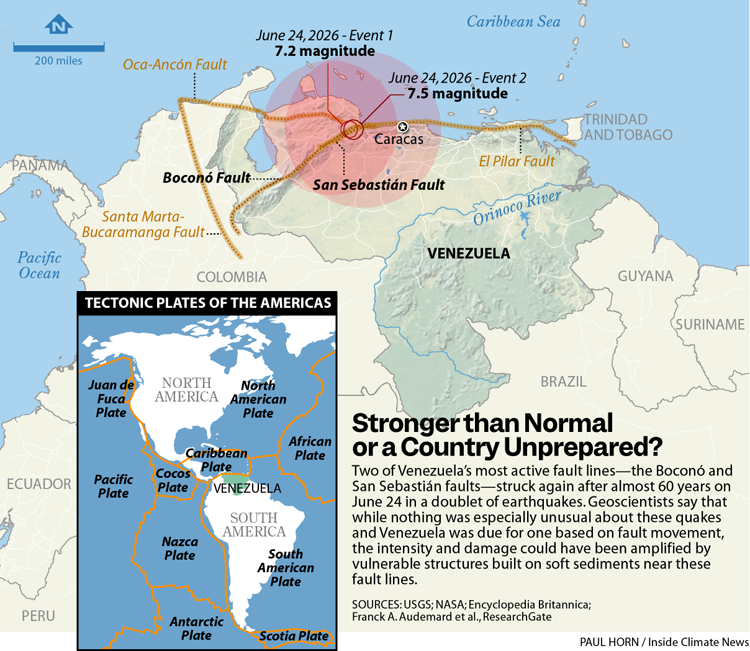
The two earthquakes, recorded at a 7.2 and 7.5 magnitude, impacted Venezuela’s northern coast on June 24, causing the most damage near the cities of La Guaira and Caracas. In comparison, the earthquake in 1967 that hit those same cities the hardest was recorded at a 6.5 magnitude. As of July 6, the death toll had reached 3,535, with 16,740 people sustaining injuries and 17,854 displaced without housing, according to the country’s official counts.
Geoscientists said that while the earthquakes were intense, they were to be expected. They say the country was overdue for an earthquake as the movement along the active fault lines in Venezuela have a cycle of about 50 to 60 years between major events.
The earthquakes occurred less than a minute apart and impacted over 200 kilometers from east of San Felipe to Guatire, according to Venezuela’s Fundacion Venezolana de Investigaciones Sismologicas (FUNVISIS) and the U.S. Geological Survey (USGS). FUNVISIS, in collaboration with the USGS, has released new preliminary reports, data and imagery daily since the event occurred.
The last significant natural disaster La Guaira experienced was in 1999, when a mudslide caused approximately 19,000 deaths and thousands of buildings to fall, according to the USGS. Allison said that if seismic codes were not followed in the process of rebuilding the area, it might have contributed to building collapses after the recent earthquakes. Other engineers and geoscientists noted that the country has all of the policies—such as their COVENIN1756 code, implemented in 2019, that engineers consider a high quality, modern framework—in place to ensure seismic codes are met, but it is unclear whether or not they are enforced.
Carlos Giraldo, a geoscientist and seismology expert, worked at FUNVISIS for 8 years before relocating to Spain. He grew up and lived in La Guaira for 20 years, where he studied the Boconó and San Sebastián faults on which the earthquakes occurred. He said that along with these two very active faults, Venezuela is filled with differing soil conditions that can explain why some cities experienced worsened effects.
For example, Caracas, situated in the valley, has softer rock and sediment versus the mountainous areas where the rock is harder. As a result, one must take into account how much the soil might move and how that might amplify the tremors in the event an earthquake occurs. When the soil moves at a speed close to 0.4 meters per second squared, it can hinder a building’s seismic resistance. Geoscientists like Giraldo develop seismic zonation maps to ensure buildings constructed in vulnerable areas are placed in the safest locations possible and builders are taking the precautions necessary to be seismo-resilient. In his opinion, the country’s buildings and towns suffered from poor enforcement of these seismic zonation maps.
“We need to build good infrastructure and be prepared for emergencies, which is not the case in Venezuela,” Giraldo said. “Venezuela was not prepared for an emergency just like this.”
Although seismologists won’t know the exact locations of the epicenters for another week, Giraldo said the expanse of the destruction from east to west makes the epicenters virtually irrelevant. With the predicted epicenters farther east than where the impact was felt the most, Juan Francisco Arminio, a Venezuelan geologist based in Colombia, said he and his colleagues believe there could have been some seismic activity to the north that has not yet been accounted for.
Arminio said he was shocked by the intensity of the damage that La Guaira and other cities incurred. He said that it would be hard to predict the severity of future earthquakes or understand why certain cities were affected harder than others in the earthquakes’ path, but offered some recommendations that could improve conditions.
He believes the country should have never stopped updating and maintaining proper disaster relief protocols. Arminio noted that after the government invested in seismological studies and disaster relief protocols after the last major earthquake in 1967, the recent quakes should have never “thrown the country off guard like it did the last time.” The government should have made an effort to maintain the systems it had created for aid and rescue operations to be “a motor that moves forward any planning and prevention efforts,” he said.
This story is funded by readers like you.
Our nonprofit newsroom provides award-winning climate coverage free of charge and advertising. We rely on donations from readers like you to keep going. Please donate now to support our work.
Donate NowReports from citizens indicate that government officials, emergency responders and militia were not deployed until almost two days after the June earthquakes. Venezuela’s interim president, Delcy Rodriguez, denied a slow response in a press conference on July 2, saying “we acted immediately.”
Outside of maintaining and investing in the proper prevention and rescue protocols, Arminio said the government should be more conscientious about where buildings are constructed. He recommended that the country have an authority that keeps building zoning and safety accountable in every region. Allison agreed, saying that the country has the money and the personnel to do it, but that there needs to be a more coordinated effort.
“The elephant in the room is the dysfunctionality of the government,” Arminio said.
Giraldo and Arminio both said seismologists in Venezuela are not only in need of more data but of more support from their government to be able to produce more accurate seismic zonation maps. With that knowledge, they can prevent future events from being as catastrophic as the June 24 earthquakes, even if they cannot predict how severe other earthquakes might be.
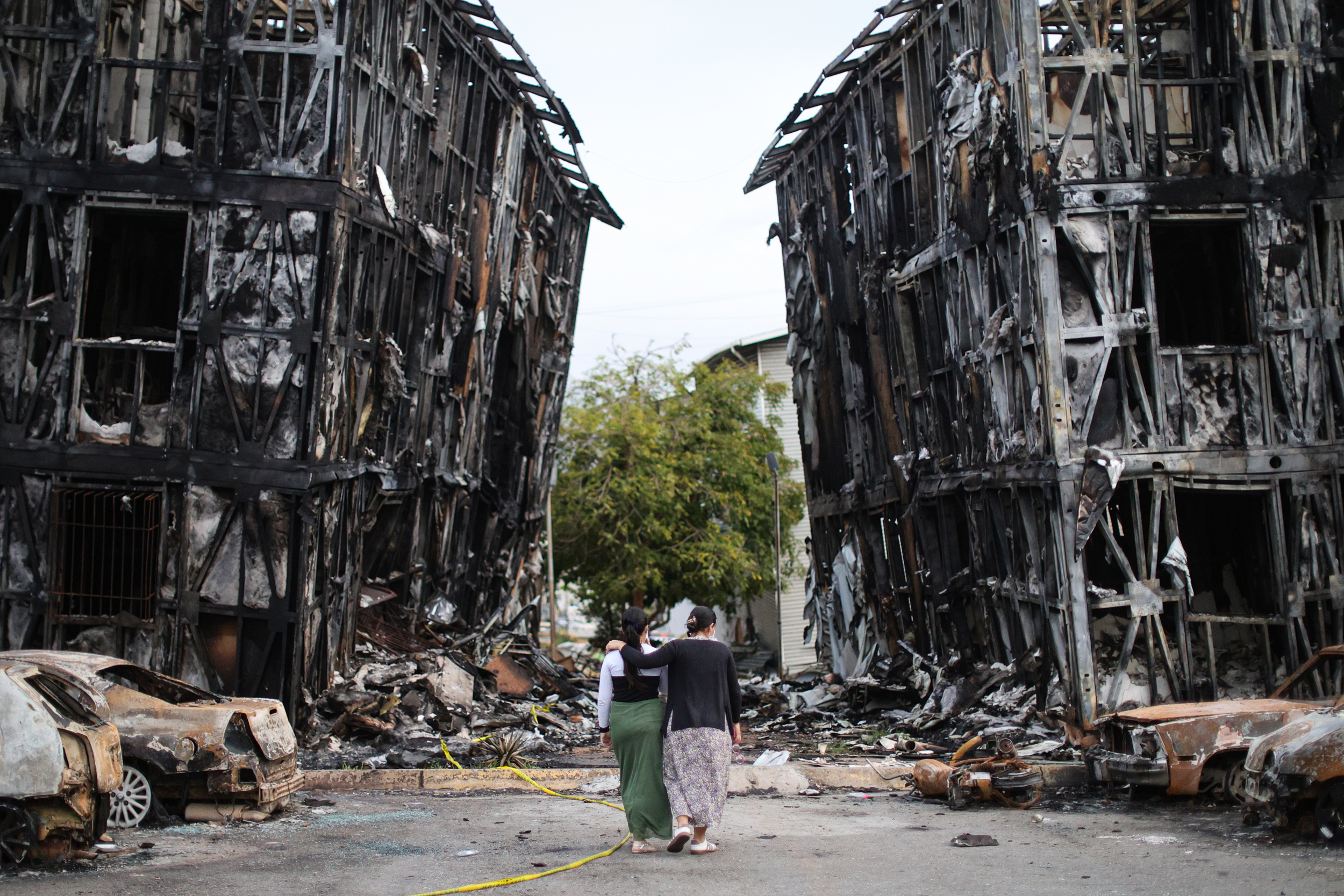
While many independent rescue and aid organizations within and outside of Venezuela contributed heavily to rescue efforts and continue to do so, Arminio said he observed a lack of organization he thinks is necessary to create a well-rounded response.
However disorganized, it was the citizens’ response that showed experts, and especially Allison—despite feeling discouraged by the government’s disaster response—that Venezuelans are “still in full solidarity.”
In the early hours following the catastrophe, citizens were seen pulling their neighbors and relatives out of the rubble and working with foreign disaster relief teams dispatched to the country to find missing people. Displaced and migrant communities of Venezuelans in the United States also organized collection centers to ship donations to La Guaira, collecting everything from batteries and face masks to sanitary pads and new clothes.
“They are resilient and can organize and be there despite the absence of the state,” Allison said. “However, we cannot hide the responsibility of the state at this time; the state must act because that is its duty. When citizens take on these tasks, something is wrong. We must not get used to this.”
About This Story
Perhaps you noticed: This story, like all the news we publish, is free to read. That’s because Inside Climate News is a 501c3 nonprofit organization. We do not charge a subscription fee, lock our news behind a paywall, or clutter our website with ads. We make our news on climate and the environment freely available to you and anyone who wants it.
That’s not all. We also share our news for free with scores of other media organizations around the country. Many of them can’t afford to do environmental journalism of their own. We’ve built bureaus from coast to coast to report local stories, collaborate with local newsrooms and co-publish articles so that this vital work is shared as widely as possible.
Two of us launched ICN in 2007. Six years later we earned a Pulitzer Prize for National Reporting, and now we run the oldest and largest dedicated climate newsroom in the nation. We tell the story in all its complexity. We hold polluters accountable. We expose environmental injustice. We debunk misinformation. We scrutinize solutions and inspire action.
Donations from readers like you fund every aspect of what we do. If you don’t already, will you support our ongoing work, our reporting on the biggest crisis facing our planet, and help us reach even more readers in more places?
Please take a moment to make a tax-deductible donation. Every one of them makes a difference.
Thank you,
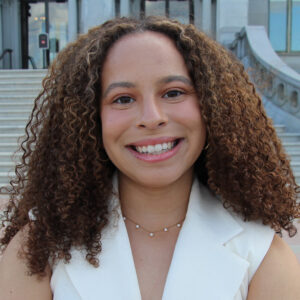
Avril Silva
Fellow
Avril Silva is an award-winning journalist and an Outrider fellow at Inside Climate News. She has experience covering environmental and public health policy and is interested in pursuing investigative political journalism. She is currently pursuing a master’s at NYU’s Science, Health, and Environmental Reporting program. You can find more of her work on the New York Times, CBS News, POLITICO’s E&E News, and more.