

This summer has been off to a particularly hot—and deadly—start.
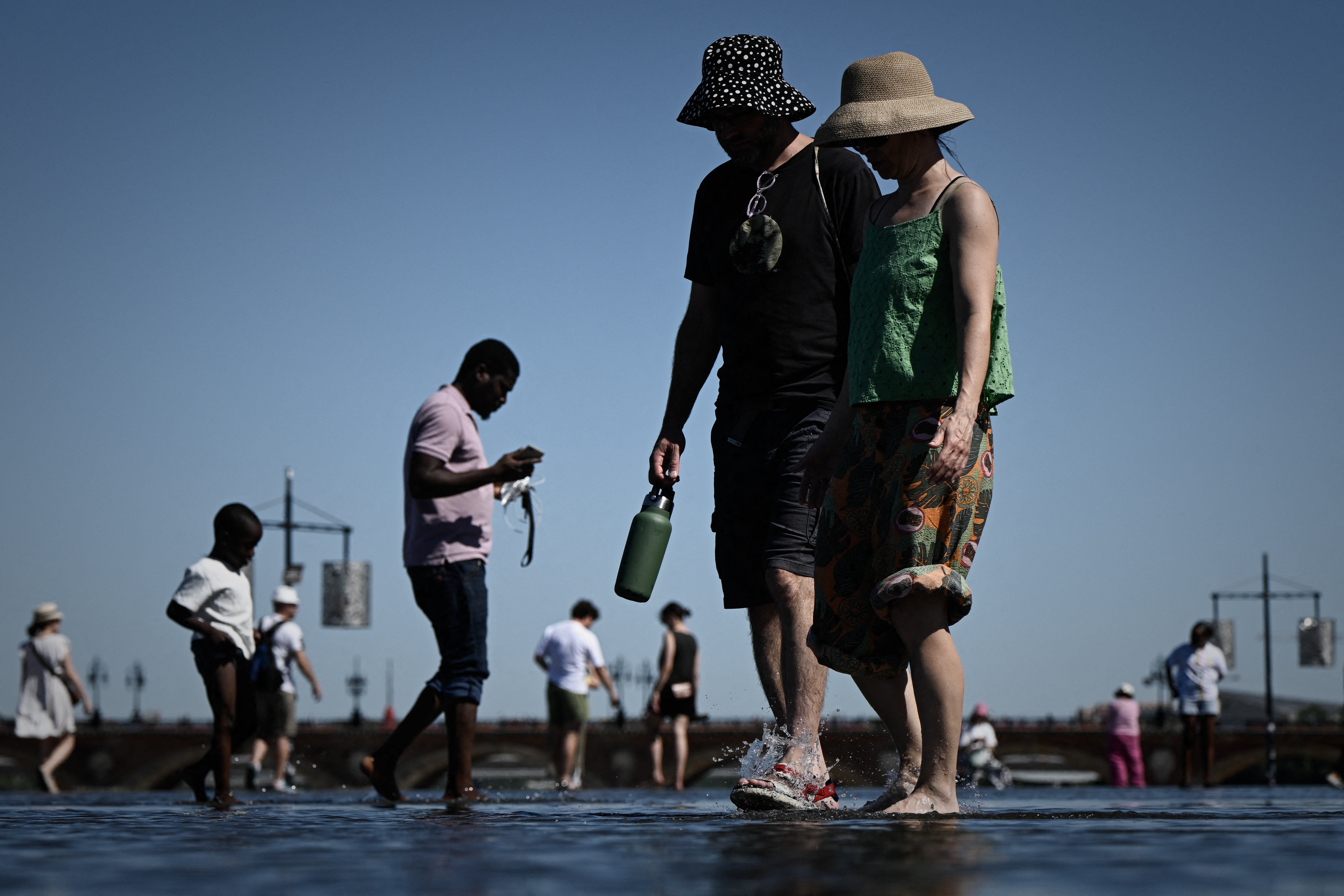
In June and early July, severe heat waves blanketed Europe and the United States, exposing millions of people to dangerously high temperatures and humidity. The French government recorded more than 2,000 excess deaths during a particularly scorching week at the end of June—likely still an underestimate, according to officials.
The rest of the continent is still tallying excess deaths that occurred during the heat waves. Meanwhile, in the U.S., a sweltering Fourth of July holiday sent many to emergency rooms across the country, with New Jersey alone estimating 29 deaths last week.
Healthcare facilities are scrambling to keep up with an inundation of patients on both continents as medical professionals urge people to be aware of the early signs of heat stress and how to combat it. Speaking about the European heat wave at the end of June, the World Health Organization warned that it is only a “dress rehearsal” for the increasingly sizzling summers that climate change will bring.
Grim Health Impacts of Summer Heat Waves
More than half of the U.S. population was under a heat alert at some point last week as temperatures soared from Texas to Maine. Washington, D.C., reached 102 degrees Fahrenheit with a heat index of 117 on Saturday, a new local record for July 4. Similar highs were seen in New York City, with little reprieve at night as sweaty crowds gathered to watch fireworks shows. Not-so-fun fact: When Thomas Jefferson measured the temperature on July 4, 1776, the high was 76 degrees—around 25 degrees lower than Philadelphia on Saturday.
These temperatures, especially when combined with high humidity, can disrupt the body’s ability to cool itself down. My colleague Keerti Gopal reported in 2025 on the all-encompassing impacts extreme heat can have on the body—from your heart to your lungs. According to the Centers for Disease Control and Prevention, some of the first signs of heat illness include muscle aches, cramps and fatigue. More severe heat exhaustion is characterized by symptoms such as heavy sweating, lightheadedness, nausea or vomiting and headaches.
In suspected cases of heat stress, medical experts urge people to immediately seek shade or air conditioning, drink water, use damp cloths on the skin and lie down with legs elevated.
But high temperatures can push bodies even closer to the brink and into heat stroke, which often comes with cognitive symptoms such as confusion or even unconsciousness when the body reaches a core temperature of 105 degrees or higher. These cases can be life-threatening and call for immediate medical attention, experts say.
The CDC reported “extremely high rates of heat-related illness” in regions across the Northeast at times last week. In New Jersey alone, state officials estimated more than two dozen died due to the heat, with ages ranging from mid-30s to 80s, The New York Times reports.
“This was crazy heat,” Dalya Ewais, a state health department spokeswoman, told The Times. “This was not your normal heat wave.”
The June heat-related death toll was grim in Europe, where heat waves have enveloped vast swaths of the continent for weeks. While heat directly killed many, other related deaths in France were due to drowning as droves of people sought reprieve from boiling temperatures in local bodies of water.
Adapting to Ever-Scorching Summers
French hospitals struggled to keep up with the influx of patients suffering from heart attacks, dehydration, kidney issues and other heat-related problems, The Associated Press reports.
“We thought we were ready. We were not actually,” Cédric Lussiez, the director of the Paris-Saclay Hospital, told the news outlet. “The hospital was working on a 24-hours-a-day basis because we had to find new solutions in a very short delay.”
Some older hospitals lacked equipment such as AC units, enough refrigerators for medicines or ice machines (though a local fast food restaurant in Paris recently donated some of their ice to help cool patients at Paris-Saclay Hospital, the AP reports). French Prime Minister Sébastien Lecornu—who just made it through a no-confidence vote over the government’s response to the heat crisis—announced last week a roughly $114 million investment to install cooling systems and updated infrastructure for healthcare facilities. The government recently ordered 30,000 cooling appliances for hospitals across France to deploy as high temperatures continue, with another heat wave this week.
The healthcare issue is widespread across Europe and beyond. In England, MRI scanners, cooling units and IT systems crashed at the end of June as heat-related illnesses surged, the Guardian reported. The United States has also been struggling in recent years to meet the increased demand at healthcare facilities during heat waves, and it’s likely to get worse, research shows. The number of annual U.S. heat-related emergency department visits or hospitalizations are forecast to reach as many as 237,000 by 2040, according to a study published in June.
Hospitals from the U.S. to Europe have started to prepare for heat waves by stocking up on ice and postponing non-essential surgeries. But experts stress the best way to stay safe during a heat wave is to avoid needing the emergency room in the first place: watch out for warning signs of heat stress before the problem escalates. Grist published a guide in 2023 for staying safe when temperatures spike, and the CDC and National Weather Service have heat guides and trackers as well.
More Top Climate News
The heat wave in the eastern U.S. is causing roads to buckle, an increasingly common trend in the country as temperatures rise, Scott Neuman reports for NPR. Typically made of asphalt or concrete, roads expand and soften when temperatures rise, which can increase wear and tear, a problem I covered in 2024. Government initiatives across the country aim to refurbish roads and use more durable materials, but these projects are incredibly expensive.
New research found that people are willing to pay extra for wine deemed climate resilient, Frida Garza reports for Grist. The wine industry has faced a climate reckoning in recent years, losing crops to extreme weather events such as wildfires and droughts and struggling to grow grapes in a warming climate. Strategies such as installing shade cloths, growing new varieties of grapes and relocating to more suitable climates can help prevent these losses—and make brands appealing to consumers when communicated as climate adaptations, according to the new study.
To help protect Panama’s poisonous harlequin frogs from a deadly disease, researchers and conservationists collected some from the wild and raised them in captivity with hopes of eventually releasing them. The problem? The frogs lost their toxicity, leaving them vulnerable to predators. Now, researchers are working to make these amphibians poisonous again, Anna Gibbs reports for National Geographic. As you’ll read in the piece, this is one of the few toxic relationships that could actually be a good thing.
About This Story
Perhaps you noticed: This story, like all the news we publish, is free to read. That’s because Inside Climate News is a 501c3 nonprofit organization. We do not charge a subscription fee, lock our news behind a paywall, or clutter our website with ads. We make our news on climate and the environment freely available to you and anyone who wants it.
That’s not all. We also share our news for free with scores of other media organizations around the country. Many of them can’t afford to do environmental journalism of their own. We’ve built bureaus from coast to coast to report local stories, collaborate with local newsrooms and co-publish articles so that this vital work is shared as widely as possible.
Two of us launched ICN in 2007. Six years later we earned a Pulitzer Prize for National Reporting, and now we run the oldest and largest dedicated climate newsroom in the nation. We tell the story in all its complexity. We hold polluters accountable. We expose environmental injustice. We debunk misinformation. We scrutinize solutions and inspire action.
Donations from readers like you fund every aspect of what we do. If you don’t already, will you support our ongoing work, our reporting on the biggest crisis facing our planet, and help us reach even more readers in more places?
Please take a moment to make a tax-deductible donation. Every one of them makes a difference.
Thank you,

Kiley Price
Reporter
Kiley Price is a reporter at Inside Climate News, with a particular interest in wildlife, ocean health, food systems and climate change. She writes ICN’s “Today’s Climate” newsletter, which covers the most pressing environmental news each week.
She earned her master’s degree in science journalism at New York University, and her bachelor’s degree in biology at Wake Forest University. Her work has appeared in National Geographic, Time, Scientific American and more. She is a former Pulitzer Reporting Fellow, during which she spent a month in Thailand covering the intersection between Buddhism and the country’s environmental movement.