Many of our impact case studies cover ongoing stories that Inside Climate News continues to actively cover. The impact reflected here is current as of publication and may be updated as the situation develops.
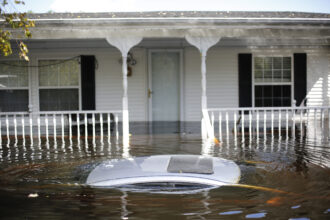
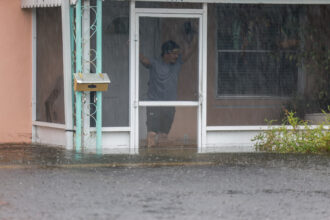
In 2024, more than 1,600 households in North Carolina were stuck with years-old hurricane damage. Eight years after Hurricane Matthew and six years after Hurricane Florence, thousands of North Carolinians who owned storm-damaged homes were still living in one-star motels, with friends or family, or in mold-infested dilapidated houses. All were waiting for recovery funds from a key state agency.
The North Carolina Office of Recovery and Resiliency–known as ReBuild NC–was responsible for distributing nearly a billion of dollars of federal funds and, it turns out, much of the money never reached the state’s most vulnerable hurricane survivors. As the North Carolina reporter for Inside Climate News, I broke the story that tracked how the agency was mismanaged.
ReBuild NC had routinely rejected my public records requests for months so I tapped my deep well of sources, including the stranded homeowners, and revealed confidential documents and public emails showing the extent of the financial crisis and how it unfolded.
The story showed how director, Laura Hogshead, mismanaged funds intended to repair or rebuild the homes and built up huge debts. I found that ReBuild NC had overspent its budget by $150 million—and that was later estimated by ReBuild NC itself to be closer to $200 million. The agency owed contractors millions of dollars in overdue invoices. Construction crews stopped building some homes because they had not been paid. Motel stipends for the hurricane survivors were weeks late, which threatened them with eviction. Without a rapid infusion of funds, thousands of people would never receive money to repair their homes or to purchase new homes as they had been promised.
ReBuild NC had accumulated crippling debts over the years, according to internal documents I reviewed, by underestimating the demand for services, overspending on contracts to build modular homes, hiring outside firms to do redundant work, and granting $100,000-plus salaries to 30-some state employees. In a series of emails that I reviewed, ReBuild NC had, unsuccessfully, pleaded with other state agencies to fill the financial gaps.
Agency personnel–including Hogshead–had delayed responding to requests from state lawmakers charged with monitoring its progress, emails showed. When I presented my findings to these lawmakers, they said they were shocked.
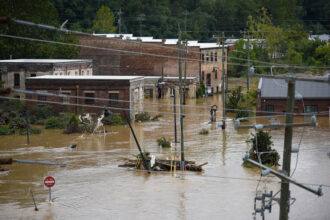
In September 2024, ReBuild NC was out of money, having overspent their budget by hundreds of thousands of dollars, according to internal memos I reviewed. That same month, Hurricane Helene swept in and devastated western North Carolina. ReBuild NC was to be in charge of yet another storm recovery.
My story was published in October 2024 and prompted a state legislative oversight committee to summon Hogshead to testify under oath about her stewardship. The day after her testimony, Hogshead, who had been running the agency for six years, was no longer employed by the agency, according to ReBuild NC. Several more high-ranking officials soon resigned.
In early March 2025, with a new director at the helm of ReBuild NC, the legislature passed, and the governor signed an appropriation for the last $217 million in federal funds to repair the homes. One of the conditions of the bill: A new entity, Renew NC, was created within the state Department of Commerce to oversee Hurricane Helene recovery and future hurricane response. The governor’s office was mandated to monitor Renew NC.
The much-troubled ReBuild NC will spend its remaining funds on repairs and construction and is set to be dissolved as early as December 2026, according to the same legislation.
About This Story
Perhaps you noticed: This story, like all the news we publish, is free to read. That’s because Inside Climate News is a 501c3 nonprofit organization. We do not charge a subscription fee, lock our news behind a paywall, or clutter our website with ads. We make our news on climate and the environment freely available to you and anyone who wants it.
That’s not all. We also share our news for free with scores of other media organizations around the country. Many of them can’t afford to do environmental journalism of their own. We’ve built bureaus from coast to coast to report local stories, collaborate with local newsrooms and co-publish articles so that this vital work is shared as widely as possible.
Two of us launched ICN in 2007. Six years later we earned a Pulitzer Prize for National Reporting, and now we run the oldest and largest dedicated climate newsroom in the nation. We tell the story in all its complexity. We hold polluters accountable. We expose environmental injustice. We debunk misinformation. We scrutinize solutions and inspire action.
Donations from readers like you fund every aspect of what we do. If you don’t already, will you support our ongoing work, our reporting on the biggest crisis facing our planet, and help us reach even more readers in more places?
Please take a moment to make a tax-deductible donation. Every one of them makes a difference.
Thank you,