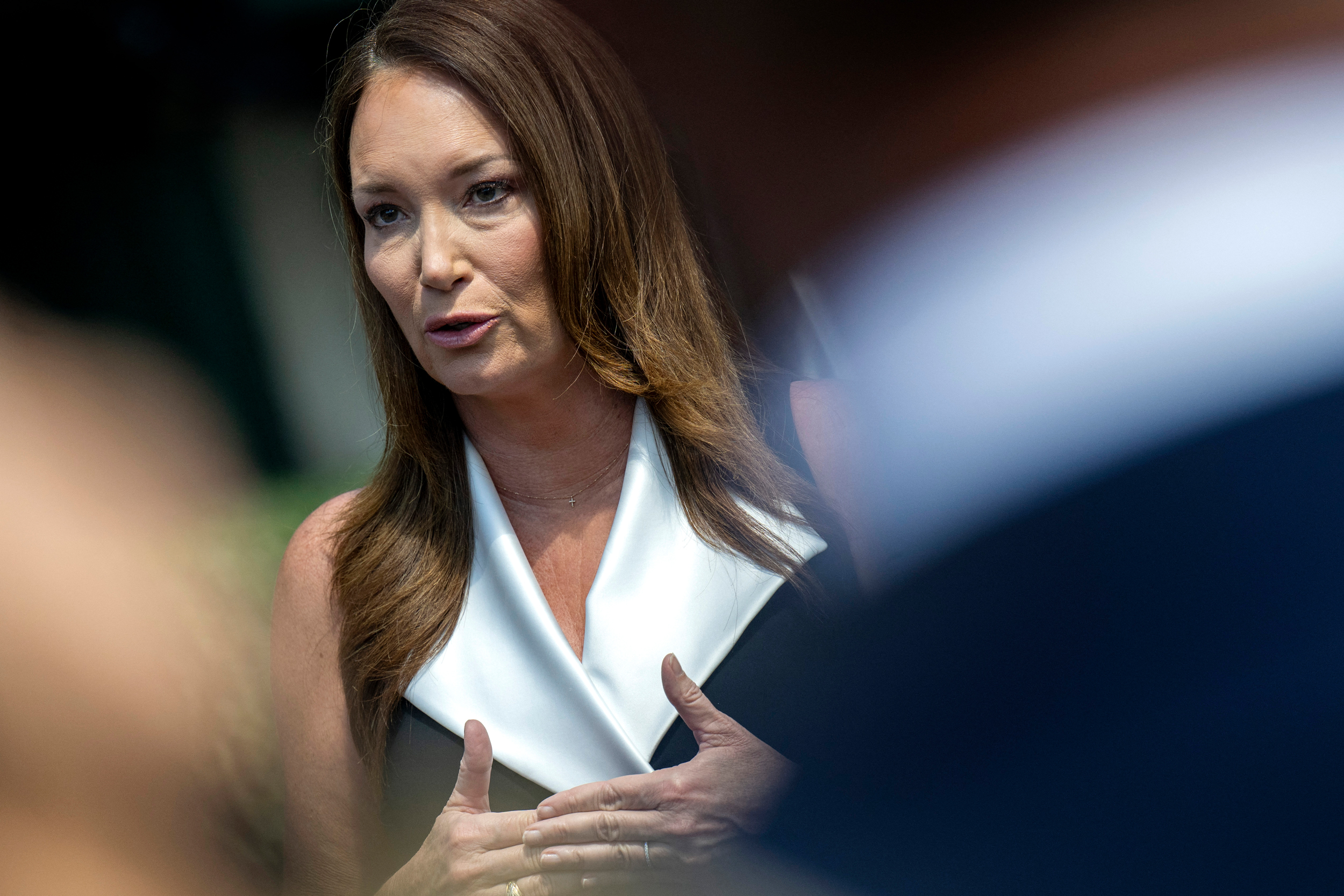


As farmers grapple with soaring diesel and fertilizer prices and the Department of Agriculture yanks support for cheaper, renewable forms of energy, the agency’s chief, Brooke Rollins, is carrying millions in highly profitable oil and gas investments.
In disclosure reports filed in July, Rollins indicated that she and her husband, Mark Rollins, an oil and gas industry executive, together hold as much as $2.5 million in fossil fuel investments. At least $1 million of that is in HKN II, a limited partnership with oil and gas interests in the Kurdistan region of Iraq; another $1 million, at least, is in Hillwood Energy New Ventures, which has interests in oil and gas operations in Texas, Rollins’ home state. Rollins also disclosed that she holds between $250,000 and $550,000 in investments in operating companies that own oil and gas assets in Texas.
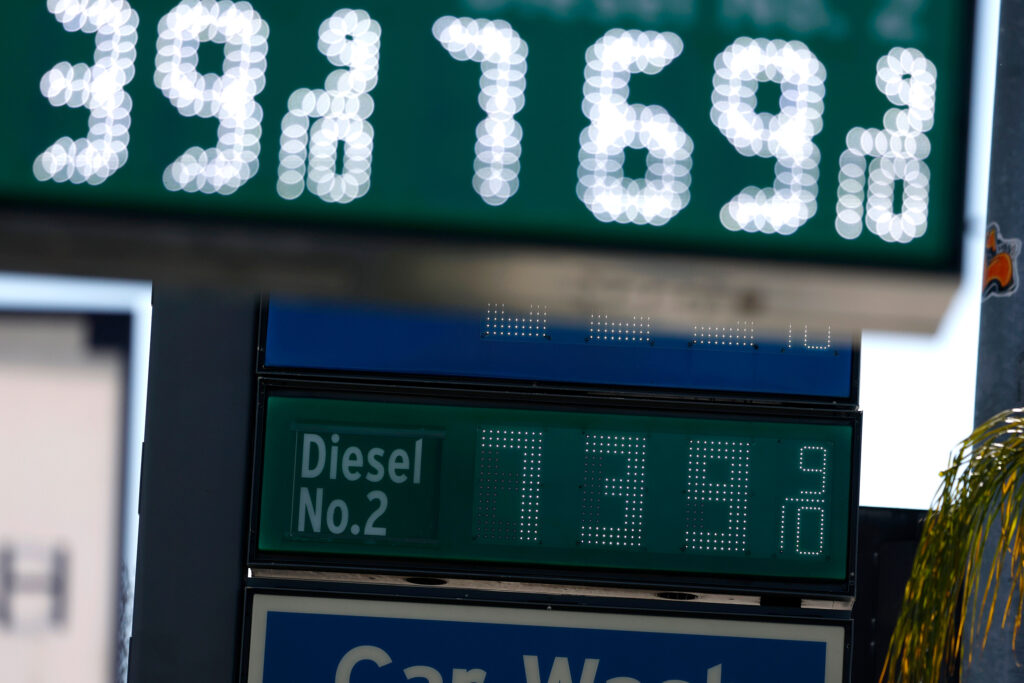
Since the beginning of this year and President Donald Trump’s launch of the war in Iran, oil and gas prices have skyrocketed, and so have industry profits. Prices for diesel hit record highs this week, while prices of fertilizer, which are manufactured with natural gas and tied to the market, have also spiked this year, hitting an agriculture industry already battered by Trump’s tariffs and increasingly extreme weather events.
“Farmers have spent a billion and a half [dollars] just on additional costs for diesel because of the Iran war,” said former Washington Gov. Jay Inslee, a former presidential candidate who campaigned on progressive climate policies. “American farmers are paying through the nose for this.”
Inslee is currently working with Climate Power, a strategy and communications group that’s working to push climate and clean energy policies.
According to a Climate Power analysis, the only other top Trump administration official with significant fossil fuel investments is Director of National Intelligence Jay Clayton, who held as much as $320,000 in oil and gas stocks as of the end of 2025.
Trump himself has been the biggest beneficiary of his own war.
A new report from the U.S. Congress Joint Economic Committee-Minority finds that since the war sent oil and gas prices skyrocketing, the president has potentially made around $15.5 million on the oil and gas holdings he held at the end of 2025. The report says Trump owned as much as $45.6 million in oil and gas company stocks, a sum that is now worth as much as $61.1 million.
The committee noted in its report that Trump promised the industry his administration would create favorable conditions for oil and gas businesses if they donated $1 billion to his campaign. Since the launch of the war, which choked off the Strait of Hormuz, a critical passage for oil and gas from the Persian Gulf, oil and gas companies have reported more than $125 billion in profits.
“This administration is a dumpster fire of corruption and self dealing,” Inslee said. “This is just typical of an administration that is costing Americans money while they feather their own nest.”
The committee did not calculate the increase in value of Rollins’ or Clayton’s fossil fuel holdings, but Climate Power analysts project they would be similarly profitable.
This story is funded by readers like you.
Our nonprofit newsroom provides award-winning climate coverage free of charge and advertising. We rely on donations from readers like you to keep going. Please donate now to support our work.
Donate NowRollins is a climate skeptic who called for the repeal of the Obama administration’s landmark Clean Power Plan and for the United States to withdraw from the Paris Agreement. She was a surprise pick to lead an agency that oversees a huge range of responsibilities, including nutrition policy, agricultural subsidies, conservation programs and forest management. Though she has a degree in agricultural development and roots in farming, Rollins spent her career as a lawyer.
When Trump tapped Rollins to head the USDA, she was leading the America First Policy Institute, a group that supported Trump’s bid for a second term.
During her tenure, the agency has worked to gut a range of climate-focused programs, including redirecting millions of dollars identified for climate programs under the Biden administration’s Inflation Reduction Act.
The agency has halted funds for wind and solar projects on American farmland and disqualified renewable energy projects from loans under the Rural Energy for America Program (REAP). It also cancelled the Biden-era Partnerships for Climate-Smart Commodities program, designed to advance climate-focused practices on farms, calling it a “slush fund” for advocacy groups. And it has moved to cancel protections for millions of acres of national forest lands, which are under its purview.
The USDA did not respond to a request for an interview with Rollins.
The American Farm Bureau Federation recently projected that inflation, low commodity prices, labor and high production costs, including for diesel and fertilizer, will cost American farmers $31 billion in 2026 and $32 billion in 2027.
Farmers, as a block, have been among Trump’s most important supporters, voting overwhelmingly for him in the 2024 election. That support appears to be dissipating amid rising bankruptcies and crashing profits.
An April survey found that 94 percent of farmers were concerned about rising production costs linked to the war in Iran. The same poll found that nearly 40 percent said they were “persuadable” in the upcoming midterm elections.
About This Story
Perhaps you noticed: This story, like all the news we publish, is free to read. That’s because Inside Climate News is a 501c3 nonprofit organization. We do not charge a subscription fee, lock our news behind a paywall, or clutter our website with ads. We make our news on climate and the environment freely available to you and anyone who wants it.
That’s not all. We also share our news for free with scores of other media organizations around the country. Many of them can’t afford to do environmental journalism of their own. We’ve built bureaus from coast to coast to report local stories, collaborate with local newsrooms and co-publish articles so that this vital work is shared as widely as possible.
Two of us launched ICN in 2007. Six years later we earned a Pulitzer Prize for National Reporting, and now we run the oldest and largest dedicated climate newsroom in the nation. We tell the story in all its complexity. We hold polluters accountable. We expose environmental injustice. We debunk misinformation. We scrutinize solutions and inspire action.
Donations from readers like you fund every aspect of what we do. If you don’t already, will you support our ongoing work, our reporting on the biggest crisis facing our planet, and help us reach even more readers in more places?
Please take a moment to make a tax-deductible donation. Every one of them makes a difference.
Thank you,