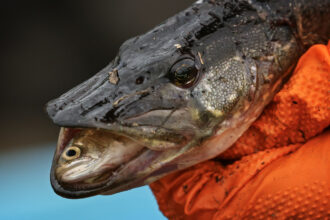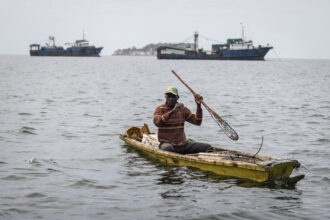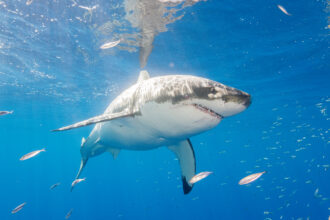
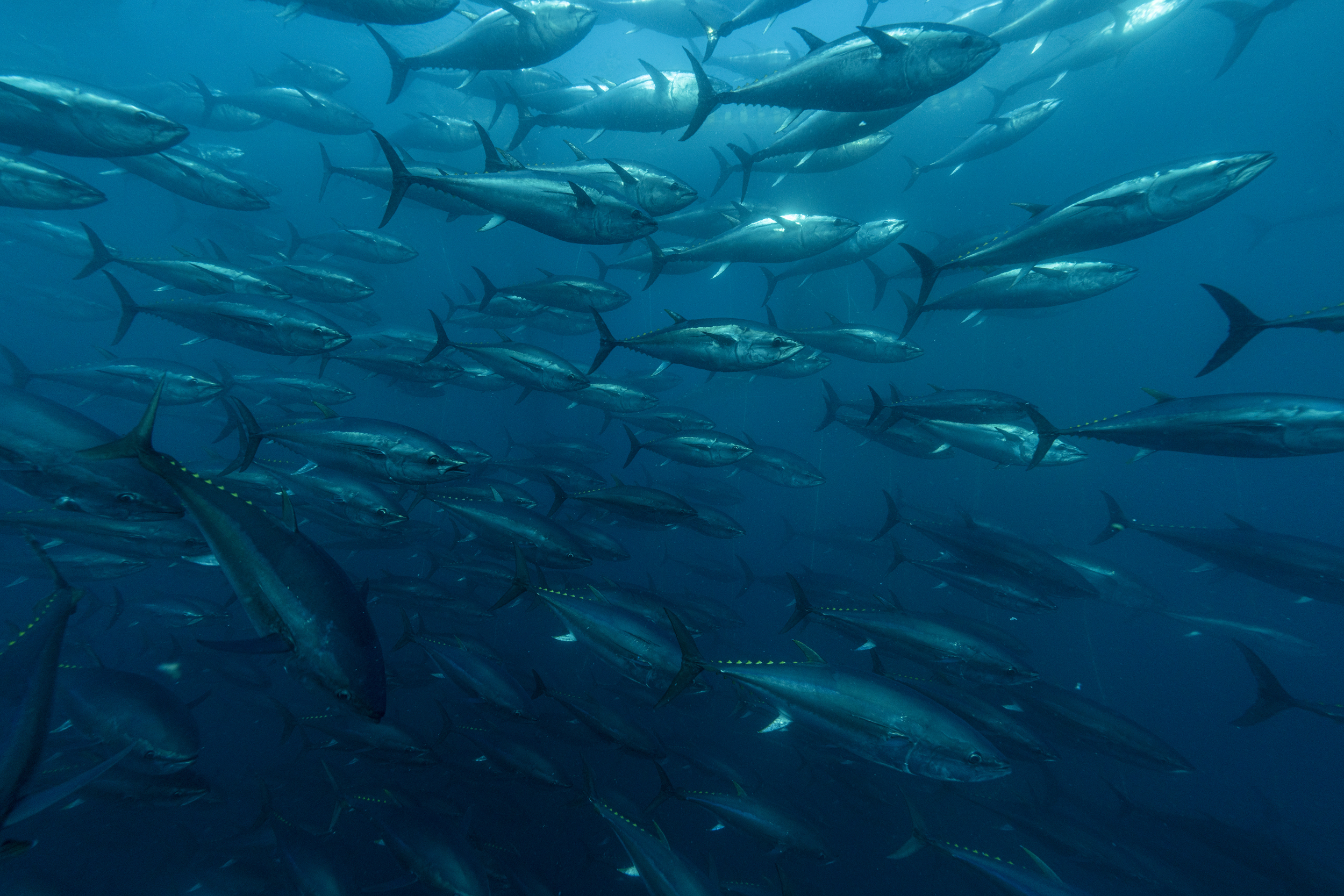


As climate change reshapes marine habitats, scientists have discovered European fish aren’t just moving north to stay cool. Instead, they’re diving deeper into darker waters.
While scientists traditionally expect warming oceans to push fish poleward, analysis of over 90,000 European bottom trawl samples found fish are actually plunging deeper, according to a report published this month in Nature Communications.
Navigating not just sea surface temperature increases but changes to oxygen levels, industrial fishing and prey availability, fish patterns are shifting in ways most 2D conservation models are currently unable to predict.
“These findings challenge the assumption that species predominantly shift their ranges polewards under climate change,” the report said.
Assessing data for more than 600 fish species over four decades, scientists found deepening was the predominant response to environmental changes.
Sixty percent of populations increased their depth—on average by nearly 60 feet per decade. Meanwhile, the movements north or south were split almost evenly with no clear trend in a specific direction.
In more than 60 percent of cases, fish also expanded their standard range in search of more advantageous conditions. In the Mediterranean, for example, species spread south to areas of the sea with deeper waters.
Most fish are “ectothermic,” meaning they cannot regulate their own temperature and instead depend on finding suitable surrounding waters. Comparing existing conditions against new areas, researchers found fish faced less environmental stress by relocating to deeper, colder water. Yet species responses were driven by more than just temperature changes alone.
Dissolved oxygen levels, water salinity and chlorophyll-a concentration—the metric used to measure phytoplankton biomass and food availability—reflected “a highly diverse mosaic of environmental conditions” that influenced fish choosing to move downwards, according to the report.
For some species, the response to climate change was more pronounced. Slow-growing, long-living apex predators were more likely to move deeper than the fast-growing fish that sit lower down the food chain. These “high-trophic level” species are generally more mobile and can access a broader range of environmental conditions.
However, diving deeper brings new challenges. “The question is: What will be next?” said co-author Camille Albouy, a marine ecologist at ETH Zürich. “You can go deep, but if your prey are not following, what will be the food for the fish? What will be the consequences? You can go deep, but until when?”
The paper notes that the majority of fish populations increased in abundance, likely supported by the European Union’s Common Fisheries Policy.
Indeed, clamping down on overfishing played a role in 40 percent of fish moving in the opposite direction: Towards shallower water. Albouy hypothesizes this pattern may be linked to species “refinding” their historic habitats as industrialized fishing in coastal zones has relaxed over recent decades.
“We like to blame climate change for fisheries problems, but it’s mostly fishing,” said Asta Audzijonyte, a senior lecturer at the University of Tasmania’s Institute for Marine and Antarctic Studies. “The fact is we effectively don’t have MPAs,” added Audzijonyte, or marine protected areas (MPAs)—less than one percent of European waters are currently fully or highly protected.
Audzijonyte’s research shows that in addition to deepening, fish are also getting smaller. In the Baltic Sea, for example, gigantic cod that once measured over three feet long are now the size of a dinner plate. And though fish populations have increased in abundance, this doesn’t necessarily mean they’ve increased in biomass.
“We [are] actually breeding dwarfs, because we are removing all the fast-growing fish, and we are only leaving the slow-growing ones to reproduce,” said Audzijonyte.
Understanding these marine species’ adaptations to changing seas is key for their conservation and for the management of commercial stocks, said the paper’s lead author Arnaud Auber, a researcher at the French Research Institute for Exploitation of the Sea, in an email to Inside Climate News.
“Future fisheries strategies will need to place greater emphasis on anticipating long-term species redistributions,” said Auber, adding that bathymetry—the watery version of studying topography—must be included in marine conservation predictions as a more accurate measure of fish spatial dynamics.
Moving deeper or getting smaller might provide a temporary buffer from increasing temperatures or the threat of fishing gear, but there are physical limits to both. Audzijonyte, however, is hopeful that ever-increasing environmental pressure could ease.
“If we sorted out our fisheries management, and if we left them alone, [fish stocks] could recover within five years,” she said. “But, you know, we are greedy.”
About This Story
Perhaps you noticed: This story, like all the news we publish, is free to read. That’s because Inside Climate News is a 501c3 nonprofit organization. We do not charge a subscription fee, lock our news behind a paywall, or clutter our website with ads. We make our news on climate and the environment freely available to you and anyone who wants it.
That’s not all. We also share our news for free with scores of other media organizations around the country. Many of them can’t afford to do environmental journalism of their own. We’ve built bureaus from coast to coast to report local stories, collaborate with local newsrooms and co-publish articles so that this vital work is shared as widely as possible.
Two of us launched ICN in 2007. Six years later we earned a Pulitzer Prize for National Reporting, and now we run the oldest and largest dedicated climate newsroom in the nation. We tell the story in all its complexity. We hold polluters accountable. We expose environmental injustice. We debunk misinformation. We scrutinize solutions and inspire action.
Donations from readers like you fund every aspect of what we do. If you don’t already, will you support our ongoing work, our reporting on the biggest crisis facing our planet, and help us reach even more readers in more places?
Please take a moment to make a tax-deductible donation. Every one of them makes a difference.
Thank you,
Johnny Sturgeon
Fisheries Reporter
Johnny Sturgeon is a London-based reporter covering fisheries and aquaculture. Joining us from the Outlaw Ocean Project, he has experience producing in-depth maritime investigations for nonprofit newsrooms. A former boatbuilder, he holds a B.A. in History & Politics from the University of Oxford, and an M.S. from Columbia Journalism School.