

Read this article in Chinese 阅读本文中文版.
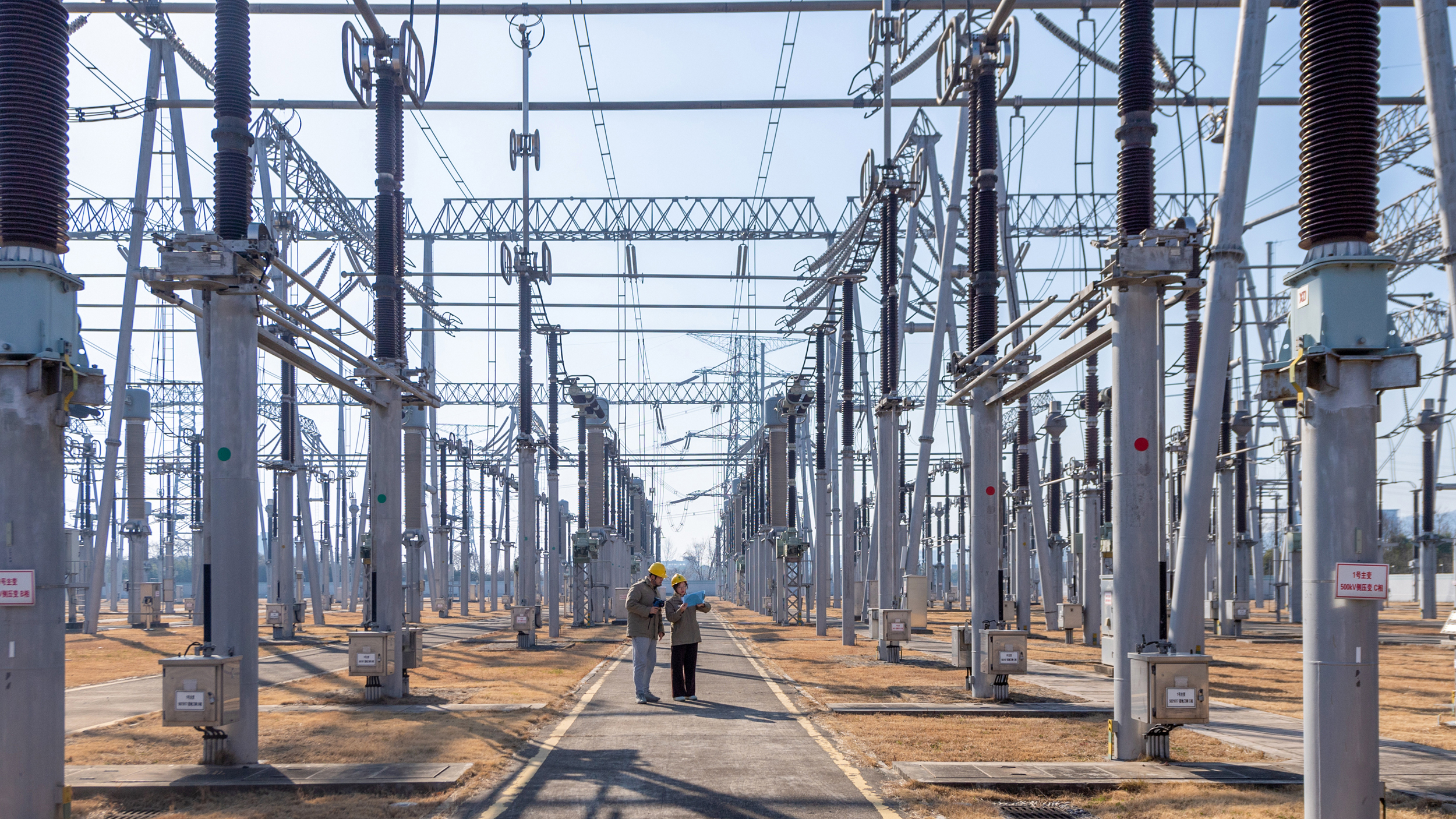
China’s electric grid has a dirty secret: Despite leading the world in renewable energy expansion, it is also the largest emitter of the planet’s most potent greenhouse gas.
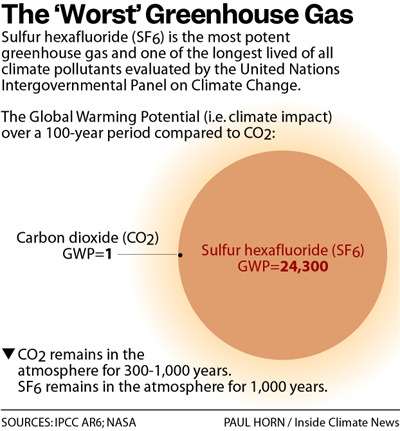
Sulfur hexafluoride (SF6) is a synthetic chemical that plays a critical role as an electrical insulator in high-voltage equipment. The gas is odorless, invisible, non-toxic and non-flammable. But it is also a climate killer, 24,300 times more effective at warming the planet than carbon dioxide on a pound-for-pound basis. Once released, sulfur hexafluoride remains in the atmosphere for 1,000 years.
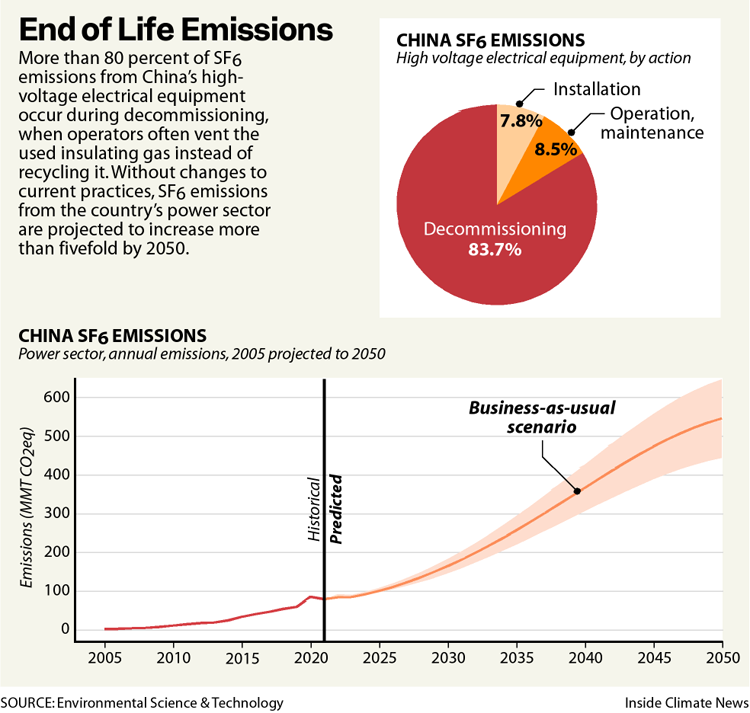
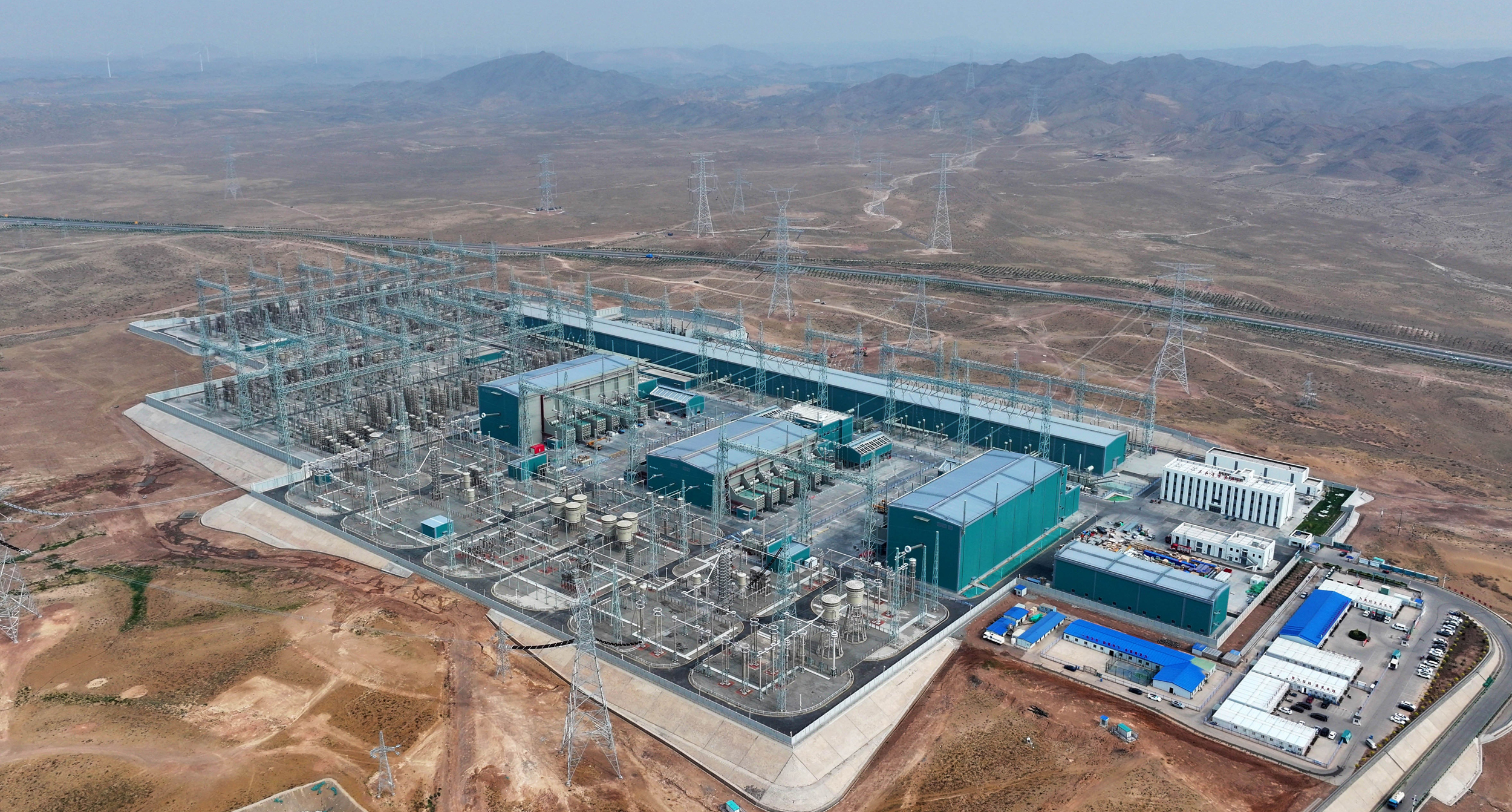
Emissions come primarily from the electric power sector, where the gas is used in circuit breakers and other high-voltage equipment to prevent electricity from arcing. Nearly indestructible, SF6 serves as a critical backstop for any modern electric grid, ensuring that electricity flows only when and where it is needed. However, when electrical equipment in China reaches the end of its useful life, much of the gas is likely vented into the atmosphere.
By 2014 government researchers in China warned that SF6 poses “a significant potential threat to the global environment.” However, emissions of the climate pollutant in the country remain unregulated.
China’s Ministry of Ecology and Environment (MEE) recently stated that electric utilities in China recycle—or have the ability to recycle—90 percent of their waste SF6 gas. However, Inside Climate News estimates the actual recycling rate is substantially lower, around 30 percent. The companies could increase their recycling rate to approximately 90 percent at little cost for a significant reduction in greenhouse gas emissions.
The analysis draws on hundreds of pages of government documents, annual reports from the country’s leading electric utilities, peer-reviewed studies and interviews with dozens of academics and policy experts. Based on this review, Inside Climate News estimated that China’s state-owned electric transmission and distribution companies could increase the amount of sulfur hexafluoride they recycle from electrical equipment by approximately 1,400 metric tons of SF6 per year. Doing so would likely reduce the country’s total emissions of the pollutant across all sectors by nearly one-third at an estimated cost of about $6 million per year, a small fraction of the approximately $70 billion invested annually in China’s electric grid.
“It’s such a three-alarm fire if you are venting that gas to the atmosphere instead of recycling it,” Deborah Ottinger, a former fluorinated greenhouse gas emissions analyst for the U.S. Environmental Protection Agency, said of Inside Climate News’ assessment. “It’s a very obvious thing that can be implemented immediately.”
MEE and the Chinese embassy in Washington, D.C., as well as State Grid Corporation of China and China Southern Power Grid, two state-owned electric utilities that together provide power to nearly all of the country, declined to comment on the findings.
More than half of all SF6 emissions worldwide come from China, according to a 2024 study published in the journal Nature Communications. While releases of the gas have decreased elsewhere, China’s emissions nearly doubled from 2011 to 2021 and are projected to continue climbing. In 2021, the most recent year for which data is available, China released 5,100 metric tons of SF6. The pollution is equal to the annual greenhouse gas emissions of 29 million gas-powered automobiles.
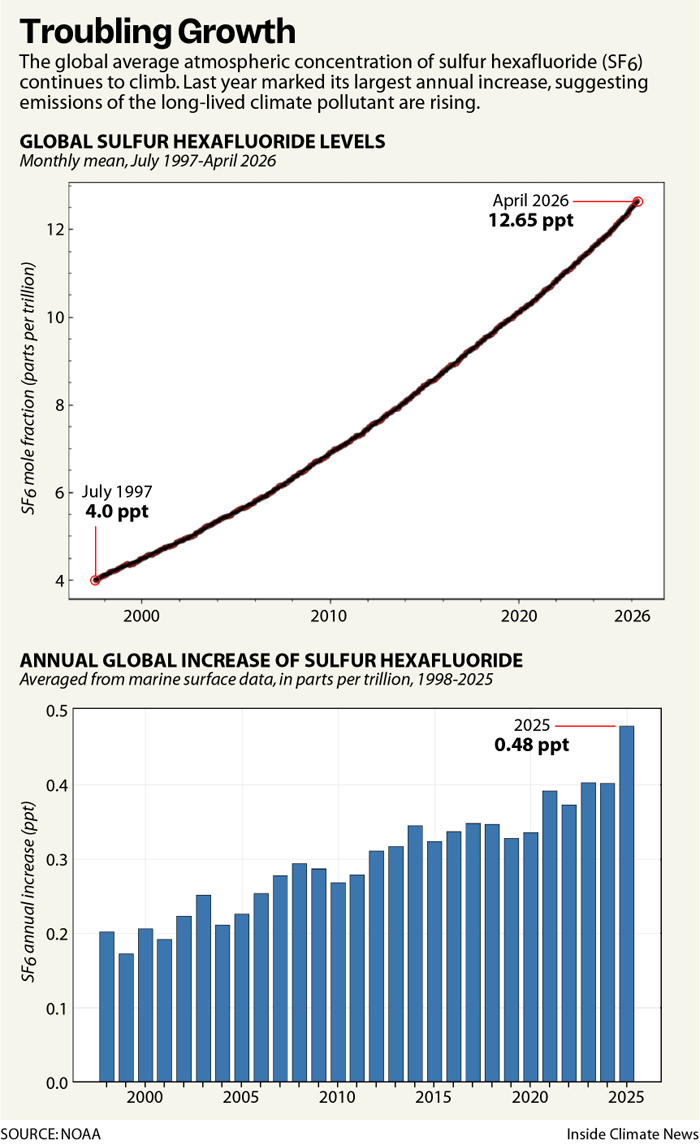
Last year saw the largest annual increase in global atmospheric concentrations of SF6 since recordkeeping began in 1998, suggesting China’s emissions continue to rise.
“It’s pretty much the worst greenhouse gas in terms of its global warming potential and its lifetime,” said Matthew Rigby, an atmospheric chemistry professor at the University of Bristol and a co-author of the Nature Communications study. “Once it’s in the atmosphere, it’s there forever as far as human timescales go.”
Reduce, Reuse, Recycle
In the late 1980s, workers at a chemical plant in what was then West Germany discovered they had a problem. The sulfur hexafluoride they manufactured had an outsized impact on the “greenhouse effect.” If they didn’t do something to address it, regulators likely would.
The problem wasn’t the chemical itself, but how their customers—electric utility companies—used it. When high-voltage equipment required maintenance or reached the end of its life, grid operators would simply vent SF6 into the atmosphere.
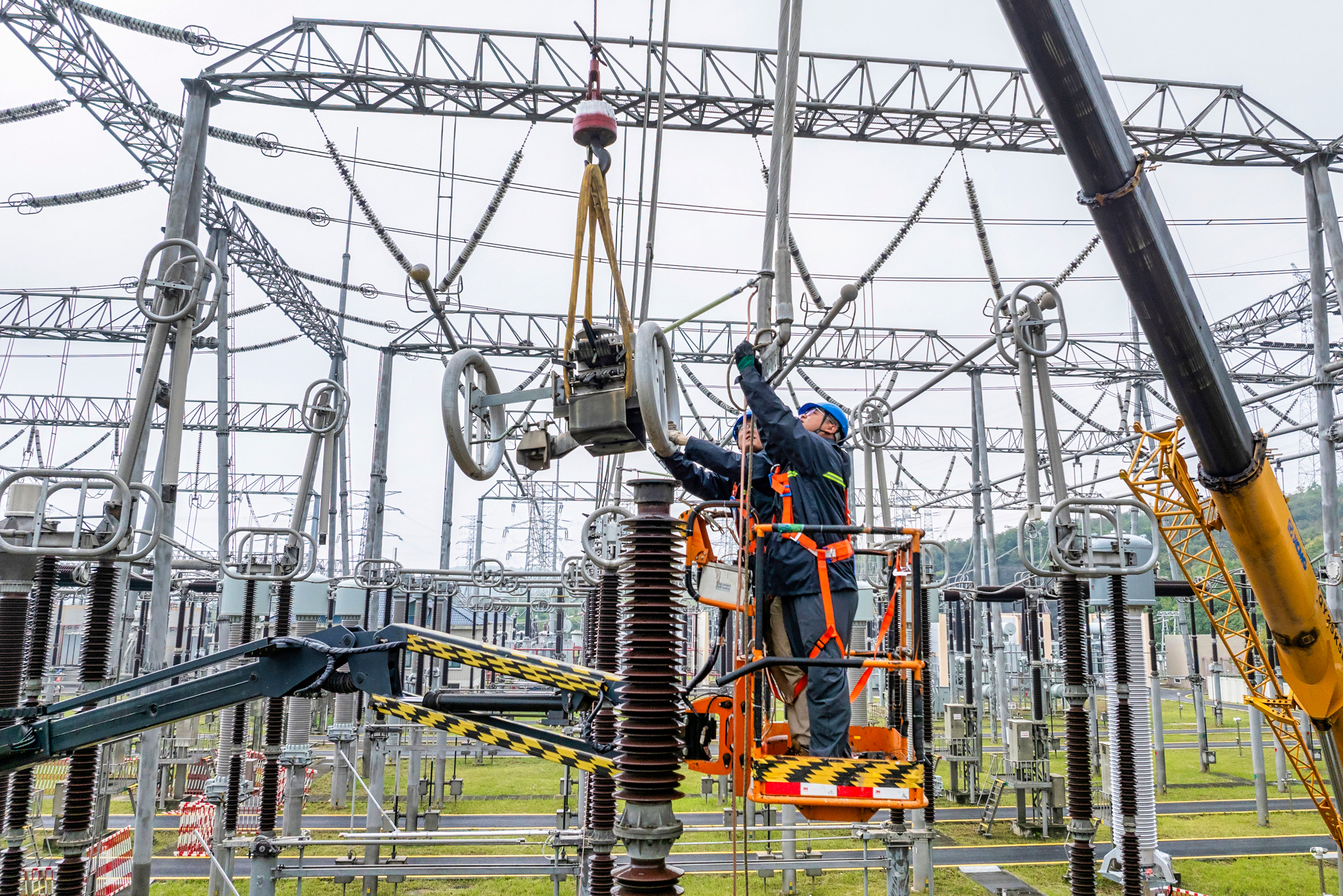
Solvay, a Belgian chemical company with a plant in Bad Wimpfen, Germany, worked with utility companies in Europe to recycle the waste gas instead.
Hermann Kraehling, a former environmental assessment team leader at Solvay who worked for the company in the 1990s assessing the impact of SF6, attributed its success to bringing different interest groups together.
“It was not just Solvay,” Kraehling said, adding that equipment manufacturers, power suppliers, regulators and even environmental advocacy organizations helped shape the recycling effort.
In 1997, the German Ministry for the Environment honored Solvay with the European Recycling Award for its SF6 reuse program.
In the early 2000s, company officials shared what they had learned at industry conferences hosted by the U.S. Environmental Protection Agency. By 2015, emissions from electrical equipment in Germany and the U.S. dropped by two-thirds or more.
Kraehling, now retired, praised China’s ongoing buildout of renewable energy. However, he called its inability to curb SF6 emissions a “disaster.”
Solvay has had its own recent challenges with emissions. An atmospheric study published in 2025 revealed higher-than-previously-reported releases of the climate pollutant in Germany, around 30 metric tons of SF6 per year. The emissions were likely from a chemical production and recycling facility in southwest Germany; Solvay’s Bad Wimpfen plant is the only such facility in Europe.
In December, Environmental Action Germany, an environmental organization, filed a criminal complaint against company officials over the pollution. The same month, Solvay signed an agreement with German authorities to reduce emissions and enhance monitoring efforts, an agreement that was extended in May.
“The test phase confirmed that Solvay’s regular, day-to-day operations successfully comply with the required average emission limits,” a Solvay spokesperson said in a written statement.
Bang for the Buck
State Grid, the world’s largest electric utility, launched SF6 recycling pilot projects in three provinces in 2007. A book the Chinese Ministry of Environmental Protection published more than a decade ago concluded that the technology was relatively mature, that it was the most effective measure for the power industry to reduce greenhouse gas emissions in the near term and that “its cost is not high relative to the overall cost of the electric power industry.”
The book’s policy recommendations called for implementing a national SF6 management program aimed at recovering and reusing 100 percent of waste gas. China now has more than 30 recycling centers that clean waste gas for reuse. However, their efforts appear to fall far short of that goal.
China’s electric power sector had the capacity to handle only 30 percent of the SF6 that needed recycling each year as of 2020, according to a study published last year in the journal Environmental Science & Technology. Much of the remaining gas is likely vented, though some portion may be collected and stockpiled. The figures were based on interviews with industry experts at State Grid, China Southern and several gas recycling companies operating in China.
The actual numbers and what they describe merit a closer look. The study concluded that in 2020, China’s electric power sector had the capacity to recycle 727 metric tons of the climate pollutant, out of a total 2,518 tons of waste gas. But less may actually be recycled than the capacity allows.
State Grid and China Southern reported a combined total of less than 300 metric tons of SF6 recycled in 2020. This suggests that the percentage of waste SF6 that was actually recycled that year may have been significantly lower than 30 percent. The reports show that the recycled amount increased to 635 metric tons in 2024, the most recent year for which data is available for both companies, though the amount of waste gas requiring recycling likely also increased during this time.
A similar amount of recycling, around 600 metric tons per year, was reported by Chinese researchers at an international energy conference in Guangzhou, China, in 2024.

An Inside Climate News assessment found the companies could reuse an additional 1,400 metric tons of the gas for approximately $6 million per year. This is less than 0.01 percent of the approximately $70 billion invested annually in China’s electric grid.
The assessment is based in part on a 2025 U.S. EPA analysis that estimates how much it would cost to remove 1 metric ton of carbon dioxide or its greenhouse gas equivalent from different industries in each of more than 190 countries. The agency estimated the cost of recycling SF6 from the power sector in China to be 18 cents per metric ton of carbon dioxide equivalent.
This compares with a cost of $11 per metric ton of CO2 to reduce carbon dioxide emissions from energy production by installing windmills, according to the 2025 Environmental Science & Technology study. Reducing emissions through the installation of solar panels would come at an even higher cost of $31 per metric ton of CO2 equivalent.
“You’re certainly getting bang for the buck if you reduce your SF6,” said Sally Rand, a former EPA program manager who led partnerships with U.S. industries focused on reducing emissions of long-lived fluorinated gases.
The cost figures for SF6 recycling are based on methods used in the U.S. and Europe that prioritize on-site cleaning and reuse of the gas. Recycling in China relies heavily on centralized, off-site reclamation facilities, which can produce higher-purity gas but are likely more expensive to build and operate.
Inside Climate News could not obtain precise cost figures for centralized facilities. However, even if the centralized model was 10 times as expensive as one that prioritized on-site recycling, the cost of significantly ramping up that effort would be relatively modest.
This story is funded by readers like you.
Our nonprofit newsroom provides award-winning climate coverage free of charge and advertising. We rely on donations from readers like you to keep going. Please donate now to support our work.
Donate NowPractical Shortcomings
If China recycled an additional 1,400 metric tons from its power sector, its recycling rate would increase from roughly 30 percent to approximately 90 percent. This would bring its recycling to a level comparable with the United States, where reuse is voluntary but strongly encouraged, said Ottinger, the former EPA analyst. In Europe, recycling is mandatory. The rate there should be 100 percent; however, precise figures are unavailable, said Cornelia Elsner, a policy adviser with the German Environment Agency.
A study published in 2023 in the Proceedings of the Chinese Society for Electrical Engineering noted that SF6 recovery and purification technology in China still has considerable room for development with “several practical shortcomings.”
The study found that the high construction costs of centralized SF6 recycling centers in China resulted in a limited number of facilities concentrated in provincial capitals that cannot easily cover all regions, particularly remote areas.
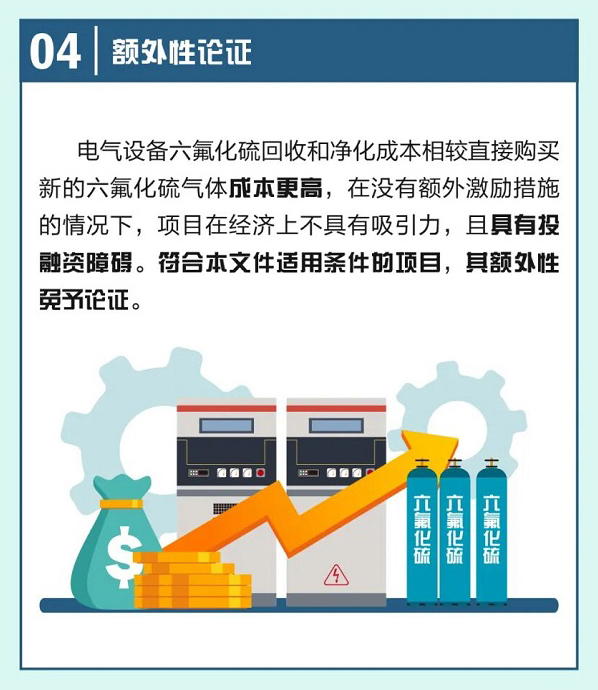
In 2024, the China Electricity Council published non-binding guidance recommending utilities recycle the gas, and do so on-site. In December, MEE went a step further, incentivizing utilities to recycle SF6 by allowing them to sell carbon credits when they recycle more than 90 percent of their waste gas.
Jin Yana, an assistant professor of environmental economics at Peking University, said the program’s assumption of a high level of recycling is smart policy. It ensures “that the market only issues carbon credits for exceptional, above-and-beyond efforts rather than rewarding standard industry practices,” Jin said.
However, incentives alone may not be enough. Stronger regulations may be needed to address SF6 emissions, a 2024 report on fluorinated greenhouse gases by the Beijing-based Institute for Global Decarbonization Progress concluded.
Next Steps
State Grid and China Southern recently began using alternative electric insulating gases including SF6 mixed with nitrogen gas as more climate-friendly options in low-to-medium-voltage electrical equipment. However, alternatives for high-voltage equipment will need 10 to 20 years to fully mature in China, according to a 2022 assessment compiled by the Administrative Center for China’s Agenda 21, a government agency.
In July, government officials called for the development of projects with the capacity to reduce emissions of SF6 and other “non-CO2” greenhouse gases such as nitrous oxide and hydrofluorocarbons by a total of 30 million metric tons of carbon dioxide equivalent by 2030. The new policy was included in the country’s National Climate Change Response Plan jointly released by MEE and 18 other government departments.
It’s the first time the government has called for an SF6 management plan, said Ma Yue, an assistant analyst at the Institute for Global Decarbonization Progress and author of the 2024 fluorinated gas report. This “sends a positive policy signal for advancing SF6 emissions reductions in the power sector,” Ma said.
China’s utilities could receive assistance in emission reduction efforts through a new initiative on SF6, initiated by the German government under its International Climate Initiative and supported by its international development agency (GIZ). The agency wants to build a “coalition of the willing” among emerging and developing countries to reduce SF6 emissions.
“It’s really one greenhouse gas where not much has happened yet, and actually, a lot can happen,” said Philippe Lempp, who oversees the project at GIZ and held a workshop with government officials and industry executives in Beijing in 2024 to discuss potential reduction efforts.
Hu Jianxin, a professor at Peking University’s College of Environmental Sciences and Engineering, said SF6 is difficult to replace in cold climates but is less necessary elsewhere.
“I think the direction first of all is to block its use in non-essential places,” Hu said. “We do not use SF6 anymore in such places and we just keep allowing less and less essential use.”
Kraehling, who was part of the 1990s efforts to rein in this climate super-pollutant, said a similar reduction could happen in China today.
“If you are able to bring together all these stakeholders, you not only have a good chance for success, but you also have a good chance for acceptance,” Kraehling said.
Rudy Lu and Peter Aldhous contributed reporting.
Correction: This story has been updated to accurately reflect Philippe Lempp’s role in Germany’s international initiative on SF6. He oversees the project at Germany’s international development agency, not the entire initiative.
About This Story
Perhaps you noticed: This story, like all the news we publish, is free to read. That’s because Inside Climate News is a 501c3 nonprofit organization. We do not charge a subscription fee, lock our news behind a paywall, or clutter our website with ads. We make our news on climate and the environment freely available to you and anyone who wants it.
That’s not all. We also share our news for free with scores of other media organizations around the country. Many of them can’t afford to do environmental journalism of their own. We’ve built bureaus from coast to coast to report local stories, collaborate with local newsrooms and co-publish articles so that this vital work is shared as widely as possible.
Two of us launched ICN in 2007. Six years later we earned a Pulitzer Prize for National Reporting, and now we run the oldest and largest dedicated climate newsroom in the nation. We tell the story in all its complexity. We hold polluters accountable. We expose environmental injustice. We debunk misinformation. We scrutinize solutions and inspire action.
Donations from readers like you fund every aspect of what we do. If you don’t already, will you support our ongoing work, our reporting on the biggest crisis facing our planet, and help us reach even more readers in more places?
Please take a moment to make a tax-deductible donation. Every one of them makes a difference.
Thank you,

Phil McKenna
Reporter, Boston
Phil McKenna is a Boston-based reporter for Inside Climate News. Before joining ICN in 2016, he was a freelance writer covering energy and the environment for publications including The New York Times, Smithsonian, Audubon and WIRED. Uprising, a story he wrote about gas leaks under U.S. cities, won the AAAS Kavli Science Journalism Award and the 2014 NASW Science in Society Award. Phil has a master’s degree in science writing from the Massachusetts Institute of Technology and was an Environmental Journalism Fellow at Middlebury College.