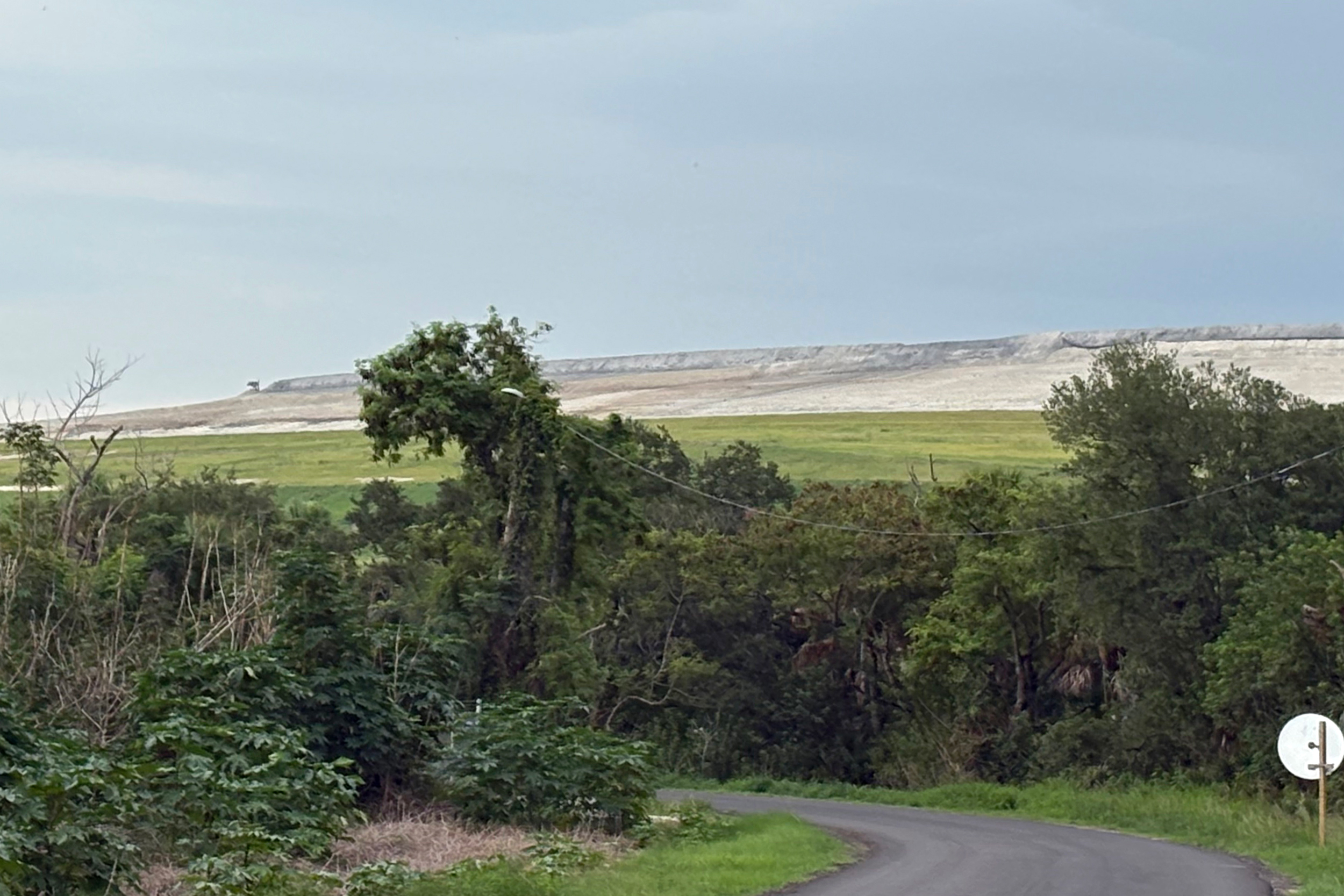


PROGRESS VILLAGE, Fla.—The radioactive phosphogypsum stack looms tall and wide beside this small, neighborly community southeast of Tampa.
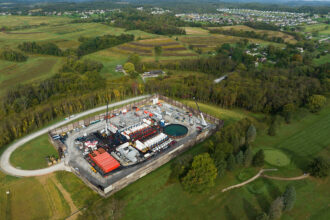
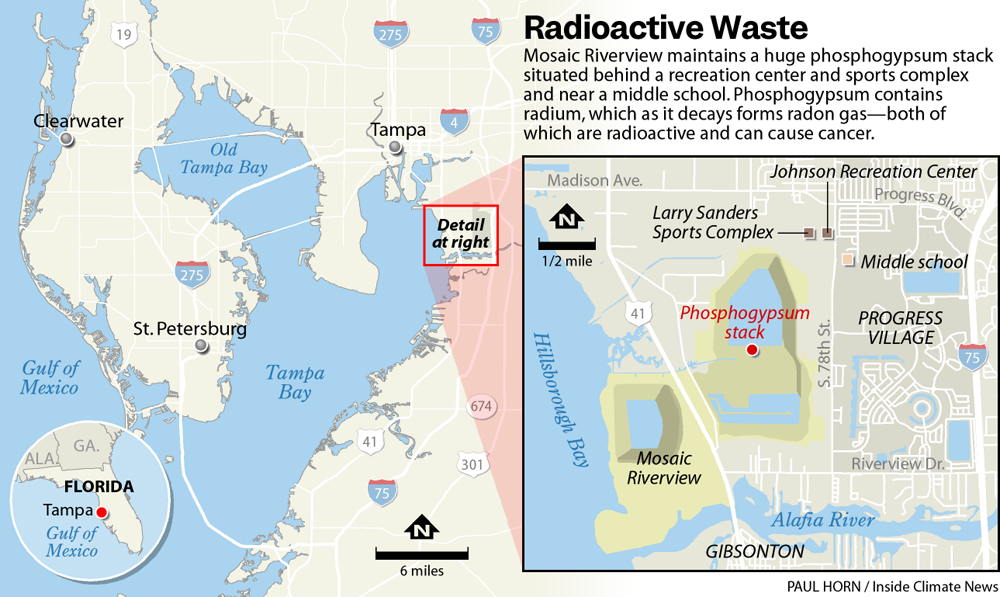
The community was established during the late 1950s to provide affordable housing for segregated Black residents displaced by the construction of Interstate 75. Today the village consists of a few older neighborhoods, sprinkled with newer developments. The population has more than doubled in the past 16 years to at least 11,000. The phosphogypsum stack, situated behind a recreation center and sports complex and also near a middle school, contains the carcinogenic and toxic waste of fertilizer production.
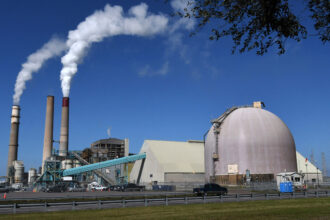
Phosphogypsum stacks, or gypstacks, are basically uncovered open dumps, and the somewhat pyramid-shaped one next to Progress Village could be mistaken for a landfill. The waste contains radium, which as it decays forms radon gas. Both radium and radon are radioactive and can cause cancer, and radon exposure is the second-leading cause of lung cancer. The stack is one of two at the Riverview manufacturing site owned by The Mosaic Co., a Fortune 500 company that is the nation’s largest phosphate manufacturer. The second stack, located across U.S. Highway 41 from Progress Village, is closed; the site also includes a manufacturing plant.
Despite significant community opposition, Hillsborough County commissioners approved construction of the gypstack in 1984, one of many examples nationwide of polluting facilities built in communities of color. The stack was expanded a decade later with no apparent input from the village. Now Mosaic is aiming to expand the stack again, raising concerns in a coastal area vulnerable to intensifying storms as the global climate warms.
The site is less than a mile from Hillsborough Bay, although Mosaic has said the $260 million project is designed to minimize impacts to the environment. The proposal has been expedited through the federal approval process in response to a Trump administration executive order calling for an acceleration of domestic critical mineral production.
“If they tried that anywhere else, it would be all on the news,” said Sean Bell Sr., 53, who has lived here all his life. He characterized the situation as an example of environmental racism.
A Good Neighbor
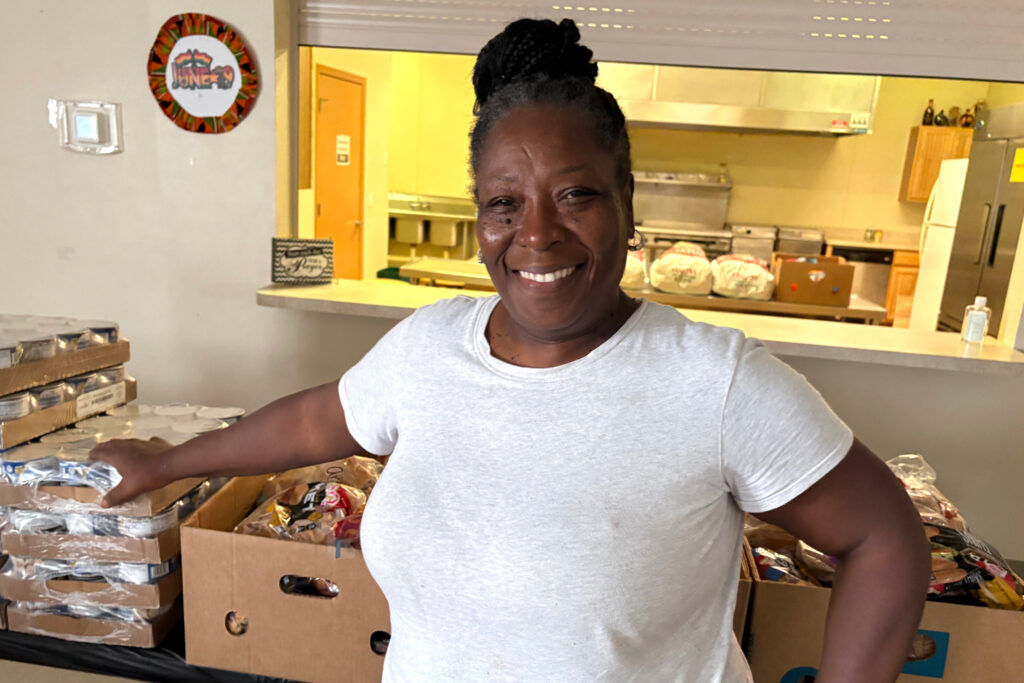
Progress Village could be described as close-knit or like one big messy family. People here are deeply proud of where they live. Proud of their shared heritage as a historically Black community. Proud of their close bonds with their neighbors. For Marlise Tolbert-Jones, 62, neighbors are like siblings, elders like grandparents.
“We know that we’re special. We know that we’re different,” said Tolbert-Jones, whose parents were among the first residents here. “We love it.”
Still, African Americans are 75 percent more likely to live in a community next to an industrial site, according to a 2025 lawsuit filed by conservation and environmental justice groups aimed at compelling the Trump administration to classify phosphogypsum as a hazardous waste.
“It’s a system,” said Robin Lockett, regional director at Florida Rising, a grassroots organization representing communities of color. (She is currently on leave while running for a seat in the Legislature.)
Lockett spoke of the ingrained inequities that often leave marginalized communities at a further disadvantage. “The system is working well because so many people are left behind.”
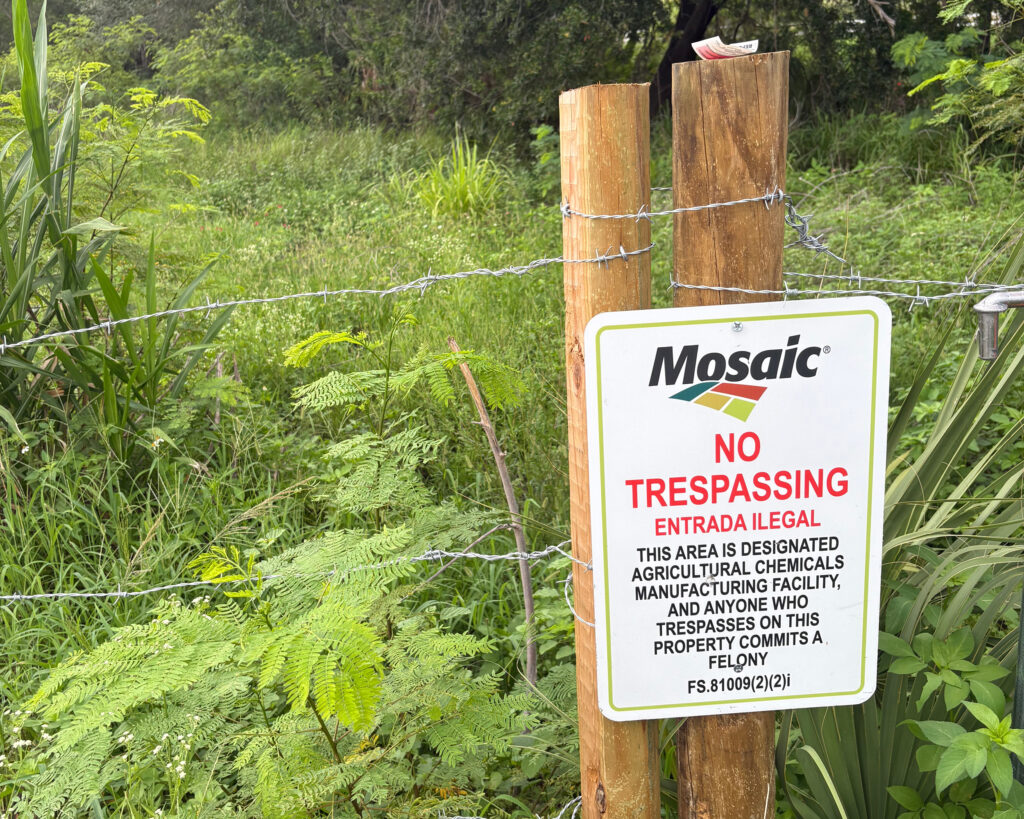
Expanding the phosphogypsum stack would enable Mosaic to extend the life of its Riverview manufacturing plant for about another 16 years, the company told the federal government. Currently the stack has a remaining storage capacity for about six more years of operations. Mosaic is seeking a permit under the Clean Water Act from the U.S. Army Corps of Engineers for the project, which is projected to begin construction in January 2028 and take about two-and-a-half years to complete.
To minimize environmental impacts, Mosaic said the project would be constructed primarily on already disturbed land, and that nearly half of the expansion would lie within the existing stack footprint. The company also said the project would include a dike and ditch system to prevent seepage into the surrounding environment. Mosaic did not respond to multiple requests for comment from Inside Climate News.
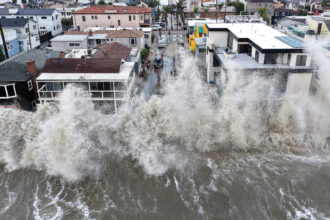
For some residents, the phosphogypsum stack is the least of their worries. In 2024 the back-to-back blows of hurricanes Helene and Milton, which made landfall in Florida within 13 days of one another, inflicted wind and flood damage across the community. Parts of the village flooded with two or three feet of water, and blue tarps still cling to the rooftops of some homes.
Collection manways associated with a closed gypstack at the Riverview facility were also damaged, forcing the release of at least 39,600 gallons of toxic, acidic, nutrient-laden process wastewater into Tampa Bay, according to the litigation brought by conservation and environmental justice organizations aimed at enhancing federal oversight of phosphogypsum.
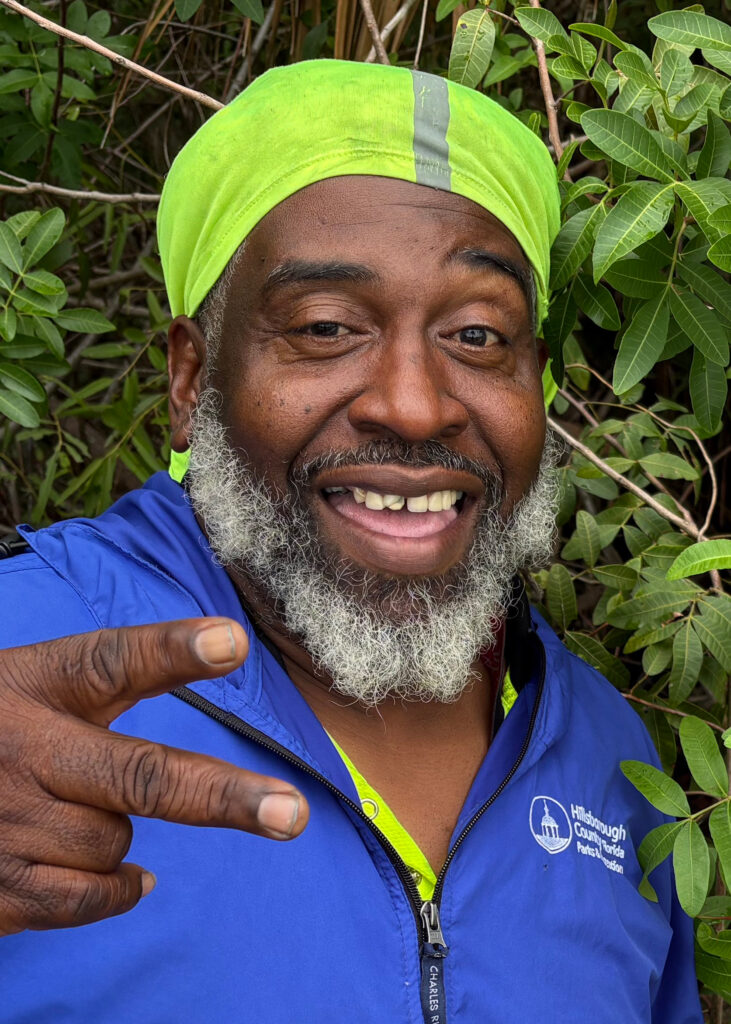
“It could have been some lives lost right here in Progress Village,” Bell said. “Almost every street was flooded.”
Flooding has been a persistent problem here for many years and seems to be getting worse, residents said. Some have been forced to sell their homes and leave the community because they could not afford hurricane or flooding repairs or sky-rocketing insurance rates. Gwen Myers, a Hillsborough County commissioner representing the village, said the county has invested $18 million toward infrastructure projects aimed at addressing the flooding problems.
Many here regard Mosaic as a good neighbor. The company is a prominent employer in the community, has made large donations locally and sponsored youth programs. Mosaic has provided academic scholarships for area students and agreed to the installation of air monitors at Progress Village Middle Magnet School and nearby Gibsonton Elementary School.
“They are an extremely excellent partner,” Myers said. “They have continued to give back to that community.”
Dust from gypstacks can blow into nearby communities, make its way into the groundwater or decay into a gas and drift through the air, but Myers said when she had an opportunity to tour the facility she saw no problems. The county commission voted to support the expansion.
“There is no wind or dust or anything that would be blowing to the residents,” she said. “Everything is really solid.”
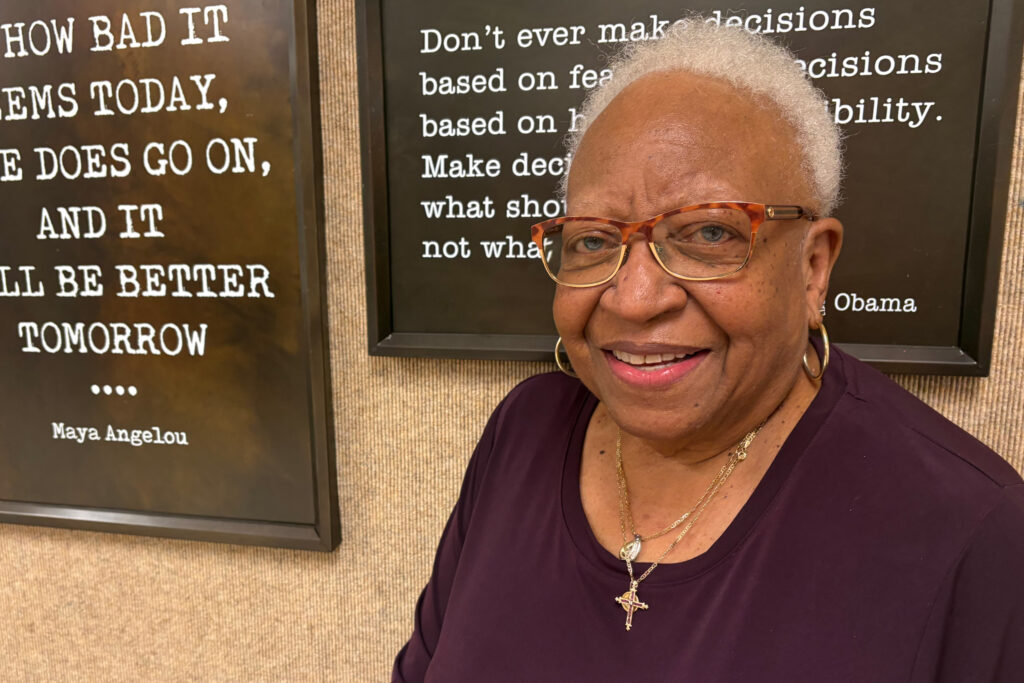
Some residents are concerned. Bettye Napier, 85, knows people with lung problems who wonder whether the gypstack may be responsible.
“My friend has asthma really, really bad, and she’s been getting worse,” said Napier, who has lived in Progress Village for 65 years. “I hear people complaining all the time about Mosaic.”
Bell thinks about how the toxic waste may affect his health or that of his family and friends but feels resigned to the inevitability of the expansion.
“A lot of people, they may want to say something, but now my son work for them. My cousin work for them,” he said. “So it’s kind of hard to go against them, with so many people from Progress Village working for that company.”
Bone Valley
Florida is home to one of the world’s largest deposits of phosphate, a natural element found in greatest quantities in underground rock. The phosphate here is derived from fossilized animal bones that settled centuries ago at the bottom of what then was a low-level sea. Today the region, encompassing Hardee, Hillsborough, Manatee and Polk counties, is known as Bone Valley. Phosphate primarily is used in the production of fertilizers for food crops, although it also is found in animal feed supplements, food preservatives and many other industrial products.
Phosphogypsum usually is disposed of in engineered piles called stacks to limit public exposure to radon emissions. The stacks can span more than a square mile and rise hundreds of feet tall, and can be expanded as they reach capacity or closed, which involves draining and capping. More than 1 billion tons of the waste is stored in stacks in Florida, with the fertilizer industry adding some 40 million tons annually, according to the Center for Biological Diversity. Process wastewater, which also is toxic and corrosive because of its acidity, is discarded in the stacks as well.
This story is funded by readers like you.
Our nonprofit newsroom provides award-winning climate coverage free of charge and advertising. We rely on donations from readers like you to keep going. Please donate now to support our work.
Donate NowThe stacks have had problems. Most notably a pond at Florida’s Piney Point site, which is not owned by Mosaic, leaked and threatened to collapse in 2021, forcing the evacuation of more than 300 homes and the release of 215 million gallons of process wastewater into Tampa Bay. Some 200 tons of nitrogen were also dumped into the bay, leading to one of the worst red-tide outbreaks in the bay in 50 years. More than 1,600 tons of marine life went belly-up.
At Mosaic’s New Wales phosphogypsum stack in Mulberry, Florida, some 30 miles east of Progress Village, there have been at least five sinkholes. The largest occurred in 2016, releasing some 215 million gallons of process wastewater and an undisclosed amount of phosphogypsum solids into the Floridan aquifer, an important drinking water source.
In June 2023 there was a liner tear at the facility, and in October 2023 another liner tear resulted in the loss of an unknown quantity of process wastewater from the phosphogypsum stack. Another lawsuit challenges the U.S. Environmental Protection Agency’s approval in 2024 of a controversial Mosaic plan to include phosphogypsum in a road project proposed at the facility.
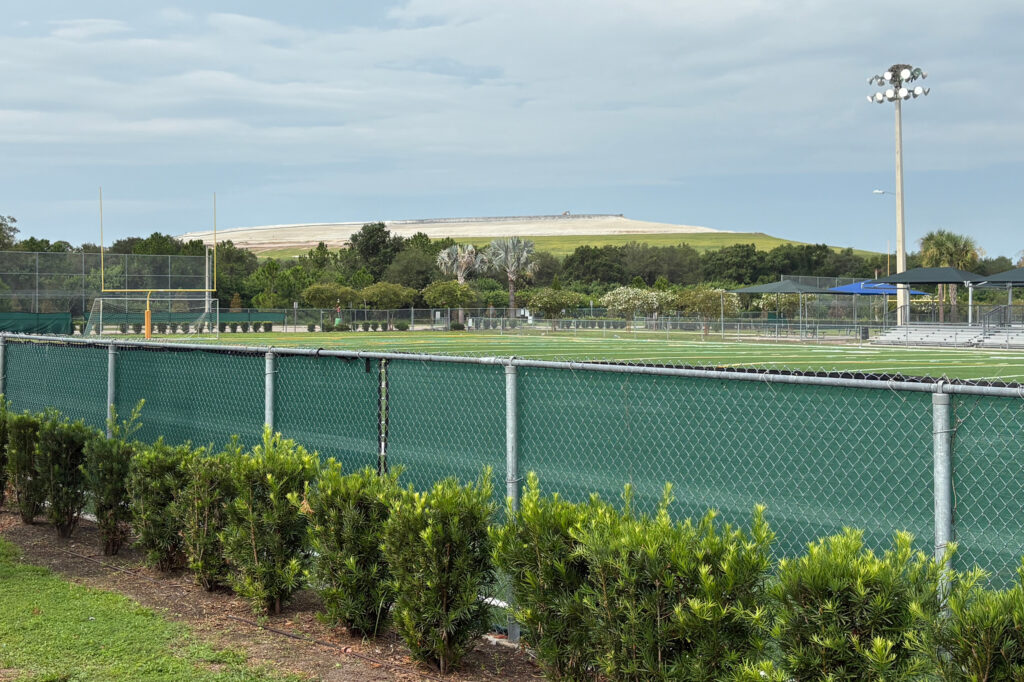
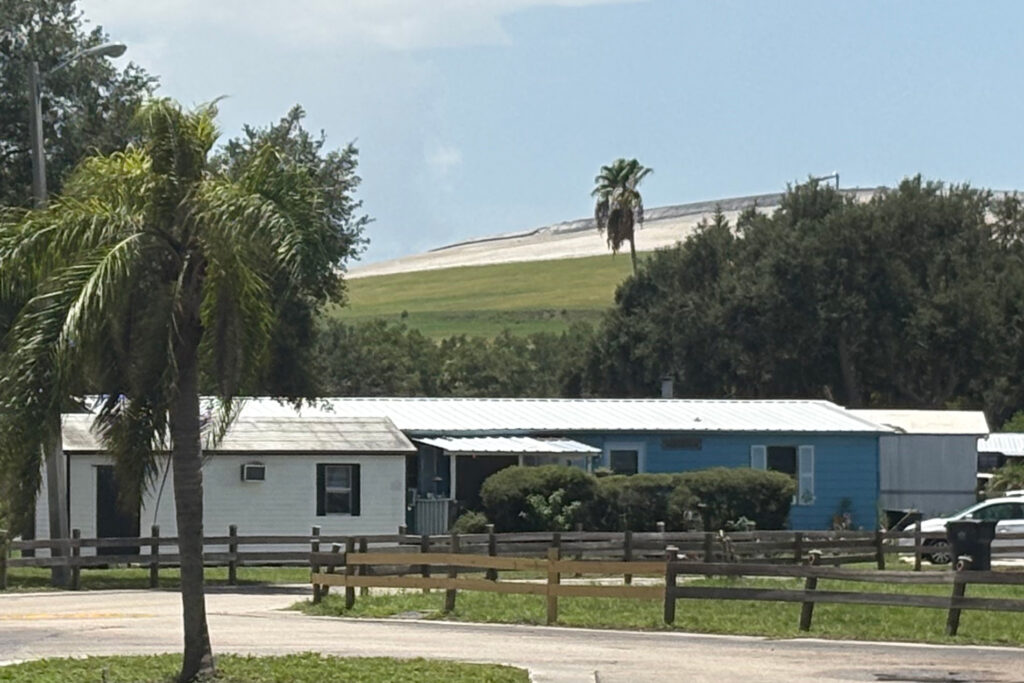
At Mosaic’s Riverview site beside Progress Village, process wastewater discharged into Tampa Bay because of Hurricane Milton in 2024. In 2004 Hurricane Frances similarly prompted the release of 65 million gallons of process wastewater into the bay. Ragan Whitlock, staff attorney at the Center for Biological Diversity, worried the Trump administration’s rush on the project would mean a less thorough environmental review.
“This is directly perched on Tampa Bay. There could not be a worse place to have a radioactive waste storage facility than on the shores of one of our most fragile ecosystems,” he said. “There are regulatory programs available to ensure protections of the environment and these communities that have to live in the shadow of these facilities, but it takes political will.”
For Tolbert-Jones, this is home. When she was growing up her father made a good living working at the phosphate plant. After marrying her childhood boyfriend, she raised two daughters here. Today she is retired from the Tampa Housing Authority and spends her time volunteering for her church and other local nonprofits. The need here is great, she said.
“If you are a die-hard villager, this is your home. This is your life. You could leave Progress Village and move into another state,” she said. “This is still your home. The village belongs to you. You can come visit your cousins for a weekend once a month or come for the summer and you still feel connected to Progress Village.”
Correction: A previous version of this article incorrectly stated that a gypstack at the Riverview facility was damaged in 2024 by Hurricane Milton. The hurricane damaged collection manways associated with a closed gypstack at the facility.
About This Story
Perhaps you noticed: This story, like all the news we publish, is free to read. That’s because Inside Climate News is a 501c3 nonprofit organization. We do not charge a subscription fee, lock our news behind a paywall, or clutter our website with ads. We make our news on climate and the environment freely available to you and anyone who wants it.
That’s not all. We also share our news for free with scores of other media organizations around the country. Many of them can’t afford to do environmental journalism of their own. We’ve built bureaus from coast to coast to report local stories, collaborate with local newsrooms and co-publish articles so that this vital work is shared as widely as possible.
Two of us launched ICN in 2007. Six years later we earned a Pulitzer Prize for National Reporting, and now we run the oldest and largest dedicated climate newsroom in the nation. We tell the story in all its complexity. We hold polluters accountable. We expose environmental injustice. We debunk misinformation. We scrutinize solutions and inspire action.
Donations from readers like you fund every aspect of what we do. If you don’t already, will you support our ongoing work, our reporting on the biggest crisis facing our planet, and help us reach even more readers in more places?
Please take a moment to make a tax-deductible donation. Every one of them makes a difference.
Thank you,

Amy Green
Reporter, Florida
Amy Green covers the environment and climate change from Orlando, Florida. She is a mid-career journalist and author whose extensive reporting on the Everglades is featured in the book MOVING WATER, published by Johns Hopkins University Press, and podcast DRAINED, available wherever you get your podcasts. Amy’s work has been recognized with many awards, including a prestigious Edward R. Murrow Award and Public Media Journalists Association award.