

Many of our impact case studies cover ongoing stories that Inside Climate News continues to actively cover. The impact reflected here is current as of publication and may be updated as the situation develops.
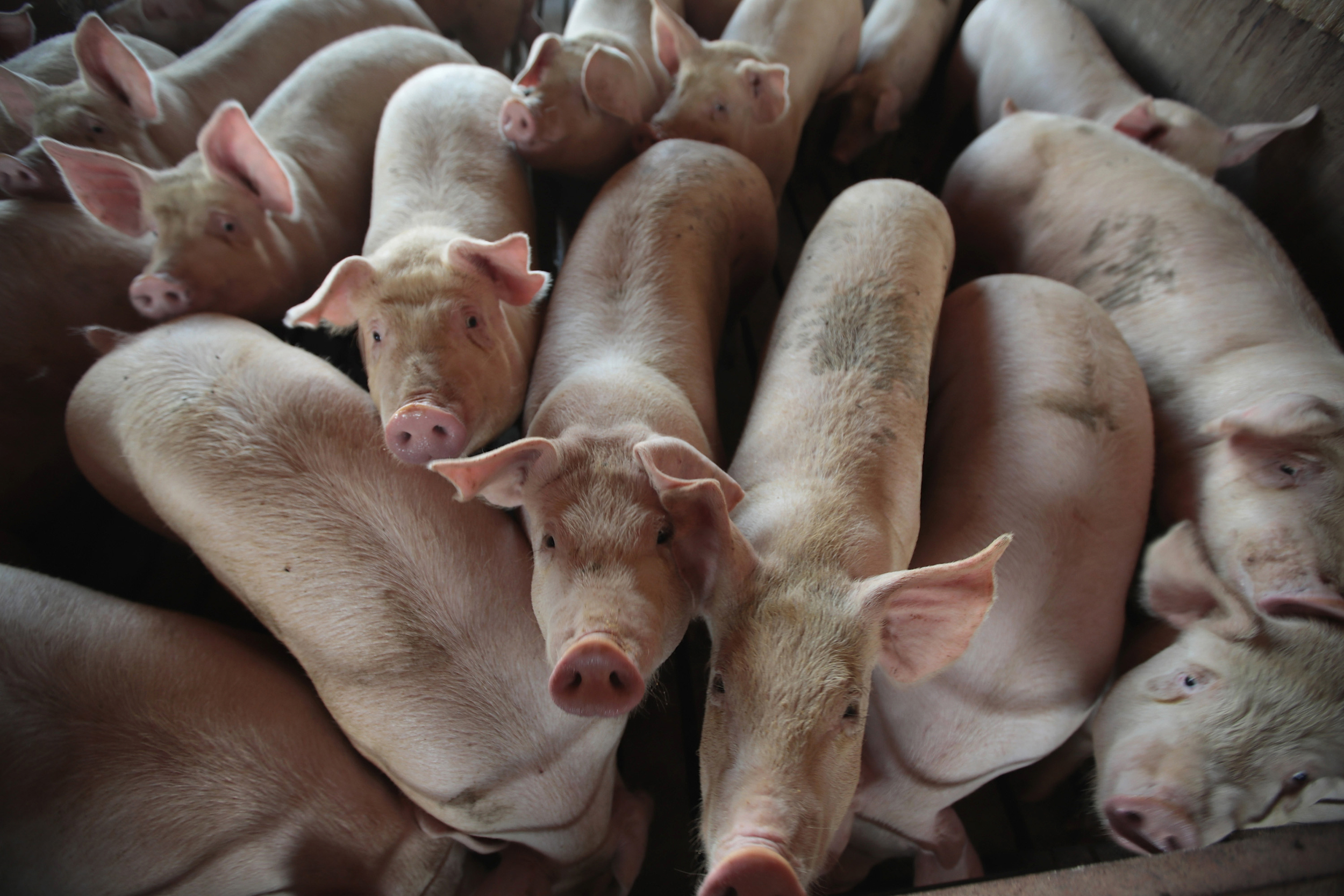
Iowa’s hog population outnumbers its human population eight to one. Conservative estimates place the annual output of our swine inhabitants at 110 billion pounds of manure, weighing nearly as much as the entire Great Wall of China.
As a reporter who covers the environmental impacts of Iowa’s agricultural industry, I’ve long been curious about how the state tracks these gargantuan quantities of manure.
Nearly all of it gets spread somewhere on Iowa’s 47,000 square miles of farmland as a nutrient-rich, organic fertilizer. But where, exactly? And how much?
When too much manure is applied to a field, any nitrogen and phosphorus not taken up by the crops can be swept away in runoff or soil erosion. Downstream, those nutrients render waterways unswimmable, undrinkable and, for many species, unlivable. Nutrient pollution isn’t a hypothetical issue in Iowa, where local utilities struggle to reduce nitrates in their water and nearly half of tested stream segments are listed as “impaired” in the state’s latest Clean Water Act-mandated assessment.
In June 2025, I submitted a records request with the Iowa Department of Natural Resources (DNR) and asked for all 8,000-plus active Manure Management Plans.
State law requires all hog producers with more than 1,250 pigs to submit these little-known documents to the DNR every four years. The documents include rough estimates of the manure generated by a facility, the nitrogen and phosphorus composition of that manure and the tracts of farmland where they plan to spread it.
A few days after submitting my request, a state employee called to tell me it was essentially impossible to fulfill. Only half of the manure management plans submitted to the DNR were in a digital format, she told me. Pulling all the files into a single database would take two years and cost $85,000.
In other words, the state didn’t have a system that would allow them—let alone a reporter—to meaningfully compare manure management plans and prevent the over-application of nutrients.
That finding became the premise of a two-part investigation I published with Nina Elkadi, then covering animal agriculture for Sentient. We spoke to five current and former employees in the DNR division who were or had been responsible for approving manure management plans. We analyzed nearly 400 plans that I ultimately obtained through county auditors and a second, narrower DNR records request.
Published at the end of 2025, our first story laid bare Iowa’s woefully inadequate approach for vetting manure management plans and highlighted how Iowa law protects actual manure application records as confidential documents.
Our second story analyzed 156 enforcement orders issued by the agency in the last five years for violations related to manure management, including the nature of the violation, any fines levied and their dollar amounts. It revealed lax enforcement by the DNR’s Animal Feeding Operations division, an office with five fulltime state employees plus some field officers who help with compliance duties. The division has not received a budget or hiring increase for nearly a decade, even as large hog operations in Iowa continue to grow.
Almost immediately, our reporting added new depth to ongoing statewide conversations about Iowa’s poor water quality and its causes.
The investigations were republished in newspapers and online magazines across the state, triggering a surge of op-eds, policy briefs and manure management-related coverage by other local journalists.
Insights from ICN’s reporting are now showing up in concrete policy proposals that could bring long-overdue improvements to Iowa’s regulation of livestock producers. In a health and water quality policy framework published in late April, State Auditor Rob Sand, a frontrunner in the race for governor, called for some reform of manure management: He wants to replace current handwritten plans with a uniform online form and make application records publicly accessible.
The Democratic nominee’s proposals have elevated the formerly obscure manure management system to be a matter of broad public concern—a shift that came only after ICN’s deep reporting.
Our ambitious data-driven collaboration with Sentient shed light on a poorly understood and broken system that is central to one of Iowa’s largest industries and its water safety.
About This Story
Perhaps you noticed: This story, like all the news we publish, is free to read. That’s because Inside Climate News is a 501c3 nonprofit organization. We do not charge a subscription fee, lock our news behind a paywall, or clutter our website with ads. We make our news on climate and the environment freely available to you and anyone who wants it.
That’s not all. We also share our news for free with scores of other media organizations around the country. Many of them can’t afford to do environmental journalism of their own. We’ve built bureaus from coast to coast to report local stories, collaborate with local newsrooms and co-publish articles so that this vital work is shared as widely as possible.
Two of us launched ICN in 2007. Six years later we earned a Pulitzer Prize for National Reporting, and now we run the oldest and largest dedicated climate newsroom in the nation. We tell the story in all its complexity. We hold polluters accountable. We expose environmental injustice. We debunk misinformation. We scrutinize solutions and inspire action.
Donations from readers like you fund every aspect of what we do. If you don’t already, will you support our ongoing work, our reporting on the biggest crisis facing our planet, and help us reach even more readers in more places?
Please take a moment to make a tax-deductible donation. Every one of them makes a difference.
Thank you,