

Climate pollutant concentrations in the Beijing region of northern China have plateaued or begun to decline—except for the world’s most potent greenhouse gas, new research concludes.
The findings, published in the journal Environmental Science & Technology, suggest a decades-long effort to clean Beijing’s air is beginning to pay off. But while it cites progress, the research also highlights a growing climate challenge, driven by the region’s surging electricity demand and the explosive growth of semiconductor manufacturing amid the AI boom.
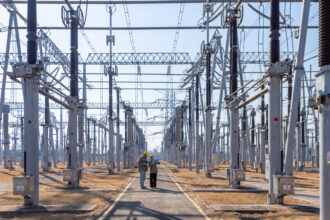
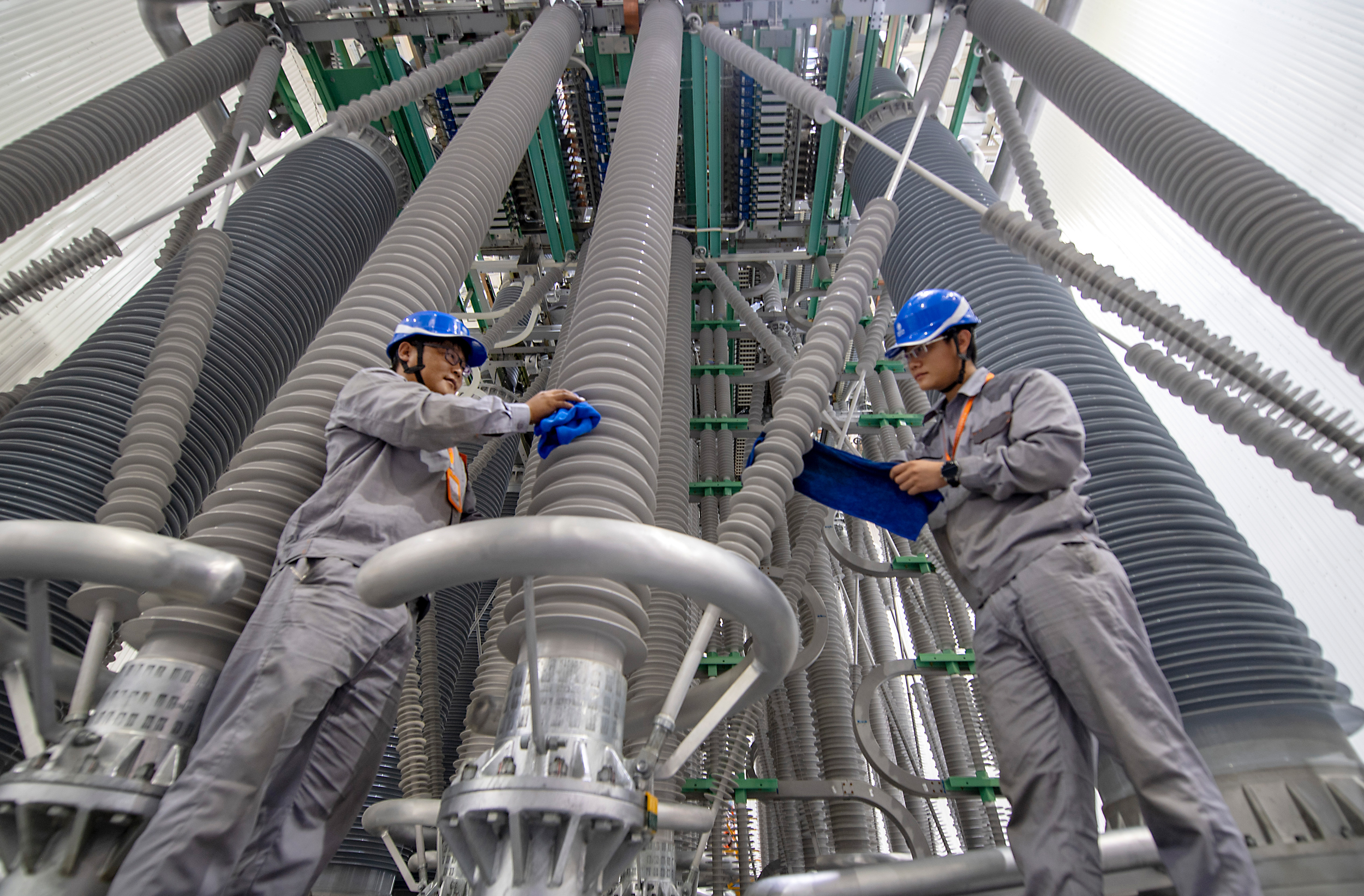
Sulfur hexafluoride—known as SF6—is 24,300 times more effective at warming Earth’s atmosphere, pound for pound, than carbon dioxide, the leading driver of climate change. The synthetic gas is widely used as an electrical insulator in high-voltage equipment, making the power sector a key source of concern as electricity infrastructure expands. While SF6 emissions are declining in other parts of the world, they are rapidly rising in China, which accounts for more than half of global releases.
The country’s state-owned electric power companies recycle only about 30 percent of the gas they discard each year, with the remainder likely released into the atmosphere, a recent Inside Climate News analysis concluded.
The study, by researchers at the Chinese Academy of Sciences’ Institute of Atmospheric Physics in Beijing, examined greenhouse gas concentrations in the region between 1993 and 2024 to assess the effectiveness of the city’s energy transition.
The researchers found that semiconductor manufacturing, where the gas is used for etching and cleaning, is another fast-growing source of SF6 emissions in the Beijing region.
The scientists, who did not respond to interview requests or declined to comment, found that carbon dioxide concentrations have begun to decrease in China’s capital. The study attributed the shift to local policies introduced around 2008, when Beijing hosted the Summer Olympics, that promoted natural gas and electricity while discouraging or banning coal use.
Growth in atmospheric concentrations of methane and nitrous oxide, the second and third leading drivers of climate change, has slowed. The study attributes the change in methane levels to capturing landfill emissions and reusing the gas for power generation or incinerating waste before it can decompose. Increased electric-vehicle use and stricter pollution controls for gas-powered automobiles hit the brakes on growth in nitrous oxide concentrations, the researchers found.
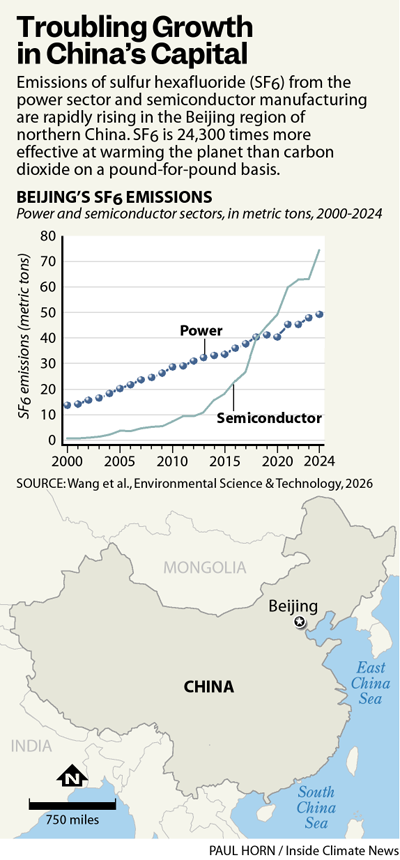
However, SF6 concentrations are accelerating.
“These findings underscore the power and semiconductor sectors as critical domains for targeted SF6 emission control,” the study concluded.
The electric power sector is China’s leading national source of the climate pollutant, accounting for about 70 percent of all SF6 emissions, according to the study. However, emissions from semiconductor manufacturing in Beijing have grown rapidly for more than a decade and are now the pollutant’s primary local source, the study found.
Martin Vojta, an atmospheric scientist at the University of Vienna, noted that Beijing’s increase in semiconductor manufacturing correlated with rising SF6 emissions. However, other factors, such as changes in production practices, could affect the industry’s emissions, Vojta said.
Atmospheric modeling that traces SF6 emissions back to their sources would more definitively link the increase in emissions to the semiconductor industry, Vojta said.
The research results were compiled into a policy report, “Beware of Sulfur Hexafluoride Emissions Behind AI Industry Development,” which was quickly adopted by the Beijing Municipal Committee of the Chinese People’s Political Consultative Conference, according to an Aug. 19 press release from the Institute of Atmospheric Physics.
This story is funded by readers like you.
Our nonprofit newsroom provides award-winning climate coverage free of charge and advertising. We rely on donations from readers like you to keep going. Please donate now to support our work.
Donate NowArtificial Intelligence, or AI, could fuel rising SF6 emissions by increasing semiconductor chip manufacturing and continuing the region’s power-grid buildout. The Beijing Municipal Committee is a government advisory body overseen by the Chinese Communist Party. The institute’s press release announcing the policy report’s adoption came less than a week after the study was published.
Members of the committee visited the institute shortly before publication for briefings. Tang Guiqian, one of the study’s co-authors, was among those speaking to the group, according to the institute.
Tang declined to comment, citing institute policies. The Beijing Municipal Committee did not respond to a request for additional information.
SF6 supplies fluorine for the semiconductor industry, where it is used to carve channels into silicon or other materials to help build circuitry in computer chips, liquid crystal display panels—better known as LCD—and other electronic devices. The gas can also clean deposition chambers where chips and other electronics are fabricated. In both processes, some sulfur hexafluoride passes through without reacting and, unless properly abated, is released into the atmosphere.
The semiconductor industry can rein that in. Among the options: optimizing production, using alternative fluorine sources and destroying waste gas.
From 1996 to 2010, the U.S. Environmental Protection Agency partnered with manufacturers in a voluntary effort to reduce emissions of SF6 and other fluorinated greenhouse gases.
Scott Bartos, a former EPA official and program manager on the partnership, said any effort to reduce climate pollution as a result of the current study and subsequent policy report would be good news as China ramps up semiconductor manufacturing and electrifies its economy.
The World Semiconductor Council, which represents industry associations in China, Taiwan, Europe, Japan, Korea and the United States, committed in June to continue gradually reducing the emissions intensity of SF6 and other climate super-pollutants in its products.
However, Avipsa Mahapatra, climate campaign director for the Environmental Investigation Agency US, a nonprofit organization based in Washington, D.C., argued the current study exposes a blind spot in decarbonization policies.
“Whatever measures currently exist are not yet bending the SF6 curve,” Mahapatra said.
Rudy Lu contributed reporting.
About This Story
Perhaps you noticed: This story, like all the news we publish, is free to read. That’s because Inside Climate News is a 501c3 nonprofit organization. We do not charge a subscription fee, lock our news behind a paywall, or clutter our website with ads. We make our news on climate and the environment freely available to you and anyone who wants it.
That’s not all. We also share our news for free with scores of other media organizations around the country. Many of them can’t afford to do environmental journalism of their own. We’ve built bureaus from coast to coast to report local stories, collaborate with local newsrooms and co-publish articles so that this vital work is shared as widely as possible.
Two of us launched ICN in 2007. Six years later we earned a Pulitzer Prize for National Reporting, and now we run the oldest and largest dedicated climate newsroom in the nation. We tell the story in all its complexity. We hold polluters accountable. We expose environmental injustice. We debunk misinformation. We scrutinize solutions and inspire action.
Donations from readers like you fund every aspect of what we do. If you don’t already, will you support our ongoing work, our reporting on the biggest crisis facing our planet, and help us reach even more readers in more places?
Please take a moment to make a tax-deductible donation. Every one of them makes a difference.
Thank you,

Phil McKenna
Reporter, Boston
Phil McKenna is a Boston-based reporter for Inside Climate News. Before joining ICN in 2016, he was a freelance writer covering energy and the environment for publications including The New York Times, Smithsonian, Audubon and WIRED. Uprising, a story he wrote about gas leaks under U.S. cities, won the AAAS Kavli Science Journalism Award and the 2014 NASW Science in Society Award. Phil has a master’s degree in science writing from the Massachusetts Institute of Technology and was an Environmental Journalism Fellow at Middlebury College.