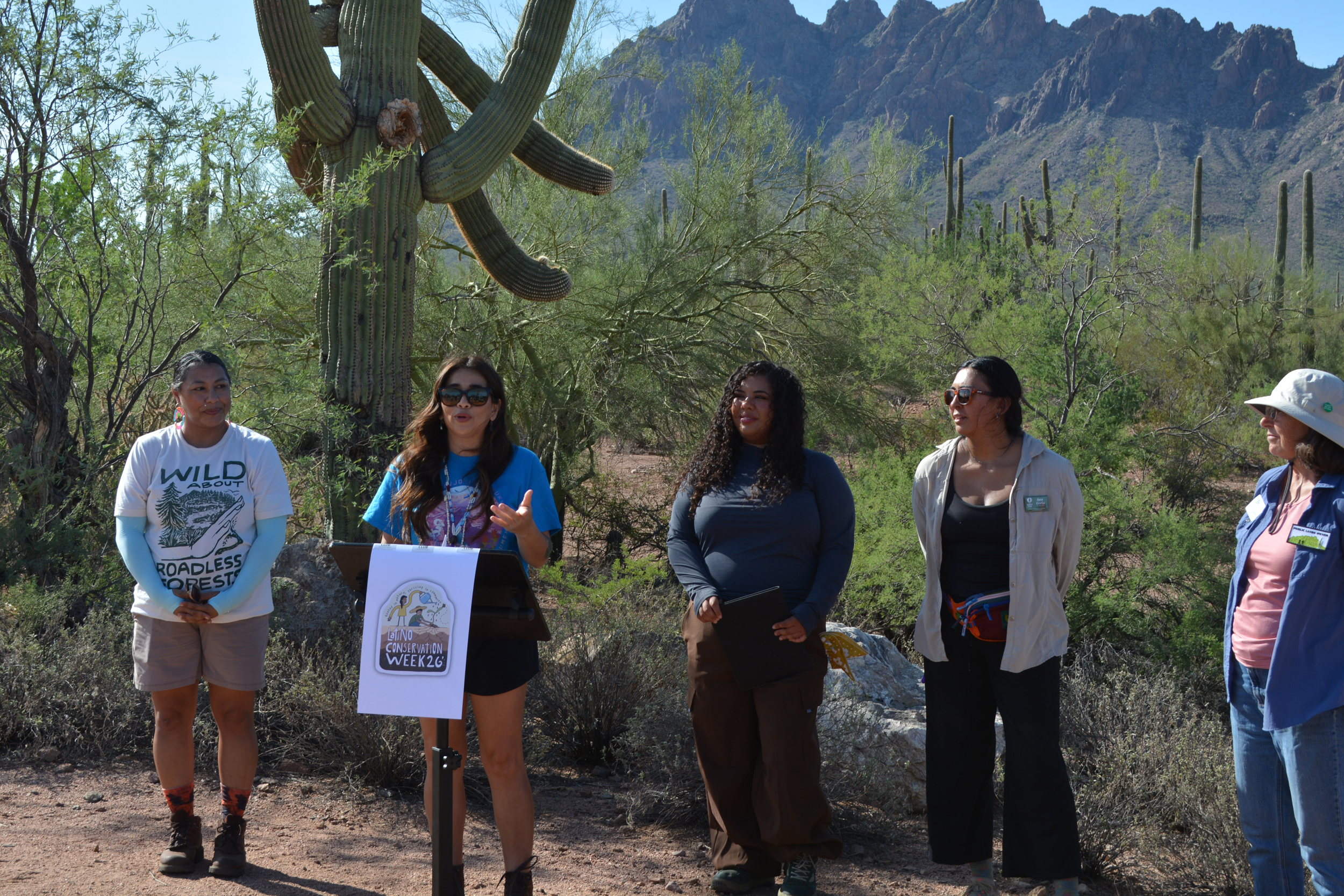


IRONWOOD FOREST NATIONAL MONUMENT, Ariz.—Cassandra Becerra didn’t know it when she first arrived in the U.S. from Mexico as a three-year-old, but she was already an environmentalist. Her family didn’t have much money, but they were rich in the abundant public lands that make up Arizona
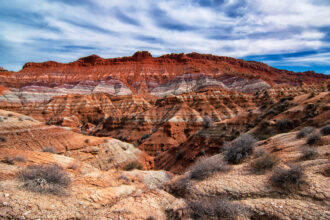
Becerra remembers a childhood filled with fishing at the lake, playing with worms and exploring the desert. Those memories helped lead her down the path of working in the environmental space, serving as the Arizona State Director for Mountain Mamas, a nonprofit dedicated to protecting the environment for the next generation. On Saturday, they led her to stand before a mountain range in the Ironwood Forest National Monument just north of Tucson to kick off the 12th annual Latino Conservation Week, a nationwide initiative created by the Hispanic Access Foundation to inspire the Latino community to connect with the outdoors and advocate for the protection of the country’s natural resources.
“We’ve been caring for these places that we’ve called home for so long, and not only that, but sharing our knowledge across generations and keeping our culture alive, spending time outdoors and protecting our resources,” Becerra said at the press conference opening the event. “We were taught these things by our families growing up and so that helped shape us. Latino Conservation Week really just encourages us to participate at a greater capacity to protect our environment and our natural resources.”
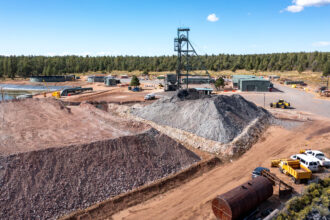
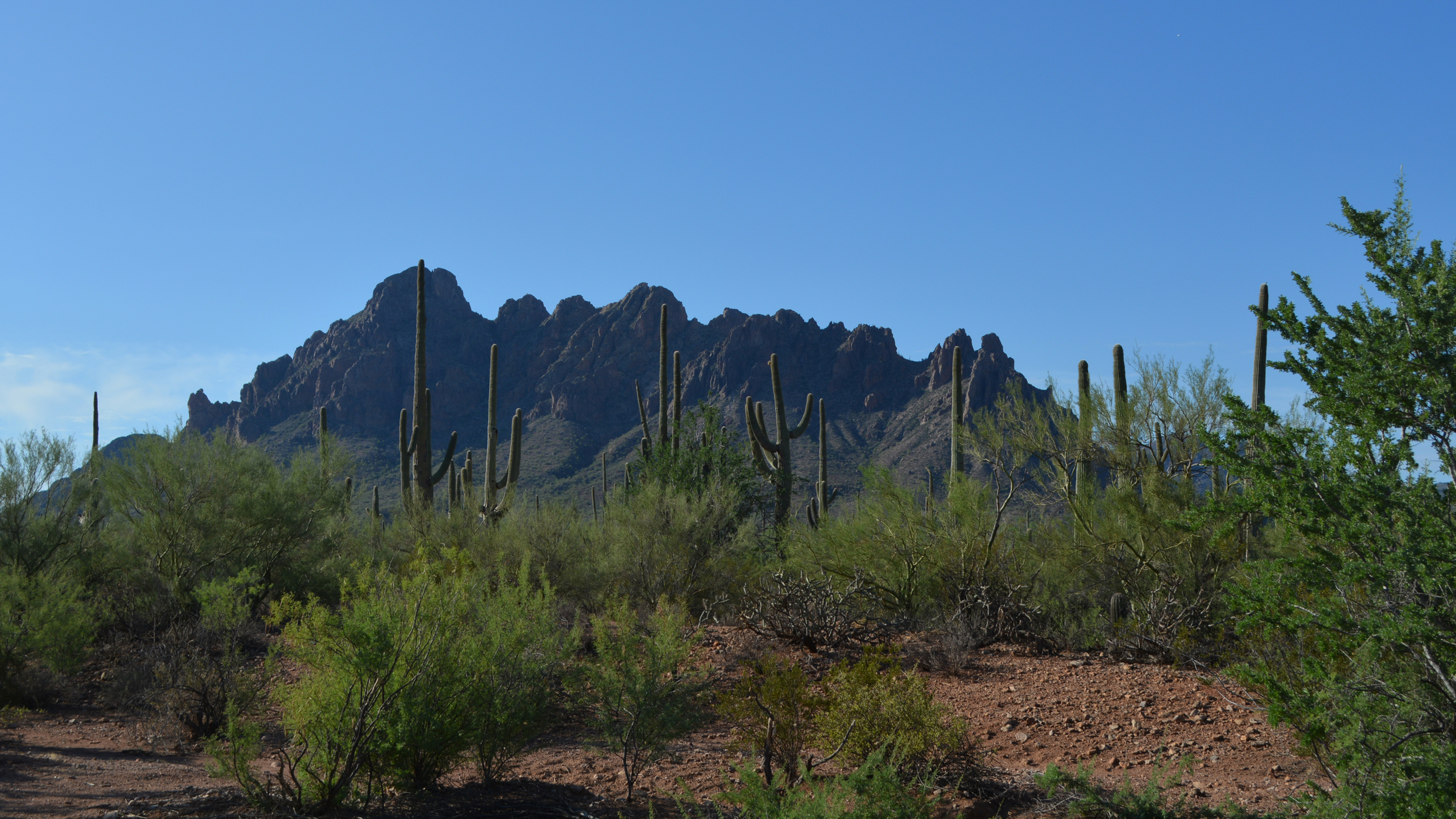
Kickstarting the week at Ironwood Forest National Monument was a strategic choice. Since it was designated as a monument in 2000, this stretch of 129,000 acres of the Sonoran Desert north of Tucson, Arizona, has been protected as a haven for scientific research and a buffer against the expansion of existing mines and the establishment of new ones in the area. It is also one of six national monuments the Trump administration has signaled it may reduce in size to make way for more development and extraction. Just outside of the monument is ASARCO’s Silver Bell mine, whose years-long goal of expanding into the area to boost copper production has been foiled by the site’s protections.
Locals fear another attempt to reduce the monument’s size may come soon. In July, President Donald Trump signed two executive orders drastically reducing the size of Bears Ears and Grand Staircase-Escalante National Monuments in southern Utah, a decision that has drawn sharp criticism from locals and led to lawsuits.
“Public lands belong to all of us, not special interests. Yet this summer, the Trump administration virtually eliminated Utah’s Grand Staircase Escalante and Bears Ears National Monuments, making them vulnerable to mining and drilling,” said Rebecca Perez, the Arizona conservation manager for the Wilderness Society, at the press conference. “Once these places are industrialized, they cannot be readily restored … Any effort to undo protections at one national monument is a threat to every national monument, including the one we stand at today.”
The week’s events across Arizona and the country to get Latino community members outdoors and involved with their public lands include hikes, cleanups and educational sessions. The first step to getting people involved in protecting the country’s natural spaces is to get them out in nature, the organizers said.
Before leading a small hike to explore the monument’s plant life, Christine Flanagan, president of the Friends of Ironwood Forest, recalled a walk in the desert with her grandmother when she was about six years old. Gesturing to the hills on the horizon, Flanagan’s grandmother told her never to let anyone tell her she wasn’t allowed there. These are public lands, she learned, and the public owns them.
“We all must join together and understand that this is our land,” Flanagan said. “And as public land owners, we need to start acting together like we own this land.”
About This Story
Perhaps you noticed: This story, like all the news we publish, is free to read. That’s because Inside Climate News is a 501c3 nonprofit organization. We do not charge a subscription fee, lock our news behind a paywall, or clutter our website with ads. We make our news on climate and the environment freely available to you and anyone who wants it.
That’s not all. We also share our news for free with scores of other media organizations around the country. Many of them can’t afford to do environmental journalism of their own. We’ve built bureaus from coast to coast to report local stories, collaborate with local newsrooms and co-publish articles so that this vital work is shared as widely as possible.
Two of us launched ICN in 2007. Six years later we earned a Pulitzer Prize for National Reporting, and now we run the oldest and largest dedicated climate newsroom in the nation. We tell the story in all its complexity. We hold polluters accountable. We expose environmental injustice. We debunk misinformation. We scrutinize solutions and inspire action.
Donations from readers like you fund every aspect of what we do. If you don’t already, will you support our ongoing work, our reporting on the biggest crisis facing our planet, and help us reach even more readers in more places?
Please take a moment to make a tax-deductible donation. Every one of them makes a difference.
Thank you,

Wyatt Myskow
Reporter, Phoenix
Wyatt Myskow covers drought, biodiversity and the renewable energy transition throughout the Western U.S. Based in Phoenix, he previously reported for The Arizona Republic and The Chronicle of Higher Education. Wyatt has lived in the Southwest since birth and graduated from Arizona State University with his bachelor’s degree in journalism.