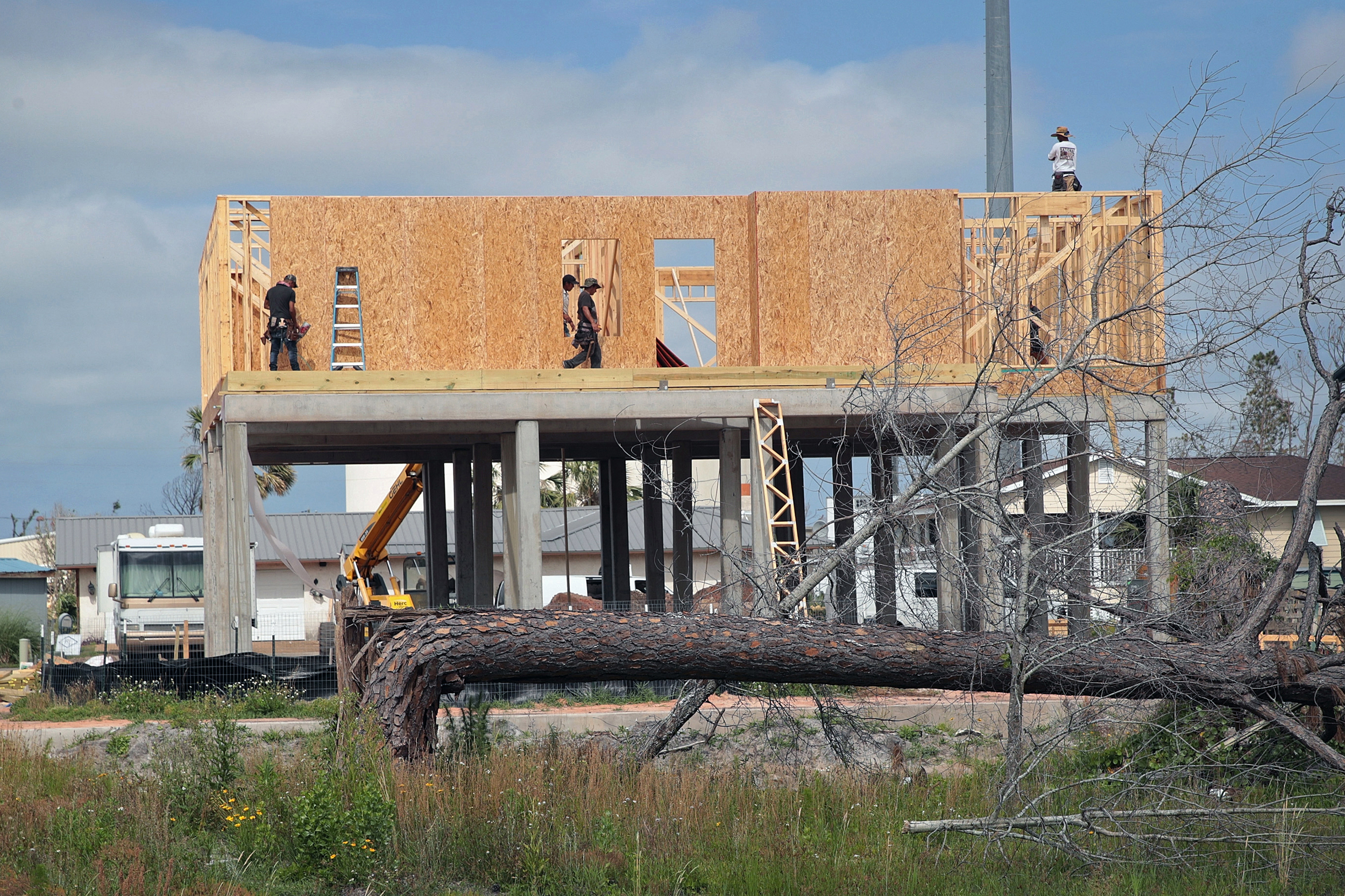


Jaques and Paulina Sebastiao were the first residents on their street to rebuild their two-bedroom house two years after Hurricane Michael’s 155 mile-per-hour winds leveled almost every building in Mexico Beach in 2018.
Few of their old neighbors in the Panhandle fishing village followed their lead. Some didn’t have insurance, and others battled their insurance companies over claims. Some neighbors just didn’t want to go through the lengthy and expensive headaches involved with building a new house from the ground up under stricter building codes, especially when many of them were in their early 60s.“I think age had a lot to do with it,” Jaques Sebastiao said.
New owners soon scooped up beachside lots that had once held modest homes around the Sebastiaos. They built multimillion-dollar McMansions with a half-dozen bedrooms or more that they often rent out to vacationers when they’re not using the homes themselves. The Sebastiaos’ tight-knit neighborhood group fell away as former neighbors decided not to move back.
“It went from a middle-class neighborhood to now a lot of multimillion-dollar investment properties,” Jaques Sebastiao said recently. “None of the people who said they were going to move back here, moved here.”
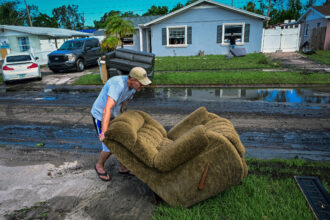
Although the Florida hurricane season this year has been comparatively quiet so far, up and down the state’s coastlines, populations of communities that were recently thrashed by more frequent and intense storms have been remade economically and socially in what has been dubbed “post-disaster gentrification.” Beachside neighborhoods that were once home to working-class or middle-class people are being replaced by younger, wealthier residents who can afford the higher costs of rebuilding and through-the-roof homeowners’ insurance.
Who Doesn’t Come Back
In the early 2020s, U.S. Census Bureau surveys identified who was least likely to return to a community following a natural disaster. Black and Latino households were more likely never to return compared to white households. Renters, the poorest households and people who didn’t finish high school were less likely to return than households in higher income and educational brackets. People with disabilities and members of the LGBTQ community also were more likely never to return, according to the bureau’s Household Pulse Survey.
The reasons include a lack of insurance, limited access to assistance and unaffordable housing after a storm, according to research from Ther Aung and Ashwini Sehgal at the MetroHealth Institute for Health, Opportunity, Partnership and Empowerment in Cleveland.
“People of color and with lower income also are likely to live in places that increase their exposure to hazards, such as areas more prone to flooding,” Aung said in an email.
Post-disaster gentrification also has been taking place in communities decimated by wildfires in recent years, according to a working paper published last month by researchers from the University of British Columbia, the University of California San Diego, the University of Virginia and the Census Bureau.
On average, half of destroyed homes remained unoccupied four years after a wildfire, they found. In homes that were rebuilt, the incomes of residents were higher than those of residents before the fire, and the share of people over age 65 was lower. The incomes of residents living in destroyed homes that had been rebuilt started climbing in the second year after the wildfire, according to the researchers.
Local officials’ desire to rebuild neighborhoods under stricter codes, so that new homes can withstand future storms, often conflicts with the need to find housing for displaced residents. The cost of rebuilding also goes up when materials and workers are in short supply.
“Whereas institutions and business interests tend to benefit from hazard gentrification, residents at the lower end of the socioeconomic ladder tend to bear the brunt of its negative effects,” researchers led by Justin Stoler at the University of Miami wrote last year.
Few Options After a Hurricane
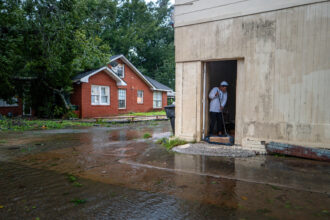
Bridget Fown was living with her two children in Cape Coral when Hurricane Ian’s more than 12-foot storm surge flooded her three-bedroom rental just a few blocks from the southwest Florida coast in September 2022. Her landlords were told by city officials that they couldn’t rehabilitate the house since it was too old and didn’t comply with new codes requiring elevated foundations, even though its cinderblock walls and foundation were still intact. Fown and her family were left without a roof over their heads.
“Like many other people who got caught up with losing everything during Ian from the flooding, there were no rehousing options,” Fown said recently. “I mean, there was nothing to aid you in getting back into another place.”
Fown stayed with a friend, and her children stayed with other friends in a camper on the friends’ property. Fown searched for a new rental up and down Florida’s southwest coast but couldn’t find anything because a substantial chunk of the rental market had been wiped out. More infuriating for her, each time she filled out an application, she had to pay a nonrefundable fee, ranging from $100 to $175 per adult in her household. Her daughter was 19.
“I blew through $5,000 looking for housing, just like everybody else did, and nobody got their money back,” Fown said.
As Christmas approached that year, Fown had enough.
“I just couldn’t do this because we were separated on two different ends of town,” Fown said of her kids.
This story is funded by readers like you.
Our nonprofit newsroom provides award-winning climate coverage free of charge and advertising. We rely on donations from readers like you to keep going. Please donate now to support our work.
Donate NowThey packed up and moved to Beaufort, South Carolina, where they found a rental home. In her old neighborhood in Cape Coral, lots that previously had two-and-three-bedroom bungalows now have multimillion-dollar homes in their place.
“We kind of lost a lot of locals, including myself,” said Fown, who grew up in the area and still visits regularly to see family.
Even worse, in her opinion, is what happened to nearby Fort Myers Beach where the laid-back, beach town vibe was replaced by the endless construction of high-rise hotels and condos and more crowded roads.
“You used to go there and really soak up and enjoy the atmosphere of the beach itself,” Fown said. “It’s like all the local mom and pops, the locally owned places, have now sold out, and the corporations are coming in with cookie-cutter hotels.”
From a Fishing Village to an “Investment Place”
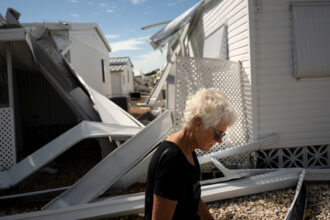
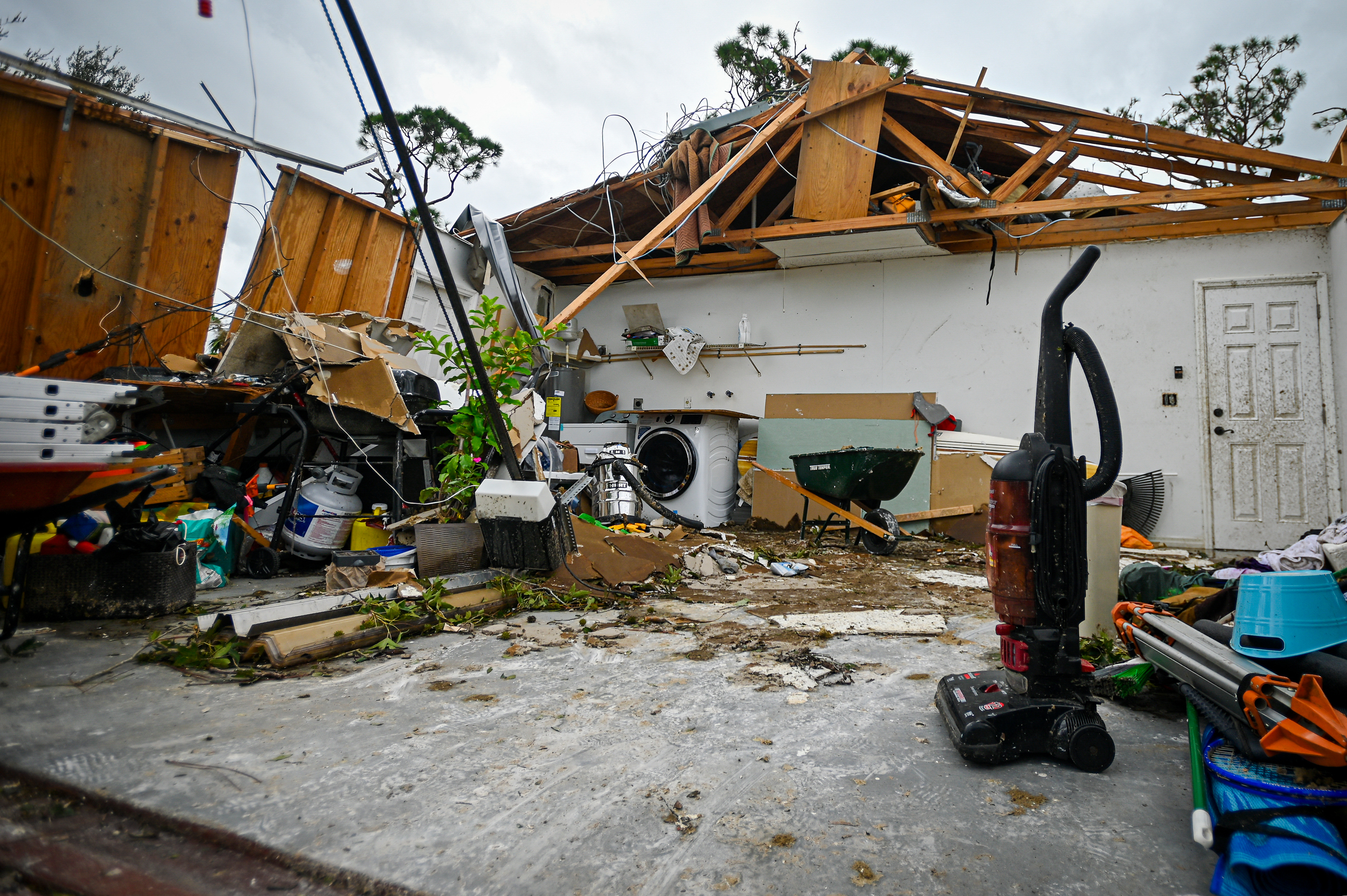
Hurricane Michael ravaged the Panhandle, particularly Bay County, home to Mexico Beach, where 15-foot storm surges flooded homes and winds sheared buildings into piles of wood beams, insulation, overturned furniture and trash. Mexico Beach had fewer than 1,500 residents before the Category 4 hurricane hit in 2018. The storm pulverized the town’s water, electricity and sewage facilities and destroyed most of the town’s homes.
In its wake, many affordable homes vanished in Bay County.
Before the hurricane, 70 percent of the homes in Bay County cost less than $300,000. After the storm, that figure dropped to less than half. The median home price jumped to $310,500 from almost $220,000 between 2019 and 2024, according to Census Bureau figures, thanks to less housing stock and the increased costs of building a new home from the sudden demand for labor and supplies.
By the middle of the 2020s, more than a third of Bay County residents had been in their current homes for five years or less, according to Census Bureau figures, a sharp indicator of the influx of new residents.
The economy changed too, and the county got wealthier. The share of the workforce that was professional jumped, while the share of service workers dropped from 2019 and 2024. Households earning $200,000 or more rose from 6.5 percent to 9.2 percent, and the share of families living below the poverty line dropped in the years following the hurricane. The share of young adults between ages 20 and 34 declined, as did the share of Black residents, according to Census Bureau figures.
In Mexico Beach, the average annual household income jumped from more than $68,000 in 2017, the year before the storm, to more than $100,000 in 2024. The share of households earning $200,000 a year almost quadrupled to 10.1 percent. Mexico Beach became more non-Hispanic white, as the number of Hispanic residents dropped, according to Census Bureau figures.
“Before it was like a fishing village,” Jaques Sebastiao said. “Now it’s an investment place.”
About This Story
Perhaps you noticed: This story, like all the news we publish, is free to read. That’s because Inside Climate News is a 501c3 nonprofit organization. We do not charge a subscription fee, lock our news behind a paywall, or clutter our website with ads. We make our news on climate and the environment freely available to you and anyone who wants it.
That’s not all. We also share our news for free with scores of other media organizations around the country. Many of them can’t afford to do environmental journalism of their own. We’ve built bureaus from coast to coast to report local stories, collaborate with local newsrooms and co-publish articles so that this vital work is shared as widely as possible.
Two of us launched ICN in 2007. Six years later we earned a Pulitzer Prize for National Reporting, and now we run the oldest and largest dedicated climate newsroom in the nation. We tell the story in all its complexity. We hold polluters accountable. We expose environmental injustice. We debunk misinformation. We scrutinize solutions and inspire action.
Donations from readers like you fund every aspect of what we do. If you don’t already, will you support our ongoing work, our reporting on the biggest crisis facing our planet, and help us reach even more readers in more places?
Please take a moment to make a tax-deductible donation. Every one of them makes a difference.
Thank you,