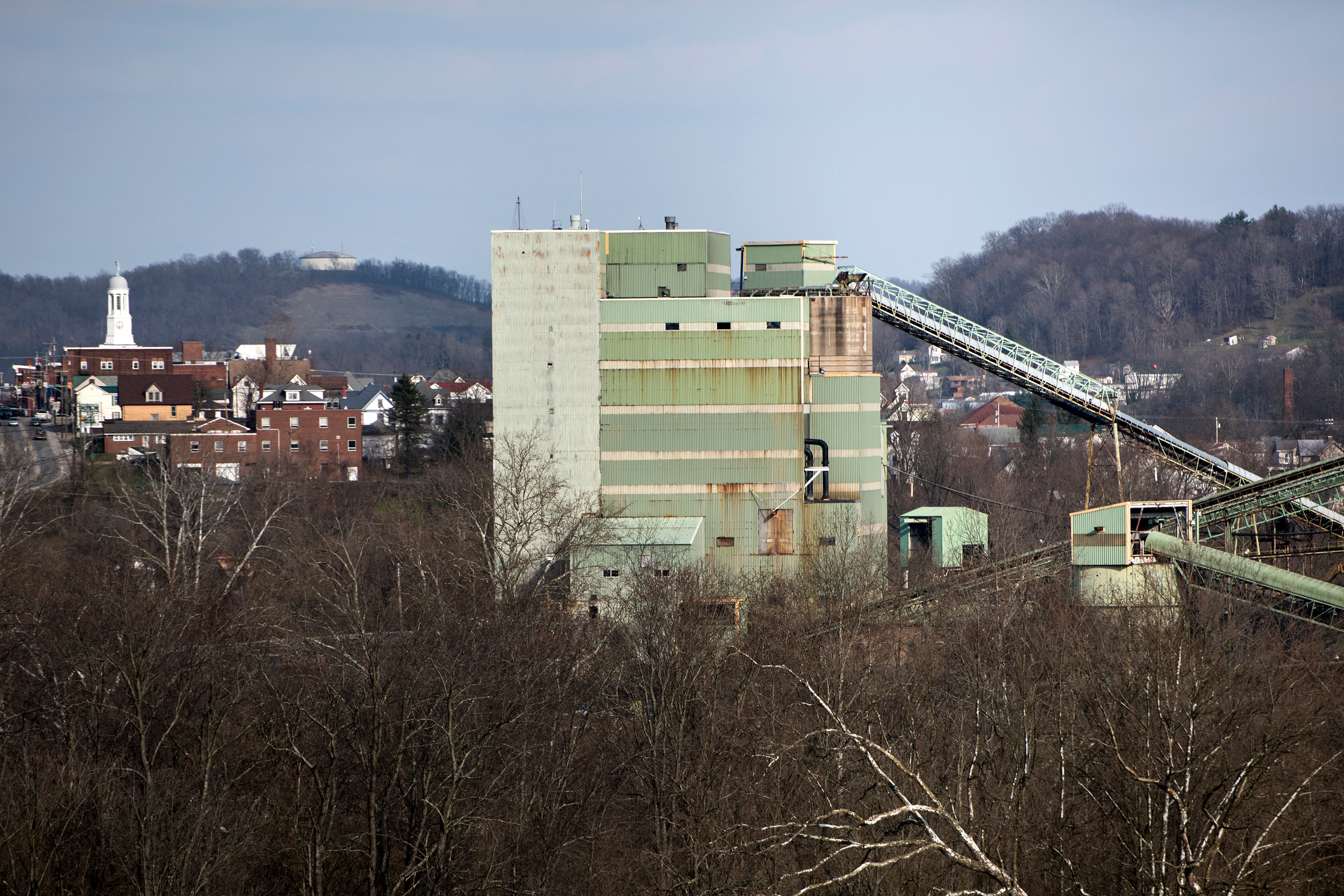


Almost nobody wants a data center for a neighbor. Residents fear noise and air pollution, excessive energy and water use and the loss of open land. In Pennsylvania, a hot spot for new data centers, researchers see an opportunity to solve some of these issues by taking advantage of a much older environmental hazard: abandoned coal mines.
Pennsylvania has the most abandoned coal mines in the country, totaling around 5,586 sites across the state. The state reports it would take roughly $5 billion to reclaim these polluted and sometimes dangerous areas, which have contaminated thousands of miles of waterways and are linked to underground fires, subsidence and sinkholes. At the same time, local opposition to data centers is growing.
Building data centers on abandoned mine lands would provide an alternative to destroying farmlands or local forests, instead making use of already unwanted acreage. Underground mine pools could cool data centers without relying on outside water sources. And companies could help shoulder cleanup costs of existing contamination. The idea is appealing enough that federal researchers investigated it in 2023, concluding that abandoned mine lands offer “land, power infrastructure, and mine water cooling” to data center developers, particularly in a place like Pennsylvania.
“If the data centers can demonstrate that they can clean up, treat the acid water and help restore their local environment, the local people are more likely to accept such development proposals,” says Zhongyang He, a researcher in Penn State’s Department of Energy and Mineral Engineering who’s been examining possible data center development on abandoned mine lands in the state. His research suggests that it’s a proposition worth pursuing—at least compared to building data centers in people’s non-polluted backyards. But could it actually work at scale? Or would Pennsylvania end up replacing one intractable environmental problem with another?
An Opportunity for Reuse
There’s already some proof of concept in western Pennsylvania, where a former mine has housed a data center since 2013. The site of an old limestone mine, Iron Mountain’s West Pennsylvania data center in Boyers sits 220 feet below ground, a 330,000-square-foot facility on a 315-acre campus that doesn’t bring in any outside water. Instead, the data center cools through a closed-loop system that relies on the 53-degree water in a 100-acre, underground lake (not a mine pool, but a comparable concept).
“We are using what the miners had left behind,” said Iron Mountain’s senior director of energy and sustainability, Chris Pennington. Boreholes, dug in mines to reach deep water or minerals, provide infrastructure for internet access, and data center clients appreciate the security of storing their information deep underground. Though the facility regularly recycles its lake water, Iron Mountain brings in some refrigeration to supplement the system.
Former coal mine sites in Western Pennsylvania slated to become data centers include the former Robena Mine in Greene County, which members of the county’s Planning Commission voted in favor of late last year and would use water from a nearby river that it would convert into steam. Another proposed data center at the former Consol coal mine in Washington County, owned by natural gas company CNX Resources, would use nearby natural gas reserves and “remediated mine gas,” per the Pittsburgh Business Times.
There’s precedent outside of Pennsylvania, too. In West Virginia, Energy DELTA Lab’s 450-acre Data Center Ridge boasts access to almost “10 billion gallons of underground water” for cooling at a former mine site. In Italy, an active dolomite mine is home to a data center located 328 feet underground, cooled by the surrounding rock and chilly air.
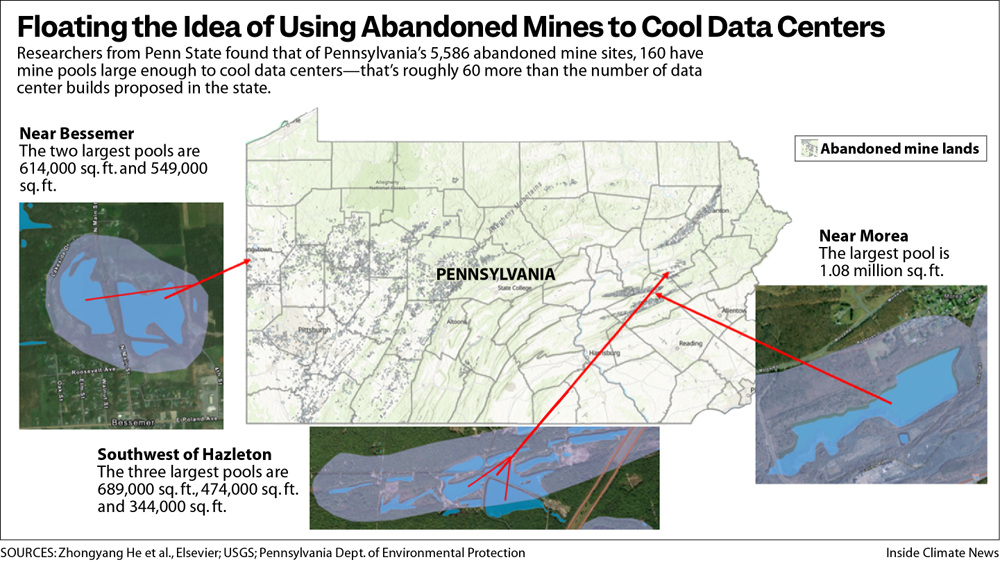
Typically in the 40s or low 50s degrees Fahrenheit, mine pool temperatures are theoretically low enough to cool data centers. Mechanical cooling accounts for around 40 percent of an average data center’s energy consumption, and medium-sized data centers can consume around 100 million gallons of water per year. Penn State researcher He and his colleagues found that of the 5,586 abandoned mine sites they analyzed in Pennsylvania, 160 had mine pools large enough to accommodate data centers (there are currently at least 100 data centers proposed in Pennsylvania).
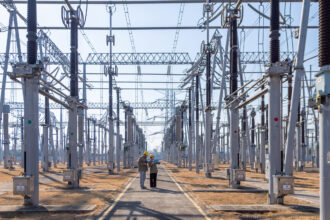
He’s research team landed on other advantages in addition to natural cooling, like “legacy infrastructure,” he said. That could include proximity to roads and the electricity grid, which can be repurposed for data centers. Transmission lines powered large equipment at former mines, and some of that infrastructure remains. “That does not mean that…the line transmission capacity is enough for data centers,” He said, but it does mean relevant permits could be in place.
Both Penn State and the Eastern Pennsylvania Coalition for Abandoned Mine Reclamation have assessed a former mine in northeastern Pennsylvania called Morea as a possible data center site. It harbors an estimated 7 billion gallons of underground water via a nearby creek that was routed underground when the mine was active. It still has an electric transmission line, “sufficient for utility-scale solar or a large industrial facility, and expensive and slow to replicate,” per the coalition’s report.
That report also acknowledges the ongoing economic burdens carried by communities that once produced coal. In Mahanoy Township, home to the Morea site, the coalition notes a 20.3 percent poverty rate (compared to 11.6 percent statewide)—a commonality across former Pennsylvania mining regions. A study published in Nature in 2024 notes that people living in areas of Pennsylvania exposed to mine drainage had incomes 30 percent lower than people in unaffected areas.
Data center development could help with that. The federal report brings up the thousands of job opportunities that could materialize from abandoned coal mine restoration, which increase with data center builds. A June study by the research project Resilient Energy Economies found that communities in Pennsylvania with some restoration of mine drainage-contaminated waterways experienced more population growth than areas without. Restoration attracts skilled workers, which can in turn increase commerce.
Choosing the Lesser Evil
If abandoned mine lands proved a hospitable home for data centers, possible sites could be found across the U.S., from West Virginia, Ohio and Kentucky to Western states like Wyoming.
But before new development could begin, companies would need to contend with the many kinds of pollution left behind by decades of mining, from acid mine drainage in streams to coal ash piles.
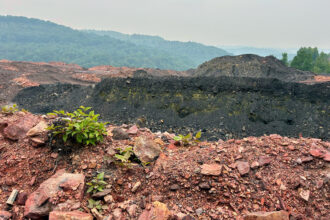
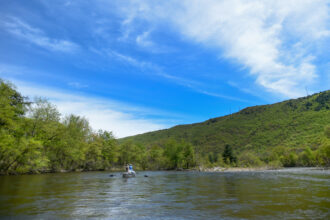
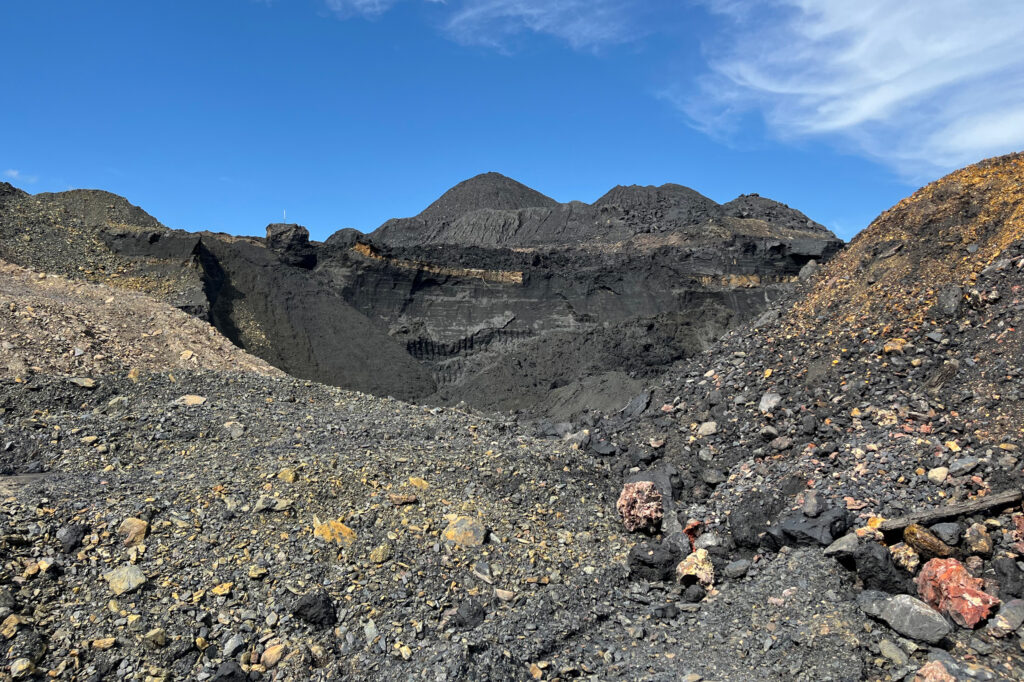
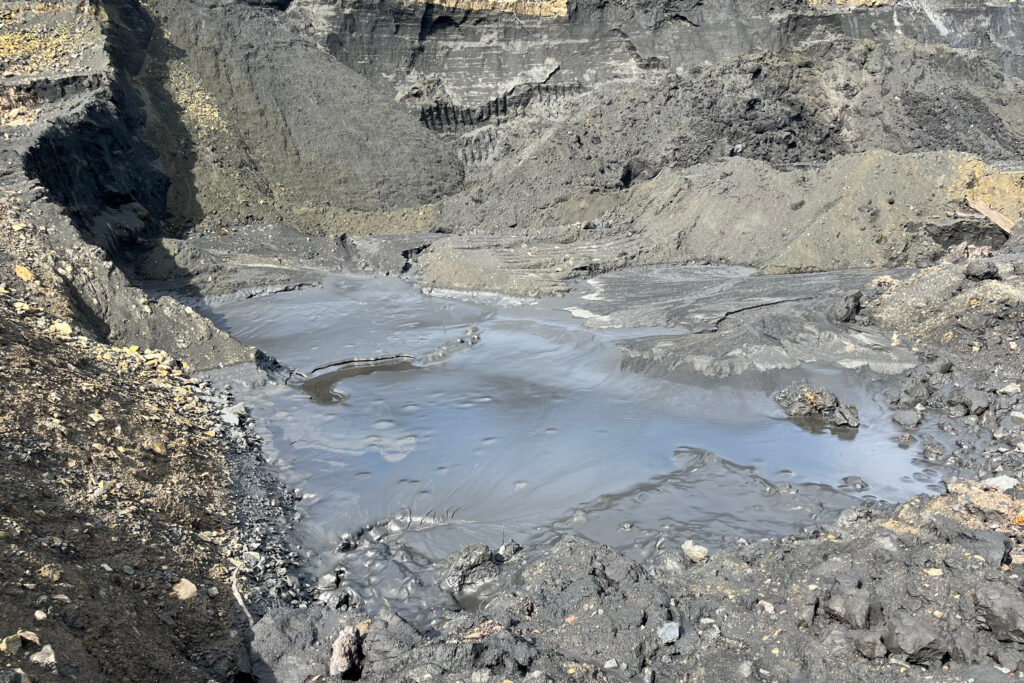
Today, you can observe this mess all over Pennsylvania. In Luzerne County, streams run orange with iron from abandoned mine drainage, emitting the sulfuric stench of rotten eggs and deterring the local trout. Piles of anthracite coal tower over fields that abut residents’ backyards, their formations almost resembling peaks in the Grand Canyon, only inky black. Ash pillars of burnt coal erode into the streams below when it rains, bringing toxic discharge.
Nearby, however, where you’d once find dead frogs flipped underside-up from the drainage, wildflowers buzz with bees and butterflies, water striders float on clear streams and foxes traverse fields of sprouting grass (albeit with pools of anthracite coal still looming in the background).
These environmental changes came partly due to the Surface Mining Control and Reclamation Act, which Congress enacted in 1977 and established a trust fund to reclaim and restore abandoned mine lands. Since 1980, Pennsylvania reports receiving more than $2 billion for this effort, and the state’s Department of Environmental Protection still offers reclamation grants to counties, municipalities and certain nonprofits.
Environmental groups like the Eastern Pennsylvania Coalition for Abandoned Mine Reclamation then do much of the on-the-ground work in the region, assessing sites and taking steps to restore the area’s natural ecosystem.
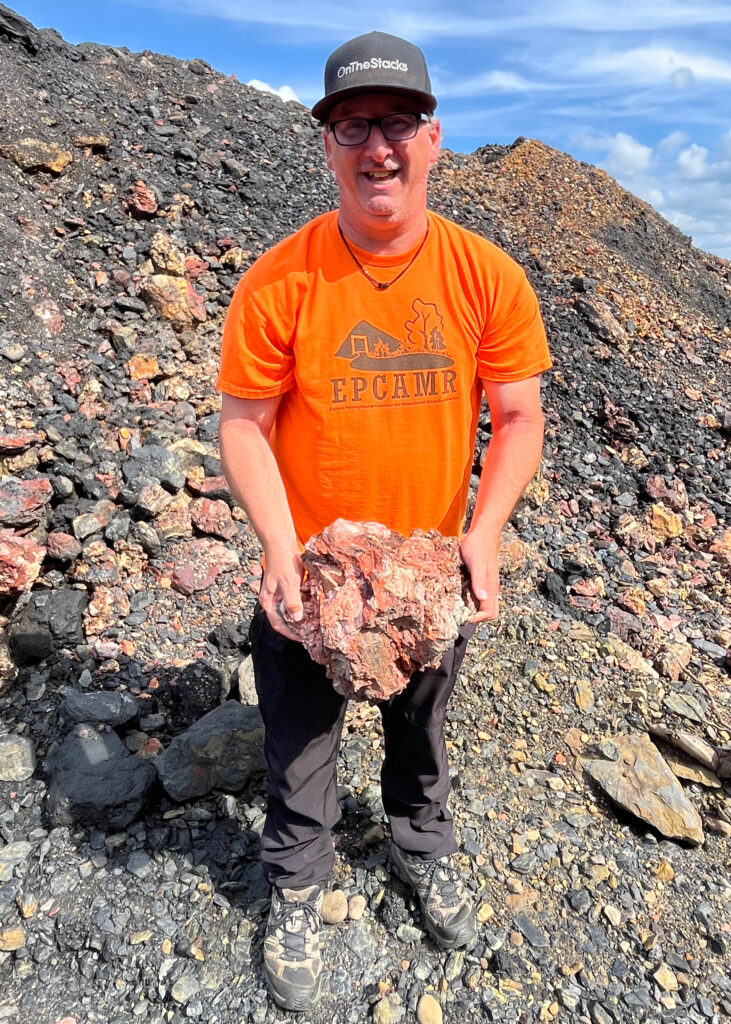
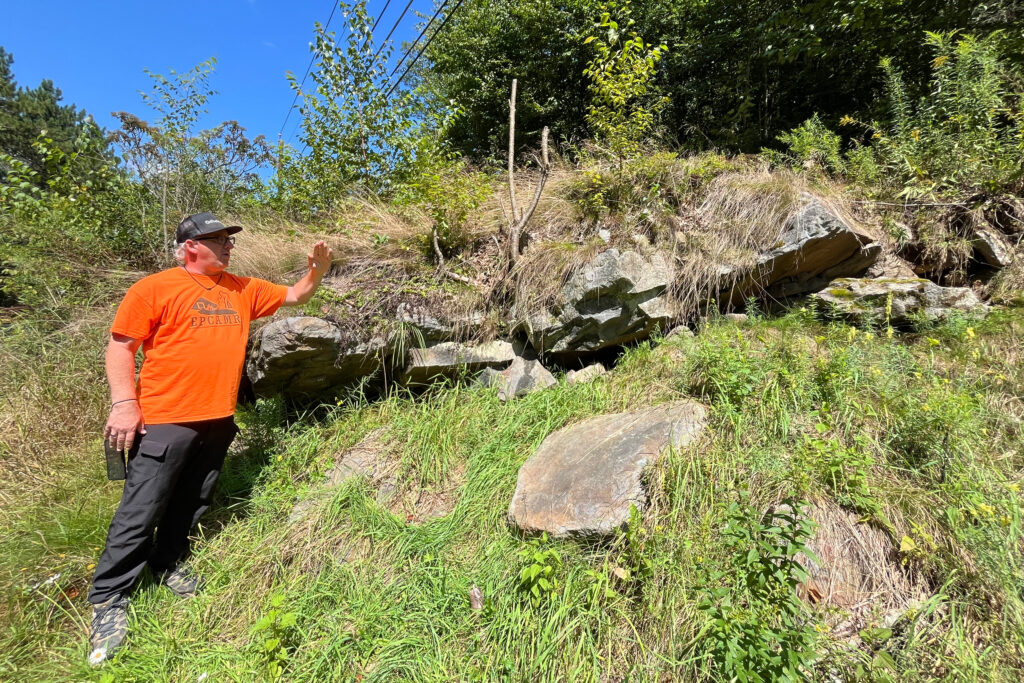
Fish have returned to clean, cold waters near sites where waste coal piles have been dismantled in favor of planted trees, said Bobby Hughes, the coalition’s founder, when showing ICN around some former mine lands in late August. “The plants are starting to grow back—a native wildflower mix,” he said, which attracts pollinators. He pointed out one spot where coal piles have been reduced and shaped to redirect mine drainage from the homes just yards away, creating a big, open field between backyards. That space might be used for the public to enjoy long-term, or ultimately house some kind of development. But for now, it’s much more pleasant for residents to traverse than piles of mining residue.
Hughes also pointed out some corporate developments on former mine lands, including an Amazon distribution center, and the reclamation happening at those sites, like developers putting down seed and carving out drainage systems. Hughes and his team have planted trees nearby.
In the rapidly expanding data center landscape, where to build can come down to the lesser of multiple evils. Building on mine lands “kind of beats taking down natural forest land,” said Hughes. That doesn’t mean it would be easy.
Hughes knows what would need to happen before developers even begin to build a new data center. Those underground mine pools that offer such promising natural cooling? “The majority of them are not mapped accurately,” he said, which would not only present structural challenges to engineers, but would also require investigation to figure out where their tainted discharge ends up (not to mention ongoing monitoring).
When mine pool water heats up from data center use, ideally in “closed loop” systems that mean the same water gets reused instead of siphoning water from nearby communities, that could spur chemical reactions. “If that happens, you could get an increased metal load into extremes [the area] hasn’t seen before,” Hughes said, “and that could lead to problems…[like] fish kills downstream.”
The unknown consequences of using mine pools for closed-loop cooling systems begs further study. Not only could the changing chemistry prove damaging to the surrounding environment, but long-term use could also raise water temperatures to the point that the mine pools cease to offer effective cooling systems.
To those who insist the mine pools are large enough to accommodate small temperature changes without issue, Hughes has a challenge: “Prove that to me,” he said. “If the mine water temperature changes slowly over time, you may not see something until after the change is already inverted from cold to warm.”
Then there’s the local wildlife. Hughes said builders would have to complete bat surveys and look at the Pennsylvania Natural Diversity Inventory to ensure their builds don’t disturb threatened plants and animals.
This story is funded by readers like you.
Our nonprofit newsroom provides award-winning climate coverage free of charge and advertising. We rely on donations from readers like you to keep going. Please donate now to support our work.
Donate NowBuilders may not love the idea of building on old mines, either. Despite the subterranean lake’s cooling “advantage” at Iron Mountain, Pennington said building underground was no simple feat. “I don’t think anybody would go through the work and expense of putting a data center below ground just to take advantage of a natural cool environment down there,” he said. (Iron Mountain’s Boyers site had been used for years as a storage facility before it housed the data center.) Workers also have to monitor the lake’s temperature and water level “constantly,” he added, even though there’s no concern about chemical drainage, unlike in former coal mines, which would require even more intensive observation.
Infrastructure at old coal mines isn’t a given. Not all the mine lands Hughes works on in eastern Pennsylvania have power infrastructure ready to go. “In our assessment report for solar, we found that most of the areas that we’re looking at…the grid infrastructure isn’t there,” he said.
Matt Prusak, a former executive at several data center companies and current chief business officer at data center systems manufacturer Giga Energy, says building on former mine lands has come up as developers seek out novel, viable sites, but the power issue remains. “The mine can solve land and sometimes cooling,” Prusak says. “However, it does not solve the grid… The bottleneck is typically in megawatts, not acreage.”
Local Skepticism Endures
Walking past fuzzy mullein and saplings growing on former mine land, Hughes emphasized that his organization’s work lies in assessments of these sites to determine the next steps for reclamation. “It’s not for me to decide if I think mine lands are the right locations” for data centers, he said. Where he lives, just outside the areas that used to house coal mines, his community is shoring up their zoning ordinances to keep data centers out.
Heading north toward Hughes’ office on windy Pine Run Road, white signs with bold, red letters make a familiar demand every few miles, peeking out between roadside shrubs: “NO DATA CENTERS.”
In Archbald, about 30 miles north of Hughes’ office, the promise of treating polluted former mine lands for iron, aluminum, sulfuric acid and other heavy metals before any construction takes place isn’t enough to appease residents who fear data centers will destroy their communities, nor is the potential use of mine pools for cooling the site’s high water needs (up to 3.3 million gallons per day in the hot Pennsylvania summers). The proposed 500-acre Wildcat Ridge Data Center campus has met fierce local resistance.
At a hearing about the project earlier this year, County Commissioner Bill Gaughan spoke out against the proposal with a nod to the long history of coal mining and pollution in the region. “I am not anti-technology, and I’m not anti-progress. I don’t think anybody is, but I am absolutely opposed to sacrifice zones, which I think this is what we’re becoming,” he said. “I am opposed to a future where communities like Archbald are once again told ‘trust us, be patient, it will be worth it in the end.’ We have heard that before. Coal was supposed to be worth it. It wasn’t.”
About This Story
Perhaps you noticed: This story, like all the news we publish, is free to read. That’s because Inside Climate News is a 501c3 nonprofit organization. We do not charge a subscription fee, lock our news behind a paywall, or clutter our website with ads. We make our news on climate and the environment freely available to you and anyone who wants it.
That’s not all. We also share our news for free with scores of other media organizations around the country. Many of them can’t afford to do environmental journalism of their own. We’ve built bureaus from coast to coast to report local stories, collaborate with local newsrooms and co-publish articles so that this vital work is shared as widely as possible.
Two of us launched ICN in 2007. Six years later we earned a Pulitzer Prize for National Reporting, and now we run the oldest and largest dedicated climate newsroom in the nation. We tell the story in all its complexity. We hold polluters accountable. We expose environmental injustice. We debunk misinformation. We scrutinize solutions and inspire action.
Donations from readers like you fund every aspect of what we do. If you don’t already, will you support our ongoing work, our reporting on the biggest crisis facing our planet, and help us reach even more readers in more places?
Please take a moment to make a tax-deductible donation. Every one of them makes a difference.
Thank you,