

U.S. exports of natural gas are surging, and legislation moving through Congress could boost them even higher.
A bill that would overhaul federal permitting for a range of projects across energy, technology and other sectors is expected to unleash a wave of pipeline construction, experts say. Much of that gas could end up overseas.
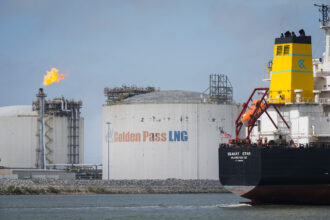
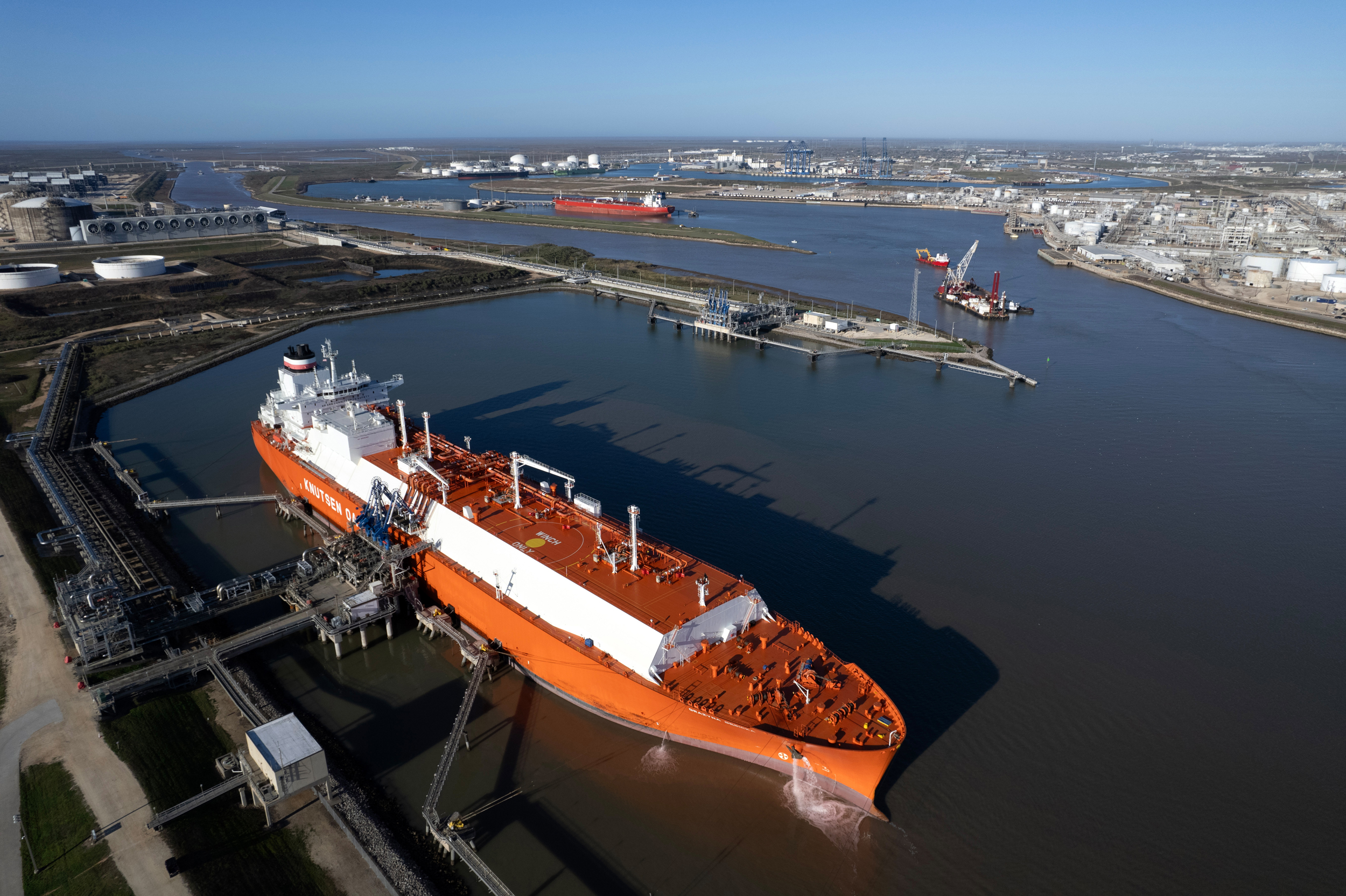
Exports of liquefied natural gas, or LNG, are already the fastest-growing source of demand for U.S. gas production, which hit a record high this summer. By 2040, those exports are expected to roughly double.
If the Bipartisan American Affordability and Jobs Act becomes law, that projected increase could grow by an additional 8 percent to 15 percent, according to modeling by the Rhodium Group.
While some of the bill’s proponents say it would help reduce climate pollution by speeding construction of renewable energy and electricity transmission, many environmental groups are warning those gains would be outweighed by accelerating fossil fuel development.
Ben King, a director with Rhodium’s energy and climate practice, said the biggest winner among fossil fuels would be LNG. The group’s modeling projected a buildout of new gas pipelines, most of which would be oriented to exports, he said.
While LNG growth has faced few constraints, one of them has been a lack of new pipelines, said Mariam Al-Shamma, a director with the Bipartisan Policy Center’s energy program.
“It’s gotten really difficult to build interstate gas pipelines in the United States, and that’s obviously something you need if you want to be exporting LNG and don’t want to have an impact on gas supply domestically,” Al-Shamma said.
The permitting bill would make it harder for states and tribes to modify or reject certain permits needed for pipelines and would also restrict legal challenges by environmental groups or other opponents. These types of challenges have slowed or blocked numerous pipeline projects in the Northeast and Appalachian region.
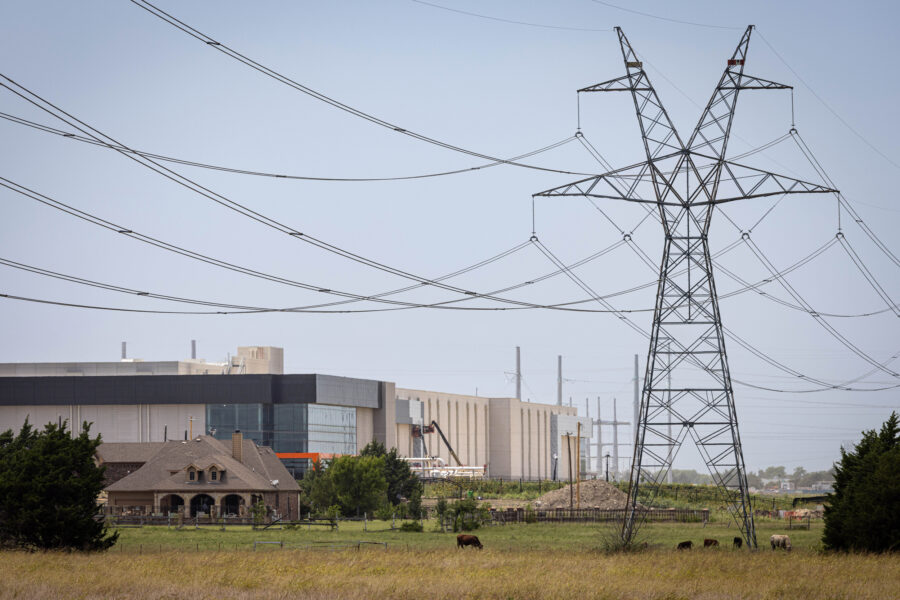
Beyond pipelines, the bipartisan bill could free more gas for export by reducing demand for it in the United States. While domestic gas use is expected to grow in coming years, driven in part by demand from data centers and others, the bill could help wind and solar energy gain a larger share of that increased electric demand, Rhodium’s modeling found.
Yet rather than remaining underground, the modeling said, that natural gas would likely get exported.
It’s unclear what that would mean for the global climate. If LNG exports displace coal, they could, under certain conditions, reduce greenhouse gas emissions, Rhodium said. (Some studies suggest LNG is even worse for the climate than coal, because of methane leaks.) If they spur new demand or replace renewable energy, they would drive pollution higher. In cases where exports replace gas from Russia or the Middle East, they wouldn’t change emissions much at all.
“The simple fact of the matter is it’s a whole jumble of all those things,” King said.
Modeling aside, some climate advocates are warning that provisions in the bill would effectively lock in a massive wave of LNG exports that has already been approved.
The U.S. Department of Energy had authorized the export of nearly 56 billion cubic feet of gas per day as of September. For a sense of scale, that figure is equal to roughly 40 percent of current U.S. gas production. Only about two-thirds of what has been authorized is either operating or under construction.
The Trump administration has focused on expanding LNG exports. It has devoted billions of dollars in federal subsidies to help build terminals or sell gas overseas and wielded exports as leverage in trade negotiations to secure new deals with foreign governments.
This story is funded by readers like you.
Our nonprofit newsroom provides award-winning climate coverage free of charge and advertising. We rely on donations from readers like you to keep going. Please donate now to support our work.
Donate NowIn 2024, the Biden administration paused approving new gas exports, saying it was reviewing its criteria for determining whether they were in the public interest. Provisions in the new bill would make it much harder for a future administration to do the same.
“That kind of project uncertainty is exactly what the legislation is attempting to eliminate,” Al-Shamma said.
An analysis by Public Citizen, a consumer advocacy group, argued current law allows a future administration to modify existing LNG permits if, for example, it determined exports were inflating domestic energy prices. The new bill could erect significant hurdles to this approach, the group argued, by restricting such modifications to a narrower set of circumstances.
What’s more, the bill would impose a new standard for judicial review that would allow companies to sue the government if agencies modified or revoked permits. In those cases, the agency would need to show “by clear and convincing evidence” that its action was warranted. If it failed, the government could face substantial penalties tied to the costs of construction or operations.
If an agency denied or “unreasonably delayed” a permit, and an applicant could establish it was being treated unfairly, the penalties could reach 100 percent of “reasonably expected” costs.
LNG terminals often cost tens of billions of dollars to construct, a sum that experts say could serve as a formidable deterrent to an agency that was considering modifying a permit. Once built, the terminals are meant to operate for decades.
“The project certainty provisions in this bill are quite certainly the worst provisions I’ve seen in 20 years of following Congress,” said Jeremy Symons, president of the Center for Energy & Environmental Analysis, a think tank. “They are a blank check to industry.”
Symons added that under the Natural Gas Act, “the Department of Energy has a responsibility to determine whether or not these facilities’ exports are in the public interest, and this provision stomps on that.”
Al-Shamma said her reading of the bill suggested it would be unlikely to prevent the Energy Department from using its authority under the Natural Gas Act. One of the allowable reasons for modifying or revoking a permit is if the action were taken “pursuant to any applicable law or regulation.”
Others have argued that permits have not presented a constraint on LNG exports—some of the proposals that have won approval to export gas have yet to secure investors to finance construction. By this argument, the permit certainty provisions may have little practical effect.
LNG exports rose by nearly 25 percent in the first half of this year. And bill or no bill, they are expected to keep climbing next year.
About This Story
Perhaps you noticed: This story, like all the news we publish, is free to read. That’s because Inside Climate News is a 501c3 nonprofit organization. We do not charge a subscription fee, lock our news behind a paywall, or clutter our website with ads. We make our news on climate and the environment freely available to you and anyone who wants it.
That’s not all. We also share our news for free with scores of other media organizations around the country. Many of them can’t afford to do environmental journalism of their own. We’ve built bureaus from coast to coast to report local stories, collaborate with local newsrooms and co-publish articles so that this vital work is shared as widely as possible.
Two of us launched ICN in 2007. Six years later we earned a Pulitzer Prize for National Reporting, and now we run the oldest and largest dedicated climate newsroom in the nation. We tell the story in all its complexity. We hold polluters accountable. We expose environmental injustice. We debunk misinformation. We scrutinize solutions and inspire action.
Donations from readers like you fund every aspect of what we do. If you don’t already, will you support our ongoing work, our reporting on the biggest crisis facing our planet, and help us reach even more readers in more places?
Please take a moment to make a tax-deductible donation. Every one of them makes a difference.
Thank you,