

Pennsylvania’s data center industry has promised economic growth and a revival of the state’s industrial strength. But a new report issued Tuesday finds little evidence of job growth and warns that adding more of the massive computer complexes could repeat a long history of industrial facilities exploiting the communities that house them.
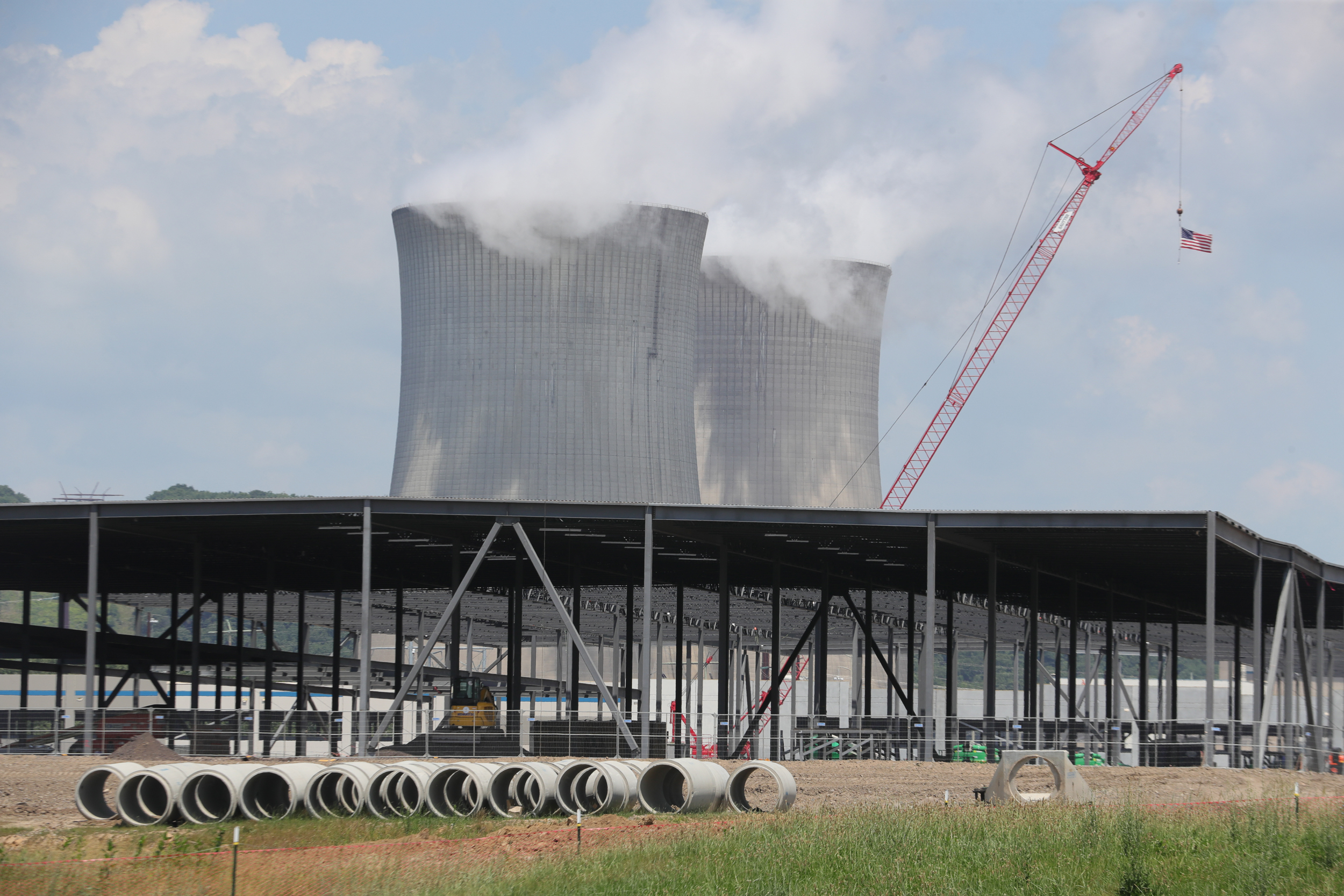
The research group Data & Society spent almost two years investigating the material, social and political impacts of the industry on Pennsylvania, where 66 data centers could be built if all current plans move forward, according to Data Center Proposal Tracker, an independent website. Of the total, five are under construction and another five have been approved for construction.
After talking to developers, attending industry conferences, consulting academic experts and gathering input from community members, the researchers concluded that the industry would need huge quantities of land, water and energy, and that the state’s “residual assets” from earlier industrial development make it especially attractive to the industry.
It also found that what it calls the boosters of AI use industrial nostalgia, nationalist fervor and union pride to mask a “power grab” that echoes earlier generations of industrial development, most recently the growth of the natural gas industry in the 2000s.
Some opponents of data centers are concerned that the huge amounts of power needed to feed the facilities would worsen climate change, the report said. Others say the centers threaten public health or undermine local democracy by failing to keep communities fully informed of developers’ plans.
Although Data & Society rejects any claim that it advocates for particular policies, the report is sharply critical of the tech industry, arguing that its heavy use of land, energy and water ignores local concerns and continues a historical pattern of exploitation.
“This report shows that the fight against data centers is about more than just AI,” it said. “For many, it is also about resisting corporate greed, destruction of local knowledge and resources, and the accumulation of wealth in the hands of the few.”
The research group said the study was funded by part of a $1 million grant from the Mellon Foundation in 2023.
In an interview, lead author Maia Woluchem said some communities have pushed back hard against data center projects, echoing and perhaps exceeding local resistance to earlier waves of industry like fracking or to the severe air pollution caused by generations of coal and steel production in southwest Pennsylvania.
“There are lots and lots of reasons for folks to feel upset, and reflect on these generations of theft, and they feel taken for granted,” she said. “So the data center becomes this symbol of larger remote systems, of inequality, of distrust, and really an instrument of power that folks are aiming to take back.”
Public opposition, the report said, shows data centers in Pennsylvania are not inevitable, as their supporters claim. “Ultimately, the unfolding case of Pennsylvania reveals the limits of AI’s supposed inevitability in America’s Keystone State,” it said.
The report contains on-the-record conversations with 44 people but drew its conclusions from many more discussions across the state, Woluchem said.
The report’s conclusions match the findings of Citizens of Montour County, a community group that won a rare victory against a data center developer in February when county leaders denied a rezoning application that would have allowed a data center to be built on what is now farmland.
“This is probably the biggest thing that has hit Pennsylvania that everybody is rallying together against,” said the group’s president, Sam Burleigh. He thinks there is more public opposition to data centers than there has been against fracking for natural gas. Whereas that was localized, criticism of data centers is broader and based on environmental and social concerns. “That is what has put data centers as the main target of the time,” he said.
The Pennsylvania chapter of the American Petroleum Institute dismissed criticism of AI industry plans to use increased natural gas production to power new data centers.
“Energy is the foundation of our modern economy–from the days of the Industrial Revolution to the invention of the internet and now the AI era, pushing power demand to new heights,” said Stephanie Catarino Wissman, executive director of the chapter. “Pennsylvania’s abundant natural gas can help address the load growth challenge and provide reliable baseload power while reducing carbon dioxide emissions.”
David Masur, executive director of the nonprofit PennEnvironment, said the study is the latest sign of the environmental, financial and public health dangers of data centers that together should lead state legislators to call for a moratorium on data center development so that there is time to consider other ways of protecting the public from the burgeoning industry. A bill this year introduced by state Sen. Katie Muth, a Democrat, would impose a three-year moratorium on the industry.
Masur also argued that public opposition to the centers, regardless of party political affiliation or region, has turned data centers into a political issue just ahead of the midterm elections for Congress and state legislatures in November.
“The polling is clear: the public is overwhelmingly concerned about the proliferation of data centers as well as the harms posed by AI writ large,” Masur said in a statement. “This one-two punch has created public opposition to this industry that is pushing Americans to call on elected officials to take swift action.”
The Data Center Coalition, a trade group, did not respond to a request for comment.
The potential economic benefits of the AI industry were stressed by President Donald Trump and Pennsylvania Gov. Josh Shapiro at the Pennsylvania Energy and Innovation Summit at Carnegie Mellon University in Pittsburgh in July 2025. Trump said then that private industry would invest $40 billion in data centers and another $50 billion in the energy needed to fuel them. Protesters said the claims ignored scientific warnings that increased natural gas production would worsen climate change by adding to greenhouse gases.
David Hess, a former secretary of the Pennsylvania Department of Environmental Protection who now publishes an environmental newsletter, predicted the strength of public opposition to data centers in Pennsylvania, as highlighted in the report, will be felt during this fall’s elections.
“Environmental and community activism is on the upswing and building and politicians at all levels of government better pay attention or risk losing their jobs,” he wrote in an email. “People are fed-up being stomped on and ignored and in Pennsylvania we’ve been stomped on by the best–the coal industry, oil and gas industry, the timber industry and railroads for 175 years.”
About This Story
Perhaps you noticed: This story, like all the news we publish, is free to read. That’s because Inside Climate News is a 501c3 nonprofit organization. We do not charge a subscription fee, lock our news behind a paywall, or clutter our website with ads. We make our news on climate and the environment freely available to you and anyone who wants it.
That’s not all. We also share our news for free with scores of other media organizations around the country. Many of them can’t afford to do environmental journalism of their own. We’ve built bureaus from coast to coast to report local stories, collaborate with local newsrooms and co-publish articles so that this vital work is shared as widely as possible.
Two of us launched ICN in 2007. Six years later we earned a Pulitzer Prize for National Reporting, and now we run the oldest and largest dedicated climate newsroom in the nation. We tell the story in all its complexity. We hold polluters accountable. We expose environmental injustice. We debunk misinformation. We scrutinize solutions and inspire action.
Donations from readers like you fund every aspect of what we do. If you don’t already, will you support our ongoing work, our reporting on the biggest crisis facing our planet, and help us reach even more readers in more places?
Please take a moment to make a tax-deductible donation. Every one of them makes a difference.
Thank you,