


More than 1 billion people per year were exposed to heat waves and fire pollution at the same time from 2010-2019, a sharp jump from the decade before it, according to a new study that highlights the growing public health crisis caused by global warming.
The research, published in Science Advances on Wednesday, is the largest global assessment to date of how many people have been exposed to heat waves and fires—particularly wildfires—at the same time.
“There are two reasons why the total number of days people spend exposed to both hazards can increase: more people are exposed, or people experience these conditions more often,” said lead author Yao Wu, a postdoctoral research fellow at Monash University in Australia, in a written statement to Inside Climate News.
“Our findings show that the second reason plays a much bigger role,” Wu added, noting that “the problem is growing mainly because people are experiencing these two hazards together more often, not simply because there are more people.”
Researchers used detailed environmental data on hourly temperature, fire emissions and air quality, along with population information to map where and when people faced both hazards.
They found that the number of people exposed to at least one day of heat and fire pollution rose from 761 million per year in 2000–2009 to more than 1 billion per year in 2010–2019, with some of the highest exposures in countries that have fewer resources to cope with the problems.
The researchers, from universities in China in addition to Australia, described the trend as “alarming.” Public health plans to address one climate-related hazard at a time aren’t sufficient as disasters increasingly overlap, they said in their study.
Tarik Benmarhnia, a professor of climate epidemiology who was not involved in the study, said the research highlights a growing challenge for public health.
“This study captures how climate change is actually showing up in people’s lives today, and how it will increasingly affect communities in the future: not one hazard at a time, but several at once,” Benmarhnia, at the Scripps Institution of Oceanography at the University of California San Diego, said in a written statement to Inside Climate News.
Climate hazards, which also include events like floods, dust storms and drought, can additionally follow one another in rapid succession, he added.
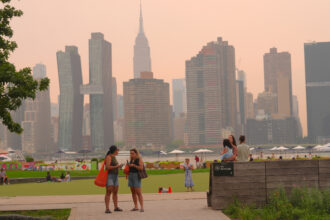
The hazards covered in the study—fire pollution and heat—can both be deadly. Extreme heat overwhelms the body’s natural systems. The heart strains to move blood, sweating depletes fluids and heatstroke can damage internal organs, including the brain. Wildfire smoke, meanwhile, carries toxic fine particles linked to a wide range of health woes.
The cumulative impacts of simultaneous exposure to heat and fire are not well known and need to be better studied, the researchers said. Benmarhnia also stressed that big research gaps remain, but noted that a handful of studies have found overlapping heat and smoke events send people to emergency rooms with worse heart and lung problems than either hazard would cause in isolation.
The new analysis found the annual average number of days with both heat and fire exposure rose sharply per person, from one day during 2000–2009 to 1.7 days during 2010–2019.
Zambia, the Democratic Republic of Congo, Malawi, Guatemala and Burundi had the highest exposures on a per-person basis, with Zambians having nearly a month of exposure per person every year, according to the study. Measured this way, smaller countries with frequent exposure tend to top the list.
The study also looked at the total exposure days across each country’s population. By this measure, more populous countries tend to rank higher because many residents are affected, even if each person is only exposed for relatively few days. The Democratic Republic of Congo, Indonesia, Mexico, Brazil and Russia collectively accounted for more than half of all global exposure days to both hazards between 2010 and 2019, the study found.
Countries with lower living standards, including poorer health and less education, had the highest exposure per person and the largest increases, the researchers said.
They added that lower-income countries often have less capacity to prepare for and adapt to climate risks, and that fire-related air pollution in low-income countries is four times worse than in wealthy countries.
This story is funded by readers like you.
Our nonprofit newsroom provides award-winning climate coverage free of charge and advertising. We rely on donations from readers like you to keep going. Please donate now to support our work.
Donate NowClimate-Amplified Feedback Loops
The study highlighted how climate change, heat waves and fires affect one another.
Human-caused climate change is shifting global fire patterns. In the past, fires were more strongly influenced by how much rain an area received. But today, rising temperatures play a larger role, the researchers said.
Hotter temperatures, drier air and parched soil make fires more likely to start and spread quickly. In turn, fires can worsen heat waves by releasing heat and pollution into the air, making conditions even hotter and drier.
“These processes create a positive feedback loop in which heatwaves and fires amplify one another,” the researchers said.
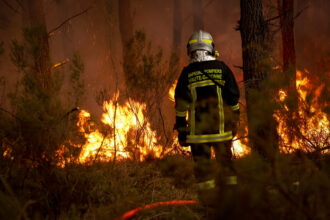
Global warming also makes heat waves and large fires more likely to happen at the same time. The researchers pointed to the 2021 record-breaking fires in Western Canada and the United States that burned 3.2 million hectares. A heat dome contributed to between 21 percent and 34 percent of the area burned.
The study also cited the 2022 heat-fueled fires that blazed across Portugal, Spain and France, along with the 2020 fire season in Brazil’s Pantanal, which, worsened by heat and drought, destroyed about a third of the world’s largest tropical freshwater wetland.
Almost every region of the world experienced increases in the annual average number of dual-exposure days. Central and South America, Central and Eastern Africa, Southeast Asia and parts of North America, Australia and Russia were particularly affected, the researchers said.
To help protect people, public policy should make it easier to stay safe indoors during heat waves and wildfires, the researchers said. This includes providing accessible emergency shelters and cooling centers while designing buildings to handle extreme heat and smoke, with ventilation that filters toxic particles and gases.
Benmarhnia suggested that heat alerts could incorporate air-quality warnings.
“Learning to live with these combined events, and designing policies with them in mind, will be key to protecting people’s health in a warming world,” Benmarhnia said.
About This Story
Perhaps you noticed: This story, like all the news we publish, is free to read. That’s because Inside Climate News is a 501c3 nonprofit organization. We do not charge a subscription fee, lock our news behind a paywall, or clutter our website with ads. We make our news on climate and the environment freely available to you and anyone who wants it.
That’s not all. We also share our news for free with scores of other media organizations around the country. Many of them can’t afford to do environmental journalism of their own. We’ve built bureaus from coast to coast to report local stories, collaborate with local newsrooms and co-publish articles so that this vital work is shared as widely as possible.
Two of us launched ICN in 2007. Six years later we earned a Pulitzer Prize for National Reporting, and now we run the oldest and largest dedicated climate newsroom in the nation. We tell the story in all its complexity. We hold polluters accountable. We expose environmental injustice. We debunk misinformation. We scrutinize solutions and inspire action.
Donations from readers like you fund every aspect of what we do. If you don’t already, will you support our ongoing work, our reporting on the biggest crisis facing our planet, and help us reach even more readers in more places?
Please take a moment to make a tax-deductible donation. Every one of them makes a difference.
Thank you,