Welcome to Inside Climate, a podcast from the staff of Inside Climate News. Things get a little fishy in this episode as we discuss fish farming—aquaculture, an industry that now brings in $300 billion a year. Inside Climate News partnered with the Outlaw Ocean Project, a journalism nonprofit based in Washington, D.C., to investigate aquaculture’s global impact and the products, such as fishmeal, that have allowed it to grow. But who does this industry harm? And how does it impact the products that end up on your plate?
Listen and subscribe on YouTube, Spotify, Apple Podcasts, Amazon Music, and iHeart.
JAKE BOLSTER
Seafood is the most traded food commodity in the world.
SUSAN RYAN: More than half of the seafood that’s eaten globally comes from aquaculture. It’s a $300 billion a year industry. It’s enormous.
Aquaculture—or fish farming—is promoted as an eco-friendly solution to address over-fishing, but according to a new investigation, it’s not as sustainable as it appears.
SUSAN RYAN: About a fifth of all marine life that’s pulled out of the ocean is turned into feed.
Inside Climate News partnered with the Outlaw Ocean Project on a massive two-year investigation into aquaculture’s vast supply chain and uncovered a host of issues.
JOHNNY STURGEON: We’ve seen many instances of avoidable worker deaths. There are often violent protests.
In addition to the human impacts, there are environmental consequences from the fish farms themselves:
JOHNNY STURGEON: The pens that hold the nets up are full of polystyrene, Styrofoam. And over the years, they crack. And so on some of these beaches I put my hand in the sand expecting to pull up sand and it was just Styrofoam.
That’s coming up on Inside Climate.
Welcome to Inside Climate. I’m your host, Jake Bolster.
More than 3 billion people worldwide rely on seafood as a primary source of protein. Because of that voracious appetite, more than 35 percent of global fish stocks are classified as “overfished,” according to the United Nations.
“Farming fish” by breeding and harvesting them in captivity, is billed as a solution to addressing growing demand and maintaining biologically sustainable fish stocks. But farm-raised fish need food, and that food often comes in the form of feed or fishmeal, which is made from other fish, fish that are also taken out of the ocean in great supply.
To understand the full environmental impact of farmed fish, Inside Climate News partnered in a global investigation superheaded by the Outlaw Ocean Project, a journalism nonprofit based in Washington, D.C.
The project examines the untold consequences of using “food for feed”—which is also the investigation’s title. Not only does the production of fishmeal contribute to over-fishing, it generates a stench and toxic waste that can pollute nearby communities.
We’ll speak to Susan Ryan, operations and investigations editor at the Outlaw Ocean Project, about other crimes and social costs the global series uncovered.
And we’ll talk to Inside Climate News’ fisheries and aquaculture reporter, Johnny Sturgeon, who worked for both organizations, about what he uncovered on the ground in Greece, Europe’s most important fish exporter.
Let’s dive in.
Food for Feed
JAKE BOLSTER
Hey Susan, welcome to Inside Climate and thanks for taking the time to talk to us from your home base in Dublin, Ireland, today.
SUSAN RYAN
Thanks very much, Jake. Very glad to be here.
JAKE BOLSTER
So Susan is the operations and investigations editor at the Outlaw Ocean Project, a nonprofit journalism organization based in Washington, D.C., that investigates human rights, labor and environmental concerns that impact the world’s oceans. Your newsroom recently published a massive investigation called Food for Feed, a portion of which was co-reported and published by Inside Climate News. So, Susan, tell me more about this term Food for Feed.
SUSAN RYAN
So the project is essentially looking at the aquaculture industry, which is the raising of farmed fish. And we looked at it from the very beginning point of pulling fish out of the ocean to the end point of how that fish is turned into fishmeal, turned into fish food, fed to fish in a fish farm and then that farmed fish ends up on a plate.
It’s a huge area of protein production and it’s growing more and more every year as the increasing demand for protein grows around the world. More than half of the seafood that’s eaten globally at this point actually comes from aquaculture. It’s a $300 billion a year industry. It’s enormous.
This story is funded by readers like you.
Our nonprofit newsroom provides award-winning climate coverage free of charge and advertising. We rely on donations from readers like you to keep going. Please donate now to support our work.
Donate NowJAKE BOLSTER
So we’re farming these fish, we’re growing fish, we’re raising fish in a controlled environment, but we’re feeding them fish that were caught out in the ocean that are wild?
SUSAN RYAN
Yeah, basically. At the moment, about a fifth of all marine life that’s pulled out of the ocean is turned into feed. So, that’s a fifth of everything that comes out of the ocean is being turned into feed that goes out to feed fish.
JAKE BOLSTER
And how do they turn the wild fish into feed?
SUSAN RYAN
Basically, you take fish out of the ocean, or sometimes it’s the leftovers of fish after they’ve been filleted and kind of the stuff that goes directly to humans has been taken off. The remainder of the fish, this material, goes to a fishmeal factory where they literally cut it up, they mince it up, they heat it to incredibly high temperatures inside their factory and they produce what is ultimately kind of a flaky, flowery product at the end, and that’s the fishmeal.
JAKE BOLSTER
Outlaw Ocean has a website that you’ve published all of this at. And you lay out how we used to get food based on how much an ecosystem could provide, but now that’s totally flipped on its head.
SUSAN RYAN
Yeah, the whole chain is very interconnected, it’s very complex and it’s very global. What we’ve seen happen is, for example, fish is being pulled out of the ocean by foreign vessels off of West Africa, and that fish is going to go to processing plants either in Africa and then sent on to Europe, or else it’s going straight up to Europe and it’s being processed there and fed to fish. So you’re seeing the extraction of resources from areas of the world that had relied on those directly for human consumption and to manage local industry, and it’s being moved to countries that have higher wealth and can purchase. And those people are then getting displaced, their industry is being devastated, the fish is getting pulled out of their ocean, it’s pushing migration from, for example, as I say, West Africa up into the EU. So that’s just one part of a very complicated picture globally about the extraction of, and the movement of, these resources.
JAKE BOLSTER
So, in the investigation, the Outlaw Ocean Project was aiming to document the supply chains that connect, you know, this, this fishmeal all the way to a consumer’s plate. Can you tell us more about each stop along the way on that journey?
SUSAN RYAN
You have fish being pulled out the ocean by sometimes small vessels and as part of a fleet, sometimes enormous vessels that are very industrial. That’s getting brought to shore somewhere and either getting processed in that location into fishmeal or else getting shipped somewhere else to be turned into fishmeal. From the fishmeal factory point, then it either goes directly to a farm to feed shrimp or to feed salmon, whatever the case may be, whatever they’re raising, and then from those farms, it’s going to go on to some kind of intermediary supplier. Usually somebody who buys from farms processes those fish in some shape or form and then passes them on to retailers
JAKE BOLSTER
So the labels that you would see on a supermarket, you know, if you go in, you buy salmon and it’s like sustainably farmed, it sounds like they don’t tell the whole story?
SUSAN RYAN
No, it’s really, really hard to trace it back and I think it’s really hard for retailers themselves to even have the full picture on where, you know, what exact ships do this come from, how are the people on those ships treated? Some of those labels don’t actually go down to the ship levels, so they don’t certify, you know, people who worked to pull this out of the sea were treated fairly or were treated safely.
JAKE BOLSTER
So as you’re tracing the supply chain, what are some of the crimes or social costs that you uncovered in the investigation?
SUSAN RYAN
Yeah, it’s a pretty broad range of things that we’ve seen happening. Mostly at the seafood, kind of fishing level, you’d see things like the mistreatment of workers on vessels, see forced labor on vessels, see human trafficking, where people are think that they’re going to work in one place, they’re forced to work somewhere else or they’re not allowed to leave the ship. We see worker illness, people not being allowed to access medical treatment in a timely manner. We’ve seen disputes over wages, people not being paid right for the contract that they think that they’re on. Kind of a lot, a lot of different forced labor issues really at the ship level.
Then later on through the chain, we see problems within the fishmeal factories. Things like, you know, the actual production of fishmeal is a very dangerous business. You’re heating fish to a very, very high level, and in doing so, it releases some toxic gases. So you have to be careful how you manage the kind of containment and the release of those things.
In the factories as well, you know, you see people having injuries in the actual factories themselves, and you see a lot of problems in communities who live around fishmeal factories where perhaps the gases that are produced haven’t been properly contained or the air hasn’t been cleaned before it’s been released, and those people are living with the kind of stench that’s been produced by the fishmeal, and it’s causing a lot of unrest.
JAKE BOLSTER
Are there ways to combat the smell or is that part of the deal?
SUSAN RYAN
There are a number of ways that you can definitely reduce it. There are mechanical solutions, basically, where you kind of clean the air. They call these scrubbers and there’s different types of them. You can build them into your factory, ideally to begin with, or you can actually retrofit some of those afterwards.
JAKE BOLSTER
So do companies say it’s too expensive or it’s prohibitive to install that kind of thing?
SUSAN RYAN
Well, we reached out to hundreds of companies that we covered in this investigation and we tried to explore the reasons why you mightn’t do it, but most of the companies that we contacted never replied.
JAKE BOLSTER
Let’s talk about some of the places where these fish end up that might be familiar to a U.S.-based audience. Obviously, there are a lot of big names on that list, there are lots of companies on it, but one name that jumped out was Costco. Can you walk me through their supply chain and what you found?
SUSAN RYAN
They’re an enormous company and they have very varied supply chains for, you know, all the kinds of products that are on their shelves. But what we did find was things like Indian shrimp that’s on their shelves in Costco that is fed with fishmeal that comes from Indian plants that we found were connected with these social unrest issues around the stench that’s produced in the factories. There were other issues as well, like the failure to control wastewater pollution, so the fishmeal factories weren’t properly taking care of the kind of toxic byproducts of production.
Another area is the salmon that comes into them. Certain of the salmon that comes into Costco is fed on fishmeal from Peru. And the issues that we found in the related fishmeal factories for those salmon were things like issues over the payment of wages to fishermen who were supplying the factories with fish. And we actually also found reports of explosions at one factory, it was to do with a problem with a mechanical heater, a dryer, inside the factory. So, I mean, it’s kind of a sampling just to pull out, you know, Costco, it’s a sampling of the type of issues that we saw writ large across the industry.
JAKE BOLSTER
And how would a company like Costco respond when you alerted them to this?
SUSAN RYAN
So we did contact Costco and we didn’t hear back from them. Different retailers did become very engaged. We’ve had, in previous investigations as well, we’ve had retailers who really, you know, pull stuff immediately off the shelves.
JAKE BOLSTER
How many reporters did it take and how many countries did you travel to?
SUSAN RYAN
This report involved dozens of journalists and researchers. In the end, what we mapped was 1,400 fishmeal factories around the world and it was over 2,000 ships that feed fishmeal factories. So yeah, it’s really a global industry. It’s enormous.
JAKE BOLSTER
Is it possible to have seafood that’s sustainably farmed?
SUSAN RYAN
It’s a really good question. I think it is, but in a particular way and at a particular scale. The promise of aquaculture was that they were going to use, I suppose, the offcuts or the trimmings of a fish. So basically what was left over after all of the otherwise useful stuff had been given to a human or given to an animal, this was going to be what was left. And if that’s what you’re doing, that’s a great use of what would otherwise just be wasted material. In the cases that we’ve seen in how the industry has developed, it’s increasingly pulling full, otherwise healthy food that could go to a human immediately, and cutting it up and feeding it to a fish somewhere else in the world, so that is less sustainable.
JAKE BOLSTER
Do you still eat seafood after all this?
SUSAN RYAN
I do, on occasion, still eat seafood after this.
JAKE BOLSTER
Well it’s ubiquitous, right?
SUSAN RYAN
Yeah, yeah. And it is really healthy, so it’s kinda hard to find a replacement.
JAKE BOLSTER
The Outlaw Ocean Project is unique for the way in which it collaborates and distributes its reporting with co-publishers around the world. In fact, Inside Climate News is a partner, and we will be publishing seven stories in the Food for Feed series by our fisheries and aquaculture reporter Johnny Sturgeon. He’s been splitting time between our two newsrooms to participate in this effort. We’re going to hear about what he uncovered on the ground in Greece in just a moment. But before that, Susan, thank you so much for joining us here.
SUSAN RYAN
Thanks very much, Jake.
Aquaculture’s Hidden Costs
JAKE BOLSTER
Hi Johnny, welcome to the show.
JOHNNY STURGEON
Good morning. Great to be here.
JAKE BOLSTER
So Johnny Sturgeon is a London-based reporter who covers fisheries and aquaculture for Inside Climate News. You’ve also been filing for the Outlaw Ocean Project for the last year and you’re a Fulbright scholar. Johnny’s recently refurbished an oil rig lifeboat called the Orla using funds from a crowdsourcing campaign on Instagram and TikTok, which first introduced you to maritime journalism and that also made you a maritime influencer. Is that right?
JOHNNY STURGEON
I wouldn’t go as far as maritime influencer.
JAKE BOLSTER
Fair enough. Well, so for the Food for Feed project, you did some on the ground reporting in Greece. Why did you focus on Greece and how important is aquaculture to that country?
JOHNNY STURGEON
Greece is a brilliant example of Europe’s aquaculture industry. It has this vast coastline. It’s known for picturesque beaches and as a wonderful holiday destination. But it’s also the top producer of sea bass and sea bream in the region. It produces over 120,000 tons annually and it ships a lot of this to, you know, major culinary destinations like France and Spain and Italy. And the aquaculture industry in Greece in the last decade and a half has really ramped up, since 2011, after the debt crisis. Greece kind of bet its future on coastal aquaculture and earmarked around 60,000 acres of coastline for multinational, international aquaculture firms to come through and develop sites and expanding the industry almost 24 times came with a pretty simple economic pitch to Greek nationals, that people want more seafood and there is a limit to what we can viably pull from the oceans, so instead we will farm oceans. But the issue is most of the fish that is being farmed in Greece is being fed the same fish that is being taken from the oceans and in a way is accelerating ocean depletion.
JAKE BOLSTER
And how valuable is that trade for Greece?
JOHNNY STURGEON
For Greece, the aquaculture industry is around $900 million annually. It’s the most valuable fin fish aquaculture industry in Europe, and it’s the third most valuable aquaculture industry in Europe for all species. Collectively, aquaculture globally today is well over $300 billion. As of the last few years, more fish comes from aquaculture for human consumption than comes from the oceans.
JAKE BOLSTER
So aquaculture is being framed as a climate-based solution, but how sustainable is it, really?
JOHNNY STURGEON
In Greece specifically, lots of industry lobbyists will claim that it’s the most sustainable form of animal protein there is. You know, and they pitch the idea that aquaculture needs less space and less feed, and it’s a low carbon footprint protein. And while there are some successes in the aquaculture industry, so bivalves and those are kind of oysters and mussels and clams, seafood species that don’t require animal feed, the reality is that the vast majority of seafood is in fact fed wild fish. So the exact livestock that the industry claims to be saving, it’s taking, grinding down into fish oil and fish powder, cooking it, pulverizing it—usually thousands of miles away from end consumers and the end destination—and then it is feeding it to those farmed species. So before it reaches market, a sea bass or a sea bream in some Mediterranean farms can eat two-and-a-half times its body weight in wild caught fish.
JAKE BOLSTER
The title of this story is Food for Feed. Where is the feed for this fish coming from in Greece? Is it local?
JOHNNY STURGEON
Very rarely. So for Greece, two of the largest aquaculture players are in fact sourcing their fishmeal from a region known as Western Sahara. It’s the last colonial state in Africa. And since the mid 1970s, Morocco has been militarily occupying Western Sahara. It’s, you know, a forced presence that I think about 10 EU Court of Justice rulings and various United Nations rulings have all deemed illegal. But Moroccan ships still routinely head south across the water boundary and exploit and fish Western Saharan waters. They turn that kind of illicit catch into fishmeal, sometimes in plants in Western Sahara, and then they export it globally and they label it as Morocco, but in truth it’s Western Saharan product and it’s a product that has been taken really without the consent of the people of Western Sahara.
And so, for example, in Greece, the seafood company Avramar, which controls about 70 percent of Greek production and exports to somewhere around 40 countries, imports raw materials from more than a dozen Moroccan companies. And Greece is not alone in this problem. France does it, Spain does it, Germany does it, the Netherlands do it. But Greece is a prime example of kind of, yeah, that supply chain starts far from home in regions with real political instability. And it might seem like a small thing, but fishmeal is in many ways exacerbating those political problems.
JAKE BOLSTER
So what other types of problems did you discover in this investigation when it comes to distributing this fishmeal into aquaculture businesses in countries like Greece?
JOHNNY STURGEON
Globally, there is a huge and wide and varied array of hidden costs. So these will include losses of artisanal fishing jobs in areas that have had their local catch taken away to be shipped to a foreign land, to be pulverized and cooked, to then be sent somewhere else. They lose access to really important protein for part of their diet. Chronic chemical exposure, these factories and places where they are, you know, both grinding down the fishmeal and they release some chemicals into local waterways, or even where the fish are then being raised and reared. You know, they add chemicals of all sorts to to kind of keep the fish healthy, but they obviously naturally seep away. We’ve seen many instances of avoidable worker deaths. There are often violent protests. I think there’s around 50 or 60 protests we’ve tracked in the last few years around the world where these fishmeal factories, you know, they’re burning raw fish and cooking it and it stinks and it smells terrible for local populations and, you know, spurred on by these horrid stench kind of wafting through the local air. There’s lots of protests. And so yeah, there’s a huge variety of both social and environmental costs.
JAKE BOLSTER
You mentioned earlier this problem of overfishing stock for fishmeal. How bad of a problem is that?
JOHNNY STURGEON
It’s pretty bad and the data isn’t always there, but in the instances where it is, we found, or the investigation found, that at least half of the species landed by fishmeal vessels were classified by scientific studies as overexploited or worse. And most of the vessels in the fleet that catch fishmeal, they’re either trawlers or bottom trawlers, or they deploy these huge nets, big wide nets, sometimes miles long, that scoop up dense schools of fish and they routinely bring in non-target species, also known as bycatch, stuff that isn’t really meant to be there, but they take it all in and they wreak huge environmental havoc.
JAKE BOLSTER
So how do aquaculture companies respond to these claims? Is there any enforcement or accountability actions that are in place to help address these problems?
JOHNNY STURGEON
Accountability on the whole for the industry is pretty slim. Lots of companies, they’ll claim commitments to safeguarding marine biodiversity, but then they’ll use fishmeal from West Africa or waters that are overfished or over-exploited. You know, we requested comment from most of the companies involved, some acknowledged, some blatantly ignored the investigation. And it’s kind of fallen on this hodgepodge amalgamation mosaic of different organizations to step in. The European Union, specifically in the case of Greece, is introducing fines for companies that fail to independently undertake due diligence on their supply chains, and this should in theory include aquaculture, but they won’t enter into force for two years.
JAKE BOLSTER
You’ve spent time in the Ambracian Gulf, which is a national park in western Greece that includes a maritime protected area. So describe for me what this place was like before the country really invested in aquaculture and what has happened since?
JOHNNY STURGEON
The Ambracian Gulf in western Greece, it’s a beautiful area to begin with. It’s a semi-enclosed fjord. It opens out onto the Ionian Sea, part of the Mediterranean Sea, with a small little bottleneck about half a mile wide. But inside is this area which is home to, you know, critically endangered bottlenose dolphins, loggerhead turtles, Dalmatian pelicans. It has these critical carbon capturing seagrass meadows on the bottom of the ocean floor. And not only is it beautiful, it’s also the home of a once thriving kind of artisanal or small-scale fishing industry. Fifty years ago, there were thousands, some say as many as 5,000 fishermen fishing in the Gulf, providing food and protein to their families in local communities. You know, in the 1960s, a fisherman could catch, according to the people we spoke, you know, up to 300 pounds of shrimp in a day.
But today, it’s very different. It’s more akin to an industrial graveyard. So today, there are 19 active and 11 abandoned fish farms in an area that is not that huge. And in an area that also the water doesn’t really recirculate often. Because of that small bottleneck out onto the ocean, it’s kind of slightly stagnant with all of this waste. And so what you get is you get, you know, uneaten aquaculture food, aquaculture waste, fish excrement, carcinogenic chemicals from these farms all sinking to the seabed and alongside other forms of pollution, agriculture farms are accelerating a process known as eutrophication. And the result, even if you can’t necessarily see it from the surface, is an underwater desert.
JAKE BOLSTER
And what about the legacy fishermen in this region who are not connected to the aquaculture industry? How are they responding?
JOHNNY STURGEON
They’re not happy, and quite understandably so. The fish that they have historically caught and they’ve been able to catch for thousands of years, this is an ancient fishing ground in many ways, they’re running out pretty quickly. They’re depleting fast. You know, we spoke with a fourth-generation fisherman from his boat who said there are no fish left in the bay, and there’s, there’s no fish in the lagoons, there’s no fish at all, you know, whilst in the 1950s they might catch 300 pounds of shrimp.
Today, on a good day, maybe five pounds of shrimp. Hakes have completely vanished. This year, some of the fishermen said that they hadn’t seen a single red mullet, which was a species that they could historically rely on for income. They’ve gone from 5,000 fishermen to just a couple hundred.
JAKE BOLSTER
And is the aquaculture industry providing more jobs than the legacy fishing industry?
JOHNNY STURGEON
It’s a tightly contested statistic. The agriculture industry in Greece provides, I think it’s around 4,000 or 5,000 direct jobs and 5,000, 6,000 indirect jobs. But industry insiders and lobbyists are always arguing back and forth, and there’s a contentious claim that the number of aquaculture jobs hasn’t necessarily increased in the last 10, 15 years. It’s kind of stayed what it is, whilst the artisanal fishing jobs are on the decline year after year.
JAKE BOLSTER
So, are there any other ecological impacts you saw on your reporting trip that were tied to the aquaculture industry?
JOHNNY STURGEON
In the Ambracian Gulf and also along the rest of Greece’s coastline, there’s a big issue that the industry has kind of expanded and it’s boomed really quickly as a result of government, kind of, pushing forwards. But at the same time, it hasn’t always been able to keep up. And so what you get is a lot of abandoned aquaculture sites. So in the Ambracian Gulf, a third of the sites are abandoned, forgotten, unfarmed, essentially just left. And so you have nets and debris, you’ve got synthetic mooring lines leaching microplastics into the water. The ens that hold the nets up are full of polystyrene, Styrofoam. And over the years, in the hot Mediterranean sun, they crack. And all of those little bits of Styrofoam spill out into the ocean. And so on some of these beaches in the Ambracian Gulf, you know, I put my hand in the sand expecting to pull up sand, and it was just Styrofoam. And it’s pretty shocking and it’s pretty horrible.
JAKE BOLSTER
So you reported that the EU has a law that mandates the Gulf water quality needs to improve. Can you tell us about how that deadline is interacting with some of the expansion plans that the Greek government has in place for the area?
JOHNNY STURGEON
Sure. The European Union, across the entire continent, has water quality metrics. As it stands, the Ambracian Gulf is listed as poor quality and it was required to be good quality by next year. But at the same time, the Greek government is also facilitating, kind of, the opposite. It’s working to expand the area over 110 percent. They want to double the yearly local output to 8,000 tons of fish into this small little gulf. And we spoke with one marine scientist on a boat who said it’s kind of akin to having a vulnerable cancer patient and continuing to allow them to keep smoking. You know, that’s the health of the Ambracian Gulf right now. It’s just getting worse and worse and worse.
JAKE BOLSTER
And is that number, that 8,000 tons number, is that realistic or possible?
JOHNNY STURGEON
In theory, yeah. I mean, it’s gonna get pretty crowded. There is space for it in theory, but is there the environmental resilience? Most of the marine scientists we spoke to, they said no. They said that the Gulf is already struggling, it’s already dealing with eutrophication, both from aquaculture and the you know, the farm runoff and the factory runoff, and it’s all pooling and polluting into a small area that isn’t really recirculating. And if you just double the amount of farms, it’s only a matter of time really before things get to maybe a tipping point or they get to a point where they can’t return.
JAKE BOLSTER
Is there any oversight to make sure that the expansion can happen without causing more environmental damage?
JOHNNY STURGEON
Both nationally and also in the Ambracian Gulf, it’s a real mixed bag. So the Gulf is split between five municipalities, two larger regions. There’s kind of a fractured national policy approach. You then have this mosaic of EU regulations, and everyone wants a say on Gulf aquaculture, but nobody really holds the reins entirely. According to one of the experts we spoke to, it’s not necessarily that the mess that has been created in the Gulf is the result of ill intent, but in many ways it’s a product of just political incompetence. She said it’s like the state doesn’t even know what’s happening. And so as government-led reforms have kind of stalled or been curbed, it’s largely dependent on the communities to take these big aquaculture players to court, petitioning the high court to reverse some of these aquaculture expansion decisions. And as it stands, it’s really unclear what’s going to happen. And for residents and for the environment, that’s not wonderful.
JAKE BOLSTER
You’re publishing six stories for ICN as part of this partnership with the Outlaw Ocean Project. What are the other pieces you’ve written about?
JOHNNY STURGEON
Collectively, the investigation and the work the team has covered spans dozens of countries, but it also focuses on various thematic industry problems. For example, fire retardant in feed. So aquaculture in the 1950s, the fishmeal, because it’s highly flammable, just kept exploding and and you know, basically essentially bombing ships from the internal when they were kind of transporting fishmeal across the ocean. So what they started doing is they added a product called ethoxyquin to the fishmeal to stop it from setting on fire, but it turned out ethoxyquin is carcinogenic, and now they’re adding other chemicals to fishmeal to stop it from exploding, but it’s unclear whether those chemicals are also carcinogenic.
We’ve also got a story on stench and whether that’s kind of a biological hazard that is being wrought by the industry.
There’s also a story trying to look at well, what’s the alternative? What’s the solution if we don’t use fishmeal?
And we also have an investigation into China. China has developed hundreds of fish farms in the Xinjiang region, an area in, kind of, northwestern China that has historically been known as a mass desert. It’s the furthest place on earth from the ocean. And yet there’s something like 1,100 fish farms there. And there are real strong ties with those fish farms also to forced labor, to Uyghur labor and ethnic minority abuses, which are then somehow making their way into the U.S., sometimes into cafeterias, sometimes even to the congressional, U.S. congressional cafeteria, fish that was farmed by Uyghur forced labor. There’s a whole investigation also into that supply chain as well.
JAKE BOLSTER
Fantastic work, Johnny. So all of these stories can be read on ICN’s website and there are more than two dozen from all over the world that’ll be available to read and watch on the Food for Feed website. Johnny, thank you so much for joining us today.
JOHNNY STURGEON
Thanks very much, Jake. It’s been a pleasure.
Final Thought
After hearing from Susan and Johnny, you may be wondering, “Is it possible to buy sustainable seafood?”
To start, the Food for Feed project has a useful tool called Bait to Plate that tracks where most retailers get their fish. You can use the tool to see if your favorite seafood store has supply chain problems.
On a broader scale, experts are calling for legislation requiring companies to conduct human rights and environmental due diligence across the entire supply chain. This could improve sustainability and accountability in the seafood sector.
Finally, there are helpful online resources from organizations like the Monterey Bay Aquarium. The aquarium offers several seafood guides that can help consumers select fish species it says are caught or farmed in an environmentally friendly manner.
When in doubt, experts recommend buying locally, but also it’s fair to be skeptical of sustainability claims on packaging. As the Food for Feed investigation reveals, there’s more to those claims than meets the eye.
About This Video
Perhaps you noticed: This video, like all the news we publish, is available for free. That’s because Inside Climate News is a 501c3 nonprofit organization. We do not charge a subscription fee, lock our news behind a paywall, or clutter our website with ads. We make our news on climate and the environment freely available to you and anyone who wants it.
That’s not all. We also share our news for free with scores of other media organizations around the country. Many of them can’t afford to do environmental journalism of their own. We’ve built bureaus from coast to coast to report local stories, collaborate with local newsrooms and co-publish articles so that this vital work is shared as widely as possible.
Two of us launched ICN in 2007. Six years later we earned a Pulitzer Prize for National Reporting, and now we run the oldest and largest dedicated climate newsroom in the nation. We tell the story in all its complexity. We hold polluters accountable. We expose environmental injustice. We debunk misinformation. We scrutinize solutions and inspire action.
Donations from readers like you fund every aspect of what we do. If you don’t already, will you support our ongoing work, our reporting on the biggest crisis facing our planet, and help us reach even more readers in more places?
Please take a moment to make a tax-deductible donation. Every one of them makes a difference.
Thank you,

Jake Bolster
Reporter, Wyoming and the West
Jake Bolster reports on Wyoming and the West for Inside Climate News. Previously, he worked as a freelancer, covering climate change, energy, and the environment across the United States. He holds a Masters in Journalism from Columbia University.
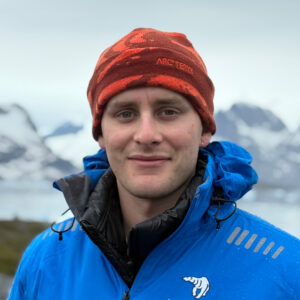
Johnny Sturgeon
Fisheries Reporter
Johnny Sturgeon is a London-based reporter covering fisheries and aquaculture. Joining us from the Outlaw Ocean Project, he has experience producing in-depth maritime investigations for nonprofit newsrooms. A former boatbuilder, he holds a B.A. in History & Politics from the University of Oxford, and an M.S. from Columbia Journalism School.