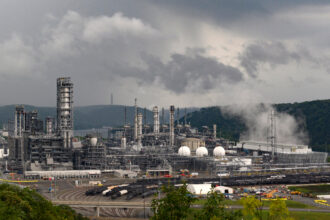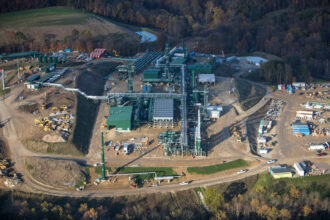


Almost 20 years ago, a Penn State University geoscientist named Terry Engelder published an eye-popping estimate of the volume of gas sitting beneath Pennsylvania. That calculation helped trigger the state’s fracking boom. It’s now the second-biggest producer of gas in the U.S., behind only Texas.
At the time, Engelder says now, he hoped that his assessment would help to curb greenhouse gas emissions because it would encourage the transition away from coal. But he now fears that natural gas has become a long-term occupant of the energy landscape rather than the “bridge fuel” that he and others thought they were promoting.
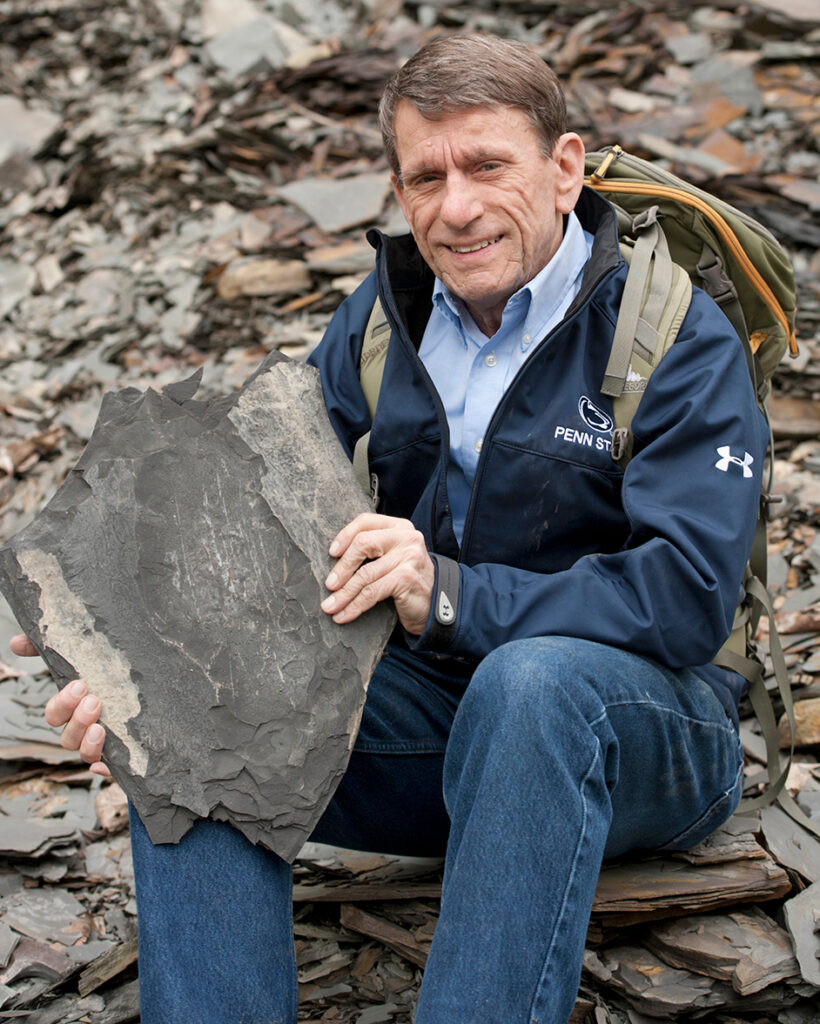
Engelder, now an emeritus professor of geology at Penn State, is writing a book describing his work in estimating that the Marcellus Shale deposit—which also underlies parts of West Virginia, New York and Ohio—had enough gas to meet total U.S. needs for about 20 years under consumption rates at the time.
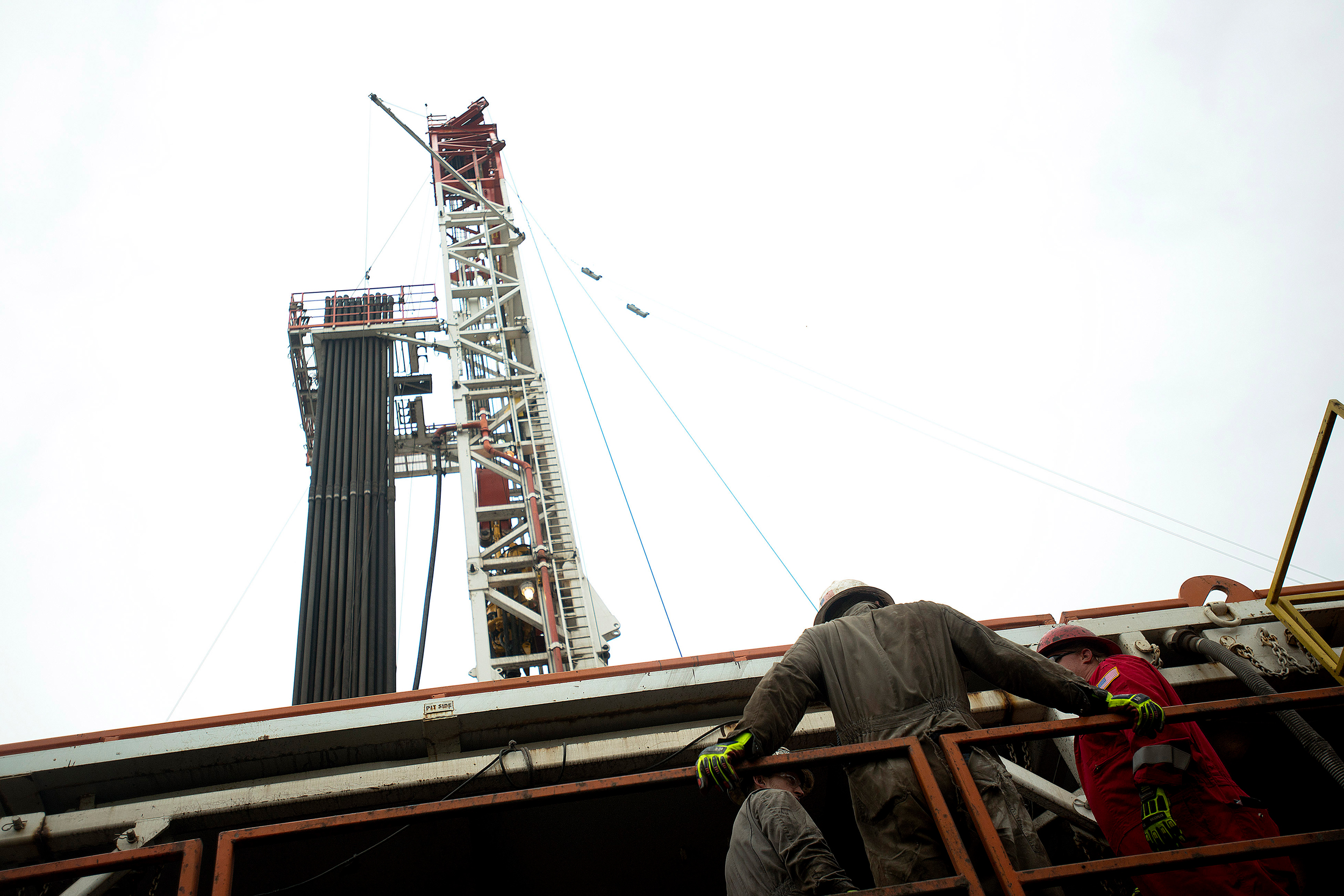
Engelder’s estimate of 489 trillion cubic feet (tcf) of technically recoverable gas—published in 2009, and still, he says, underlying industry assumptions today—first persuaded bankers to lend the energy industry billions of dollars to extract the gas using hydraulic fracturing of mile-deep shale beds. Critics say the process causes environmental and public health harms, adds to global emissions and that its entrenchment in Pennsylvania has stunted the growth of renewables.
His estimate was broadly confirmed by the U.S. Energy Information Administration, which in 2011 estimated the Marcellus contained 410 tcf of gas. In 2018, it was revised upward by the University of Texas, which calculated the field had about 560 tcf of technically recoverable gas.
Engelder hoped natural gas, which creates about 55 percent of the carbon emissions of coal, would act as a transition on the way to a renewable-dominated future. But with its increasing use since the start of the fracking revolution in Pennsylvania, its status is now at odds with Engelder’s original vision. Almost 60 percent of Pennsylvania’s electricity now comes from gas.
Demand for natural gas is expected to increase further, driven by energy-hungry data centers, dozens of which are planned for Pennsylvania.
“I really was optimistic that wind and solar were going to become American industries, and America was going to have the best solar cells, and that gas was going to serve as a bridge fuel,” Engelder said, in an interview with Inside Climate News. “It turns out that it’s become more of a permanent feature than a bridge fuel.”
Engelder described how he calculated the size of the Marcellus reserve, and how he hoped its exploitation would help slow climate change by encouraging the use of natural gas rather than coal. This conversation has been edited for length and clarity. .
JON HURDLE: In making your estimate of the huge amount of natural gas in the Marcellus, were you motivated by the idea that increased use of natural gas rather than coal would help to reduce carbon emissions?
TERRY ENGELDER: Absolutely. The most low-hanging fruit in terms of slowing the American rate of injection to the atmosphere was that conversion of coal to natural gas. That conversion, particularly in places like Pennsylvania, had a huge impact. Probably the most important thing my calculation did was it rapidly made the rate of CO2 being added to the atmosphere go down.
HURDLE: Do you have any qualms about providing the information that the industry needed to exploit the vast reserves that it has done so far?
ENGELDER: Evidence of my concern about climate change is shown in a TED Talk I gave in 2013 in which I said I had to make the judgment between furthering the era of fossil fuels, and trying to get into a position where climate change could be dealt with.
HURDLE: Did you try to reconcile those positions described in the TED Talk?
ENGELDER: These two positions just can’t be reconciled. This was always a scientific Sophie’s choice. It still is the type of choice for most, if not all, geologists who work in industry. They all know the terrible choice they are making.
HURDLE: What prompted you to do the estimate?
ENGELDER: These [fracking] companies were asking for billions of dollars; it was non-trivial money. Banks weren’t going to give these companies billions of dollars without some sort of outside confirmation that these companies were actually on the right track. I gave a webinar in 2007 to a bunch of the banks that included Morgan Stanley and Deutsche Bank. One of the bankers asked, “How much gas is there in the Marcellus? How much can be recovered for our billions of dollars?” That led to my calculation.
Suddenly, the banks freed up a lot of money for companies like Chesapeake and Range and Anadarko.
This story is funded by readers like you.
Our nonprofit newsroom provides award-winning climate coverage free of charge and advertising. We rely on donations from readers like you to keep going. Please donate now to support our work.
Donate NowHURDLE: How did you calculate the 489 tcf number?
ENGELDER: By using production data from Pennsylvania, Ohio and West Virginia from the end of 2008. That number has held up for a decade and a half now.
HURDLE: Did you make earlier estimates?
ENGELDER: Yes, I came up with a number which was, I thought, incredibly large. At the time, it was 363 trillion cubic feet. I said: “This is too large; I don’t need to tell anyone it’s that large. They might not believe me.” So the first number was 50 tcf, published on Jan. 17, 2008, but it was not based on production data because there weren’t any yet. The 50 tcf estimate was arbitrary. It could have been 100 tcf.
HURDLE: How much public interest was there in your estimate at the time?
ENGELDER: I fielded calls from 512 different reporters, my notes show. Sometimes, if I had been away at a conference for a few days, it would take me all morning to listen to the voicemails on my phone. No one else had the technical knowledge needed to respond to all those press inquiries.
HURDLE: To what extent does national politics bear responsibility for the fracking revolution?
ENGELDER: A scientist never regrets discovering the truth. In terms of climate change, my regret is that ‘God,’ or Spinoza’s natural force, put so much gas in the Marcellus in the first place. Gas from the Marcellus would have been more of a bridge fuel if the political mood of the country had maintained a left-wing course (i.e. Biden) rather than a right-wing course (the “drill-baby-drill” Trump). If you like, nature offered politicians the opportunity to make the right choice, and they walked away from that right choice. All I did was give politicians a choice.
About This Story
Perhaps you noticed: This story, like all the news we publish, is free to read. That’s because Inside Climate News is a 501c3 nonprofit organization. We do not charge a subscription fee, lock our news behind a paywall, or clutter our website with ads. We make our news on climate and the environment freely available to you and anyone who wants it.
That’s not all. We also share our news for free with scores of other media organizations around the country. Many of them can’t afford to do environmental journalism of their own. We’ve built bureaus from coast to coast to report local stories, collaborate with local newsrooms and co-publish articles so that this vital work is shared as widely as possible.
Two of us launched ICN in 2007. Six years later we earned a Pulitzer Prize for National Reporting, and now we run the oldest and largest dedicated climate newsroom in the nation. We tell the story in all its complexity. We hold polluters accountable. We expose environmental injustice. We debunk misinformation. We scrutinize solutions and inspire action.
Donations from readers like you fund every aspect of what we do. If you don’t already, will you support our ongoing work, our reporting on the biggest crisis facing our planet, and help us reach even more readers in more places?
Please take a moment to make a tax-deductible donation. Every one of them makes a difference.
Thank you,