

Seeking to sow unity amid a pending heat crisis, New York Mayor Zohran Mamdani reaped a whirlwind of right-wing rage.
Mamdani’s post on X on Wednesday urged New Yorkers to turn their thermostats to 78 degrees F and turn off unneeded lights and electronics—nothing original. It echoed the advice of the state’s largest utility, ConEd, which also asked customers to limit air conditioning in a Tuesday press release. “Let’s ease demand — and get through the heat — together,” Mamdani wrote.
“Welcome to socialism,” shot back Nikki Haley, the former Republican governor, diplomat and presidential aspirant.
Reader-provided context beneath Haley’s post noted that she had made a similar plea for conservation during a 2015 cold snap when she was South Carolina’s chief executive. They also pointed out that former New York Mayor Rudolph Giuliani, a Republican, urged an identical 78-degree limit on AC during a 1999 heat wave.
But in 2026, GOP commentators could not resist the urge to attribute Mamdani’s conservation plea to his politics, as the first democratic socialist mayor of New York.
“This is what socialism looks like, folks,” posted Vivek Ramaswamy, entrepreneur and GOP ally of President Donald Trump who is running for Ohio governor. “The right answer isn’t restrictions or mandates. It’s drilling, fracking, coal, & nuclear.”
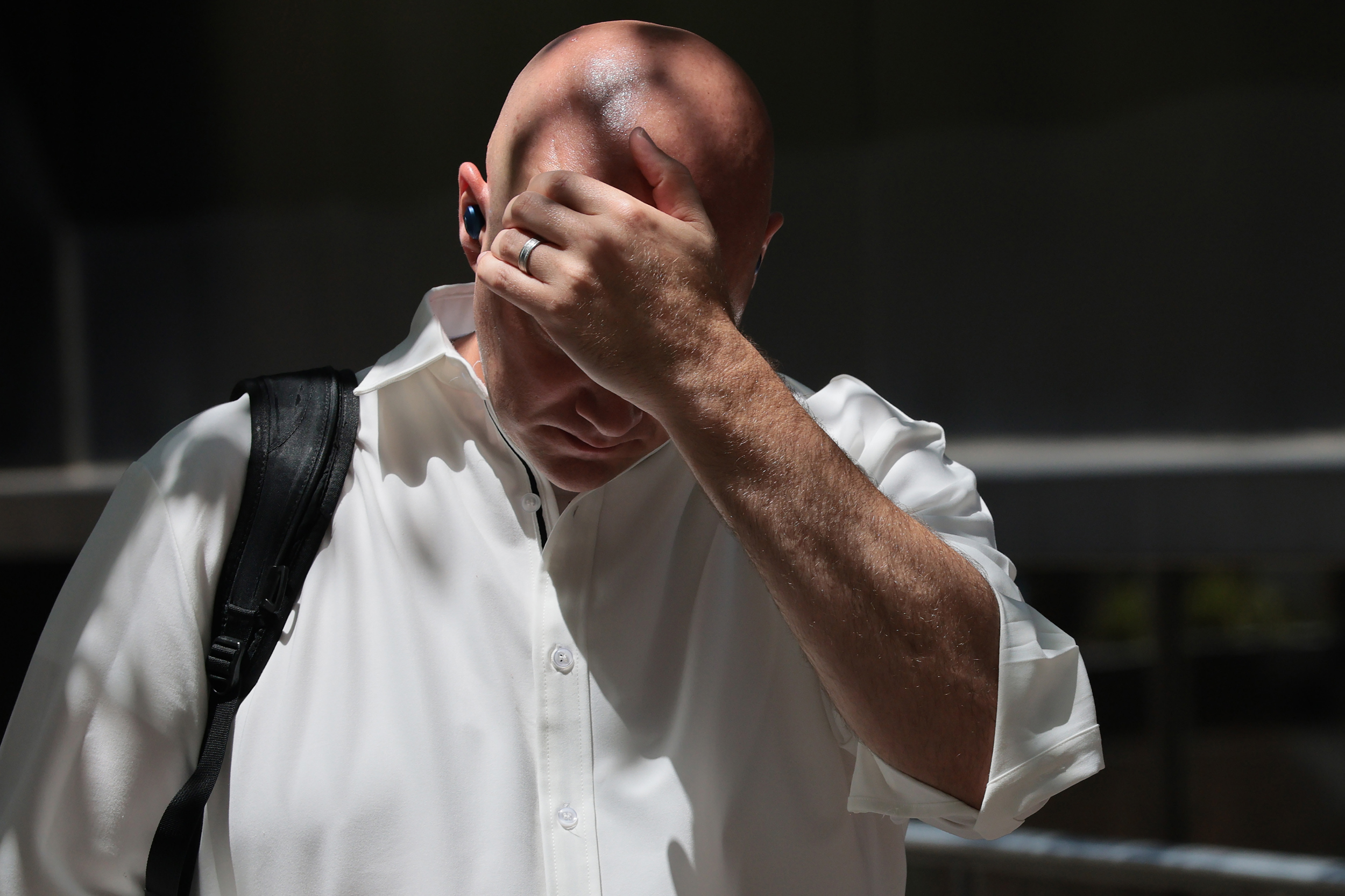
And yet, the heat dome covering much of the nation on the eve of its 250th birthday celebration laid bare the limits of the all-out energy production policy that the Trump administration has pursued. Even with most forms of U.S. energy production (except for coal) at record levels, electric grid operators throughout the central and eastern United States were engaged in emergency load reduction actions—such as powering down large business consumers—in order to relieve the significant strain as households seek more power for cooling. The National Weather Service predicted “dangerous and record-breaking heat” across more than 20 states, with 165 million people living in areas facing “major” or “extreme” heat risk.
The nation’s largest city, where temperatures were expected to feel between 100 and 110 degrees F on Thursday and Friday, has a long history of heat-driven electricity crises. Historians often recall New York’s 1965 blackout, which affected 30 million people throughout the northeastern United States, as an event that brought the city together, with citizens aiding rescuers and directing traffic: “Many shared candles and flashlights with neighbors throughout the night,” says a remembrance on Baruch College’s website. But the city’s 1977 blackout, occurring just as New York was emerging from a massive financial crisis, triggered a night of arson and looting that resulted in thousands of arrests and more than $1 billion in damages in today’s dollars.
In light of that history and despite critics on the right, Mamdani called on New Yorkers’ civic spirit in advance of any potential trouble. He spent Thursday morning at a senior center, pointing out that older adults are at the greatest risk for heat-related illness. “Cooling centers aren’t just places to escape the heat—they’re places where New Yorkers can come together, stay safe, and look out for one another during dangerous weather,” Mamdani posted on X.
New York City also this week released its annual heat-related mortality report, which said that on average 500 New Yorkers die prematurely each summer because of hot weather. Most of those fatalities are considered “heat-exacerbated deaths,” where heat worsens the effects of an underlying illness. Although the number of direct heat-stroke deaths is relatively small, it has increased from five per year to seven per year over the past decade, the report said.
“NYC summers are getting hotter because of climate change,” the report said. “Emergency response to extreme heat must be coupled with equitable investments in structural interventions and heat mitigation measures that reduce risk throughout the season.”
This story is funded by readers like you.
Our nonprofit newsroom provides award-winning climate coverage free of charge and advertising. We rely on donations from readers like you to keep going. Please donate now to support our work.
Donate NowThat’s not a policy that is likely to enjoy much support at the federal level. The Trump administration, intent on minimizing the threat of climate change while boosting fossil fuel production, reacted to the looming heat wave by loosening restrictions on the nation’s largest electric grid operator, PJM, while directing blame at President Joe Biden’s administration.
“Maintaining affordable, reliable, and secure power in the PJM service territory is non-negotiable,” said U.S. Secretary of Energy Chris Wright. “The previous administration’s energy subtraction policies weakened the grid, leaving Americans more vulnerable during events like this.” Wright was describing Biden policies that were expected to reduce pollution by reducing reliance on coal-fired generation.
Wright’s orders granted permission for PJM, the grid operator across portions of 13 states and the District of Columbia, to force data centers to use backup diesel generators to maintain system reliability. Because those generators typically run on natural gas or diesel oil, running them will temporarily increase local air pollution as well as carbon emissions.
The move came a few days after Wright dismissed both heat and climate change concerns in a video address to a conservative group meeting in London. As record-breaking heat gripped the European Union, leading to what authorities estimate are thousands of deaths, Wright delivered video remarks at the Alliance for Responsible Citizenship conference.
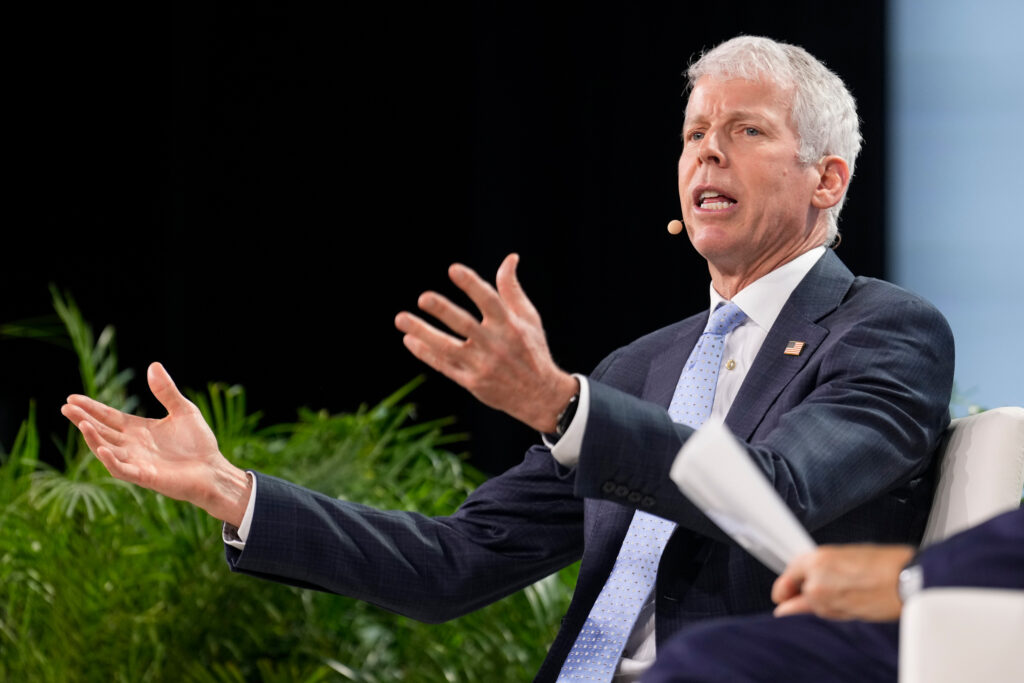
“Always more people die in the winter than die in the summer, because cold is a vastly larger killer than heat is,” Wright said. He was echoing one of the talking points of the hand-picked advisory panel he appointed last year—illegally, a federal court ruled—to dispute the consensus science on climate change.
Studies do show that cold-related deaths vastly outnumber heat-related deaths worldwide, but recent analyses show that is not because heat is less dangerous than cold. It is at least in part because the frequency of very cold days, worldwide, is currently greater than the frequency of very hot days, according to an analysis last year in The Lancet Planetary Health journal.
“The bottom line … is not whether heat or cold is more dangerous, but how we can save the most lives, especially as the climate continues to change,” wrote the international research team, led by Barrak Alahmad, director of the occupational health and climate change program at Harvard T.H. Chan School of Public Health. “Given the current climate trends and limited success in climate mitigation, the current epidemiological literature strongly suggests that an urgent focus on heat-related deaths is well justified.”
Experts see the United States, where 90 percent of homes are equipped with air conditioning, as much less vulnerable to heat deaths than the European Union, where only 20 percent of households have cooling systems. However, as long as the United States remains fossil fuel-reliant for energy, the science is clear that increased air conditioning is a short-term heat wave solution that worsens the long-term global warming problem.
But as the Fourth of July weekend approached, former U.S. Rep. Marjorie Taylor Greene of Georgia was just one of many conservation foes posting on social media about the patriotic right to crank up the AC. Deriding Mamdani’s plea for New Yorkers to turn up their thermostats, Greene posted on X, “American energy should be so strong and plentiful that you never have to set it above 70 if you don’t feel like it.”
The Energy Department, which as recently as June had a web page urging Americans to save energy by setting their thermostats from 75 degrees to 78 degrees, took the page down.
About This Story
Perhaps you noticed: This story, like all the news we publish, is free to read. That’s because Inside Climate News is a 501c3 nonprofit organization. We do not charge a subscription fee, lock our news behind a paywall, or clutter our website with ads. We make our news on climate and the environment freely available to you and anyone who wants it.
That’s not all. We also share our news for free with scores of other media organizations around the country. Many of them can’t afford to do environmental journalism of their own. We’ve built bureaus from coast to coast to report local stories, collaborate with local newsrooms and co-publish articles so that this vital work is shared as widely as possible.
Two of us launched ICN in 2007. Six years later we earned a Pulitzer Prize for National Reporting, and now we run the oldest and largest dedicated climate newsroom in the nation. We tell the story in all its complexity. We hold polluters accountable. We expose environmental injustice. We debunk misinformation. We scrutinize solutions and inspire action.
Donations from readers like you fund every aspect of what we do. If you don’t already, will you support our ongoing work, our reporting on the biggest crisis facing our planet, and help us reach even more readers in more places?
Please take a moment to make a tax-deductible donation. Every one of them makes a difference.
Thank you,

Marianne Lavelle
Bureau Chief, Washington, D.C.
Marianne Lavelle is the Washington, D.C. bureau chief for Inside Climate News. She has covered environment, science, law, and business in Washington, D.C. for more than two decades. She has won the Polk Award, the Investigative Editors and Reporters Award, and numerous other honors. Lavelle spent four years as online energy news editor and writer at National Geographic. She spearheaded a project on climate lobbying for the nonprofit journalism organization, the Center for Public Integrity. She also has worked at U.S. News and World Report magazine and The National Law Journal. While there, she led the award-winning 1992 investigation, “Unequal Protection,” on the disparity in environmental law enforcement against polluters in minority and white communities. Lavelle received her master’s degree from Columbia University Graduate School of Journalism, and is a graduate of Villanova University.