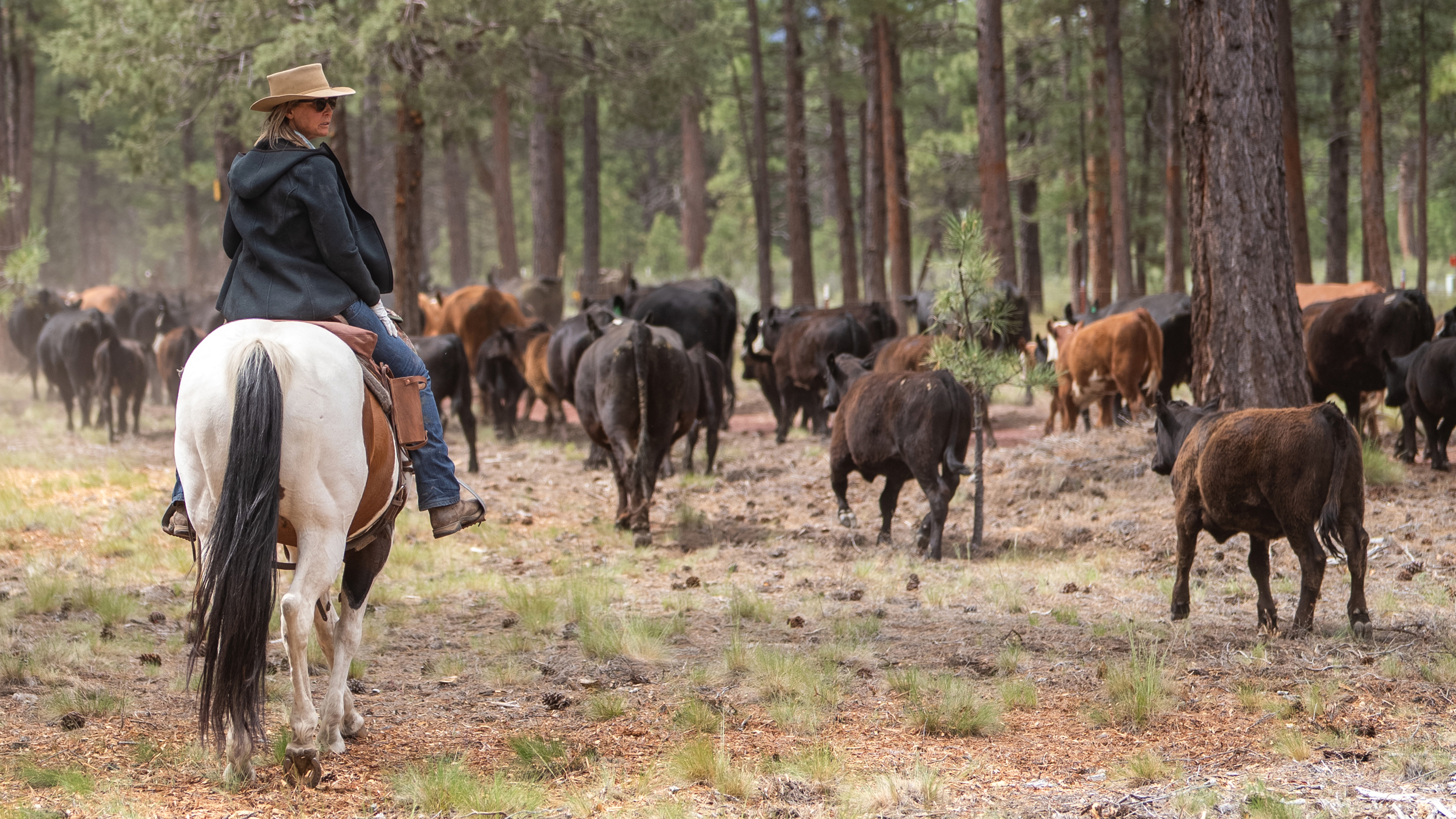


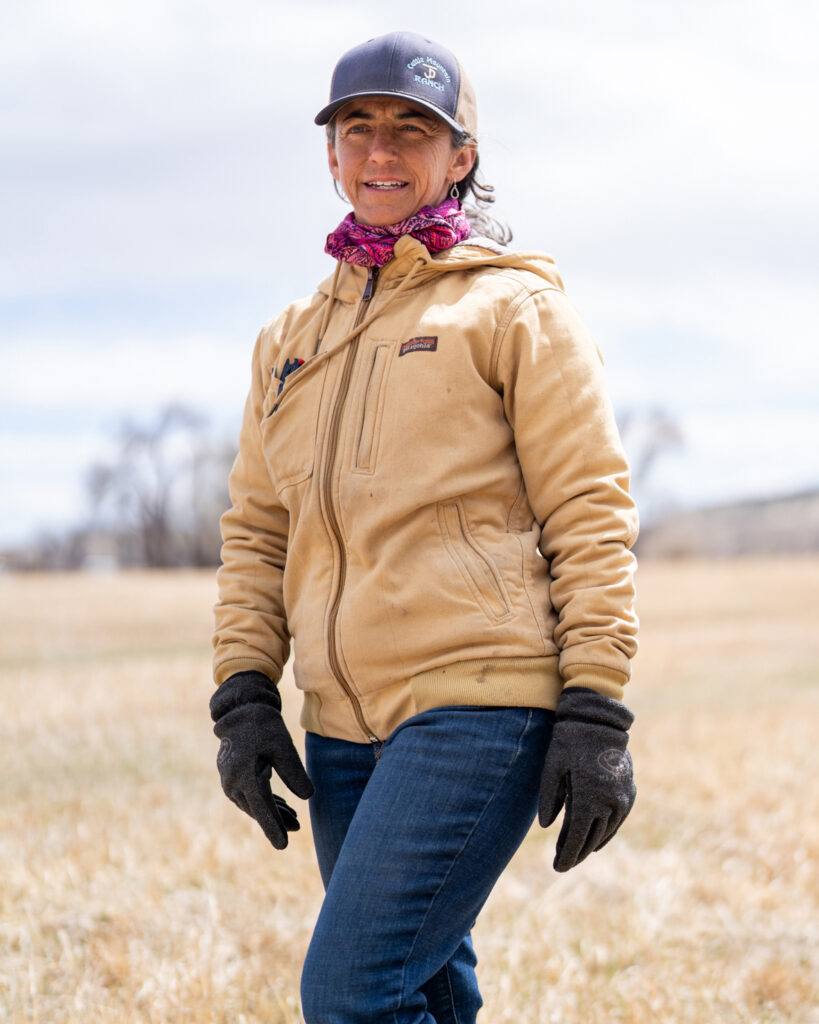
DEL NORTE, Colo.—On an overcast spring day, Keri Brandt Off was helping her friend, Kyler Brown, move and tag his cattle when a heifer broke loose from the herd. It charged at a cowboy tying down her calf, who just managed to tag the baby cow’s ear before scrambling back to his horse.
“She’s just gonna stomp the shit out of a wolf,” Brown exclaimed in delight.
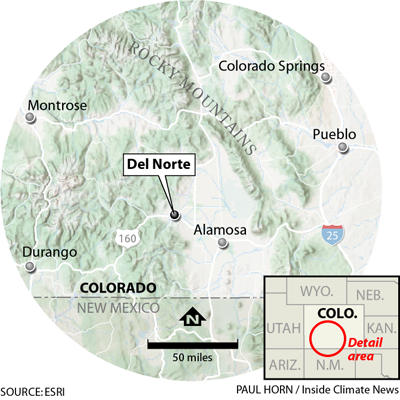
Like Brown, many other ranchers in the San Luis Valley, an agricultural notch in the Rockies near the border with New Mexico, have been anxiously contemplating what may happen to their cattle if the wolves recently reintroduced to the state reestablish themselves in the surrounding mountains. But a few producers have been buoyed by a little-heralded approach to predator-livestock conflicts: changing how they handle their cattle so that the animals respond differently to predators.
Last summer, as Colorado’s new wolves traversed the state, Working Circle, a California-based nonprofit dedicated to helping ranches thrive alongside wolves, hosted a clinic in Del Norte, demonstrating techniques that could make herds less vulnerable to the canids. Many ranchers remain wary, but some have found Working Circle’s techniques transformational.
In November 2020, Colorado became the first state to vote for reintroducing wolves. But the ballot initiative passed by less than two points, with urban and affluent communities mostly supporting it while rural enclaves largely opposed wolves’ return.
Three years later, Colorado Parks and Wildlife (CPW) released 10 wolves in northwestern Colorado. The program remains controversial.
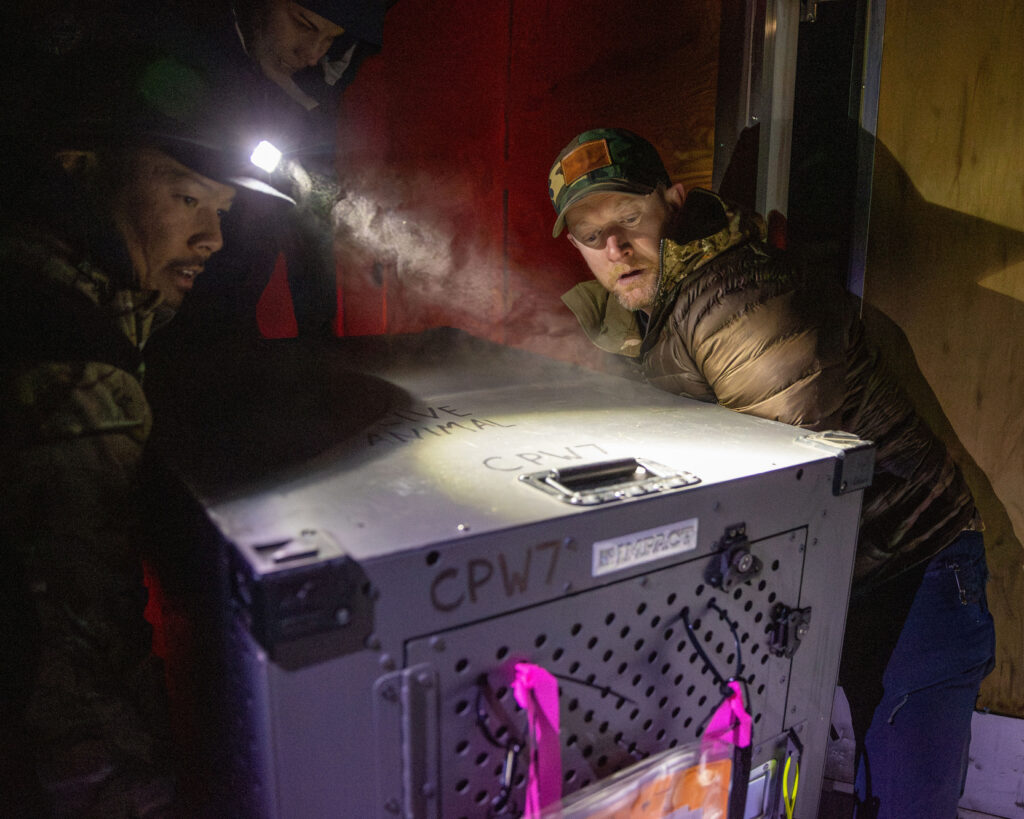
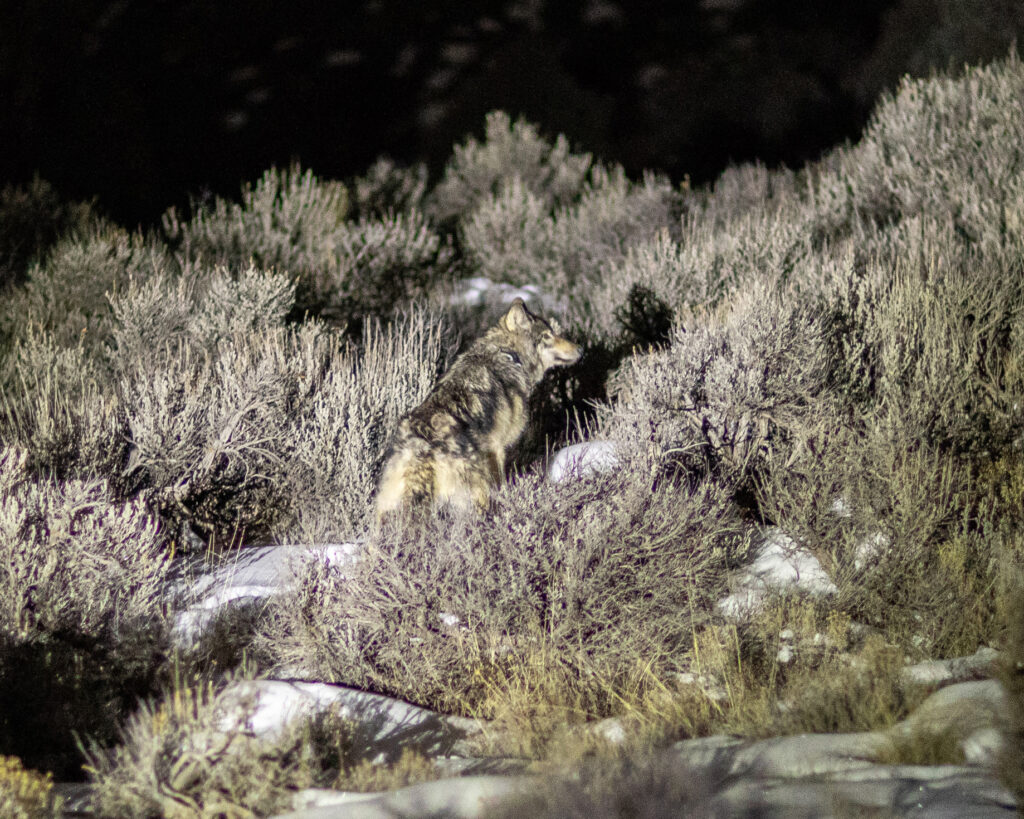
Managers with the Colorado Parks and Wildlife District release a gray wolf on the night of Jan. 14, 2025. Credit: Colorado Parks and Wildlife
According CPW’s most recent annual report, state payments to ranchers for depredations and other harm outpaces what Colorado has budgeted (the agency says the fund was created before the compensation program was finalized). Last October, U.S. Fish and Wildlife Service (USFWS) director Brian Nesvik told CPW the state agency’s plan to transport 15 more wolves from British Columbia would violate federal rules (CPW is exploring getting wolves from other locations).
CPW estimates that 32 gray wolves are roaming the state, including some that have dispersed from Wyoming into Colorado. Since 2023, 16 wolves have died, with one rancher admitting her employee shot a wolf.
A keystone species, wolves occupy a special place in the food web, and their absence—driven by a brutal, decades-long extirpation campaign carried out by the U.S. government and westerners—has tangibly altered the ecosystems they once inhabited. Researchers are still determining the ecological impacts of reintroduced wolf populations, but scientific evidence suggests the biodiversity they contribute to is essential for mitigating climate change. Conservationists have preached for years about the environmental benefits and moral imperative of restoring wolves to their former habitats.
But wolves are not returning to the same world from which they were driven out. Humanity’s sprawling footprint has irrevocably altered the West, fragmenting open spaces and thrusting wolves into closer proximity with cattle, which, as a species introduced by settlers to the West, are an unnatural prey for the canines.
Though wolves account for a tiny portion of all cattle deaths in the Mountain West, losing any livestock is a financial setback for a ranch, so ranchers play a significant role in the politics and conversations surrounding wolf reintroduction.
So far, Colorado’s new wolves mainly roam in more northerly parts of the state, leaving ranchers in the San Luis Valley nervously tracking one or two roaming canids. Some feel the entire initiative amounts to an experiment that could drive them out of business and further erode the character of rural Colorado.
Reintroducing wolves has not wiped out the agricultural industry in Idaho, Montana and Wyoming, where gray wolves were released into Yellowstone by the USFWS and National Park Service in 1995, and not every rancher in southern Colorado feels resigned to such a fate. After the Working Circle clinic last summer, hosted at the Off ranch, Brandt Off felt like she could see a way forward.
“I became a little bit of, well, I don’t want to say a believer, but why not try” to live alongside wolves, she said.
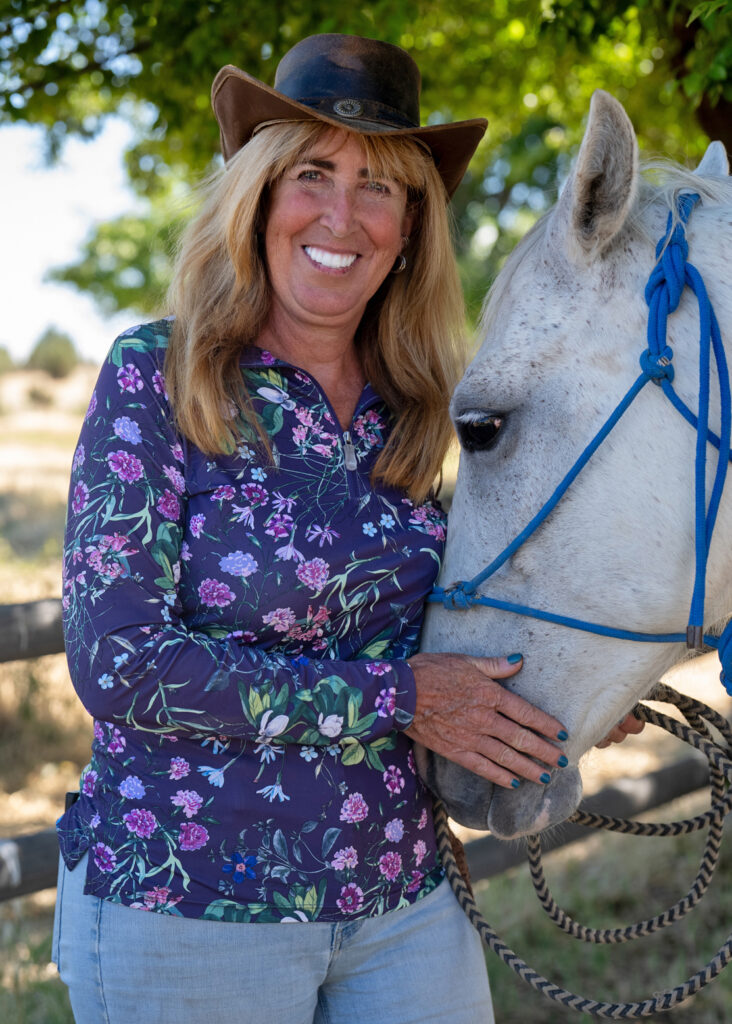
Karin Vardaman, a self-described “wolf person,” co-founded Working Circle in 2016 with some ranchers in northern California after the group devised a system attempting to identify and address a ranch’s potential vulnerability to wolf depredation.
“Where we’re kinda different is we focus on the root cause” of wolf-livestock conflicts by making cattle more difficult prey, she said.
While traditional conflict mitigation strategies like attaching red flags to fencing, patrolling herds on horseback and burying dead cows’ carcasses focus on preventing wolves and cattle from interacting, Working Circle helps ranchers try to teach their animals to defend themselves. Often, this means modeling new ways for ranchers to manage their cattle.
Working Circle did not invent the techniques it promotes, and it cautions that there is no silver bullet that will fully prevent wolf depredations. Still, after a decade of quietly working with ranchers across Northern California, Colorado and elsewhere in the West, Vardaman and her team have experienced enough success to describe these tools as a promising new frontier in predator-livestock conflict mitigation.
“We are very confident in this approach,” she said. “This is the direction we need to go.”
Calving Season
Early spring is calving season for many in the San Luis Valley, a time of renewal and growth. But volatile environmental and market forces can conspire to create uncertain economics for many ranchers, even as they enjoy subsidized irrigation and grazing fees.
This summer, Brandt Off and her husband have had to cull their herd due to a deep drought, she said. This year’s snowpack, diminished by climate change, was the worst in Colorado’s history; if a landscape is too dry for cattle to find enough grass or water, ranchers are forced to shrink their herd before nature does it for them.
“Everyone’s hanging on by their fingernails,” Brandt Off said.
Many ranchers in the San Luis Valley take their herd to the mountains in the summer, where their livestock encounter black bears and mountain lions. Ranchers have adapted to those predators, but some still say life alongside wolf packs will be impossible.
“We’re not very happy,” said Rick Davie, whose family has been running cattle in the valley since the late 19th century. “I just don’t see any way of getting along with [wolves]. I mean, if they’re killing your cattle, what are you gonna do?”
In Idaho, Montana and Wyoming, where wolves have been reestablished for decades, they kill a few dozen cows annually, less than one-tenth of one percent of all reported cattle deaths, according to state and federal data.
But wolves can still harm a rancher’s bottom line without making a kill.
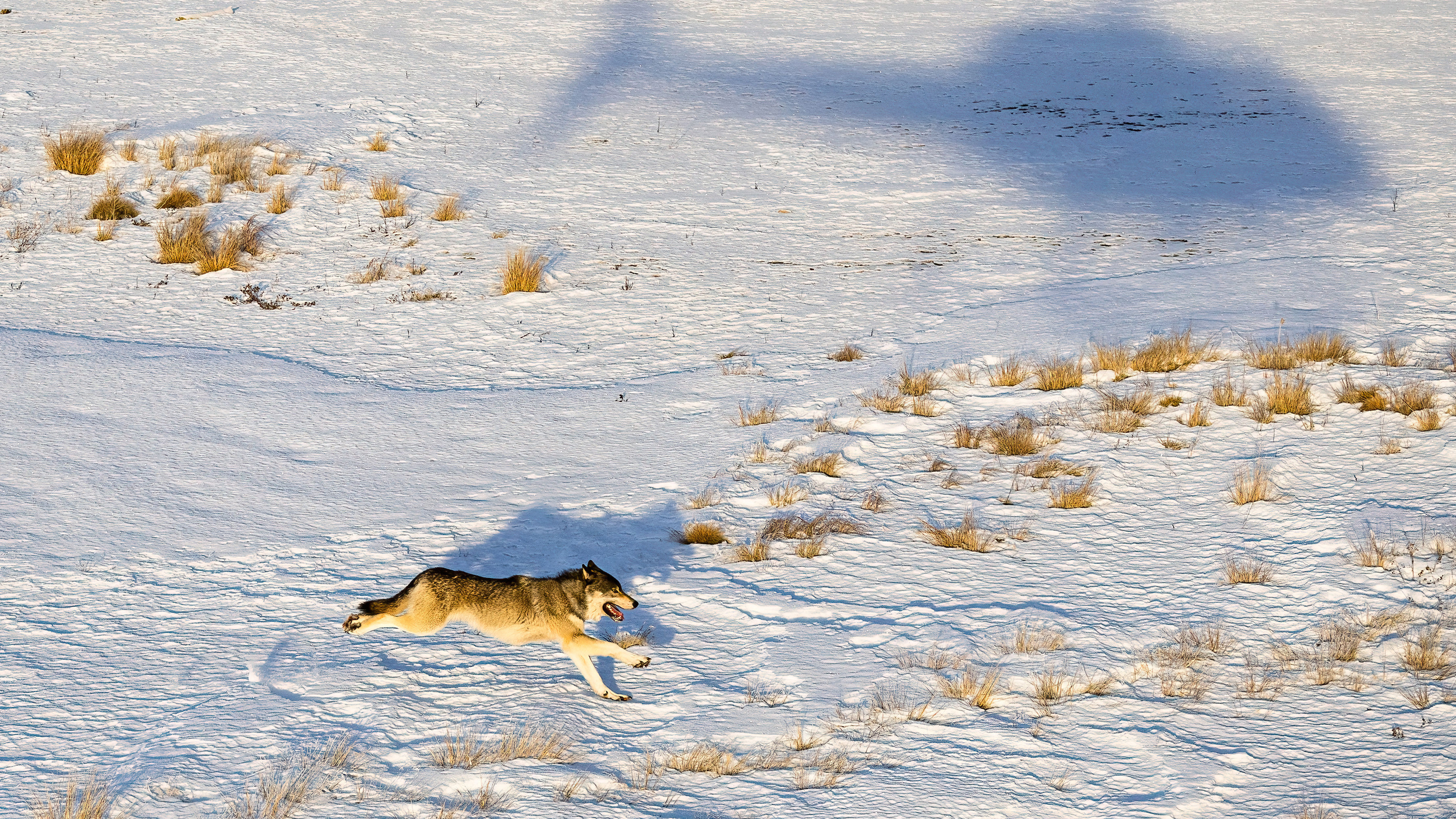
To hunt cattle, wolves may pester, lunge and chase a herd, trying to spook animals into fleeing. “That’s not their recognized prey, so they have to test for vulnerabilities,” said Carter Niemeyer, a former wolf biologist and trapper for the USFWS, who worked with Vardaman and Working Circle in the organization’s early years. “When they’re not hungry, I’ve watched wolves walk among cattle” without stressing them, he added.
But if wolves test cattle for extended periods, it can elevate the bovines’ stress levels, which ranchers fear causes them to put on less weight than they otherwise would. One analysis across 18 ranches in Montana found an average 22-pound weight reduction per head in herds that experienced a wolf depredation. Since cattle are sold by the pound, weight declines—which can also be caused by sickness, altitude or weather—cost ranchers money.
“You can’t keep these ranches going just because you like them,” Davie said. “If you can’t make it work, you gotta sell them.”
Davie shares a Forest Service grazing permit with David Colville, whose worst nightmare is dividing up his ranch and selling it to a developer because it’s no longer economical to graze cattle in the mountains during the summer.
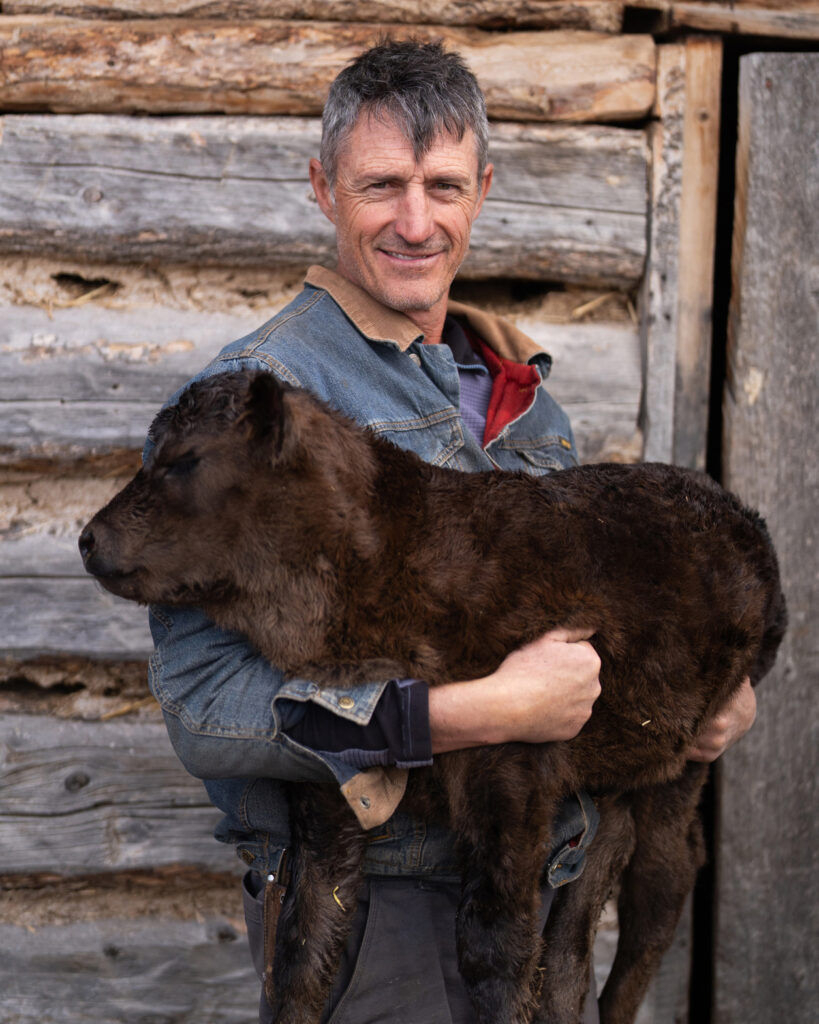
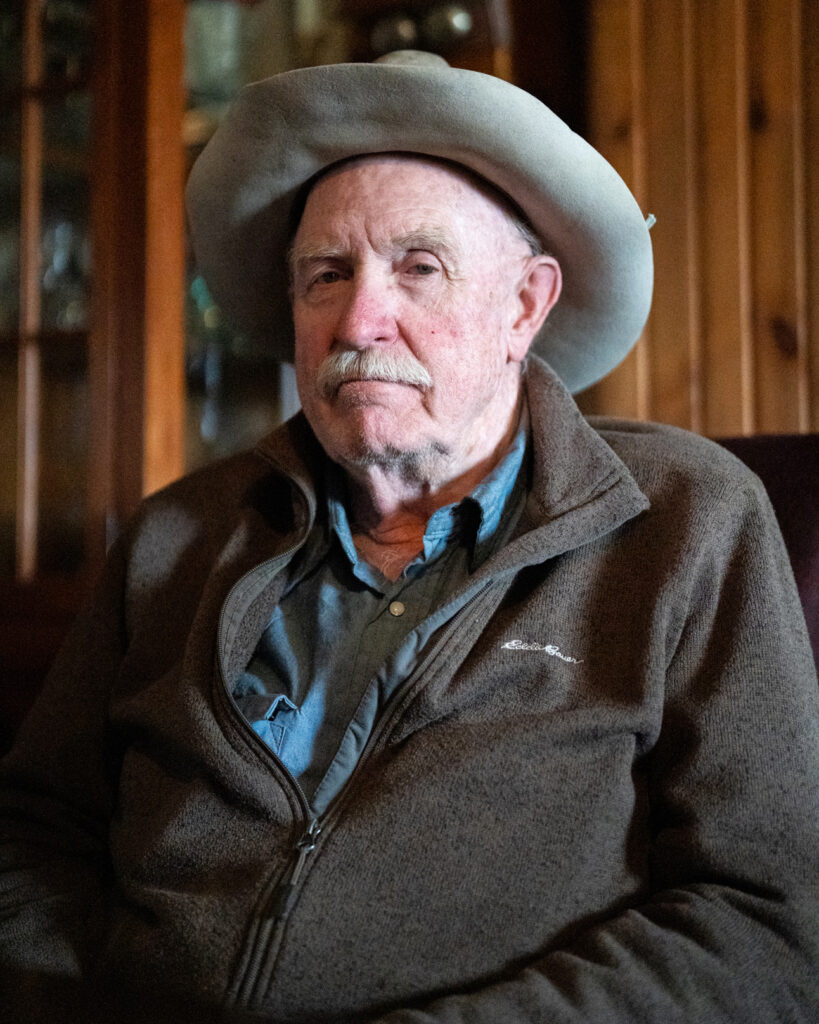
He and his wife, Amy Engle, attended the Working Circle clinic at the Off ranch hoping to learn how to deal with the pressure wolves could put on their business.
A Working Circle clinic typically offers ranchers a range of management tweaks that can benefit their business regardless of whether predators are present. Assessing cattle feed, boosting their mineral intake and redesigning corrals could all reduce the animals’ stress on the ranch (potentially increasing their weight). When these adjustments are paired with Working Circle’s cattle-handling practices, the collective effect ideally makes the animals easier to manage, and less likely to panic and flee in the presence of a wolf.
“[Working Circle] had a lot of information. They knew what they were talking about,” Colville said.
Still, nothing he heard felt to him like it would meaningfully tip the predator-prey dynamic in his animals’ favor. “I kind of came away from it feeling hopeless,” he said.
One of Working Circle’s suggestions, according to Colville, who is 53, was for ranchers to select for tougher cattle, including ones with horns, that would rough up a wolf. But that could make things on his ranch more dangerous. “We’ve spent a hundred years making cows docile so they don’t kill us when we go out to tag and manage their babies,” he said. “I’m just not sure if I’m willing to go there at my age.”
Engle was more upbeat. Working Circle had introduced her to ranchers in other places whose cattle lived alongside wolves, and she believed this was possible in Colorado. “But it takes doing things differently,” she said. “That’s hard when you have however many generations doing things one way. It’s hard to adapt to that.”
David Colville stressed that he is not inherently anti-wolf. He loves wildlife, he said, and pointed out duck habitat he and the USFWS are creating on his property during a spring drive across his land. While he believes wolves “intrinsically” belong in the Rockies, he doesn’t support something that he believes will directly conflict with his livelihood.
Hopelessness, despair, frustration and anger are all common emotions among ranchers anywhere wolves roam. “We care about a lot of people who are put through trauma. And that’s exactly what we’re doing to ranchers,” said George Whitten, a regenerative rancher in the valley. “We’re putting them into a situation where the trauma is real—it’s real.”
A wolf kill can be a grisly scene. They will sometimes eat an animal’s hindquarters and guts while it’s still alive.
“It’s personal at that point,” said Whitten, who also serves as the Colorado Department of Agriculture’s regional assistant commissioner for southwest Colorado, where he lives. “I mean, that’s their family. So then they can’t sleep at night ’cause they don’t know when the wolves are gonna come back. They don’t know and they don’t have any way to deal with it.”
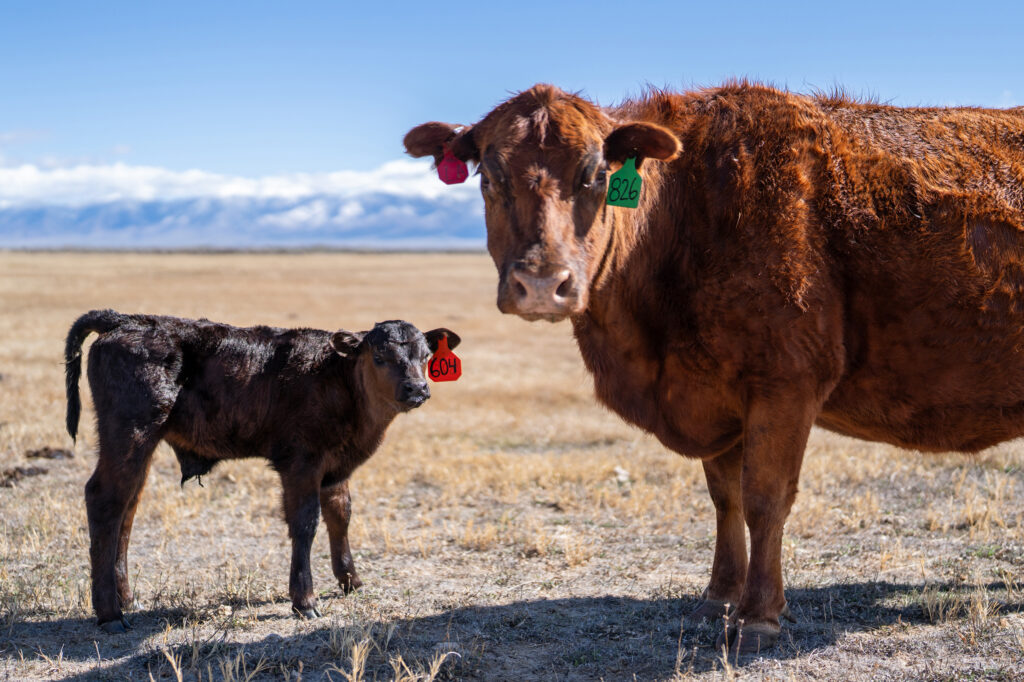
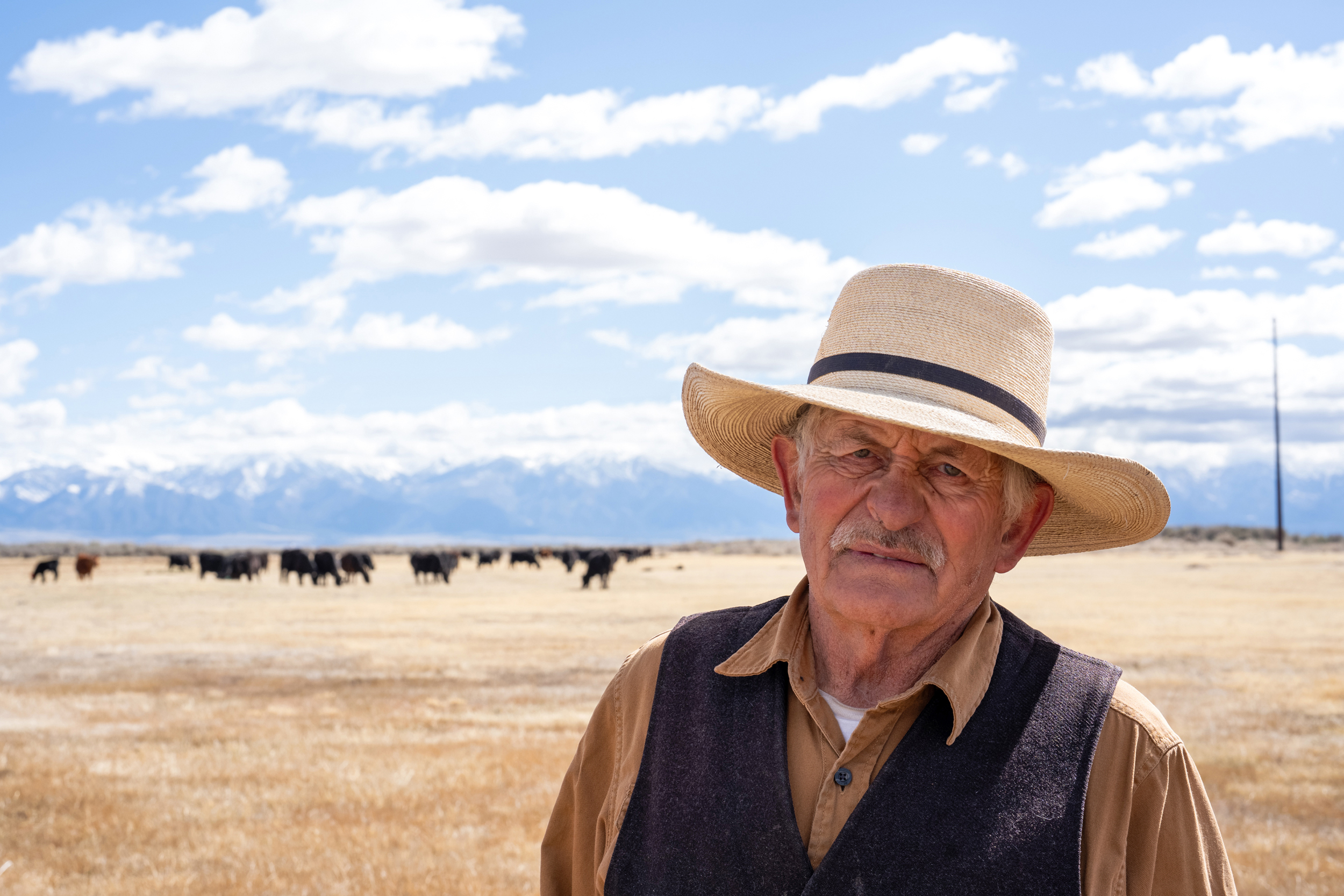
All of these nuances—the subtle way wolves may affect cattle’s weight, ranches’ ability to provide wildlife habitat, the emotional toll wolves can take on ranchers—were new to Vardaman, Working Circle’s founder, when she started working in wolf conservation.
So she and Working Circle set out to address some of these problems, starting with ranchers in some of the country’s most intractable wolf conflict zones.
Herd Mentality
Along a red-dirt road in a valley near northern California’s Mount Shasta, a mass of about 260 cows and calf pairs wended their way through ponderosa pine stands this June. Like water through a drain, the herd crossed another road and settled into the trees on the other side. Five people were working the bunch, including Janna Martin Gliatto, who runs Table Rock Ranch in Montague, and Mike Ensley, Working Circle’s rangeland manager.

Martin Gliatto connected with Working Circle in 2022, when she was “getting slaughtered” by wolves that had naturally dispersed back into California from Oregon. Recent surveys by the California Department of Fish and Wildlife show there are at least 55 wolves in California, almost all of which roam the state’s northern reaches. A recent peer-reviewed study from the University of California, Davis, found cattle DNA in 72 percent of collected scat samples from northern California wolves in 2022 and 2023; that was more than wild game showed up in, and suggested that beef is “the predominant dietary item of wolves in Northeastern California during the summer months,” the authors wrote.
Wolves account for less than one percent of all cattle deaths in California, according to state and federal data, and the study authors note that their work shows what wolves are eating, but not what they are killing—they could be scavenging carcasses of cattle that died of other causes. (The researchers received funding from the university’s Rustici Rangeland and Cattle Endowment and the California Cattle Council, but said neither “played any role in study design, data collection, analysis, decision to publish, or manuscript preparation.”)
Table Rock is among the first properties one pack of wolves crosses when descending from dens in the foothills.
“It’s definitely a huge, huge financial burden on the ranchers,” Martin Gliatto said, estimating she’s spent about $150,000 annually since 2022 adapting to wolves’ presence. She is immensely frustrated with wolf management in California, but determined to hold on to her way of life. So, four years ago, she decided to try something outside the box and sought help from a wolf-friendly organization.
Vardaman and Working Circle were “looking at things differently than most wolf advocates,” Martin Gliatto said. “She was very pro-ranch.” Their methods of controlling cattle— stockmanship, in ranching parlance—were “very, very helpful,” she recalled.
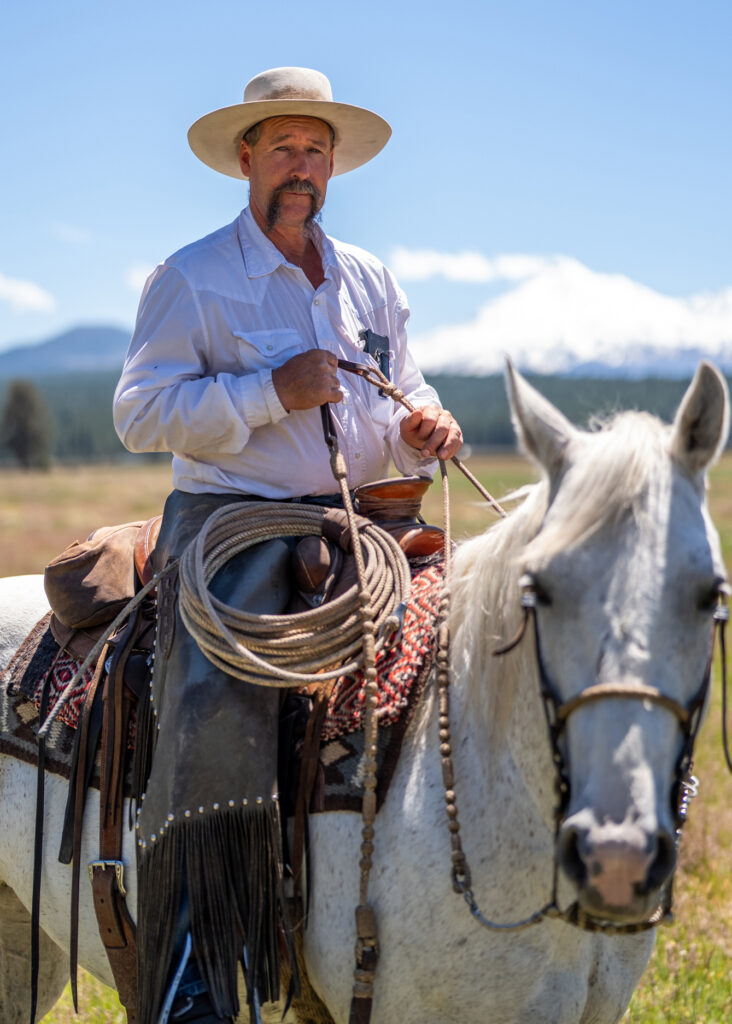
As they munched on fruit and homemade fried chicken during a roadside lunch, Ensley and Martin Gliatto recalled how the herd had survived a harrowing journey to this valley. Wolves had been among the cattle for three nights, trying to pick off the vulnerable. Each time, the herd closed ranks, fending off the wolves. After walking about 13 miles, the cows arrived exhausted, but alive.
“Nobody got killed,” Ensley said. “They’re fine.”
A few days later, Working Circle held a clinic in Montague similar to the one it had given in Colorado the year prior. A little more than a dozen people attended, most of them local ranching families.
Vardaman opened by saying that, despite its support for wolves, Working Circle does not view ranchers as enemies. They want to help them thrive.
Working Circle’s philosophy to ranching in wolf country combines what wolf biologists know about how wolves hunt with what ranchers know about how cattle behave under pressure. Despite their reputation as ruthless killers, wolves are astute risk managers, thoughtfully weighing their chance of getting injured against the probability of making a kill. While taking down a flighty deer is mostly a matter of stamina and wit, a misstep around a bunch of burly bison could spell doom for a wolf. By teaching cattle to remain calm and in a herd when they’re under pressure on the ranch, they’re more likely to group up and stand their ground when threatened by wolves on the range.
In Working Circle’s experience, when cattle are handled this way, they’re healthier and less stressed, and once a herd repeatedly deters a pack, the wolves move on.
“You want the cattle to become their own deterrents,” Vardaman told the audience. “Wolves will learn what cattle are vulnerable and what cattle are not.”
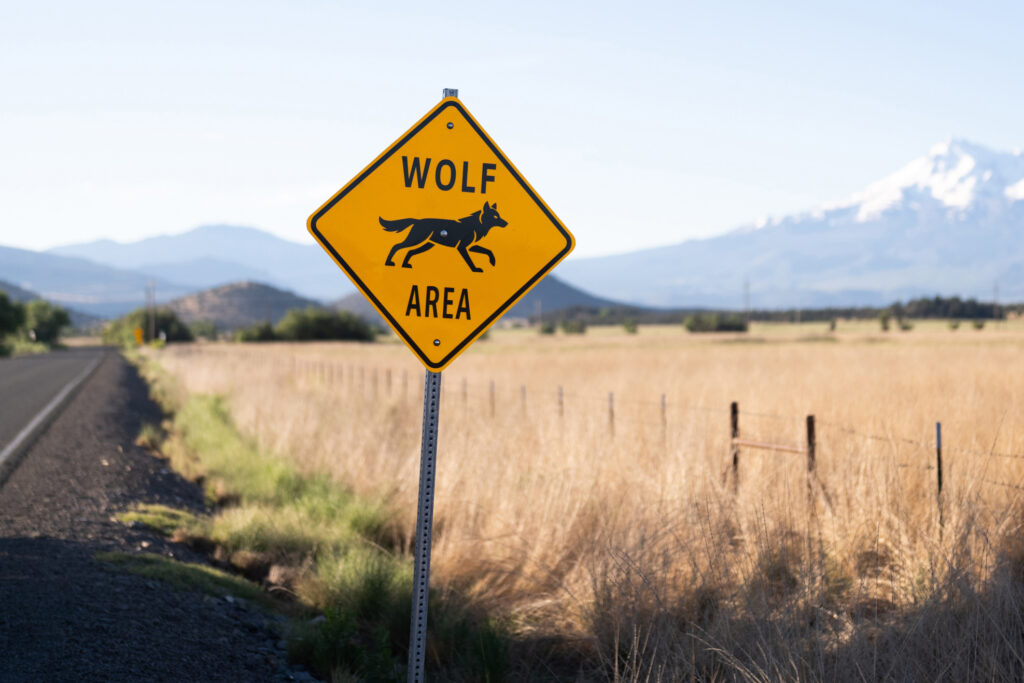
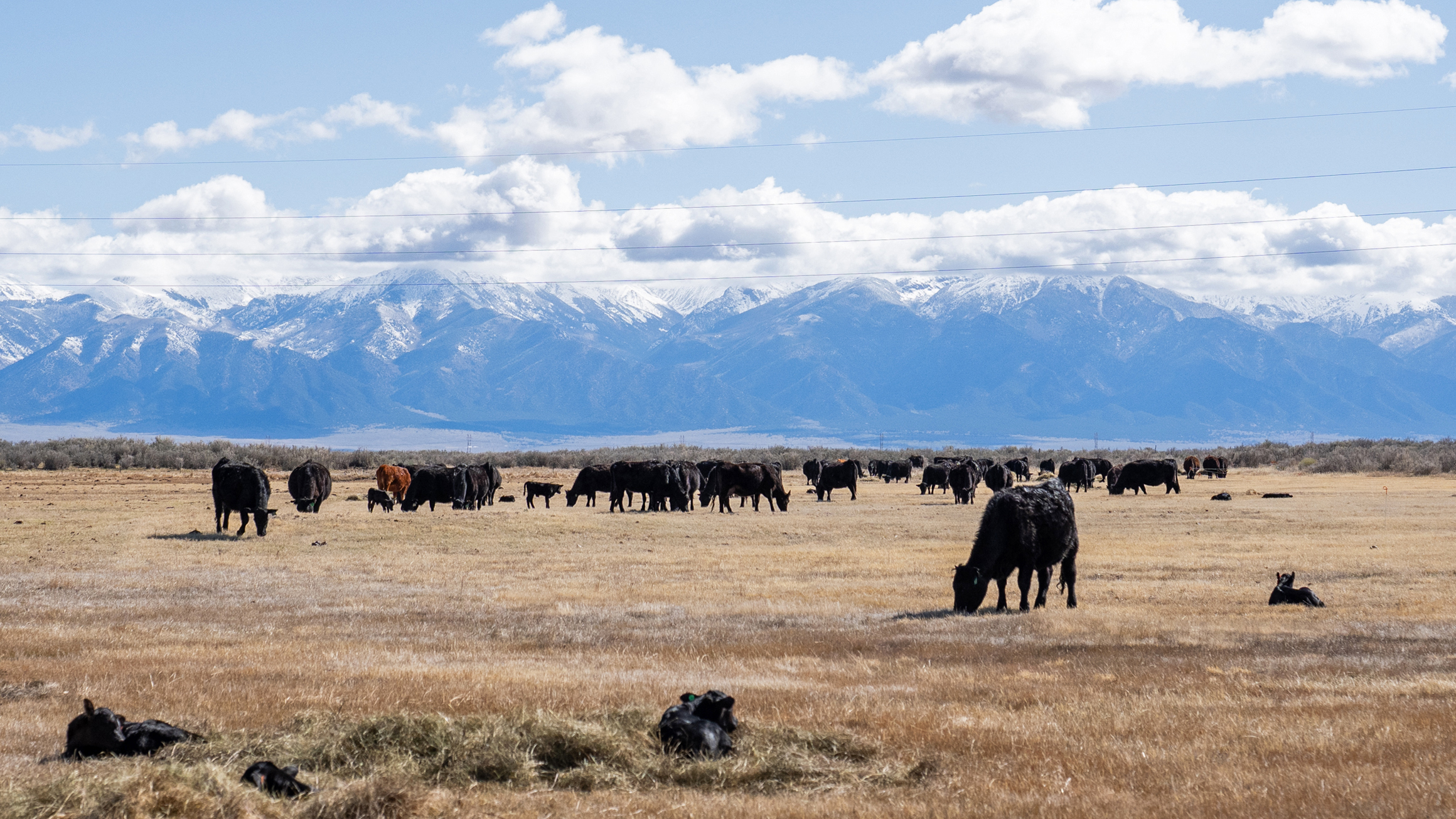
But the way cattle are traditionally handled can reinforce their flight response, according to Dawn Hnatow, Working Circle’s cattle-handling specialist and founder of her own company, Cattle Up Stockmanship. Herding cattle can be a bit like herding cats. Handlers will typically yell at, hit and whip cows till they obey. Ranchers don’t have all day, and time spent working cattle is time lost elsewhere.
But herding this way elevates the animals’ levels of cortisol, the hormone associated with stress, in a way similar to when a wolf menaces cattle, Hnatow told the audience. Ranchers could be costing themselves “tens of thousands of dollars,” she continued, whether or not they live with wolves.
A rancher herself in Texas, Hnatow asked why some of her peers feel they have no time to explore changing how they run their operation in response to wolf reintroduction, but accept, however spitefully, having to deal with the potential consequences—stressed cattle, missing livestock, countless sleepless nights—of not doing so.
“I don’t like fixing wrecks,” she said. “I like preventing wrecks.”
Hnatow developed her techniques—“effective stockmanship”—as a protege of the late, legendary stockman Bud Williams. Through a series of controlled but irregular movements and formations—like zig-zagging at a herd or arranging horseback cowboys into a T formation—Hnatow applies and releases pressure on cows “in a way the animal understands and can process,” she said. This way, according to Hnatow, the animals think as they move, are relaxed and, most importantly, easier to keep heavy.
The next day, Hnatow, who has worked with herds numbering in the thousands, demonstrated this approach at a nearby ranch.
Over about four hours, she quietly deployed and released pressure to move and sort around 25 cows and calf pairs. She had never worked with this group before, and there were several moments when the bunch appeared uncooperative.
“You’ve got to set your ego completely aside,” she explained.
Gradually, Hnatow’s patience paid off, and there appeared to be a palpable energy between her and the herd, which was moving more fluidly. One onlooker remarked that, while Hnatow’s technique took time, she could tell the cattle were processing what was being asked of them.
Running scared all over the ranch does not help cattle if they confront wolves on the range, Hnatow explained. But “if cattle are always moving as a group,” the wolves are stumped, she continued.
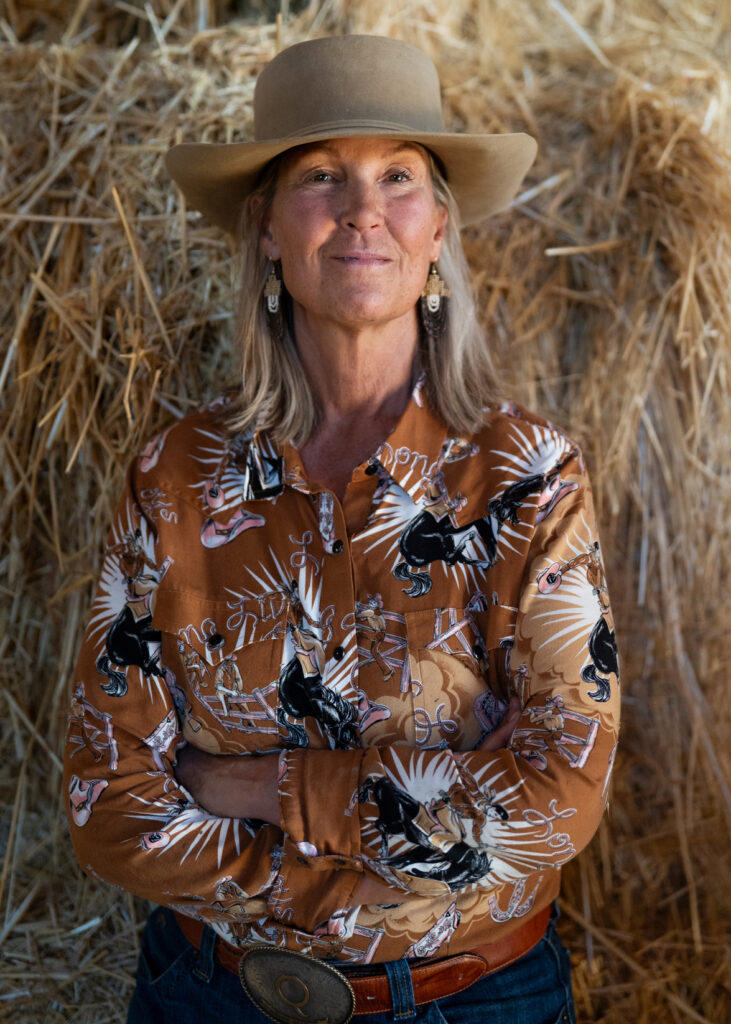
By the early afternoon, Hnatow’s shirt was covered in cow dung, her hands were dirty and her face was lit up with a smile. “I could do this all day long seven days a week,” she said.
With relentless work, Martin Gliatto has raised a healthy herd near a pack of wolves.
“If [other ranchers] could just see that,” Ensley said, “from a couple of years ago to present time is a big, big difference in these cows.”
Martin Gliatto says she still loses cattle to wolves , but at a significantly lower rate than before she took up effective stockmanship. She has heard other ranches in the area are noticing an uptick in depredations as wolves have increasingly moved off her herd. (California has a compensation program to for ranchers who suffer confirmed wolf depredations)
In addition to helping her herd become more resilient, Working Circle has given Martin Gliatto something else important. “If people don’t have hope, that could be the straw that breaks a camel’s back,” she said. “It’s too much.”
Off the Ranch
There is no formal research into how Working Circle’s methods affect wolf predation, or cattle behavior and weight. But that hasn’t stopped people from advocating for their use in Colorado.
“Private programs like Working Circle should absolutely be a part of the wolf recovery effort,” said Niemeyer, the former USFWS wolf biologist. “I believe they can serve a lot of good.”
“Working Circle has done some great work,” said Suzanne Asha Stone, executive director of the International Wildlife Coexistence Network. “Those were resources I’m not sure that were fully taken advantage of,” by everyone involved in Colorado’s wolf reintroduction effort, she said.
The Colorado Department of Agriculture and CPW both partner with Working Circle (and a host of other nonprofits) to supplement conflict mitigation resources across the state, but Vardaman doesn’t expect the agencies to do what Working Circle does. “They have limited resources and it takes years to learn it,” she said, adding that CPW conflict specialists are “busting their butts” across the state.
For any new conflict mitigation strategy to be implemented by CPW, there needs to be “years of science backing it through peer review,” said Adam Baca, CPW’s wolf conflict coordinator. “Or you need a critical mass of producer feedback or situations indicating that this effort is going to be successful,” he added.
This is part of the reason the Colorado Department of Agriculture has so far stuck to traditional conflict mitigation tools, said Dustin Shiflett, the agency’s non-lethal conflict reduction program manager. “Our program’s a small program, so funding really is focused on carcass management and range riding,” people monitoring herds on horseback, he said.
The agency is exploring the effectiveness of cattle-handling techniques, he added.
It may be an awkward fit for CPW to promote a conflict-mitigation approach that may ask ranchers to adapt how they manage their property. “It’s just not the place of the wildlife agency to promote agricultural business practices,” Baca said.
Baca, initially the only conflict management specialist in Colorado, has witnessed the program grow beyond what the state originally planned. “We’re trying to meet the need for the broadest amount of people possible,” he said. “We are operating at lightning speed for wildlife management.”
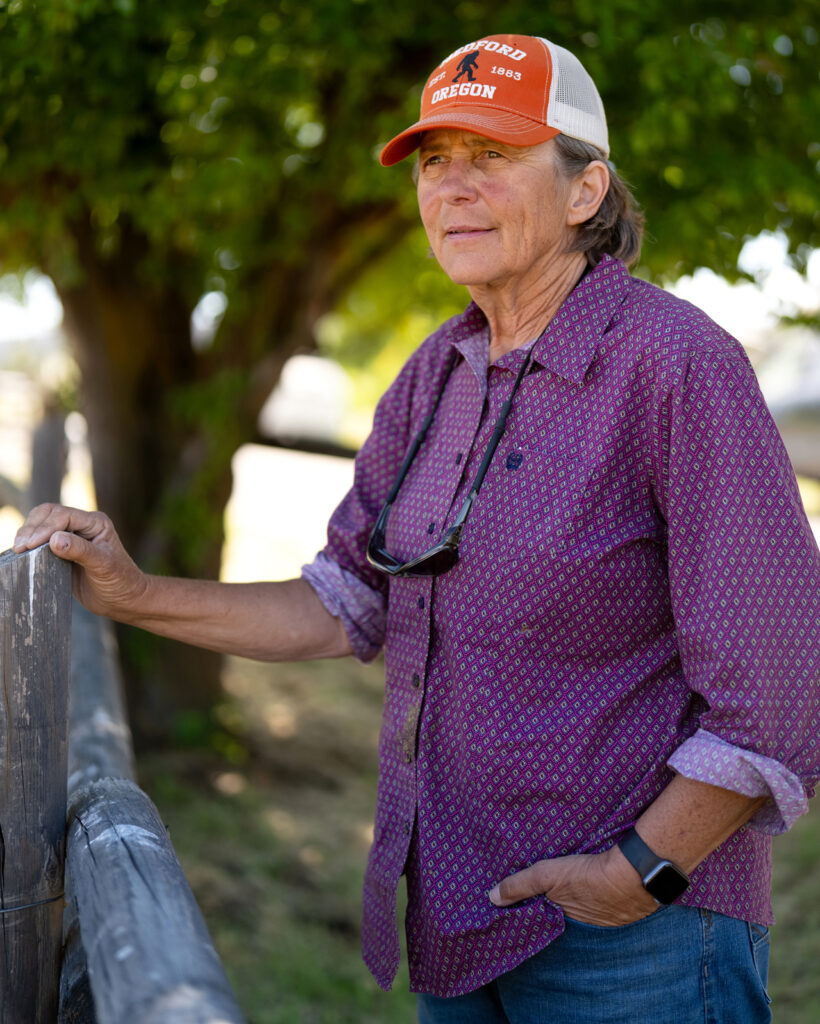
One afternoon this spring, Brandt Off, the Del Norte rancher, and her cattle dog, Clem, brought four cows across a soggy pasture on the ranch. Clem darted behind them on Brandt Off’s command, then halted to release pressure.
Ever since she hosted Working Circle’s clinic, Brandt Off has been practicing their techniques. But she suspects some of her peers would be reluctant to learn new skills.
“I think in ranching culture, there’s a strong ethos of ‘This is how we’ve always done it.’ And there’s a lot of wisdom in that,” she said. “There’s also sometimes resistance to change.”
A sociology professor at Fort Lewis College when she’s not ranching, Brandt Off, said she understands each side of the wolf debate, and wants Colorado’s urban and rural communities to listen more to each other.
“These kinds of big shifts, they need to go slow, they need to be able to tolerate a lot of debate,” she said. “They need to say ‘We’re going to value a lot of different perspectives, even if we don’t agree. We can find a way through together.’”
With hardly any fuss, Brandt Off and Clem guided the quartet of cows through a gate and into a field to join a herd. The group appeared calm, unbothered by the newcomers or their shepherds.
“I think these cows are doing what Working Circle wants them to do,” Brandt Off said, looking at the cows, which appeared to be sticking closer to their calves. “They’re looking at her and me and you and they’re all picking up their babies.”
About This Story
Perhaps you noticed: This story, like all the news we publish, is free to read. That’s because Inside Climate News is a 501c3 nonprofit organization. We do not charge a subscription fee, lock our news behind a paywall, or clutter our website with ads. We make our news on climate and the environment freely available to you and anyone who wants it.
That’s not all. We also share our news for free with scores of other media organizations around the country. Many of them can’t afford to do environmental journalism of their own. We’ve built bureaus from coast to coast to report local stories, collaborate with local newsrooms and co-publish articles so that this vital work is shared as widely as possible.
Two of us launched ICN in 2007. Six years later we earned a Pulitzer Prize for National Reporting, and now we run the oldest and largest dedicated climate newsroom in the nation. We tell the story in all its complexity. We hold polluters accountable. We expose environmental injustice. We debunk misinformation. We scrutinize solutions and inspire action.
Donations from readers like you fund every aspect of what we do. If you don’t already, will you support our ongoing work, our reporting on the biggest crisis facing our planet, and help us reach even more readers in more places?
Please take a moment to make a tax-deductible donation. Every one of them makes a difference.
Thank you,

Jake Bolster
Reporter, Wyoming and the West
Jake Bolster reports on Wyoming and the West for Inside Climate News. Previously, he worked as a freelancer, covering climate change, energy, and the environment across the United States. He holds a Masters in Journalism from Columbia University.