

MONTGOMERY, Ala.—For some incumbents, politics have turned sour in sweet home Alabama. In the May 26 primary election for two seats on the Public Service Commission, the state’s utility regulator, voters rejected one incumbent and sent another to a runoff.
The electoral shakeup comes as Alabamians are increasingly concerned about economic issues, including utility prices. Polling released earlier this year showed that 80 percent of Alabamians cite economic concerns as the top issue state leaders should address.
Now, Alabama politicians have gotten their first sense of voters’ attitudes this election cycle, and the message for incumbents charged with regulating utilities is one of frustration.
Commissioner Jeremy Oden, a Republican who has served on the body since 2012, lost his bid for re-election to Matt Gentry, who currently serves as sheriff of Cullman County, 75 percent to 25 percent.
Gentry will go on to face Democrat James O. Gordon in the November general election.
Another Republican incumbent on the PSC, Chris Beeker, also failed to garner the most votes from primary voters. Jim Zeigler, a perennial candidate who served on the body from 1975 to 1979, earned the most votes with 45 percent to Beeker’s 25. Because no candidate earned the majority of votes, Beeker will face Zeigler in a primary runoff election on June 16. The winner will face Democrat Sheila McNeil in November.
Electricity prices, in particular, have become a hot button issue across the country ahead of this year’s elections, including in Alabama, where power-hungry data center projects have begun to spring up across the state. In neighboring Georgia, utility cost increases and data center development became a major discussion in its own Public Service Commission elections, races that led to major Republican-to-Democrat flips and garnered headlines nationwide.
Fear of a similar outcome in deep red Alabama has left some politicians nervous. During this year’s legislative session, lawmakers were forced to pull a bill that would have ended Public Service Commission elections altogether after significant public outcry.
In its place, the majority GOP legislature passed a major restructuring of the regulatory body that inflates its membership from three to seven members and consolidates significant regulatory power in a newly created secretary of energy to be appointed by the governor. The new law makes it more difficult to initiate a formal rate case, effectively barring such a hearing before 2029 and subsequently requiring the approval of the secretary of energy or five of seven commission members to do so.
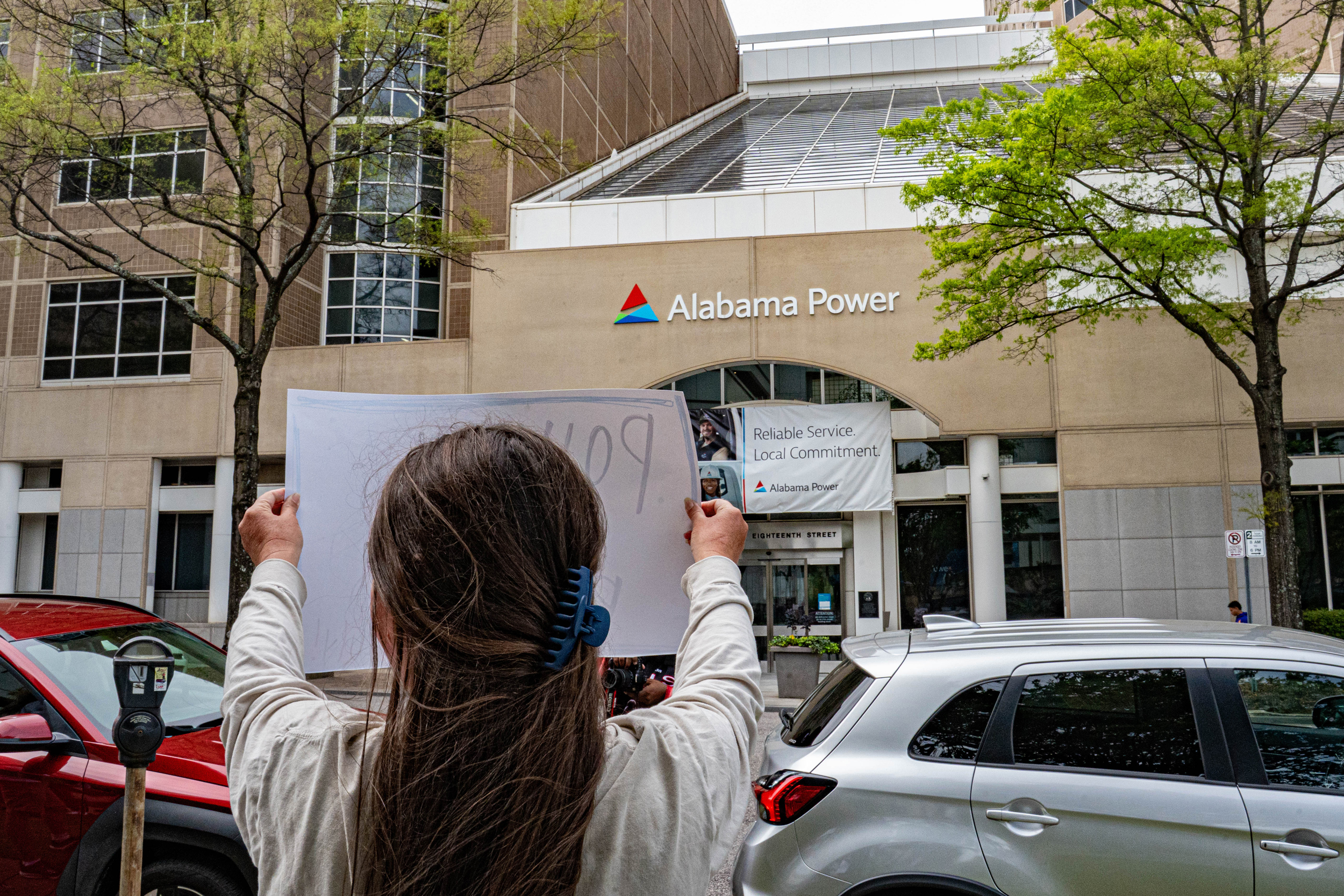
Alabamians have good reason for concern over energy prices. An Inside Climate News analysis showed that Alabama Power customers paid the highest average residential bills among the 100 largest investor-owned utilities in the United States. Experts have pointed to the “regulatory capture” of bodies like the Public Service Commission as one reason for those high rates.
All of the successful candidates in this year’s PSC primaries have cited high utility bills as a reason for reform.
In the race for the Place 1 seat, Gentry’s 50-point primary victory over Oden came in the wake of Gentry’s pledge to call for the first formal public rate hearing overseeing Alabama Power’s electricity price increases since 1982. James Gordon, his Democratic opponent, has gone further, calling for regular formal rate hearings, an immediate 25 percent reduction in bills and consideration of a cap on the company’s annual profits.
In the bid for Place 2, Zeigler and Beeker will battle it out in the lead-up to their June runoff. Beeker is relatively new to the commission, having been appointed to the body in 2024 to serve the remaining term of his father, also Chris, a three-term incumbent, who resigned citing health concerns.
This story is funded by readers like you.
Our nonprofit newsroom provides award-winning climate coverage free of charge and advertising. We rely on donations from readers like you to keep going. Please donate now to support our work.
Donate NowZeigler’s campaign has focused on pairing opposition to both large data center projects needed to power AI and solar farms for renewable electricity to harness local political passions, though his campaign’s website landing page features an AI-generated image as its background.
“They can ruin your community, consume water and drive your electric bills up. No one in Montgomery is overseeing this,” Zeigler said of data centers in a campaign video.
Beeker has taken a more traditional Alabama politics approach, nationalizing the issues and attacking what he labels “woke” left policies he claims without evidence are driving energy prices up.
Appearing in an ad holding his rifle on a farm, Beeker said he’ll fight for Alabama.
“As your public service commissioner, I’m again standing with President Trump against woke liberal environmentalists who are trying to kill Alabama jobs,” Beeker said.
As commissioner, Beeker has not yet called for a formal rate hearing on Alabama Power’s electricity prices.
McNeil, the Democrat in the race, did not face a primary challenger and has now begun her general election campaign in earnest. Her message? Power bills must come down.
“This is one of the most important positions on the ballot because it affects 1.5 million Alabamians,” McNeil said of the PSC races at a candidate forum earlier this month. “Utility rates are too high. They are some of the highest in the country. Something has got to be done because what has been going on for the last 20 years got us to where we are today.”
About This Story
Perhaps you noticed: This story, like all the news we publish, is free to read. That’s because Inside Climate News is a 501c3 nonprofit organization. We do not charge a subscription fee, lock our news behind a paywall, or clutter our website with ads. We make our news on climate and the environment freely available to you and anyone who wants it.
That’s not all. We also share our news for free with scores of other media organizations around the country. Many of them can’t afford to do environmental journalism of their own. We’ve built bureaus from coast to coast to report local stories, collaborate with local newsrooms and co-publish articles so that this vital work is shared as widely as possible.
Two of us launched ICN in 2007. Six years later we earned a Pulitzer Prize for National Reporting, and now we run the oldest and largest dedicated climate newsroom in the nation. We tell the story in all its complexity. We hold polluters accountable. We expose environmental injustice. We debunk misinformation. We scrutinize solutions and inspire action.
Donations from readers like you fund every aspect of what we do. If you don’t already, will you support our ongoing work, our reporting on the biggest crisis facing our planet, and help us reach even more readers in more places?
Please take a moment to make a tax-deductible donation. Every one of them makes a difference.
Thank you,

Lee Hedgepeth
Reporter, Alabama
Lee Hedgepeth is Inside Climate News’ Alabama reporter. Raised in Grand Bay, Alabama, a small town on the Gulf Coast, Lee holds master’s degrees in community journalism and political development from the University of Alabama and Tulane University. Lee is the founder of Tread, a newsletter of Southern journalism, and has also worked for news outlets across Alabama, including CBS 42, Alabama Political Reporter and the Anniston Star. His reporting has focused on issues impacting members of marginalized groups, including homelessness, poverty, and the death penalty. His award-winning journalism has appeared in publications across the country and has been cited by the New York Times, the Wall Street Journal and the Washington Post, among others.