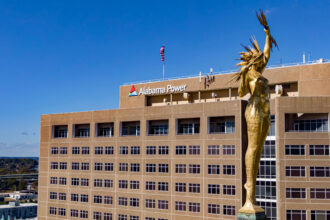


Alabama Power announced Friday its electric rates would decrease across the board next year, saving its 1.5 million customers approximately $160 million on their energy bills.
The company attributed the savings to projected increases in revenue from large data center contracts next year.
“In January, our customers will see their rates go down because of the growth we’re seeing across the state,” Alabama Power CEO Jeff Peoples said in a news release. “Alabama is growing and we’re making sure that growth works for all of our customers.”
The company news release said that a home or business using 1,000 kilowatt-hours each month would save more than $50 a year, compared to current rates.
Electricity costs have been a major political issue in Alabama for the past year, after an Inside Climate News investigation last November showed Alabama Power customers paid the highest total electric bills in the country in 2024, driven by its above-average rates and Alabama’s very high electricity usage.
In filings made Friday with the Alabama Public Service Commission, the company announced a projected 2027 income of $1.76 billion, higher than its currently allowed rate of return set by the PSC.
Unlike most regulated utilities in the United States, Alabama Power operates under a formula-based rate mechanism called the Rate Stabilization and Equalization factor, created by the PSC in 1982.
Under that system, rates are adjusted up or down automatically every January based on the company’s projections for the upcoming year, without the formal rate case hearings that most other states use to set electricity rates.
Those projections for 2027 triggered the changes, which will take effect in January.
Alabama Power also said it will comply with the commission’s request to stop billing customers for part of its advertising budget beginning in 2027. That change is expected to save the average customer about four cents per month, the company said.
Critics Say Tax Cut, Not Data Centers, Drive Decrease
Daniel Tait, executive director of clean energy advocacy group Energy Alabama, said the company should not get credit for lowering rates when the formula dictated the decrease.
“Alabama Power customers should not be fooled,” Tait said in an email. “The utility wants a public parade for handing back money it was on track to overcharge customers.”
This story is funded by readers like you.
Our nonprofit newsroom provides award-winning climate coverage free of charge and advertising. We rely on donations from readers like you to keep going. Please donate now to support our work.
Donate NowTait also said the company is crediting data centers for the decrease, but does not mention that a massive cut in the company’s tax bill generated even more savings.
“The company credits data centers, but its own numbers show there would be no cut without a roughly $180 million drop in its tax bill, which the company ties to nuclear tax credits from the Inflation Reduction Act,” Tait said. “Even after this action, the company’s own filing shows its return on equity, a marker for its profits, remaining above the national average.”
Relief for Customers Paying Country’s Highest Bills
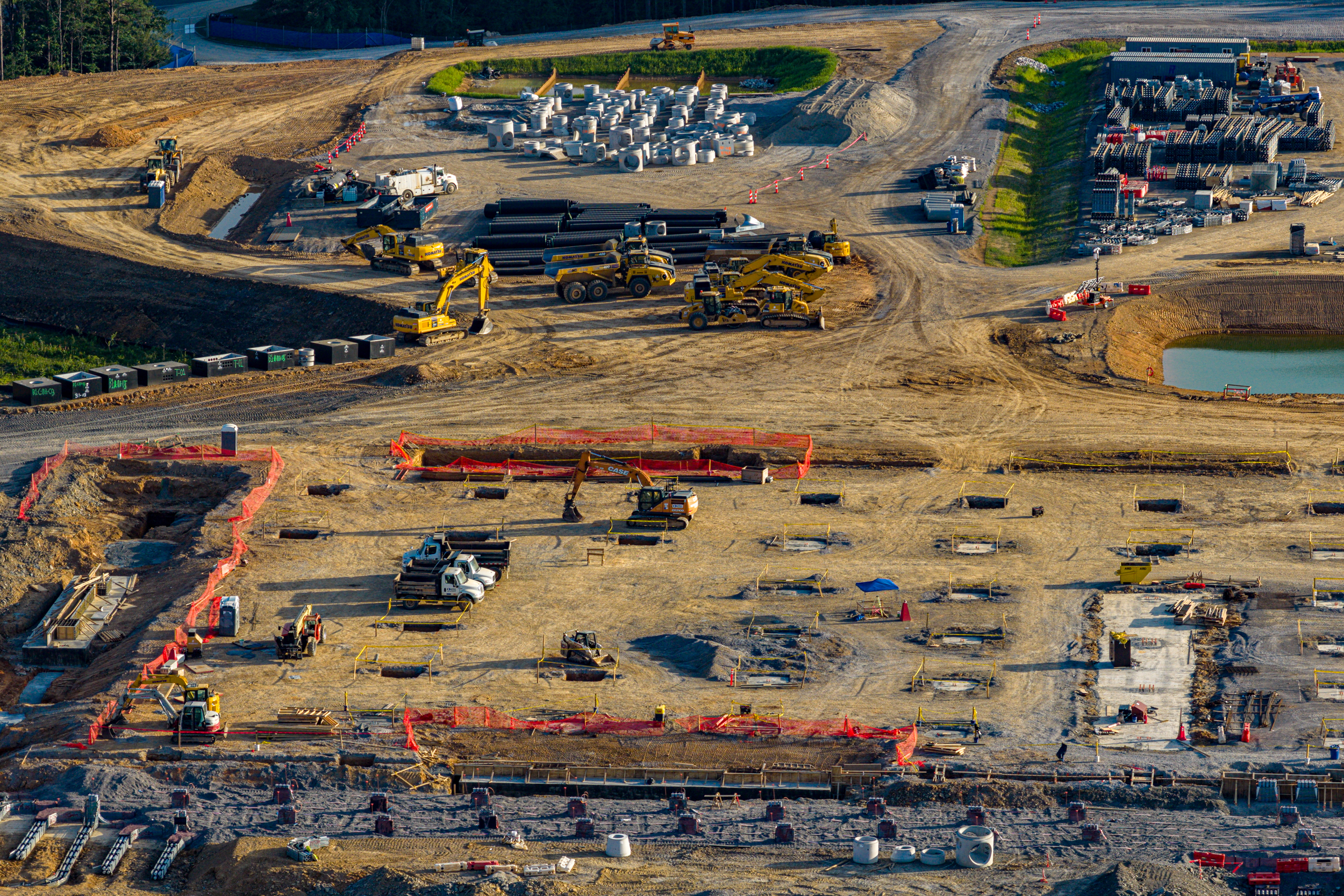
Two weeks after the ICN investigation was published last November, U.S. Sen. Katie Britt said Alabama had the “highest rates in the Southeast,” amid a debate about a hyperscale data center project currently under construction in Bessemer, just west of Birmingham.
In December, the PSC approved a two-year rate freeze proposed by Alabama Power, delaying scheduled increases surrounding the purchase of a gas-fired power plant, and blocking rate increases until 2028.
Then in the spring, fierce public backlash against high electricity prices spurred state lawmakers to pass sweeping utility legislation that will dramatically reshape the PSC, but will not require the formal rate case hearings that most other states use.
The bill will expand the PSC from three members to seven next year, and create a governor-appointed secretary of energy who will set the PSC’s agenda and “have authority over personnel and administrative functions of the commission.”
The secretary can only be overruled by a vote of five of the seven commissioners.
The two incumbent PSC commissioners on the ballot this year were defeated in GOP primaries, leaving PSC President Cynthia Lee Almond as the lone returning member next year.
Britt issued a news release Friday, taking credit for next year’s decrease.
“I asked Alabama Power to find a way to lower rates—not just freeze them, but achieve lower power bills for Alabama households,” Britt said in the release. “Today, I am excited to say that is happening.
“I am proud to have successfully led this charge and that it’s resulted in putting more money back in hardworking Alabamians’ pockets.”
Tait, from Energy Alabama, said the bigger issue is the high rate of return that Alabama Power earns. The company reported $1.52 billion in profit through the first three quarters of 2026.
“Alabamians want real relief on their electric bills, and that comes from a cut to what Alabama Power is allowed to profit,” he said. “Sure, people will take the $4 per month but shuffling tax credits around doesn’t cut it.”
About This Story
Perhaps you noticed: This story, like all the news we publish, is free to read. That’s because Inside Climate News is a 501c3 nonprofit organization. We do not charge a subscription fee, lock our news behind a paywall, or clutter our website with ads. We make our news on climate and the environment freely available to you and anyone who wants it.
That’s not all. We also share our news for free with scores of other media organizations around the country. Many of them can’t afford to do environmental journalism of their own. We’ve built bureaus from coast to coast to report local stories, collaborate with local newsrooms and co-publish articles so that this vital work is shared as widely as possible.
Two of us launched ICN in 2007. Six years later we earned a Pulitzer Prize for National Reporting, and now we run the oldest and largest dedicated climate newsroom in the nation. We tell the story in all its complexity. We hold polluters accountable. We expose environmental injustice. We debunk misinformation. We scrutinize solutions and inspire action.
Donations from readers like you fund every aspect of what we do. If you don’t already, will you support our ongoing work, our reporting on the biggest crisis facing our planet, and help us reach even more readers in more places?
Please take a moment to make a tax-deductible donation. Every one of them makes a difference.
Thank you,

Dennis Pillion
Reporter, Alabama
Dennis Pillion is a reporter for Inside Climate News based in Alabama. He joined ICN in 2024 after 17 years working for Alabama Media Group, including nine as the statewide natural resources reporter. His work for AL.com and The Birmingham News, won numerous Green Eyeshade and Alabama Press Association awards for his coverage of environmental issues in Alabama. He was born and lives in Birmingham, Ala.