
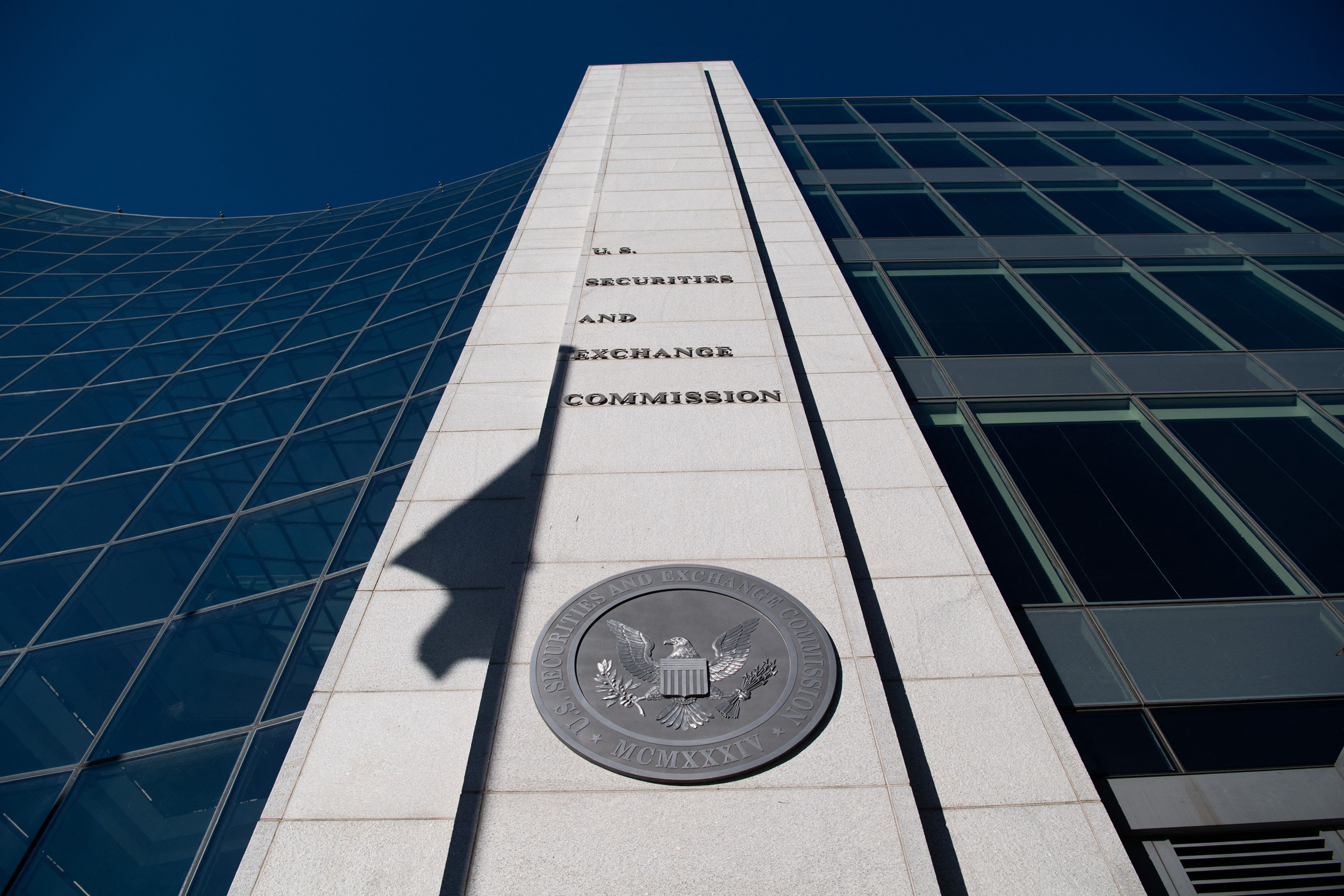


The U.S. Securities and Exchange Commission wants to scrap a rule that allows shareholders to formally petition companies, one of the ways that shareholder advocacy groups have pressed for more action on climate and sustainability.
Investor and advocacy groups warn that the SEC’s move would block a longstanding avenue for pressuring public companies to factor in climate risks that could severely impact their operations.
For instance, investors have used the rule to persuade companies to be more transparent on their emission targets and to better account for other environmental impacts. In 2022, nearly two-thirds of Home Depot shareholders backed a proposal on deforestation in its supply chains. Home Depot commissioned a third-party assessment and released a report in 2024.
“Taking away the right of shareholders to petition companies about climate change really is taking away another tool … not only from investors, but also from the public, to address the climate issue,” said Timothy Smith, senior policy advisor at the Interfaith Center on Corporate Responsibility, a coalition of faith- and values-based investors.
During the 2026 season for companies’ annual shareholder meetings, ICCR members filed 438 shareholder proposals. Fifty were related to the climate crisis, and half of these were brought up for a vote before all shareholders. Smith said scrapping the existing rules will not only remove shareholders’ right to petition companies but will also create a void for the companies by dismantling the structured pathway they had for shareholder engagement.
The SEC introduced the current rules in 1942, allowing eligible investors to submit proposals to public companies for a vote at the annual shareholder meeting. The proposals are simply recommendations, but companies may feel more pressure to act when they get a lot of shareholder support.
Most companies rarely see shareholder proposals. The Council of Institutional Investors—a nonprofit association of U.S. asset owners and managers—looked at companies in an index representing most publicly traded firms in the U.S., and found an average of one shareholder proposal per company every 7.7 years.
But some large oil and gas firms are among those receiving far more than average. The American Petroleum Institute has pushed for years to change shareholder-proposal rules. ExxonMobil sued to block a climate proposal related to its greenhouse gas emissions in 2024, citing “micromanagement”; the case was dismissed after the shareholder agreed not to submit any more climate-related proposals.
Climate risks are “very topical and very critical” for investors with the increased use of artificial intelligence, said Bryan McGannon, managing director of the Sustainable Investment Forum, an investor group based in the U.S. Investors need to understand how companies are employing AI and how that affects their energy and water usage, he said.
The SEC argues that its move hands power to states. An SEC spokesperson said in a statement that the agency’s proposal would provide states with both the legal clarity and the motivation to implement their own ideas for a “sensible shareholder proposal framework.” The spokesperson added that the changes would take companies’ focus off “debates that have little or no bearing on investors’ financial returns.”
But the Trump administration has, across agencies, sought to reduce checks on corporate behavior—rolling back protections against everything from pollution to financial meltdowns. Other proposals from the SEC include halving the number of times companies must report their earnings and letting most of them avoid financial scrutiny from outside auditors.
The SEC’s new proposal, published in the Federal Register last week, came after the agency removed itself from a key part of the shareholder-petition process. Earlier, if a company thought a shareholder proposal didn’t meet the requirements to be brought up for a vote among all shareholders, it could ask the agency to weigh in. The SEC sharply limited its involvement in this “no-action” process late last year and stopped completely in August.
McGannon says this “dramatically lowered” the number of shareholder proposals in the past year, including those on environmental issues. He fears the SEC’s new rule changes would further reduce the number.
Investor groups say it’s not yet clear how shareholder proposals would work once the rule change is in place. States have no such regulations yet, Smith said.
While shareholders could still submit proposals, investor advocates say what happens next would be at the discretion of each company.
This story is funded by readers like you.
Our nonprofit newsroom provides award-winning climate coverage free of charge and advertising. We rely on donations from readers like you to keep going. Please donate now to support our work.
Donate NowReuters reported last week that Microsoft committed to accepting shareholder proposals through next year.
From 2025 to 2026, shareholder proposals across an index reflecting most of the companies traded in the U.S. fell by approximately 20 percent, according to a report by The Conference Board, a business membership and research group. During the same period, the group found, environmental proposals declined by 32 percent, even as the ones shareholders submitted received slightly more support during voting.
Not all shareholder proposals end up receiving a vote, because in most cases shareholders and businesses discuss the matter and reach middle ground, said Andrew Collier, director of the Freedom to Invest initiative at Ceres, a nonprofit advocacy organization working with institutional investors. That process is critical for companies to protect shareholder value, he said.
“This is a big deal for investors,” he said.
Far from helping companies, Collier said, the Trump administration’s plan would replace “a predictable national system run by the SEC with a patchwork of state rules.”
Less oversight by the SEC on no-action requests, for instance, has led to six court cases against companies so far. In April, a federal court ruled in favor of the New York State Common Retirement Fund’s trustee, requiring BJ’s Wholesale Club Holdings Inc. to include in its annual shareholder vote the fund’s proposal on deforestation associated with the company’s private label brands.
The next step for the SEC’s plan to scrap its shareholder-proposal rule is public comment. People can weigh in through Nov. 20.
Andrew Behar, CEO of As You Sow, a nonprofit shareholder advocacy group, accused the SEC of intentionally creating an “information gap” on climate risks to businesses.
“They don’t want people talking about climate change. They don’t want people associating it with financial risk,” Behar said.
But it’s a problem for both companies and their investors if corporate leaders don’t try to get ahead of climate impacts. He said, “A risk is not as risky if you know it’s going to come.”
About This Story
Perhaps you noticed: This story, like all the news we publish, is free to read. That’s because Inside Climate News is a 501c3 nonprofit organization. We do not charge a subscription fee, lock our news behind a paywall, or clutter our website with ads. We make our news on climate and the environment freely available to you and anyone who wants it.
That’s not all. We also share our news for free with scores of other media organizations around the country. Many of them can’t afford to do environmental journalism of their own. We’ve built bureaus from coast to coast to report local stories, collaborate with local newsrooms and co-publish articles so that this vital work is shared as widely as possible.
Two of us launched ICN in 2007. Six years later we earned a Pulitzer Prize for National Reporting, and now we run the oldest and largest dedicated climate newsroom in the nation. We tell the story in all its complexity. We hold polluters accountable. We expose environmental injustice. We debunk misinformation. We scrutinize solutions and inspire action.
Donations from readers like you fund every aspect of what we do. If you don’t already, will you support our ongoing work, our reporting on the biggest crisis facing our planet, and help us reach even more readers in more places?
Please take a moment to make a tax-deductible donation. Every one of them makes a difference.
Thank you,

Dimuthu Attanayake
Columbia Journalism-INN Fellow
Dimuthu Attanayake is an award-winning climate journalist and the fall 2026 Columbia Journalism School-INN fellow at Inside Climate News, where she covers climate, business and economics. She previously reported on climate extremes and diseases, green markets and the gendered impacts of climate change among farmers.
Her work on how climate change exacerbates gendered financial violence—reported with support from the Pulitzer Center—received an honorable mention at the 2026 Asian American Journalists Association Awards. Her investigation on how climate change exacerbates gender-based violence among women farmers won a Developing Asia Journalism Award from the Asian Development Bank Institute in 2024.
She previously reported for Foreign Policy, Rest of World, Thomson Reuters Foundation News, the Guardian, Nikkei Asia, South China Morning Post and Deutsche Welle.
Dimuthu holds a master’s degree in data journalism from Columbia University Graduate School of Journalism and a bachelor’s degree in economics and finance from the University of London.