

EL PASO—Federal Judge Kathleen Cardone granted a preliminary injunction Friday to halt construction on the border wall in Texas’ expansive Big Bend sector, including the national and state parks.
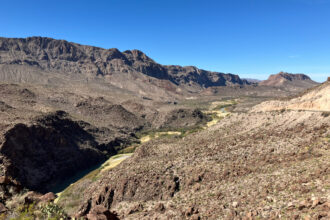
Cardone read a brief order from the bench after hearing more than four hours of testimony from conservation groups and residents of the Big Bend region, known internationally for its dark night skies, abundant biodiversity and rugged river canyons.
Cardone said that the plaintiffs are likely to succeed on the merits in at least one of their claims and to suffer irreparable harm if construction continues. Her ruling stops border barrier construction in the entire Big Bend sector—which spans more than 500 miles across West Texas—until the federal government complies with all applicable laws.
The ruling applies to all of Big Bend National Park, Big Bend Ranch State Park and the border along the Rio Grande in the rest of the sector. The injunction will remain in place while the court considers the lawsuit, which was filed in April.
Plaintiffs and their supporters embraced and wept outside the federal courtroom in El Paso Friday afternoon following the ruling. Many had traveled hundreds of miles from Big Bend communities, including Terlingua and Marfa, to attend.
The Center for Biological Diversity, Friends of the Ruidosa Church and Danny Miller Jr., a river guide, sued the U.S. Department of Homeland Security and Secretary Markwayne Mullin for waiving dozens of laws to fast-track the border wall through the Big Bend region. The Texas Civil Rights Project and the Center for Biological Diversity are representing the plaintiffs.
The federal waivers cover the entire Big Bend region. This had allowed construction to proceed without following the National Environmental Policy Act, the Archaeological and Historic Preservation Act and many other laws. Under the injunction, the effect of the waivers is stayed.
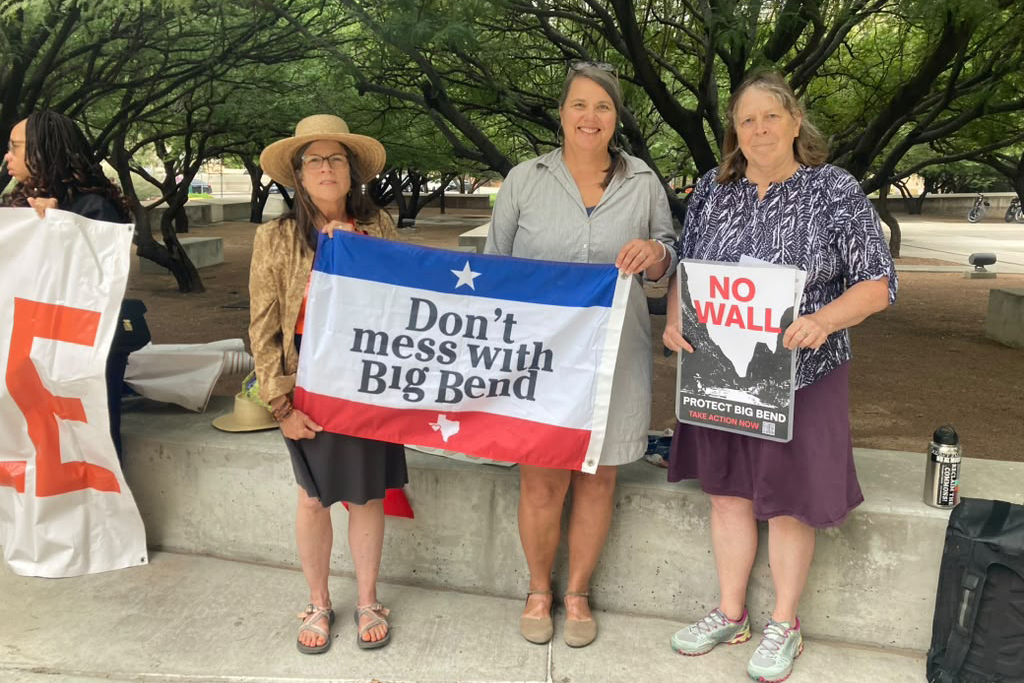
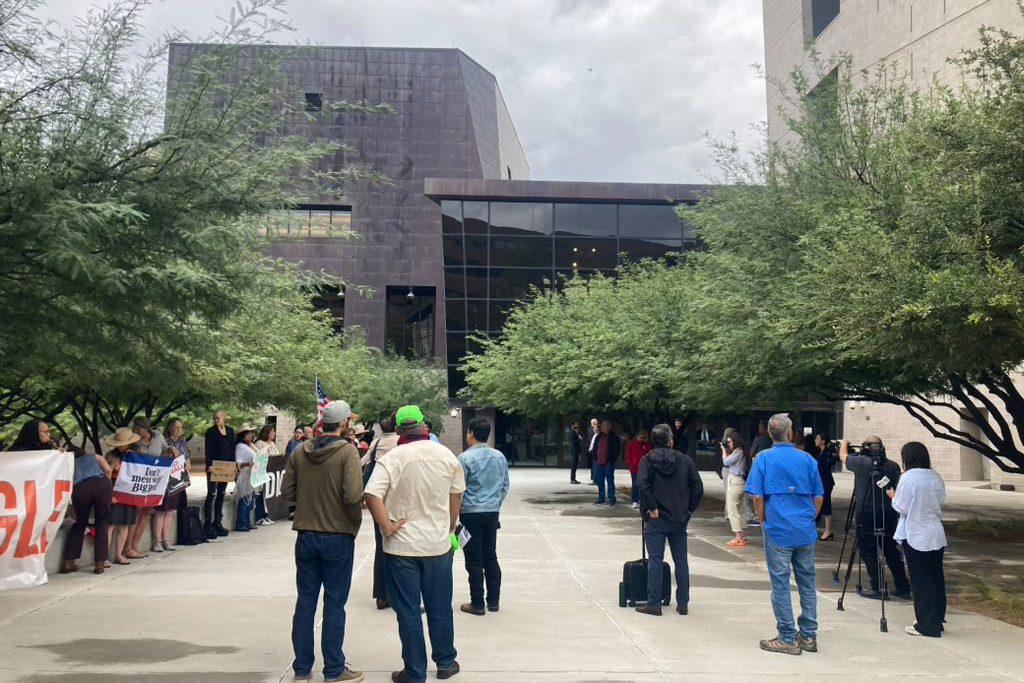
People opposed to a border wall in Big Bend gather outside the federal courthouse in El Paso on Friday. Credit: Martha Pskowski/Inside Climate News
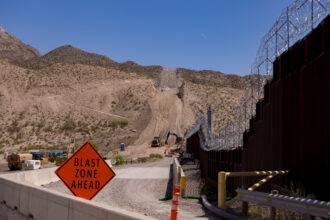
Customs and Border Protection has changed its plans for border barrier construction in the Big Bend region numerous times since February. The federal government currently plans to build vehicle barriers and access roads within the state and national parks. A 30-foot steel wall is planned for private land in Big Bend outside the parks.
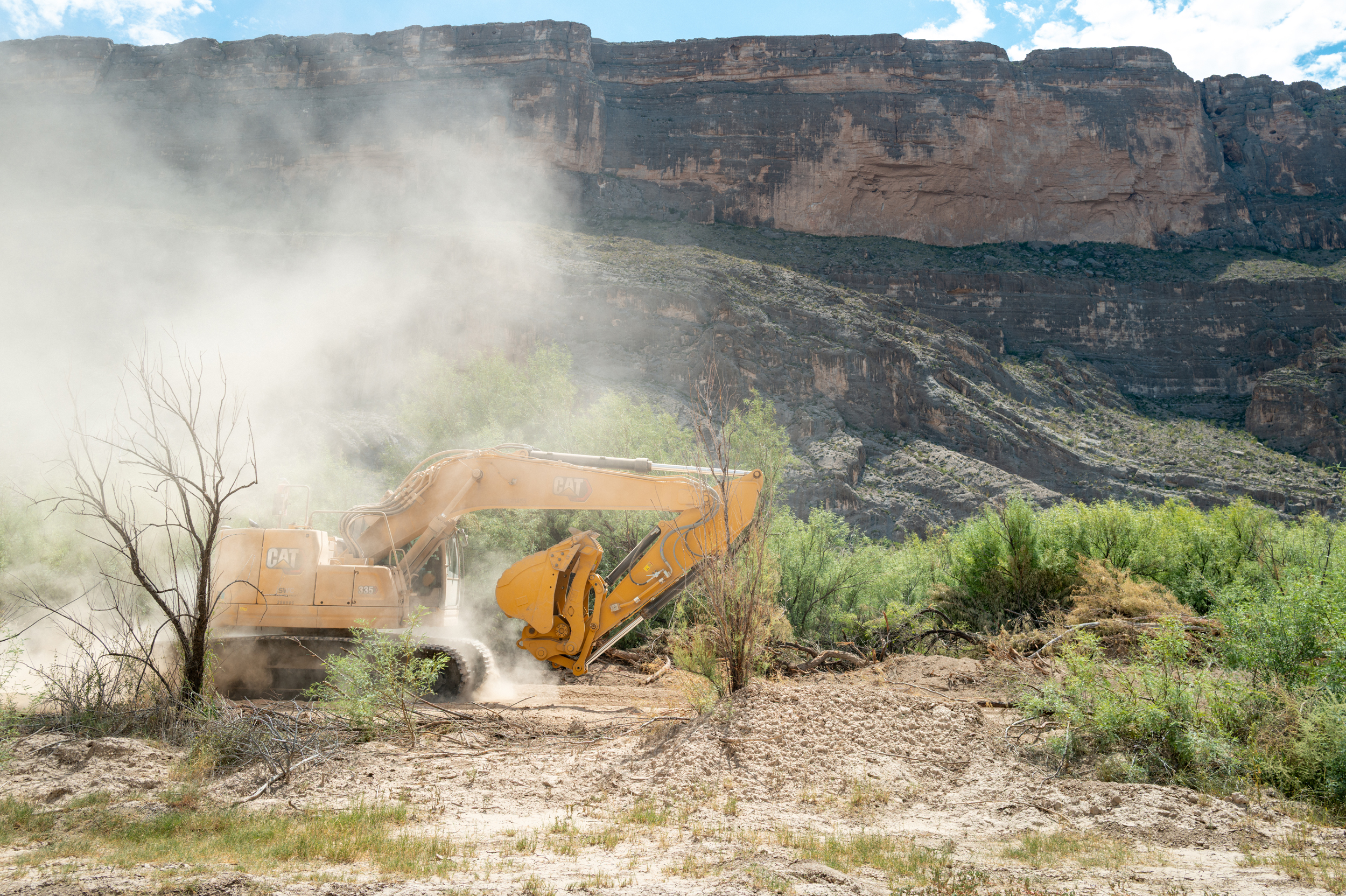
In mid-August, advocates documented excavators and bulldozers clearing land within Big Bend National Park. Customs and Border Protection then issued a construction pause in the park on Aug. 17. That pause lifted this week. Construction recently began on a new 30-foot steel wall in Hudspeth County, east of El Paso.
Attorneys for the plaintiffs called eight people to testify Friday. Their arguments centered on the lack of evidence that the Big Bend sector is an area of “high illegal entry,” as stated in the federal waivers. They argued that the plaintiffs were already suffering and will continue to suffer harm if border wall construction continues.
Adam Isaacson, an analyst at the Washington Office on Latin America, presented data showing the Big Bend sector is a “distant last place” in unauthorized border crossings compared to the nine sectors that make up the U.S. border with Mexico. The plaintiffs’ attorneys explained that they requested granular data about how many people are detained in Big Bend National Park, as opposed to the vast area that makes up the rest of the sector, and the federal government never supplied that information.
Miller, the river guide, said his business depends on access to the Rio Grande and explained how property he owns along the river will be irrevocably damaged if the wall is built.
He described border wall construction as a “visible scar that will never go away.” Miller and several other individuals giving testimony broke down in tears when asked how a border wall could change their relationship to the Rio Grande.
U.S. Department of Justice attorneys presented few counterarguments and did not present any witnesses. The White House referred questions to the Department of Homeland Security, which did not immediately respond to a request for comment.
“We stand by our assessment and remain confident in our legal authorities to secure the border while preserving the unique landscape of the Big Bend region,” a Customs and Border Protection spokesperson said. “We are working with the Department of Justice on next steps.”
About This Story
Perhaps you noticed: This story, like all the news we publish, is free to read. That’s because Inside Climate News is a 501c3 nonprofit organization. We do not charge a subscription fee, lock our news behind a paywall, or clutter our website with ads. We make our news on climate and the environment freely available to you and anyone who wants it.
That’s not all. We also share our news for free with scores of other media organizations around the country. Many of them can’t afford to do environmental journalism of their own. We’ve built bureaus from coast to coast to report local stories, collaborate with local newsrooms and co-publish articles so that this vital work is shared as widely as possible.
Two of us launched ICN in 2007. Six years later we earned a Pulitzer Prize for National Reporting, and now we run the oldest and largest dedicated climate newsroom in the nation. We tell the story in all its complexity. We hold polluters accountable. We expose environmental injustice. We debunk misinformation. We scrutinize solutions and inspire action.
Donations from readers like you fund every aspect of what we do. If you don’t already, will you support our ongoing work, our reporting on the biggest crisis facing our planet, and help us reach even more readers in more places?
Please take a moment to make a tax-deductible donation. Every one of them makes a difference.
Thank you,

Martha Pskowski
Reporter, El Paso, Texas
Martha Pskowski covers climate change and the environment in Texas from her base in El Paso. She was previously an environmental reporter at the El Paso Times. She began her career as a freelance journalist in Mexico, reporting for outlets including The Guardian and Yale E360. Martha has a B.A. in Environmental Studies from Hampshire College and a master’s degree in Journalism and Latin American Studies from New York University. She is a former Fulbright research fellow in Mexico. Martha can be reached on Signal at psskow.33.