

From our collaborating partner “Living on Earth,” public radio’s environmental news magazine, an interview by host Steve Curwood with Bill Moomaw, a distinguished visiting scientist at the Woodwell Climate Research Center.
When we take a look at the history of the United States, after the European colonists landed, some of the most dramatic changes they made were to the landscape, and especially our forests. Clearcutting ran rampant, but now, on the 250th birthday of the United States, many of our forests have recovered, particularly in the Northeast.
Since they function as carbon sinks, maintaining our forests is a key tool we have for mitigating the effects of climate change. During negotiations for the Kyoto Protocol, the United States even tried to argue that our forests should be taken into account as an offset for our historic carbon emissions.
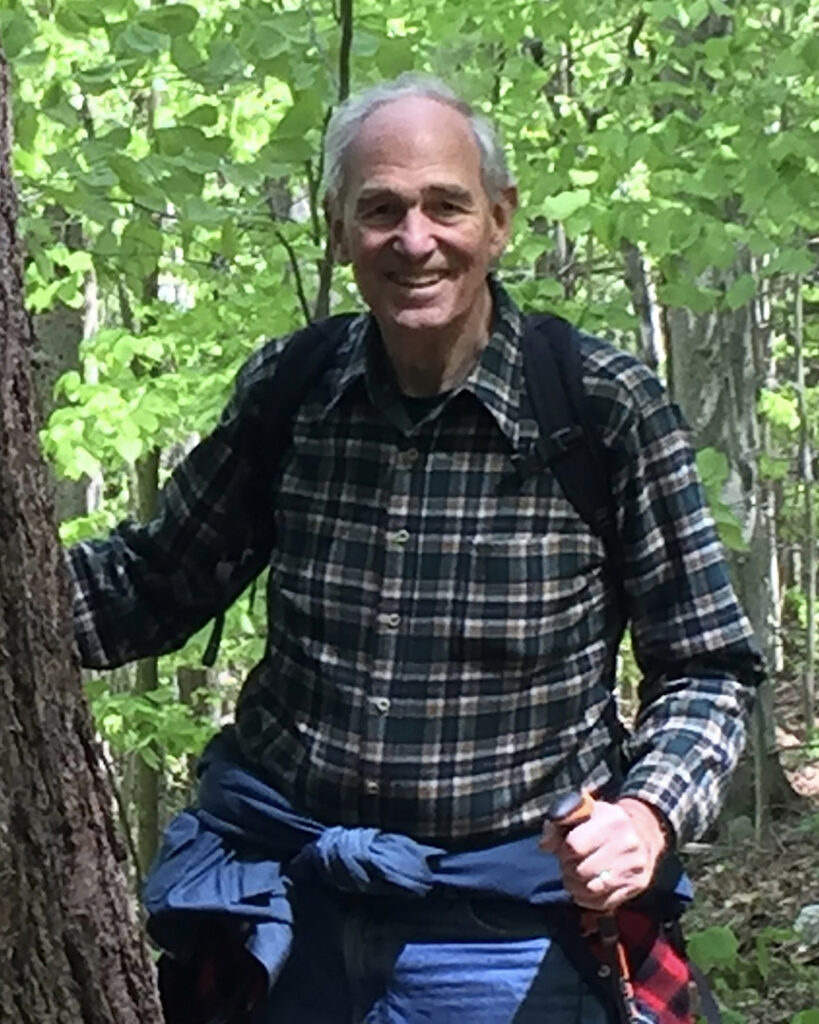
Bill Moomaw is a Tufts emeritus professor and a distinguished visiting scientist at the Woodwell Climate Research Center. He was a lead author of several Intergovernmental Panel on Climate Change reports; the organization shared the 2007 Nobel Peace Prize with the former U.S. Vice President Al Gore. Moomaw has spent decades studying how the process of rebuilding American forests could shape the country’s climate future.
STEVE CURWOOD: Can you take a look back in history to when the United States was just getting started?
MOOMAW: After arriving on the Mayflower, John Winthrop is quoted as saying: “We have been sent to a wilderness filled with savages and wild beasts.” Clearly, they weren’t impressed with the massive forest they saw or the people who were here, and had this notion that the forests were in the way.
To make it look like England, they had to have agriculture, they had to clear forests for their villages, and it didn’t stop there. The value of the tall white pines in the primary forests that were here were so magnificent that the sovereign in England required that they all be saved for Her Majesty’s ships in order to have the tallest masts, taller than the Spaniards, for example. Forest was just seen as a resource and a barrier, and therefore it had to be removed. That’s the New England part and the Virginia part, which were the first areas settled.
CURWOOD: How much of the forest was lost in the Northeast once the Europeans came?
MOOMAW: Well, it took a little while, but by 1850 New England was probably 80 percent deforested, and in some places 90 percent and 100 percent. It was just absolutely decimated.
It wasn’t until after 1900, when [first head of the U.S. Forest Service] Gifford Pinchot returned from Europe, learning how the Europeans had managed their forest in order to be a resource for hundreds if not thousands of years, that we changed our practices from wanton destruction. I mean, we were cutting down whole hemlock forests in the Northeast, in New England, just to get the bark, to get the tannin to tan leather. The rest was just dumped and then burned. These raging fires in New Hampshire—they were burning the wood that they had just cut down.
CURWOOD: What needed to happen to have the forest come back in the Northeast?
MOOMAW: Well, it’s a remarkable story. To give you an example, Massachusetts—which is the third-most densely populated state in the United States—is 60 percent forested today. Now, it was probably 90 percent-plus forested when the Europeans arrived, but it went through a period in which 80 percent to 90 percent of the forest was removed, and that was exacerbated between 1850 and 1900 by the railroads.
The railroads had to be fueled, they were fueled by burning wood to make steam. The railroad tracks had to have ties, so trees were cut down to make ties for railroads. What we extol as this great industrialization in America in the last half of the 19th century was a disaster for the forests.
But around 1850, the Ohio territories were opening up, and New England farmers who had been cutting down forests and then plowing the rocks discovered all you had to do in Ohio was cut down the forest, and there were no rocks.
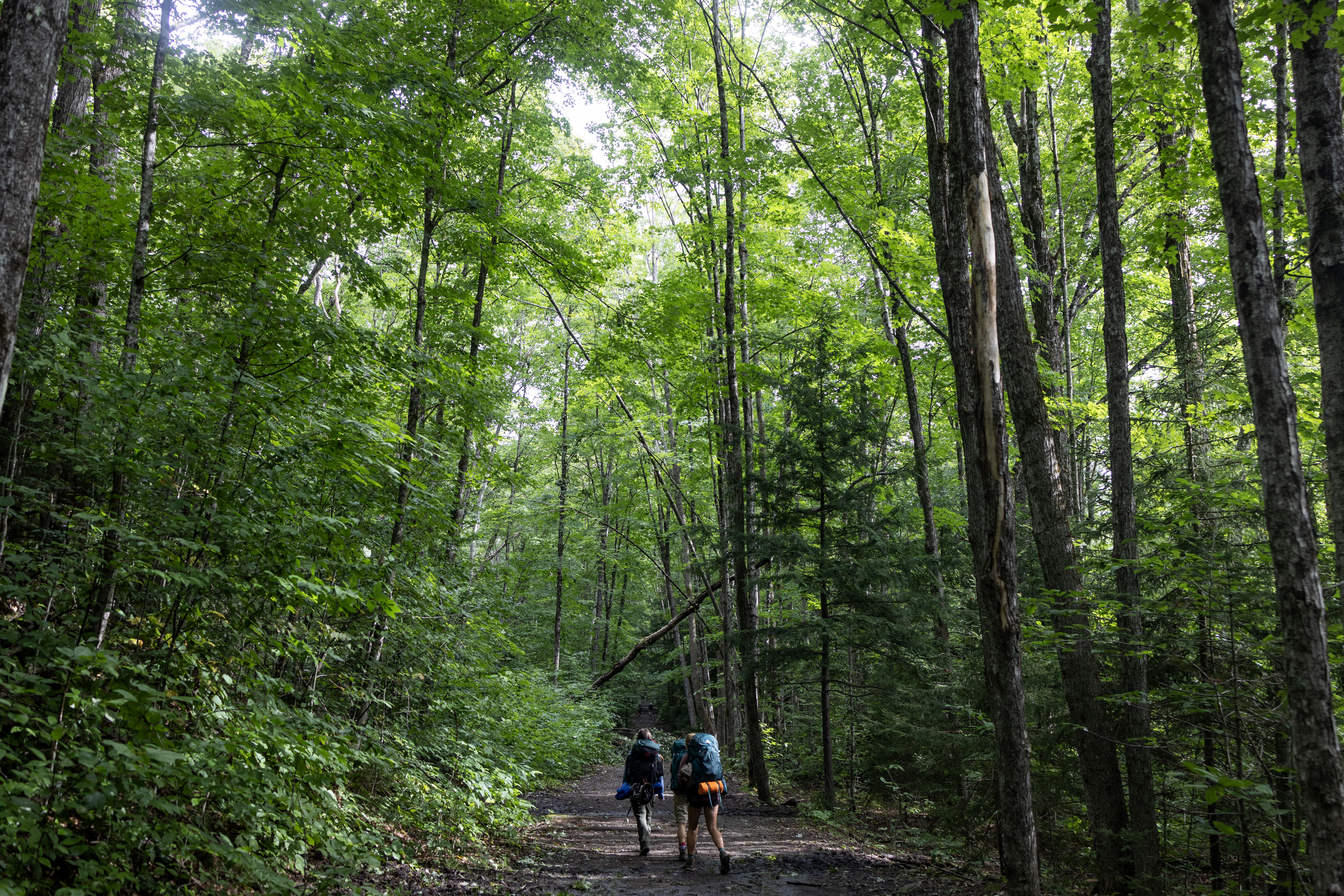
So they abandoned their farmland, and the regrowth of forest in the Northeast U.S., particularly New England, is the greatest forest recovery in the history of the world, and it all happened because of what I call benign neglect. It was not a plan, it was just abandonment of agricultural lands that receded spontaneously for the most part.
Now, in other parts of the country, forests that were cut were then turned into giant tree plantations of single species. We didn’t really plant our way back into forests, we planted our way back into tree farms, because if you’re a forester and you have a piece of land, you wanted to improve it—meaning to replace the trees you’d cut down with the trees you wanted to cut the next time—so the species were changed to accommodate that. So we didn’t get our natural forest back in some parts of the country, but in New England we pretty much did. It’s remarkable what has happened in the last hundred years.
CURWOOD: So in the East, we can essentially celebrate that they’re mostly back?
This story is funded by readers like you.
Our nonprofit newsroom provides award-winning climate coverage free of charge and advertising. We rely on donations from readers like you to keep going. Please donate now to support our work.
Donate NowMOOMAW: Well, we can. I think it is worth celebrating, too. The battle’s not over, in the sense that most states have a Department of Natural Resources, which means that a forest is considered a resource—something to be exploited for economic reasons.
There’s been this huge battle going back to the late-19th century that somehow some people thought, well, we should save some of our forests. John Muir is the most famous person who was advocating that, and so while Gifford Pinchot was saying we needed to use it as a resource and use it wisely, Muir is saying it was somehow sacred and should be protected, and that’s been the debate.
There’s now a third view, which is that forests and other ecosystems are essential components of the Earth’s operating system. This is why we’re talking about them, for climate, for example. In that role, we can’t have a planet that has the climate that made our whole civilization possible if we don’t have forests and oceans and other ecosystems that are functional.
CURWOOD: Looking ahead for another 250 years here in America, how do you think our forest management will change? How should it change?
MOOMAW: I think it needs to change in a way that protects a large enough percentage that it will be able to maintain both the global climate and our regional weather conditions.
For example, the Northeast temperature rise with global warming is significantly less because we are so heavily forested. Those forests are both providing shade, but they’re also, in order to grow, drawing water up into their trunks, and the water contains minerals and nutrients they need, and then they evaporate the water from the leaves and it cools the surrounding area. So Boston, for example, is probably three or four degrees cooler than it has any right to be.
In other words, global warming would make it that much warmer, but our forests are cooling it by that amount, so it has a huge benefit from that point of view. And that has economic consequences, by the way. A few years back, when Worcester, Massachusetts had to cut, I think, 30,000 trees that were infected, the air conditioning electricity use went up dramatically, and we can’t all stay inside. People building houses can’t be air conditioned while they’re building houses, they have to work outdoors. Farmers have to work outdoors. I think it’s just really important that we have a climate that is suitable for all of us.
About This Story
Perhaps you noticed: This story, like all the news we publish, is free to read. That’s because Inside Climate News is a 501c3 nonprofit organization. We do not charge a subscription fee, lock our news behind a paywall, or clutter our website with ads. We make our news on climate and the environment freely available to you and anyone who wants it.
That’s not all. We also share our news for free with scores of other media organizations around the country. Many of them can’t afford to do environmental journalism of their own. We’ve built bureaus from coast to coast to report local stories, collaborate with local newsrooms and co-publish articles so that this vital work is shared as widely as possible.
Two of us launched ICN in 2007. Six years later we earned a Pulitzer Prize for National Reporting, and now we run the oldest and largest dedicated climate newsroom in the nation. We tell the story in all its complexity. We hold polluters accountable. We expose environmental injustice. We debunk misinformation. We scrutinize solutions and inspire action.
Donations from readers like you fund every aspect of what we do. If you don’t already, will you support our ongoing work, our reporting on the biggest crisis facing our planet, and help us reach even more readers in more places?
Please take a moment to make a tax-deductible donation. Every one of them makes a difference.
Thank you,