

Sweeping changes underway at the federal agency tasked with protecting the nation’s forests could result in the loss of more than a century of critical historical documents, conservationists warn.
The U.S. Department of Agriculture’s Forest Service announced a major restructuring at the end of March that includes closing all 10 regional offices. Those offices house troves of archival documents—many of which are not digitized—that chronicle the history in the nation’s forests. Thus far, the agency has not made public its plans to keep that information safe.
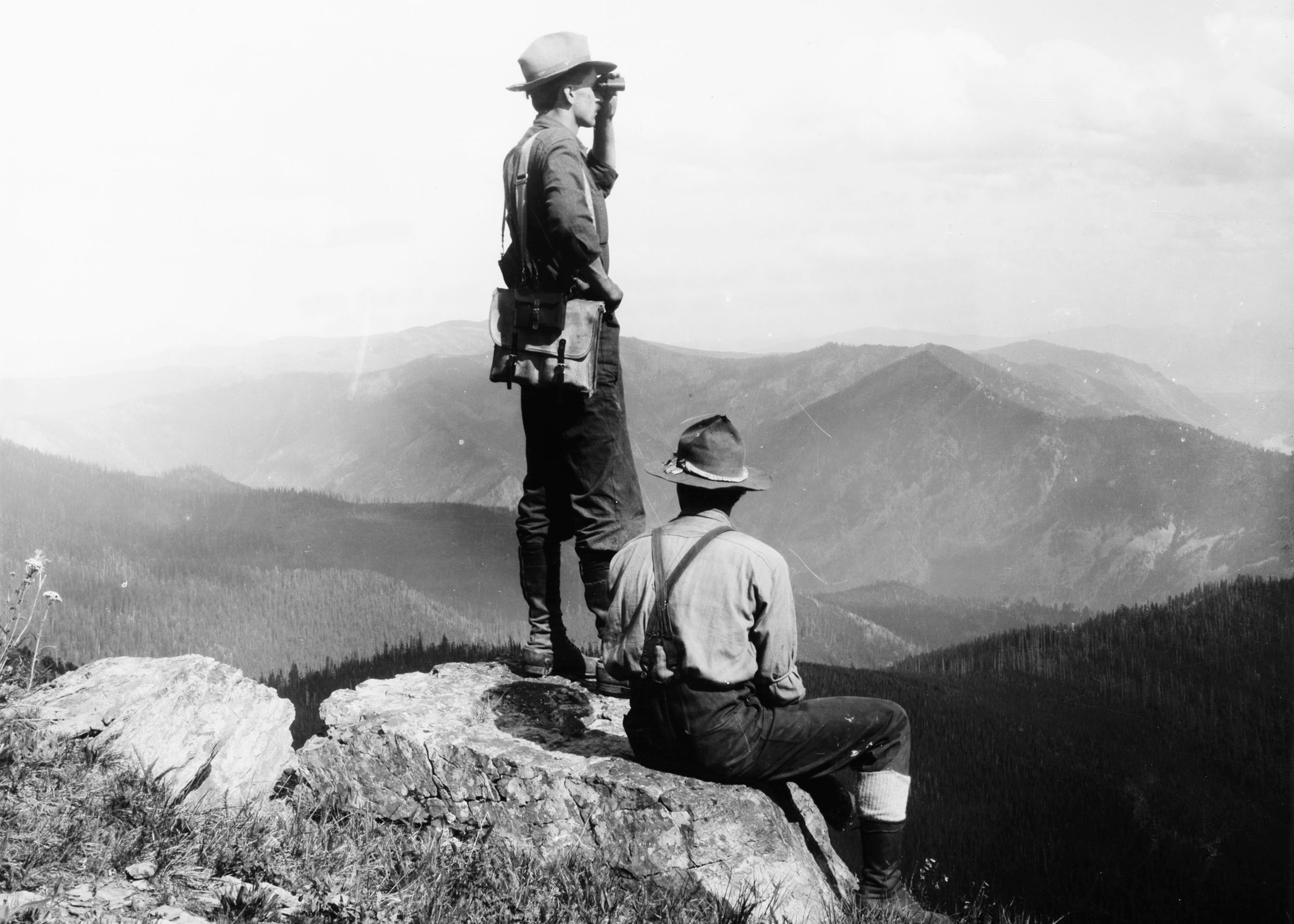
The Forest Service archives include data and records from the 120 years that the agency has operated, as well as historical documents going back to the 1800s. Included among them are photographs showing changes in forest landscapes, scientific research data, land management records and samples of water and plants.
These records outline the recent history of climate change and provide crucial information for ongoing adaptation, said the Center for Biological Diversity’s Brian Nowicki.
“We have to have our heads on straight in order to address [climate change],” said Nowicki, a senior public lands advocate. “We do that by having a strong historical record.”
On Thursday, the Center for Biological Diversity submitted a public records request to the USDA asking for details on the agency’s plans to relocate archives from the regional offices, and for any records that the agency refuses to submit to the National Archives before the offices are closed and the records are destroyed or inaccessible.
The agency has 20 business days to respond to the request, per federal law.
In an email to Inside Climate News, a USDA spokesperson said the Forest Service follows legally mandated standards to ensure that public records are not lost or destroyed during organizational changes.
“As offices transition or close, our protocol ensures public documents, from field photographs to hard-copy data, are preserved, accessible and protected under federal law,” the spokesperson wrote.
The agency added that it will retain the majority of its agency-owned regional facilities after closure, but it did not respond to requests for a timeline and details of its plans to relocate or continue managing the archives.
But the Trump administration has eliminated a variety of data sources in the past year. Nowicki wants to see specifics on the agency’s preservation plans.
He said he has been speaking with staff within the Forest Service and they’ve told him they have no clarity on plans for the archives.
He added that relocating more than a century of archival material will be a huge job for an agency whose staff is already overextended. The Forest Service lost 16 percent of its workforce in the first year of the second Trump administration, according to an Inside Climate News analysis of data from the Office of Personnel Management.
“It would take years for staff to be able to go through and correctly digitize and archive all of these materials,” Nowicki said.
The agency has said its reorganization will be implemented over the coming year. That includes other big changes, like moving the Forest Service headquarters from Washington, D.C., to Salt Lake City, Utah and shifting more authority to the states. About 6,500 employees have received preliminary notifications that they could be impacted, such as changes to their role, supervisor or location, the USDA wrote in an email to Inside Climate News. The agency did not directly answer a question about whether the impacts could include layoffs.
About 500 employees, mostly from Washington, will be relocated more than 50 miles from their current station, the agency said.
The USDA said these changes will help streamline forest management and boost timber production.
“Proper forest management means a healthy and productive forest system that provides affordable, quality lumber to build homes right here in America and it means preserving and protecting the beautiful landscapes we are blessed with across this great country,” Agriculture Secretary Brooke L. Rollins said in a statement with the announcement.
Critics say the latest changes will cause further upheaval and disruption, hindering staff’s ability to properly manage the nation’s forests while wildfire threats grow.
This story is funded by readers like you.
Our nonprofit newsroom provides award-winning climate coverage free of charge and advertising. We rely on donations from readers like you to keep going. Please donate now to support our work.
Donate NowA Pattern of Data Loss
Eliminating swaths of Forest Service documents would fall in line with the administration’s axing of data and historical records, said Rachel Santarsiero, director of the National Security Archive’s Climate Change Transparency Project.
Santarsiero recently published a comprehensive timeline of disappearing data from the start of the second Trump administration, including deletions of web pages and online tools, removal of data from federal websites and the closure of the National Aeronautics and Space Administration’s largest research library.
Climate information has been a central target. The administration has removed references to global warming from government documents and websites and ended federal tracking of high-cost climate disasters, alongside making big staff and funding cuts to agencies focused on environmental protection, weather and disaster management.
“The Trump administration is trying to rewrite our history,” Santarsiero wrote in an email to Inside Climate News. “Right now, long-term access to public information isn’t a guarantee.”
After the administration abruptly dismantled the U.S. Agency for International Development, officials ordered staff to destroy classified documents and personnel files, The New York Times reported. Elimination of records-keeping staff there and in other agencies has hampered access to public records, Bloomberg and other news organizations found.
Nowicki emphasized that some records kept by the Forest Service can’t be digitized. The archives include samples of water or tree logs that can detail histories of forest growth progression, fires, rainfall and more. As scientists come up with new ways to glean information from historical samples, these specimens are involved in ongoing study.
Historical photographs dating back to the 1800s are critical for understanding patterns of forest fires, challenging assumptions about what historic forests looked like and learning how the nation’s forests have changed, Nowicki said.
Records kept by the Forest Service are invaluable for climate adaptation and resilience, Santarsiero said, because they detail wildfires, soils, ecosystems, biodiversity and more. That’s crucial not just for historians and scientists, but for any person who wants to engage in their right to know about their environment, she said.
“It’s the way the public is able to access its own history,” Santarsiero said.
About This Story
Perhaps you noticed: This story, like all the news we publish, is free to read. That’s because Inside Climate News is a 501c3 nonprofit organization. We do not charge a subscription fee, lock our news behind a paywall, or clutter our website with ads. We make our news on climate and the environment freely available to you and anyone who wants it.
That’s not all. We also share our news for free with scores of other media organizations around the country. Many of them can’t afford to do environmental journalism of their own. We’ve built bureaus from coast to coast to report local stories, collaborate with local newsrooms and co-publish articles so that this vital work is shared as widely as possible.
Two of us launched ICN in 2007. Six years later we earned a Pulitzer Prize for National Reporting, and now we run the oldest and largest dedicated climate newsroom in the nation. We tell the story in all its complexity. We hold polluters accountable. We expose environmental injustice. We debunk misinformation. We scrutinize solutions and inspire action.
Donations from readers like you fund every aspect of what we do. If you don’t already, will you support our ongoing work, our reporting on the biggest crisis facing our planet, and help us reach even more readers in more places?
Please take a moment to make a tax-deductible donation. Every one of them makes a difference.
Thank you,

Keerti Gopal
Reporter, Health and Justice
Keerti Gopal covers intersections between climate change, public health and environmental justice at Inside Climate News. Previously, she covered climate activism and movement repression. She is a National Geographic Explorer and has received fellowships from Fulbright, the Solutions Journalism Network, The Lever, and the National Press Foundation.