

Matthew Kincanon spent Saturday drinking coffee from his favorite mug and planning an afternoon with friends, until the Old Trails Fire exploded across the Spokane River, a few miles from his home.
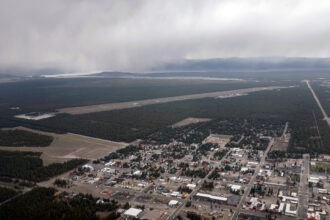
Although the fire was small by most standards—a few hundred acres—it was poised to move from the hiking trails and open spaces at Spokane’s western edge into the town’s suburban sprawl.
“ I knew I had to leave when I saw billowing smoke,” said Kincanon, a local journalist who has spent his whole life in Spokane. He grabbed a few essentials—clothes, his laptop, a few childhood mementos—and evacuated his home on Saturday afternoon.
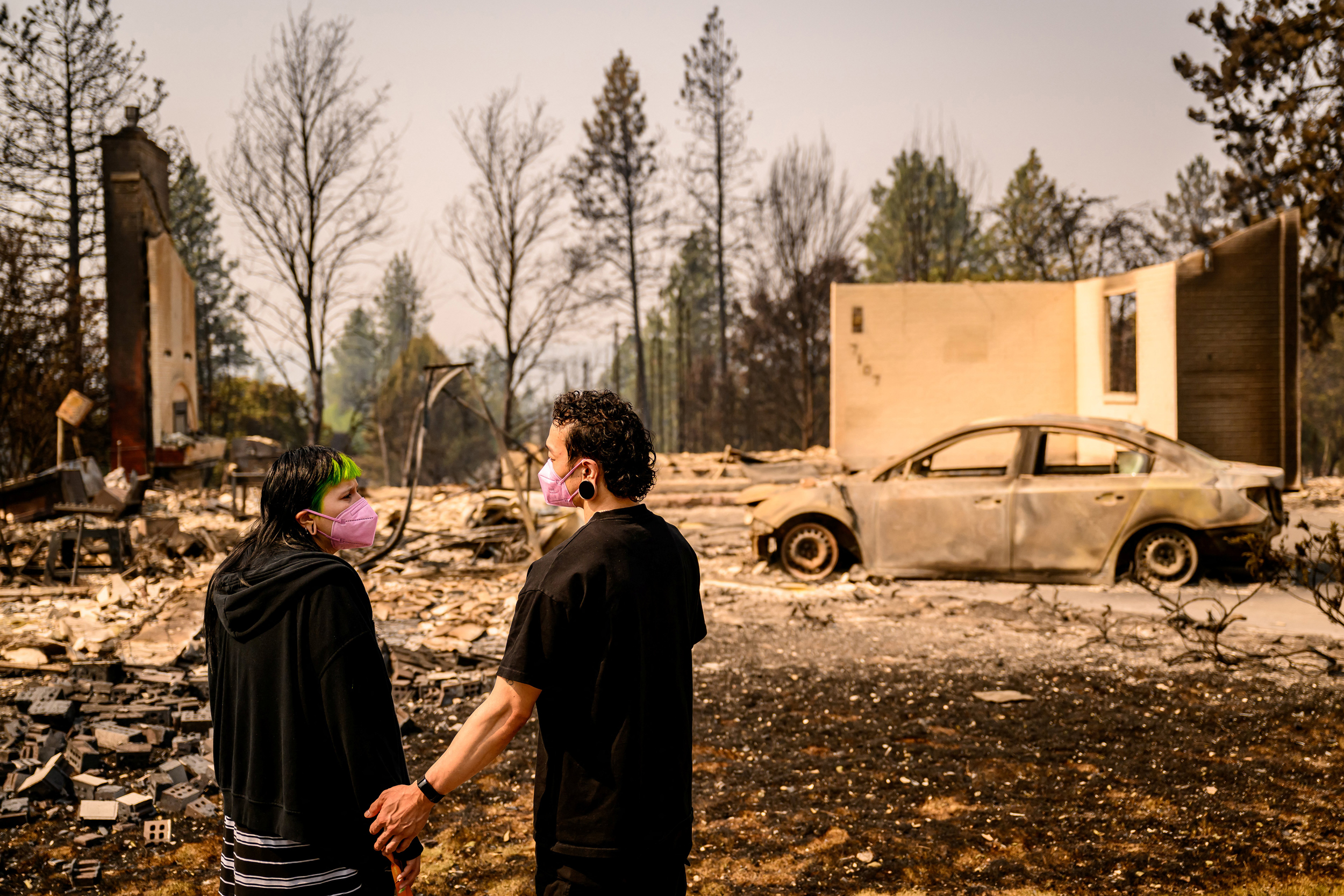
By Sunday morning, Kincanon’s home and those of his neighbors had been reduced to smoldering ash.
“When you see the devastation, you see houses that you remember passing by your entire childhood and see that they’re not there anymore, it’s too surreal,” said Kincanon.
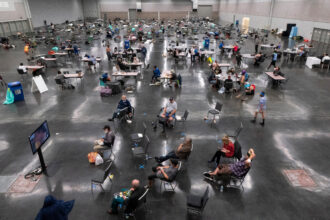
So far, the Spokane Complex fires have destroyed more than 700 structures and evacuation orders have forced more than 67,000 Spokane residents from their homes. The Autumn Lane, Old Trails and Fairview fires that make up the complex surrounding and burning Spokane have spread over 10,000 acres and are zero percent contained. No fatalities have been reported so far.
Late Monday night, a man was arrested on suspicion of arson in the ignition of the Old Trails Fire, but no causes have been cited for the Autumn Lane and Fairview fires.
“I can tell you today that is a war zone,” said Maj. Gen. Gent Welsh, Washington State adjutant general in charge of the state’s National Guard and emergency management, in a briefing on Monday. “Some of these folks may not recover, some of those folks may not rebuild in there and it’s going to continue to be, I would say, a very significant emotional event for this community long term.”
On Saturday, Washington State Gov. Bob Ferguson declared a statewide wildfire emergency due to drought and heat conditions. That same day, the National Weather Service warned of a “particularly dangerous situation” in the Pacific Northwest and extremely critical fire weather in portions of Washington and Oregon.
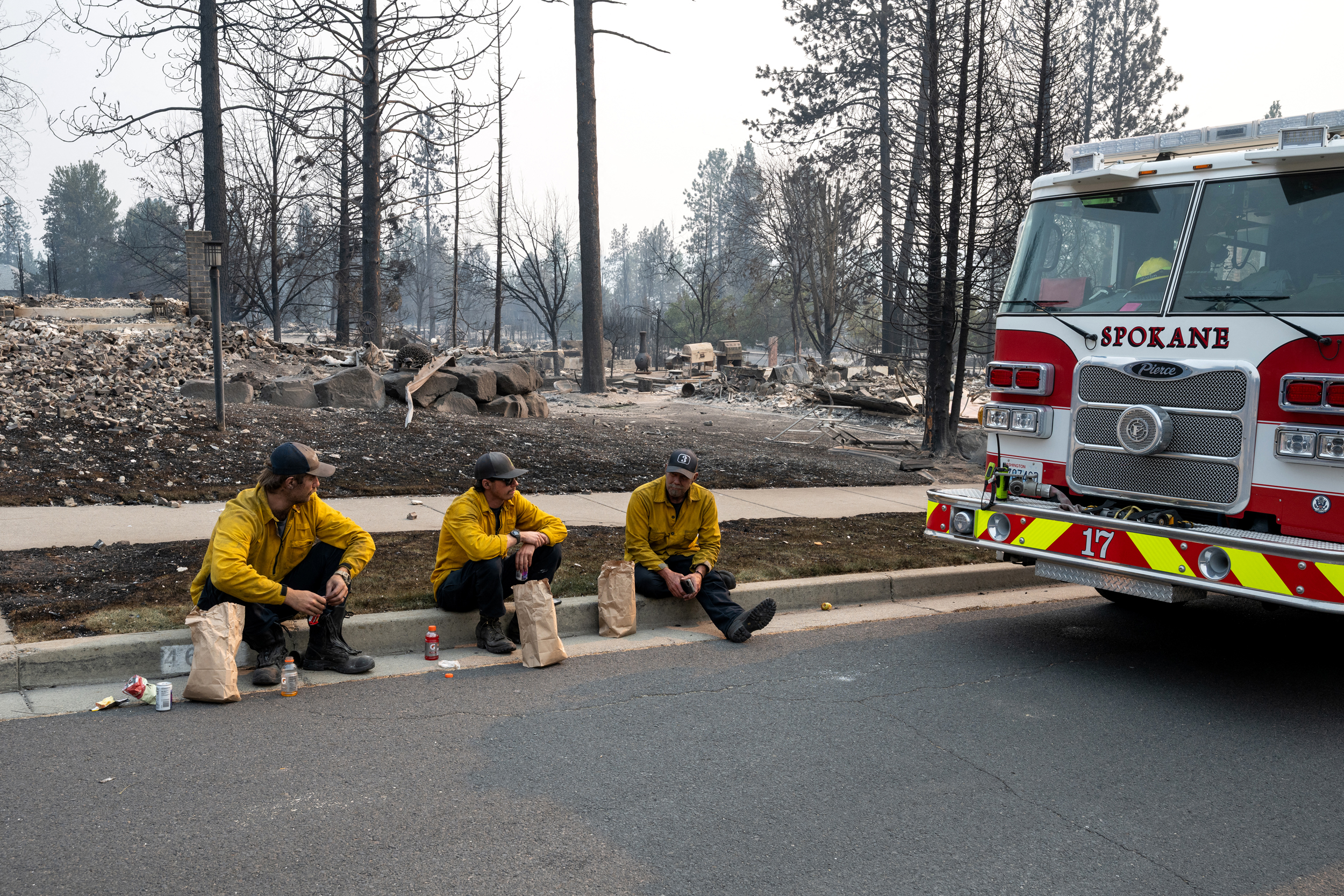
Cooler temperatures and calmer conditions on Sunday and Monday have brought some relief for Spokane, allowing firefighters to make progress on the Fairview and Old Trails fires. Despite firefighters’ aggressive suppression of the Autumn Lane fire, it has expanded by 2,000 acres since Saturday night.
Temperatures are expected to rise back into the 90s on Wednesday and relative humidity is expected to drop, increasing wildfire risk in the region into the weekend.
An Historic Fire Season
Across the Pacific Northwest, wildfire conditions are severe.
At the start of the summer, “the snowpack level was at or near historic lows,” said Brian Harvey, an associate professor of forest fire ecology at the University of Washington. “There’s a really strong relationship between years with low snowpack and/or earlier melt out of that snowpack and more active fire years.”
This year is no exception.
Oregon and Washington are experiencing their worst wildfire seasons in 30 years as 50 uncontained, large fires burn in the Northwest.
In Oregon, more than 2 million acres have burned and residents of the eastern half of the state, tribal nations in particular, have been hit especially hard. Over 30 active fires continue to burn in Oregon, more than in any other state in the country.
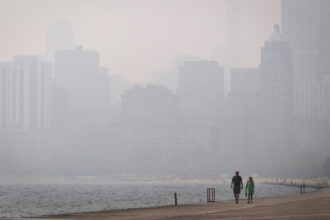
While wildfires and smoke are common in the region during the summer, the scale and magnitude of this year’s fires have shocked residents.
“Here in Spokane, we’re used to wildfire season,” Kincanon said. “It’s even a joke here. We call it ‘Smoke-can.’ There’s winter, there’s spring, there’s summer, then there’s smoke, and then there’s fall… This is different.”
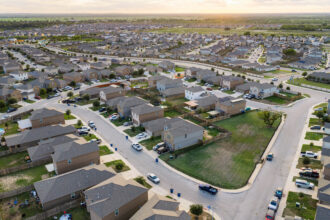
Hundreds of thousands of acres burned annually in the Pacific Northwest before the federal government began suppressing wildfires in the 20th century, but the success of the nation’s firefighting efforts led the vegetation that would have burned away to accumulate, leaving many forests with much heavier fuel loads than they had historically. The warming and drying climate has primed many of those overgrown landscapes to burn, with this summer’s heat waves and droughts increasing their flammability even more. Communities like Spokane, which have expanded rapidly into fire-prone areas, are particularly vulnerable.
“It’s really important to recognize that fire is not at all a novel or new thing in these landscapes,” Harvey said. But “the context within which fire is happening now, today, is quite a bit different than it would’ve been historically.”
Fires in the Pacific Northwest are a “ systemic policy challenge,” said Emily Moore, senior director of the climate and energy program at the Sightline Institute, a Seattle-based think tank. Populations are growing fastest in areas likely to burn, Sightline analysis shows.
“It’s a tough moment right now with people potentially losing their homes and not having a place to go back to,” Moore said. “There are areas around Spokane that we’ve known are high risk and that have continued to see population growth.”
This story is funded by readers like you.
Our nonprofit newsroom provides award-winning climate coverage free of charge and advertising. We rely on donations from readers like you to keep going. Please donate now to support our work.
Donate NowBut, while the current fire season is exceptional, wildfire threats to growing communities in the Pacific Northwest are likely to continue increasing.
“It’s not a matter of if, but when” fires visit vulnerable regions, Harvey said.
Uncertainty Over Federal Relief and Funding
On Tuesday, the federal government approved Washington state’s request for a federal emergency declaration, mobilizing federal resources and allowing the Federal Emergency Management Agency to coordinate disaster relief efforts. It is unclear how and when FEMA will work in Spokane. Similar requests for federal assistance for Oregon wildfires were denied early last week.
Even before the Spokane Complex Fires ignited, wildland firefighting resources were strained in the region, as Gov. Ferguson signaled in his announcement of the statewide wildfire emergency and burn ban on Saturday.
“There’s only so many tankers. There’s only so many helicopters. There’s only so many fire crews and engines,” said Amanda Monthei, host of the Life with Fire Podcast and a former wildland firefighter.
The Pacific Northwest is forecast to have significant wildfire potential for the remainder of August and September, even as conditions are expected to calm in other parts of the country. The nation overall is at Preparedness Level 5, its highest wildfire response, and the chief of the U.S. Forest Service issued a letter last week requesting all federally qualified wildland firefighters be made available for assignments.
“This is an extraordinary fire season,” said Dave Upthegrove, public lands commissioner for Washington state, in the Monday briefing. “This is going to shape up to be a historic fire season in Washington state and the Pacific Northwest.”
To date, roughly 2.3 million acres have burned in the Pacific Northwest. In Spokane, as the fires continue to burn, Kincanon remains optimistic despite the destruction.
“We will come together,” he said. “We will rebuild together. And we will see what we can do to make sure that the future for Spokane is a lot brighter and a lot less smoky than the present.”
About This Story
Perhaps you noticed: This story, like all the news we publish, is free to read. That’s because Inside Climate News is a 501c3 nonprofit organization. We do not charge a subscription fee, lock our news behind a paywall, or clutter our website with ads. We make our news on climate and the environment freely available to you and anyone who wants it.
That’s not all. We also share our news for free with scores of other media organizations around the country. Many of them can’t afford to do environmental journalism of their own. We’ve built bureaus from coast to coast to report local stories, collaborate with local newsrooms and co-publish articles so that this vital work is shared as widely as possible.
Two of us launched ICN in 2007. Six years later we earned a Pulitzer Prize for National Reporting, and now we run the oldest and largest dedicated climate newsroom in the nation. We tell the story in all its complexity. We hold polluters accountable. We expose environmental injustice. We debunk misinformation. We scrutinize solutions and inspire action.
Donations from readers like you fund every aspect of what we do. If you don’t already, will you support our ongoing work, our reporting on the biggest crisis facing our planet, and help us reach even more readers in more places?
Please take a moment to make a tax-deductible donation. Every one of them makes a difference.
Thank you,

Claire Barber
Fellow
Claire Barber is a fellow at Inside Climate News and a master’s in journalism student at Stanford University. She is an environmental and outdoor journalist, reporting primarily in the American Southwest and the West. Her writing has appeared in The San Francisco Chronicle, Outside, Powder Magazine, Field & Stream, Trails Magazine and more. She loves to get lost in the woods looking for a hot spring, backpacking to secluded campsites and banana slugs.