

Many of our impact case studies cover ongoing stories that Inside Climate News continues to actively cover. The impact reflected here is current as of publication and may be updated as the situation develops.
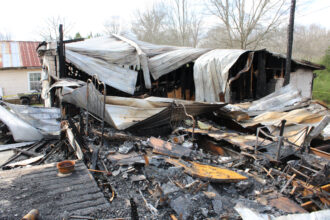
When my late colleague Jim Bruggers and I first contacted Alabama regulators in March 2024 about an explosion above a coal mine that would soon leave an Alabama grandfather dead, officials told us they didn’t even know the tragedy had occurred.
So we began digging.
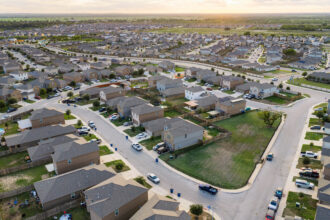
The explosion had rattled Oak Grove, a small community in western Jefferson County where residents had watched their homes sink as a longwall coal mine advanced beneath them.
In the months that followed, I went door to door, listening to neighbors of the man who died and trying to understand what had happened to their community.
One resident, Lisa Lindsay, recalled feeling the shockwave of the explosion wake her from bed. A few minutes later, her neighbor walked up to her home covered in soot, having run into his brother’s home to save him from the flames.
Residents nearby told me about the other impacts of the mining. Homes were sinking. Foundations were cracking. A local park had been closed. A business owner shut down a gas station, one of the only stores in the community, because of its location above the longwall. People living above the mine were afraid their homes might be the next to explode from leaking methane released by the underground mining.
“I wouldn’t want to be blowed up,” one child told me.

Jim and I dug through federal databases and regulatory records. We found that the mine’s operators had been cited hundreds of times for safety violations. We found a map showing when homes were scheduled to be undermined—information that state officials had not provided to residents.
We reported on the lawsuit brought by the family of the man killed in the explosion. We reported on the death of a mine worker. And we dug through years of regulatory documents showing that Alabamians had repeatedly raised concerns about the dangers of mining while regulators had done little to address them.
For months, officials were reluctant to talk.
Seven months after the explosion, federal regulators had still not inspected the mine or the site of the destroyed home. Residents were asking questions, but no public officials or mine representatives were there to answer them.
Then, slowly, story by story, things began to change.
In November 2024, federal regulators finally inspected Oak Grove Mine and the site of the fatal explosion.
A month later, federal officials took the unusual step of issuing Alabama regulators a formal “ten-day notice,” warning that Oak Grove Mine was not in compliance with federal law because of inadequate monitoring of potentially explosive methane.
In March 2025, an Alabama official acknowledged for the first time that methane had likely caused the explosion that killed W.M. Griffice. That acknowledgment came in a letter to federal regulators that we obtained through a federal Freedom of Information Act request.

As part of its agreement with federal regulators, the state also agreed to require coal companies across the state to develop plans for monitoring methane and other gases above all underground mines.
For residents who had spent months warning that something was wrong beneath their homes, the changes represented a welcome shift.
However, in the lead-up to President Trump’s re-election and resulting changes in the federal regulatory agency that had forced Alabama’s hand, state regulators began extending deadlines for the methane-monitoring plans. Then, in October 2025, the Alabama Surface Mining Commission said it had “indefinitely suspended” the broader methane-monitoring requirements it had agreed to in 2024.
Still, even under the new regime, federal regulators had specifically determined that Oak Grove’s existing subsidence-control plan was inadequate, so the mine would still be required to update that plan.
If it is implemented as written, the plan will provide protections that did not exist before the explosion for people living above Oak Grove, establishing a system for monitoring and reporting methane and other gases released as mining moves beneath homes.
Investigative journalism rarely produces a clean ending. Sometimes the impact is a new rule. Sometimes it is a government investigation. Sometimes it is an official finally acknowledging something residents have been saying for years.
In Oak Grove, we saw all three.
Our reporting helped bring federal inspectors to a mine and a community that had been waiting for them. It helped prompt federal regulators to formally challenge Alabama’s oversight. It uncovered the state’s acknowledgment that methane likely caused a fatal explosion. And it helped push regulators toward stronger methane monitoring.
About This Story
Perhaps you noticed: This story, like all the news we publish, is free to read. That’s because Inside Climate News is a 501c3 nonprofit organization. We do not charge a subscription fee, lock our news behind a paywall, or clutter our website with ads. We make our news on climate and the environment freely available to you and anyone who wants it.
That’s not all. We also share our news for free with scores of other media organizations around the country. Many of them can’t afford to do environmental journalism of their own. We’ve built bureaus from coast to coast to report local stories, collaborate with local newsrooms and co-publish articles so that this vital work is shared as widely as possible.
Two of us launched ICN in 2007. Six years later we earned a Pulitzer Prize for National Reporting, and now we run the oldest and largest dedicated climate newsroom in the nation. We tell the story in all its complexity. We hold polluters accountable. We expose environmental injustice. We debunk misinformation. We scrutinize solutions and inspire action.
Donations from readers like you fund every aspect of what we do. If you don’t already, will you support our ongoing work, our reporting on the biggest crisis facing our planet, and help us reach even more readers in more places?
Please take a moment to make a tax-deductible donation. Every one of them makes a difference.
Thank you,