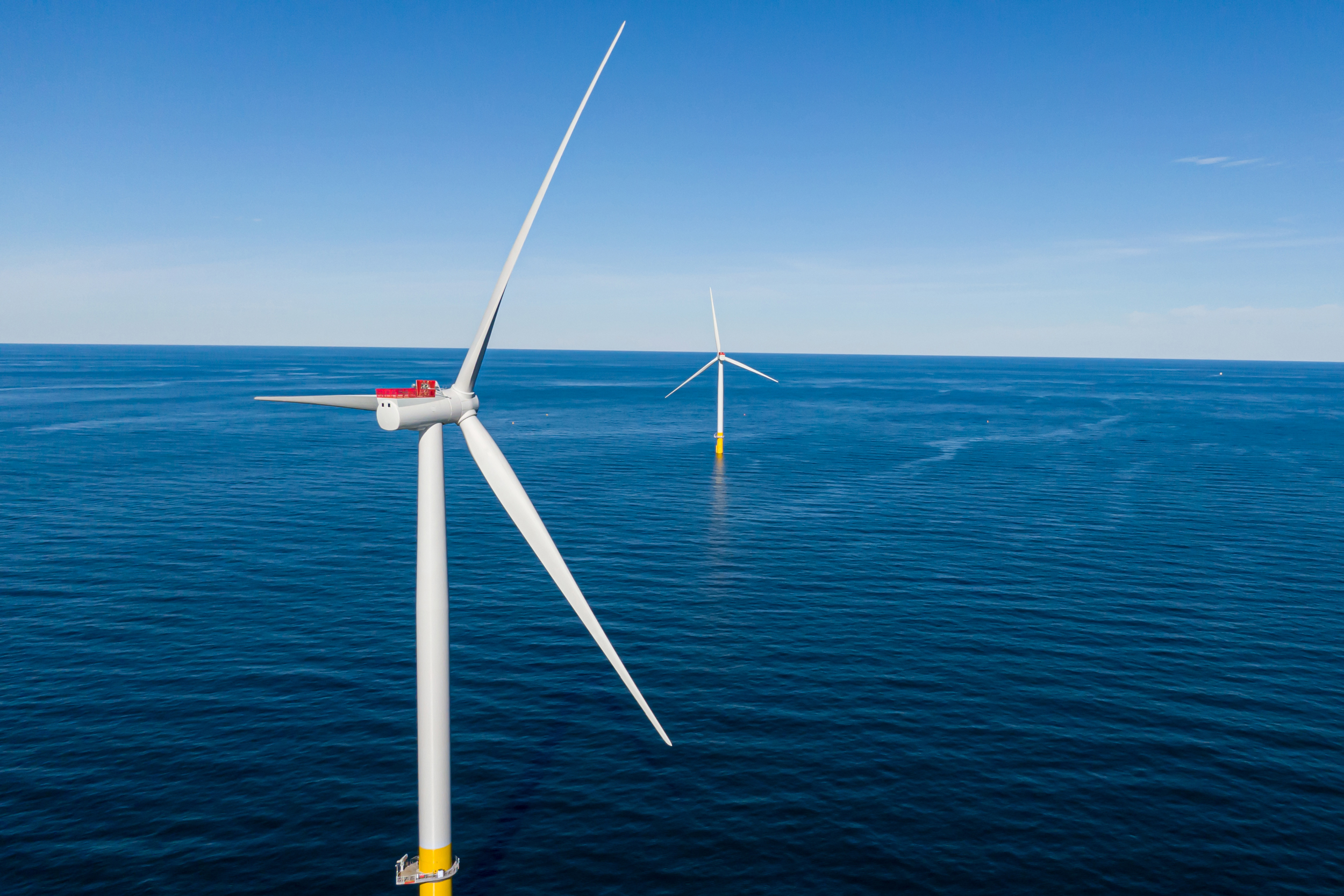


A utility megamerger announced this week would mean that the largest offshore wind project in the United States would be owned by the same company that already is the nation’s leading developer of renewables and battery storage.
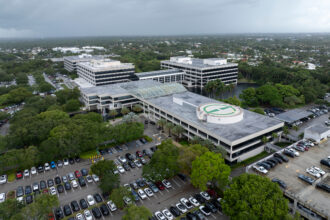
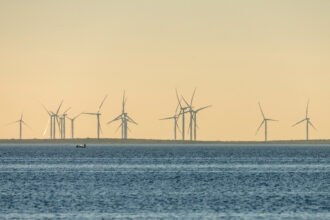
NextEra Energy of Florida, the largest U.S. utility by market value, reached an agreement to combine with Dominion Energy of Virginia, the sixth-largest utility by market value and owner of the 2,640-megawatt Coastal Virginia Offshore Wind project.
There are many reasons to be wary when large utilities merge, as several experts told me and my colleagues Charles Paullin and Amy Green for our story on the deal. For one, the resulting company is so large and powerful that it becomes difficult to regulate, making it harder to manage consumer rates and address environmental concerns.
But having NextEra, already a huge player in onshore renewables, get into offshore wind is probably good for U.S. offshore wind at a time when the Trump administration is opposing the industry at almost every turn.
The company would have a larger market value than any U.S. energy company other than the two oil giants, ExxonMobil and Chevron, based on current values.
And yet, NextEra joining the offshore wind club probably won’t do much to resuscitate the industry following the damage done by President Donald Trump, according to analysts I spoke with this week.
The Trump administration has gone to great lengths to slow development of offshore wind, including stop-work orders that were later overturned in court, lengthy permit delays and paying leaseholders to abandon projects.
NextEra would be a surprising ally for the offshore wind industry. In a 2018 conference call, then-CEO James Robo said these projects were too expensive and took too long to complete.
“It’s terrible energy policy,” he said, a quote that was used many times by groups that oppose offshore wind development.
On Monday, Robo’s successor, John W. Ketchum, was asked by an analyst how the company got comfortable with offshore wind.
“I think the Dominion team has just made excellent progress on [Coastal Virginia Offshore Wind],” Ketchum said about the project, which is under construction.
Ketchum noted that Dominion had reduced the costs from $11.5 billion to $11.4 billion and that the project is on track to begin commercial operation by the middle of 2027 with 176 turbines. So far, it has 14 turbines delivering test energy.
“We feel very good about it,” he said. “We feel like that project is online. And given the investment that’s been made there, it’s the right thing to do to finish it.”
This intent to finish is important, given that the Trump administration is eager to talk to offshore wind developers who want to abandon projects.
Let’s take a step back to assess where U.S. offshore wind now stands.
The country has four operational projects with a total generating capacity of 978 megawatts. The first was Block Island Wind Farm off Rhode Island, which began operation in 2016; followed by Coastal Virginia Offshore Wind pilot in 2021, which was Dominion’s small precursor to the one now under construction; South Fork Wind in 2024, which is east of Montauk Point, New York; and Vineyard Wind 1 in 2026, which is beginning commercial operation this spring south of Martha’s Vineyard, Massachusetts.
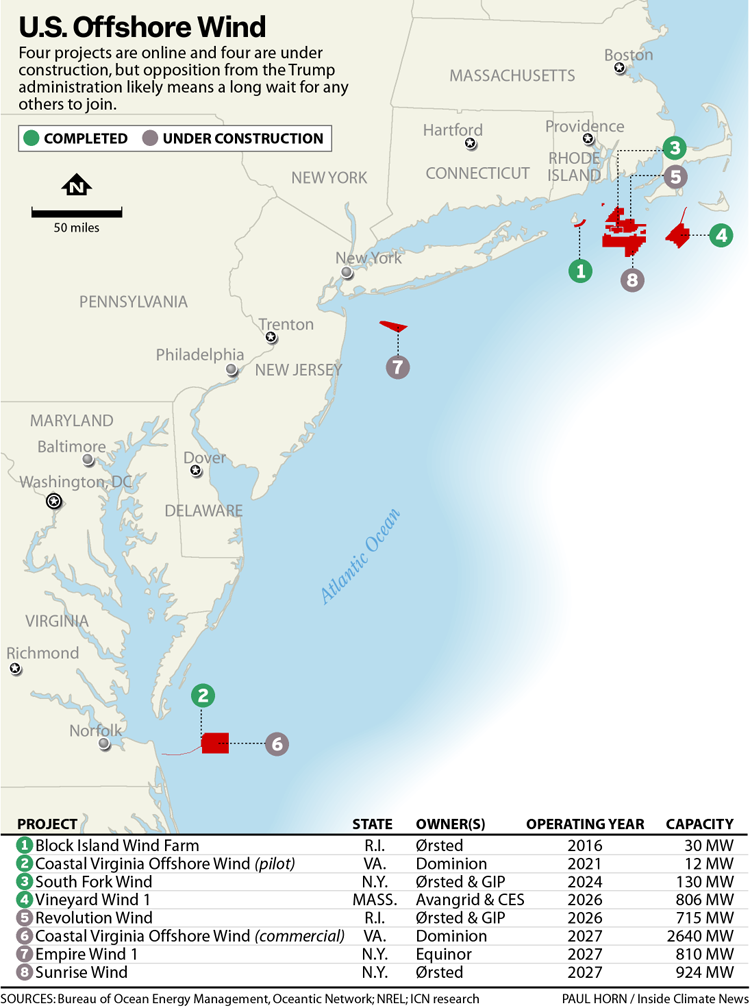
Four projects are under construction with a total planned generating capacity of 5,089 megawatts. Revolution Wind, located south of Martha’s Vineyard, is likely the closest to completion, with the developer Orsted reporting that the project began delivering electricity from some turbines in March and is on track to have all turbines operational this year. Coastal Virginia Offshore Wind is likely to be complete next year; Empire Wind 1, south of Long Island and east of New Jersey, is likely to deliver its first electricity late this year and be completed next year; and Sunrise Wind, located just south of South Fork Wind and west of Vineyard Wind 1, is on track to be completed next year.
Next are dozens of projects with other statuses, including some canceled by developers, some leases awarded but in a pre-construction phase and prospective projects in lease areas the government identified before Trump returned to office last year. The full list of lease areas can be seen on the Bureau of Ocean Energy Management website.
Every lease could be developed under a future administration. But for now, progress is almost completely stalled, to the point that it wouldn’t do much good to assess which projects are most viable.
I’ll note one of these projects because it’s relevant to the NextEra-Dominion merger: Dominion in 2024 acquired the lease to develop an 800-megawatt wind farm in waters off the Carolinas. Dominion bought the lease from Avangrid, which had called it Kitty Hawk North Wind. Dominion is calling it CVOW-South.
This story is funded by readers like you.
Our nonprofit newsroom provides award-winning climate coverage free of charge and advertising. We rely on donations from readers like you to keep going. Please donate now to support our work.
Donate NowI asked Harrison Sholler, a wind analyst for BloombergNEF, what he thinks the merger may mean for offshore wind.
In the short run, he sees little effect because the industry is at a standstill.
“Our current outlook for the offshore wind sector in the U.S. is very bleak,” he said.
Sholler thinks the projects now being built will be the last ones in the country until the federal government makes policy changes and gives assurances to developers about long-term support. Considering how long it takes to plan and build a project, we are heading for a pause that likely will last into the 2030s.
“Developers are not going to be willing to invest significant money if they perceive a market as politically risky,” Sholler said.
Right now, other parts of the world look much more stable in their support for offshore wind, including China and much of Europe. Those are the places that will be offshore wind powerhouses and enjoy the economic and environmental benefits.
So, NextEra may soon have an interest in offshore wind, but it won’t mean much as long as the United States is a backwater.
Reporter Charles Paullin contributed to this story.
Other stories about the energy transition to take note of this week:
Trump Administration Seeks to Roll Back Even More Vehicle Pollution Standards: The Trump administration has proposed delaying adoption of pollution standards for cars and trucks, arguing in part that it is responding to U.S. consumers’ rejection of electric vehicles, as my colleague Anika Jane Beamer reports. This is quite a statement considering all that the administration has done to harm the EV market, including canceling consumer tax credits. The proposal would give automakers until 2029 to meet smog and particulate matter standards.
U.S. Solar Manufacturing Poised for a Breakout in 2027: Manufacturers of photovoltaic panels and related equipment could spend as much as $7 billion expanding their capacity in the United States in 2027, which would be an increase of about 150 percent from this year, as Finlay Colville reports for PV Magazine. Companies such as Corning and Tesla will be among the leaders in a ramp-up that is serving demand for solar equipment in the United States and also responding to tariffs that make the equipment more expensive to import.
Taking Measure of Three of the World’s Largest Solar Projects: Three solar projects are now being built on a scale that would have seemed impossible even a few years ago, as Julian Spector reports for Canary Media. He looks at Khavda Renewable Energy Park in India, with capacity of 30 gigawatts; Valley Clean Infrastructure Plan in California, with capacity of 21 gigawatts; and Talatan Solar Park in China, with capacity of at least 17 gigawatts. “Giga-scale construction requires a whole new level of land access, workforce mobilization, and transmission planning,” Spector writes.
Inside Clean Energy is ICN’s weekly bulletin of news and analysis about the energy transition. Send news tips and questions to [email protected].
About This Story
Perhaps you noticed: This story, like all the news we publish, is free to read. That’s because Inside Climate News is a 501c3 nonprofit organization. We do not charge a subscription fee, lock our news behind a paywall, or clutter our website with ads. We make our news on climate and the environment freely available to you and anyone who wants it.
That’s not all. We also share our news for free with scores of other media organizations around the country. Many of them can’t afford to do environmental journalism of their own. We’ve built bureaus from coast to coast to report local stories, collaborate with local newsrooms and co-publish articles so that this vital work is shared as widely as possible.
Two of us launched ICN in 2007. Six years later we earned a Pulitzer Prize for National Reporting, and now we run the oldest and largest dedicated climate newsroom in the nation. We tell the story in all its complexity. We hold polluters accountable. We expose environmental injustice. We debunk misinformation. We scrutinize solutions and inspire action.
Donations from readers like you fund every aspect of what we do. If you don’t already, will you support our ongoing work, our reporting on the biggest crisis facing our planet, and help us reach even more readers in more places?
Please take a moment to make a tax-deductible donation. Every one of them makes a difference.
Thank you,

Dan Gearino
Reporter, Clean Energy
Dan Gearino covers the business and policy of renewable energy and utilities, often with an emphasis on the midwestern United States. He is the main author of ICN’s Inside Clean Energy newsletter. He came to ICN in 2018 after a nine-year tenure at The Columbus Dispatch, where he covered the business of energy. Before that, he covered politics and business in Iowa and in New Hampshire. He grew up in Warren County, Iowa, just south of Des Moines, and lives in Columbus, Ohio.