

When the power goes out during a Georgia summer, the heat builds fast. Inside a home without air conditioning, the air turns heavy and stifling. For Donica Odell, who has dealt with Georgia Power disconnections for much of her life, it feels “like you’re boiling like crab legs.”
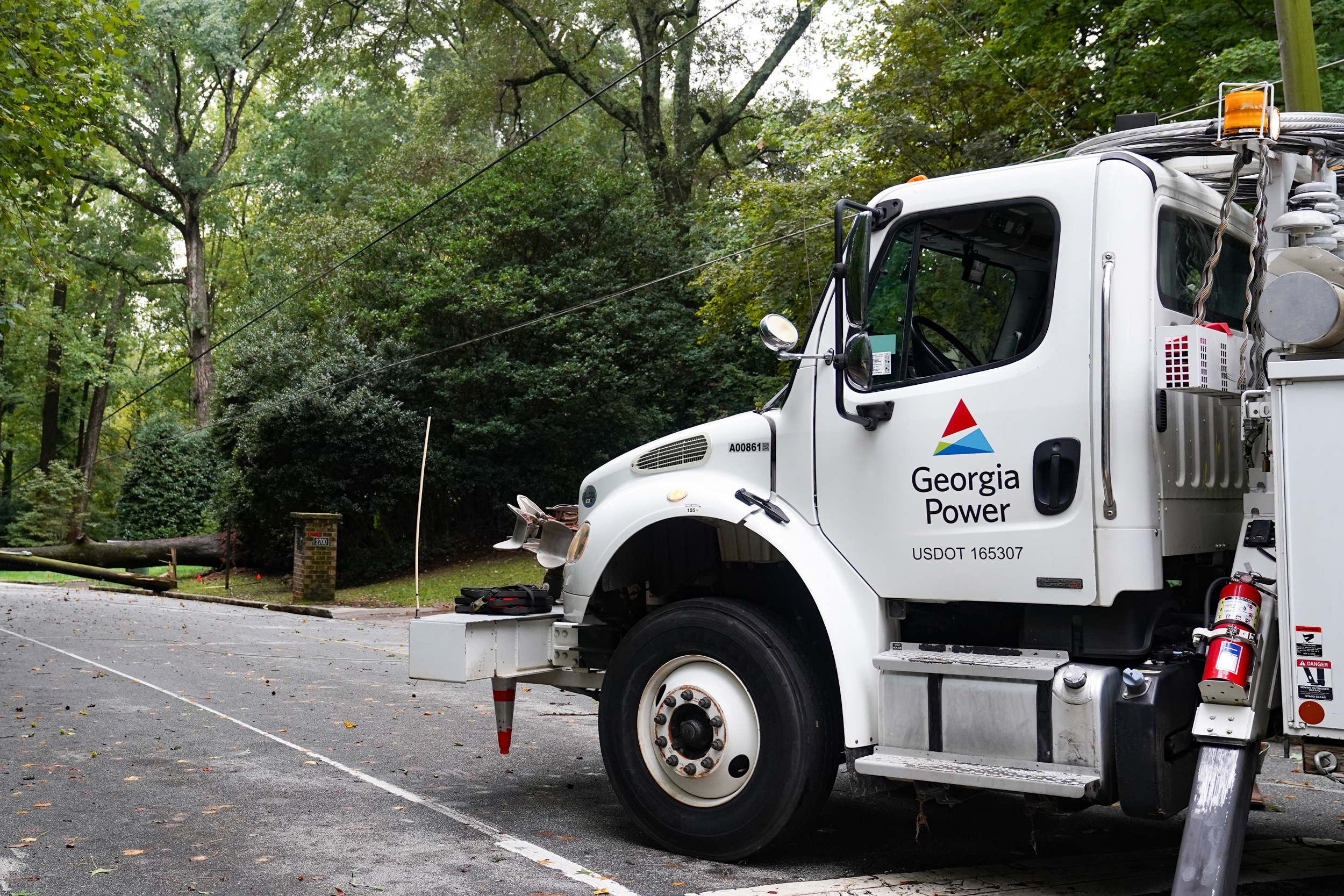
Georgia Power, the state’s largest utility, has disconnection rates among the highest in the country. The problem worsens in the summer, when disconnections rise at the same time temperatures soar, leaving households without the air conditioning they rely on to stay cool in dangerous heat.
According to a study by the Energy and Policy Institute, Georgia Power had the 10th-highest number of utility disconnections nationwide in 2024, with 187,007 disconnections out of nearly 2.5 million customers.
The utility recorded approximately 273,800 residential disconnection events in 2025, according to the Southern Company, Georgia Power’s parent company. The figure does not represent 273,800 unique households, the company said, because it includes repeat disconnections as well as account turnover associated with temporary housing and customers moving.
The increase comes as Georgia Power customers have faced higher electricity bills following the completion of nuclear-powered Plant Vogtle and as the utility has sought additional power resources to meet growing demand from data centers.
Those pressures are compounded during the summer, when electricity use rises as households run air conditioning to cope with extreme heat. Higher bills can lead to more missed payments and, eventually, disconnections. Because Georgia Power typically disconnects customers about 45 days after a bill goes unpaid, the effects of summer price increases can show up months later. Between August and November 2025, more than 100,000 Georgia Power customers were disconnected.
Summer electricity bills can be hundreds of dollars higher than those in the winter. Odell’s bill reached nearly $600 last month, compared with an average of about $120 during the winter.
“I don’t worry about winter disconnections the same,” Odell said. “Summer disconnections are truly unbearable.”
Odell, who works full-time for a law firm, has experienced frequent disconnections since the COVID-19 pandemic and the war in Ukraine began, when her electricity bills and other household costs began to climb. During the summer, losing power means figuring out how to keep her daughter and pets safe from the heat while also dealing with the other disruptions that come with losing electricity. Food in the refrigerator can spoil, the house becomes difficult to sleep in and she has to find ways to spend time somewhere with air conditioning until the power comes back on.
The disconnections have also interfered with Odell’s ability to work. She works remotely several days a week, but when the power is out, she cannot always work from home. She has had to call out of work because she has no electricity.
“It really is a brutal cycle,” said Odell.
When Georgia Power customers fall behind on their bills, some may be placed on a deferred payment plan through the utility’s PrePay program, allowing them to pay down their debt while also paying for ongoing electricity service.
Under the plan, 75 percent of each payment goes toward future electricity use while 25 percent goes toward the past-due balance. If a customer’s PrePay balance falls below zero, their electricity can be disconnected until they make a payment that brings the balance back to at least $5. For customers like Odell, that can mean being disconnected and having to come up with another payment to restore service multiple times in a month.
This story is funded by readers like you.
Our nonprofit newsroom provides award-winning climate coverage free of charge and advertising. We rely on donations from readers like you to keep going. Please donate now to support our work.
Donate NowGeorgia Power, which is regulated by the Public Service Commission, is generally barred from disconnecting residential customers for nonpayment during extreme heat. The utility said it monitors weather conditions before scheduled disconnections and applies the rule at the county level. The restriction is temporary, however, and disconnection activity can resume once the advisory or warning is no longer in effect.
Exposure to extreme heat can cause serious health impacts, including fatal cases of heat stroke and nonfatal illnesses such as heat exhaustion and muscle cramps. The World Health Organization warns that people without access to air conditioning face increased exposure to high indoor temperatures during periods of extreme heat, increasing their risk of heat-related illness. Disconnections are also associated with evictions, homelessness and family disconnections.
Climate change is making the problem worse. A study of 300,000 low-income households in California found that each additional day with temperatures reaching 95 degrees increased electricity expenses by 1.6 percent and the risk of disconnection by 1.2 percent in the following 51 to 75 days. Researchers estimated that if today’s weather resembled projected conditions for 2080-2099, the average risk of disconnection would increase by 12 percent.
“The climate-change projections assume that the current relationship between hot weather and disconnections will hold in the future,” said Alan Barreca, an author of the study. But that relationship could change as temperatures rise and households face new economic pressures, he said. Increased government assistance and subsidies could help reduce the risk of disconnection.
The Trump administration has proposed eliminating the Low Income Home Energy Assistance Program, or LIHEAP, which helps low-income households pay their energy bills, though Congress has continued to fund the program.
The effects of that financial pressure can extend beyond the electricity bill itself. Barreca said the increase in disconnections could be a sign of broader financial hardship among families struggling to keep up with rising costs. “Disconnections could just be the canary in the coal mine for all the financial troubles families are enduring,” he said.
Georgia Power is not alone in facing high rates of disconnection. Across the Southeast, customers of investor-owned utilities experience some of the highest disconnection rates in the country. The 10 utilities with the highest disconnection rates in 2024 were all located in the Southeast.
For Odell, that financial uncertainty has become a source of constant anxiety. She believes some of that anxiety stems from experiencing financial insecurity as a child, and she worries about passing that experience on to her daughter and son on the way. Every morning, she said, she checks her Georgia Power account before doing anything else, watching the balance and worrying that it will fall too low and leave her without electricity.
She worries that her children are already experiencing the same uncertainty she grew up with, and hopes it will not follow them into adulthood. But as summers grow hotter and electricity bills rise, breaking that cycle may become harder.
About This Story
Perhaps you noticed: This story, like all the news we publish, is free to read. That’s because Inside Climate News is a 501c3 nonprofit organization. We do not charge a subscription fee, lock our news behind a paywall, or clutter our website with ads. We make our news on climate and the environment freely available to you and anyone who wants it.
That’s not all. We also share our news for free with scores of other media organizations around the country. Many of them can’t afford to do environmental journalism of their own. We’ve built bureaus from coast to coast to report local stories, collaborate with local newsrooms and co-publish articles so that this vital work is shared as widely as possible.
Two of us launched ICN in 2007. Six years later we earned a Pulitzer Prize for National Reporting, and now we run the oldest and largest dedicated climate newsroom in the nation. We tell the story in all its complexity. We hold polluters accountable. We expose environmental injustice. We debunk misinformation. We scrutinize solutions and inspire action.
Donations from readers like you fund every aspect of what we do. If you don’t already, will you support our ongoing work, our reporting on the biggest crisis facing our planet, and help us reach even more readers in more places?
Please take a moment to make a tax-deductible donation. Every one of them makes a difference.
Thank you,