

In July, the Trump administration relegated endangered leatherback turtles, sea lions and whales to mere collateral damage in its race to profit from the oceans. Now, fisheries science is in the government’s crosshairs.
The National Oceanic and Atmospheric Administration (NOAA) announced new agency priorities last week that they say are a commitment to “cutting bureaucracy, modernizing our science, and putting our fishing communities first.” But experts say the agency’s actions will erode fish stocks, threaten endangered species and surrender marine habitats to destructive trawlers.
The agency-level reforms serve as a self-proclaimed “operational roadmap” to fulfilling President Donald Trump’s “Restoring American Seafood Competitiveness” executive order, signed in April 2025.
On the table: opening marine national monuments to commercial fishing operations, scaling back critical habitat designations to focus more on the downstream economics of conservation and weakening decades of peer-reviewed science.
“If you asked AI to come up with a plan to hollow out marine ecosystems and impoverish coastal communities, it would look a lot like the one NOAA just put out,” said Andrea Treece, the senior attorney in the Oceans Program at Earthjustice, in an email to Inside Climate News. “The agency is taking a sharp turn away from science.”
The announcement comes after letters were sent to regional fisheries councils earlier in the summer, directing them to dismantle restrictions in favor of more permissive, economically advantageous fishing procedures.
“It’s inexcusable for the administration to make it easier to destroy marine habitats and commit endangered species to extinction in the name of short-term profits,” said Treece. “You can’t just eliminate parts of the ecosystem you find inconvenient and expect that system to continue to sustain us.”
While this latest development includes some of the same policy agenda—such as shelving the implementation of ropeless gear designed to protect the last 350 North Atlantic right whales from entanglement—it also includes a proposed overhaul to the guiding principles of fisheries management.
Last week’s statement ordered re-evaluations of multiple “National Standards” with an eye to possible amendments or supplementations. National standards are the ten principles mandated by the 1976 Magnuson-Stevens Act to ensure sustainable and responsible fisheries management in U.S. waters.
In total, four national standards that cover overfishing prevention, applying the best science, acknowledging wider community impacts and mitigating unnecessary bycatch are up for reassessment. There’s also a call to review whether recreational fishing should adhere to the same national standards, as it currently does.
“I’m very worried about what it looks like when they start tinkering around with defining overfishing or what it means to use the best science,” said Meredith Moore, senior director of fish conservation at The Ocean Conservancy, highlighting that even the basics of peer-reviewed science might be axed.
This story is funded by readers like you.
Our nonprofit newsroom provides award-winning climate coverage free of charge and advertising. We rely on donations from readers like you to keep going. Please donate now to support our work.
Donate Now“I don’t think there is seafood competitiveness without conservation so if they’re making short-term decisions that undermine conservation, that will undermine our fisheries and fishing communities,” added Moore.
Though environmentalists see some positives in the mix—such as modernizing NOAA’s data systems or deploying eDNA studies—much of the policy looks like it’s “going backwards,” according to Moore.
The announcement was welcomed by industry insiders. The National Fisheries Institute (NFI), the largest commercial seafood trade group, said in a statement: “Calls for modernization and a return to a true risk-based regulatory structure, rather than the inertia of persistent bureaucratic expansion, could go a long way to mitigating the operational and administrative burdens the agency has committed to reduce.”
“We congratulate NOAA Fisheries and the Trump Administration for these new efforts and stand as a resource as the agency begins implementation,” said Lisa Wallenda Picard, president and CEO of NFI.
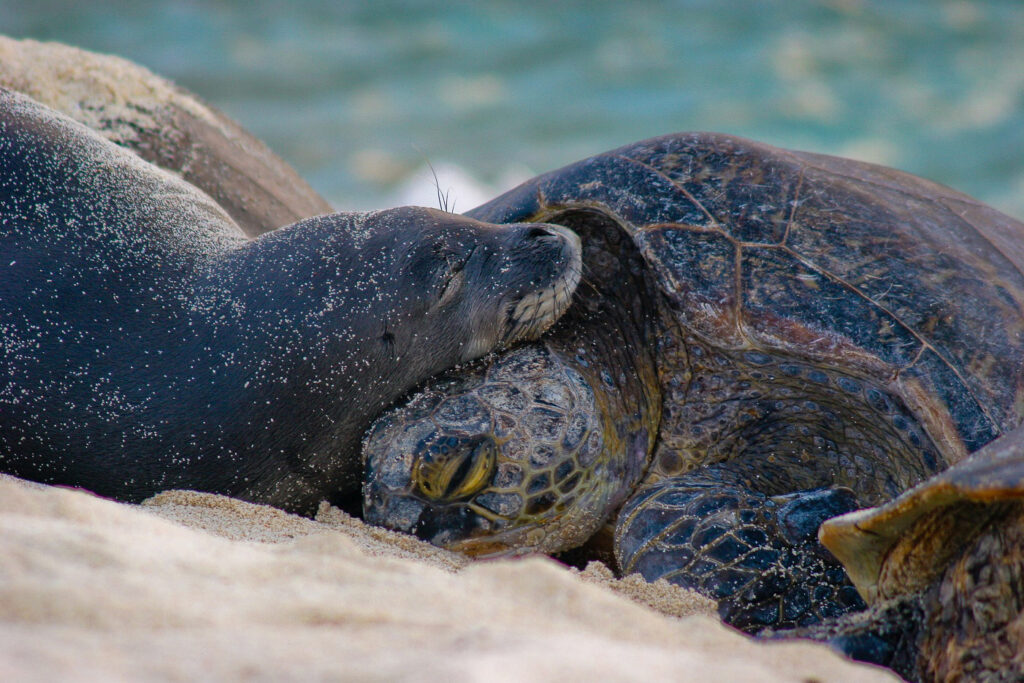
Geographically, the most significant proposal is to fast-track the expansion and introduction of new commercial fishing operations at the Mariana Trench, Papahānaumokuākea, Rose Atoll and Pacific Remote Islands national monuments.
These four protected areas currently shield “some of the last remaining relatively pristine ocean ecosystems,” according to NOAA.
Covering over 1.1 million square miles—an area almost double the size of Alaska—these habitats are home to millions of acres of coral reef and endemic species found nowhere else in the world, such as the Mariana snailfish and the Hawaiian pigfish.
Other backsliding includes applying new Endangered Species Act reforms that rescind longstanding interpretation of “harm,” and reducing the use of the conservation standards of Habitat Areas of Particular Concern in regulatory actions to “ensure protections are balanced with economic interests.”
“Regulation is the backbone of sustainable fisheries management,” said Janet Coit, the former director of NOAA Fisheries under President Joe Biden. “I worry about what [circumventing science-based limits] will do to the fish populations that future generations are counting on us to steward responsibly.”
When asked for comment on these issues, a spokesperson for NOAA told Inside Climate News that “the best available information” could be found in the press release. “We are moving away from regulations that treat domestic harvesters like a problem to be managed, and toward a science-based, common-sense system,” NOAA Fisheries assistant administrator Eugenio Piñeiro Soler wrote in the announcement.
The agency did not respond to direct questions regarding what scientific protections will be kept in place and whether NOAA Fisheries now prioritizes commercial profits over environmental stewardship.
For Coit, who directed the previous administration’s seafood strategy and believes “100 percent” in supporting and promoting U.S. seafood, short-term efforts to roll back protections miss the mark: “With climate change impacts reshaping our ocean ecosystems, now is not the time to avert our eyes and just go fish.”
About This Story
Perhaps you noticed: This story, like all the news we publish, is free to read. That’s because Inside Climate News is a 501c3 nonprofit organization. We do not charge a subscription fee, lock our news behind a paywall, or clutter our website with ads. We make our news on climate and the environment freely available to you and anyone who wants it.
That’s not all. We also share our news for free with scores of other media organizations around the country. Many of them can’t afford to do environmental journalism of their own. We’ve built bureaus from coast to coast to report local stories, collaborate with local newsrooms and co-publish articles so that this vital work is shared as widely as possible.
Two of us launched ICN in 2007. Six years later we earned a Pulitzer Prize for National Reporting, and now we run the oldest and largest dedicated climate newsroom in the nation. We tell the story in all its complexity. We hold polluters accountable. We expose environmental injustice. We debunk misinformation. We scrutinize solutions and inspire action.
Donations from readers like you fund every aspect of what we do. If you don’t already, will you support our ongoing work, our reporting on the biggest crisis facing our planet, and help us reach even more readers in more places?
Please take a moment to make a tax-deductible donation. Every one of them makes a difference.
Thank you,

Johnny Sturgeon
Fisheries Reporter
Johnny Sturgeon is a London-based reporter covering fisheries and aquaculture. Joining us from the Outlaw Ocean Project, he has experience producing in-depth maritime investigations for nonprofit newsrooms. A former boatbuilder, he holds a B.A. in History & Politics from the University of Oxford, and an M.S. from Columbia Journalism School.