

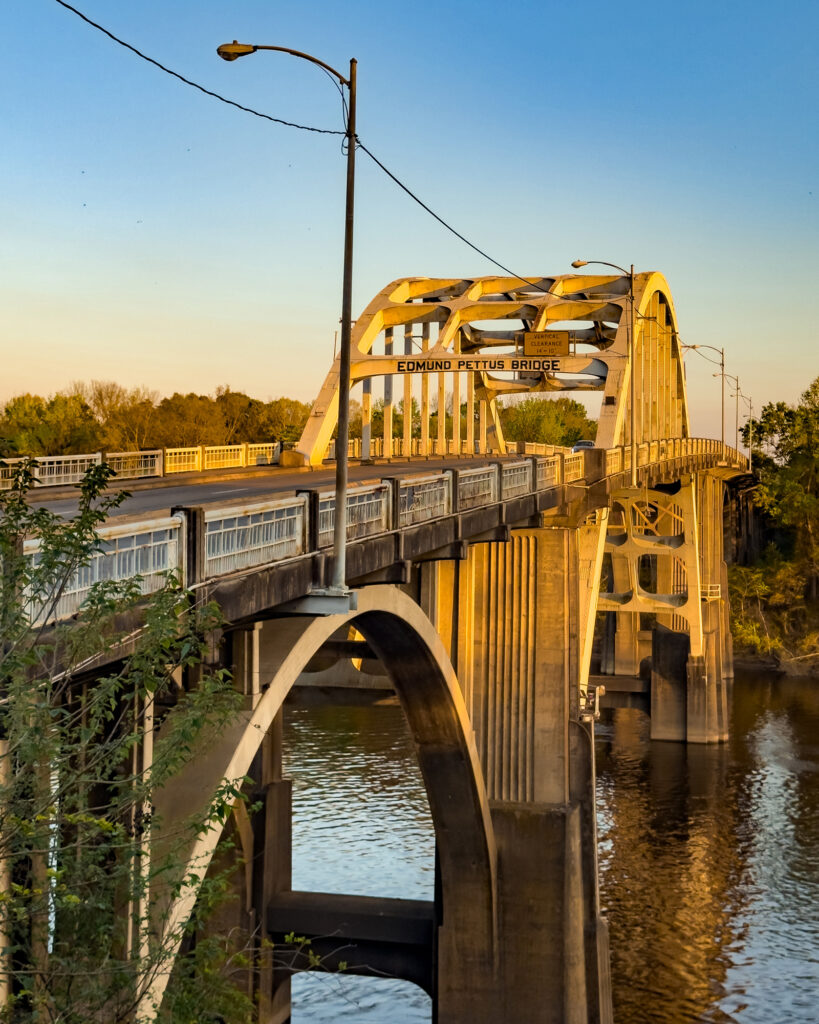
HAYNEVILLE, Ala.—When Alabamians marched from Selma to Montgomery in 1965 to demand voting rights for African Americans, Highway 80 became their path toward freedom.
Two weeks after state troopers had violently attacked nonviolent demonstrators on that highway’s Edmund Pettus Bridge, Alabamians took back to the street. Led by Rev. Martin Luther King Jr., thousands of citizens marched the 54 miles to Montgomery over three days, camping alongside Highway 80 in makeshift camps hosted by residents and business owners.
More than six decades later, residents and civil rights activists are engaged in a new fight on that historic road.
Their battle cry? We don’t want you here.
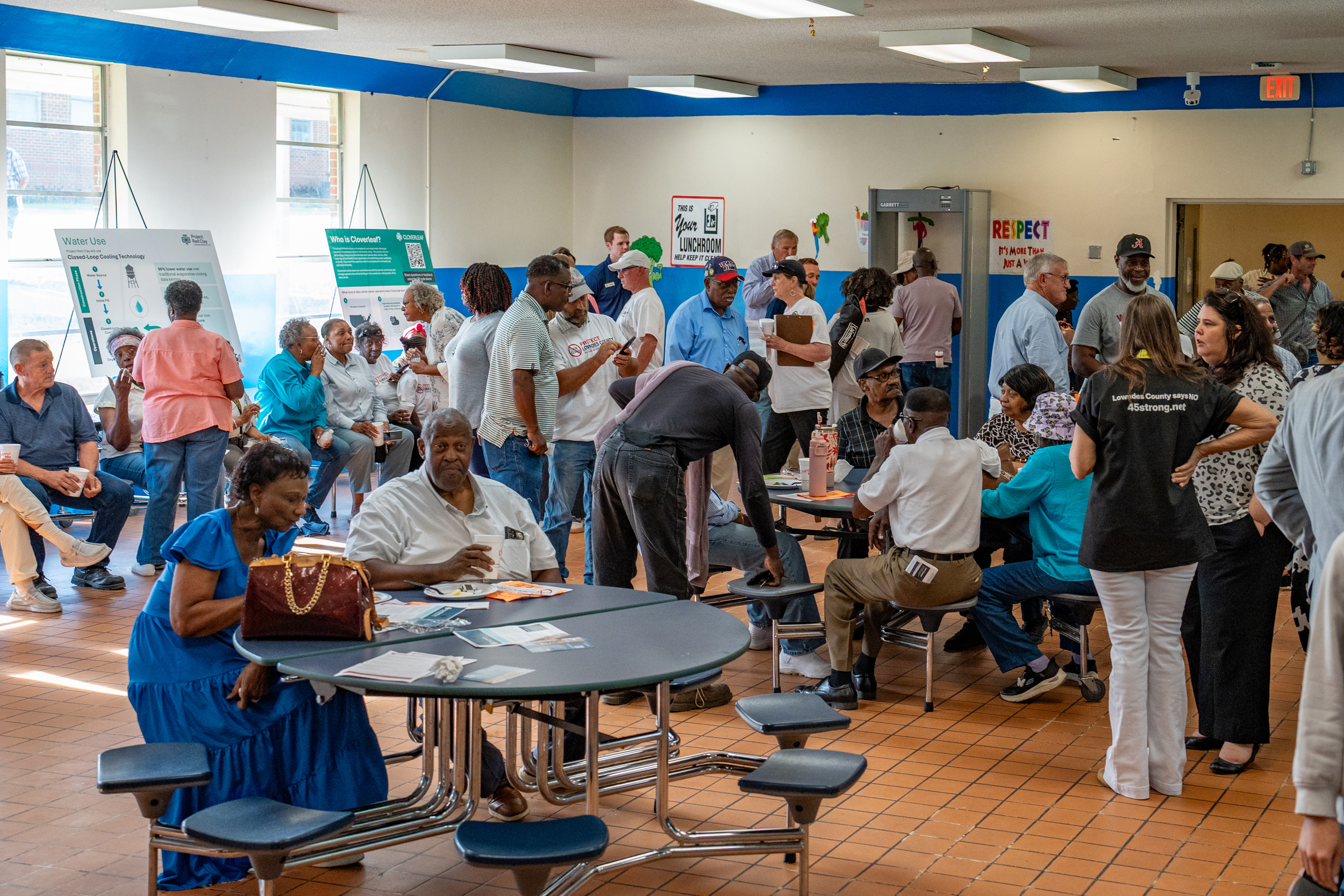
That was the overwhelming message from those who attended an open house last week deep in the Alabama Black Belt. There, in the aging cafeteria of a recently-shuttered middle school, developers of a proposed hyperscale data center campus had hoped to woo community members who’ve already expressed deep skepticism about their project’s economic, environmental and health impacts.
They had no such luck.
Instead, proponents of Project Red Clay, a planned data center campus of more than 3 million square feet, found themselves largely on the defensive, answering questions from residents to whom developers have, through the years, promised much and given little.
Cloverleaf Infrastructure, the company behind the project, said the open house was an effort to hear from residents and answer any questions they may have about the project.
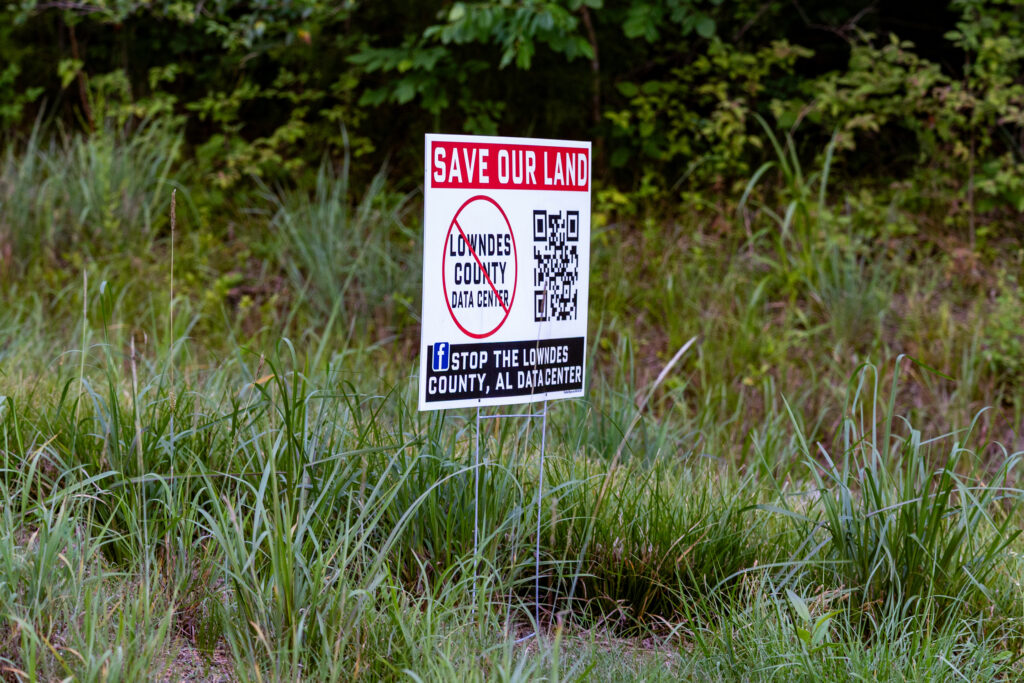
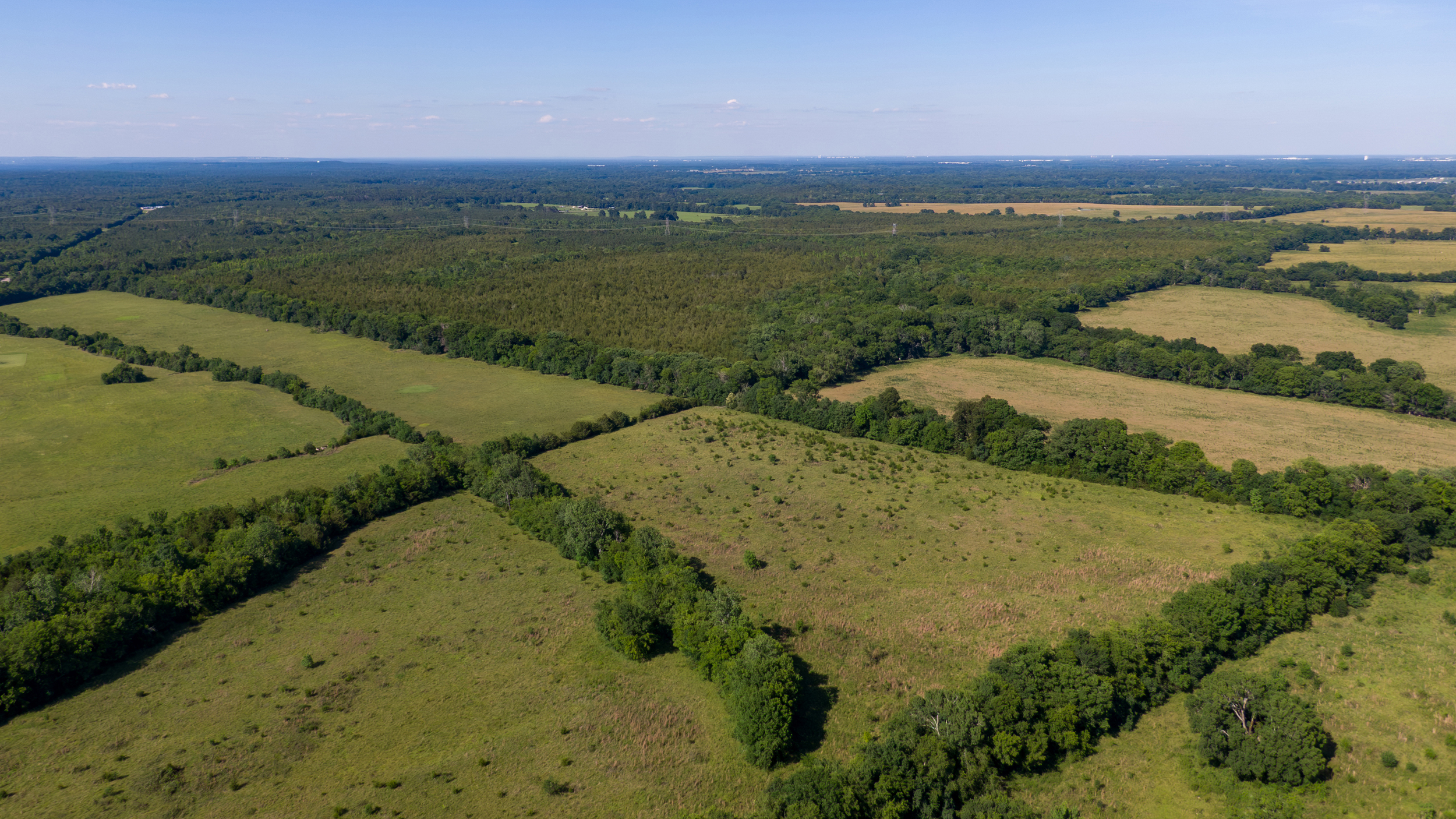
If constructed as planned, the data center campus would consist of four 720,000-square-foot buildings, a 100,000-square-foot warehouse and a 30,000-square-foot office, all to be located on around 800 acres of rural land at the intersection of Highway 80 and Route 21, according to company plans obtained by Inside Climate News.
While a spokesperson for the company told ICN that the facilities’ expected water and power demand haven’t been finalized, Cloverleaf representatives have publicly stated that they have requested 1,500 megawatts of energy capacity from Alabama Power, the state’s largest electric utility, and up to 100,000 gallons of water per day from the Pintlala Water System, a small rural water utility.
If realized, that would amount to enough energy to power around a million homes per day and enough water to supply hundreds.
Perman Hardy, a 67-year-old Lowndes County native, said that providing a significant amount of infrastructural support for a data center is criminal when many poor folks in her community and across the Black Belt do not have adequate access to clean drinking water and sanitary facilities.
“How can you bring this type of facility here when we still have people who have sewage in their yard?” Hardy asked.
Poverty in the Black Belt, nicknamed for its dark, fertile soil, is widespread. In Lowndes County, which is more than 70 percent Black, around a quarter of residents live below the federal poverty line, according to census figures.
Conditions in Lowndes and the surrounding counties have for years been the subject of international concern. Following a visit to Alabama in 2017, Philip Alston, then the United Nations special rapporteur on extreme poverty and human rights, characterized the situation in the Black Belt as the result of racism and the demonization of the poor.
“In Alabama, I saw various houses in rural areas that were surrounded by cesspools of sewage that flowed out of broken or non-existent septic systems,” Alston wrote after the visit. “The State Health Department had no idea of how many households exist in these conditions, despite the grave health consequences. Nor did they have any plan to find out, or devise a plan to do something about it.”
Under President Joe Biden, federal officials reached a settlement agreement with Alabama officials aimed at improving conditions for rural Alabamians facing sewage woes. In 2025, President Donald Trump terminated those efforts, criticizing the program to improve sanitary conditions as “illegal DEI.”
Despite limited improvement in services for residents, utility providers and some local leaders seem more than happy to accommodate a large data center, Hardy said, all driven by what she sees as empty promises of endless tax revenue and job creation.
Farmer and school bus driver Chequita Surles-Johnson said she, too, is skeptical of Cloverleaf’s promises to improve her community.
“We have a name for those kinds of claims,” she said. “We call them ‘lies.’”
This story is funded by readers like you.
Our nonprofit newsroom provides award-winning climate coverage free of charge and advertising. We rely on donations from readers like you to keep going. Please donate now to support our work.
Donate NowSurles-Johnson has lived in Lowndes County for nearly three decades. There, she and her husband work a 100-acre farm they use to feed customers at their family diner on Highway 80, just a stone’s throw from where the data center campus would be constructed.
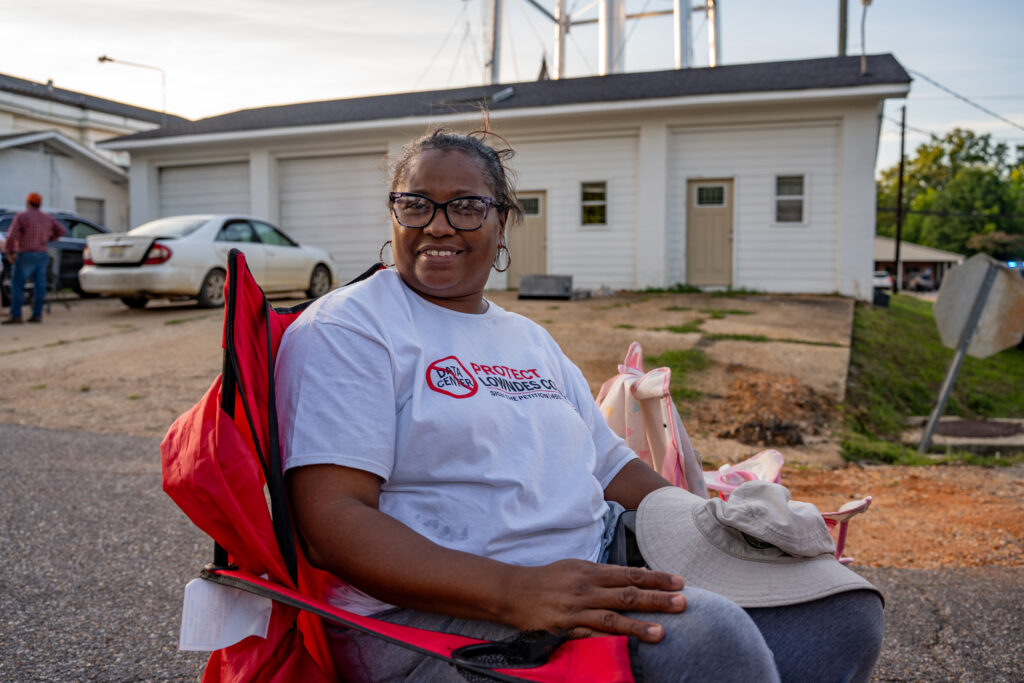
As the open house dragged on inside, Surles-Johnson plopped into a camping chair she set just behind a barrier erected by local police in the middle school’s parking lot ahead of the meeting. She wanted the developers to know: Residents are watching, and they’re not going anywhere.
“We don’t need this in our community,” she said. “This isn’t going to bring families here.”
What it will bring, she fears, is higher utility bills, air pollution from backup generators and another headache for a community that’s already struggling to stay afloat.
Ann Burgwin Faulkner has helped lead the charge against Project Red Clay since she first heard rumblings about the project months ago. That’s when she and other residents began organizing among themselves, trying to learn as much about data centers and artificial intelligence as they could.
At the open house, Faulkner told a Cloverleaf representative that she and other residents should have heard about the development from its proponents up-front. Instead, she said, the more residents learned about the project, the more adamant their opposition became.
In addition to environmental and economic concerns, Faulkner said she believes it would tarnish the legacy of the civil rights movement to construct the hyperscale data center at its proposed location.
As currently sited, the facility would be built directly along a section of Highway 80 designated as a national historical trail, just over a mile from the Robert Gardner farm, where marchers camped overnight on their way to Montgomery. In 2022, the Lowndes County portion of Highway 80 was renamed the Robert Mants Memorial Highway after Bob Mants, a Lowndes County native and longtime civil rights activist who had served as the secretary of the Student Nonviolent Coordinating Committee in the 1960s.
In a letter to county commissioners reviewed by ICN, Mants’ daughter Katanga and widow Joann wrote in opposition to Project Red Clay.
“Lowndes County is not just any rural place. It is sacred ground in the history of this nation,” the letter said. “Communities like Lowndes County are too often treated as ‘sacrifice zones,’ where environmental harm is tolerated because the population is poor, rural, and politically overlooked. We cannot allow that pattern to continue. This land is not disposable. It is historic, it is cultural, and it is home.”
Protecting that sacred ground is what’s most important, Faulkner said, and that’s why she plans to do everything she can to stop the construction of the data center campus.
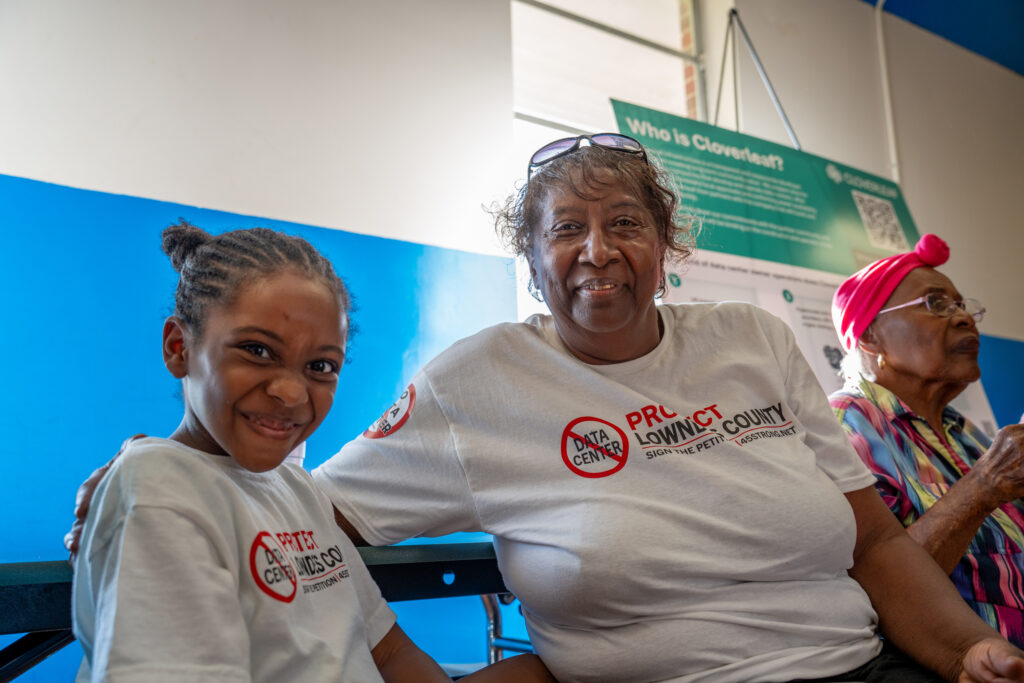
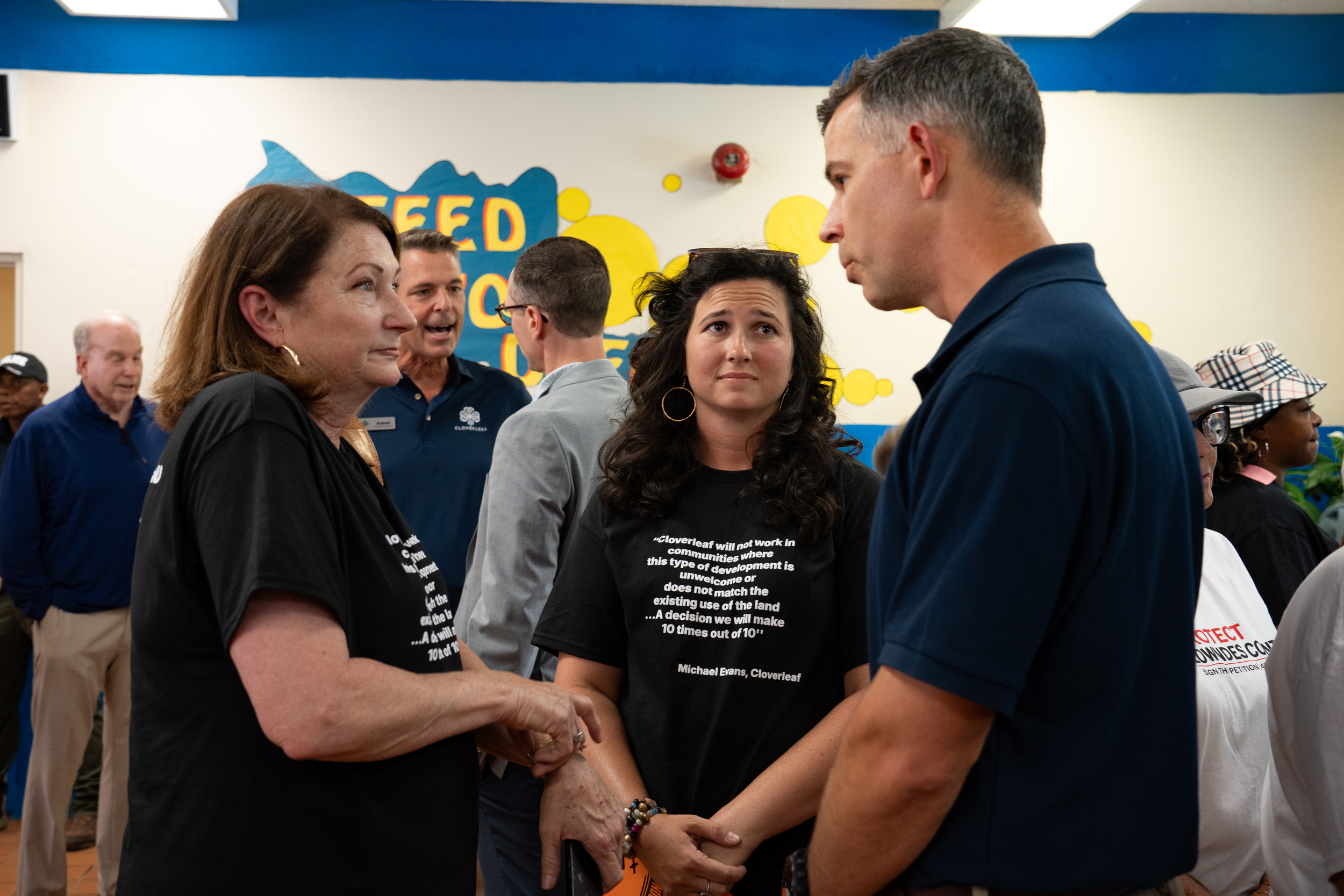
Faulkner said she is hopeful that pushing Cloverleaf to live up to its stated values will prevent the construction of the data center. At the open house, dozens of residents wore shirts featuring a quote that Michael Evans, a development principal at Cloverleaf, wrote in an email to local officials in Michigan about another of the developer’s proposed data centers.
“Cloverleaf will not work in communities where this type of development is unwelcome or does not match the existing use of the land,” Evans wrote in the September 2025 email. “A decision we will make 10 times out of 10.”
Evans referred questions about the shirts to Cloverleaf’s public relations team.
Danielle Decatur, vice president of community engagement and communications for the company, said she understands residents’ frustrations about not hearing from the developer sooner, but that it’s difficult to get ahead of the grapevine in fast-moving developments.
“It’s always tricky when you’re developing a project because you can’t really talk about something if it’s not real yet,” Decatur told Inside Climate News.
At this point, however, Decatur said the company is willing to make commitments to community members about some aspects of the development that Cloverleaf can control, including that the facility will use a closed-loop cooling system meant to reduce water demand.
But there are many questions about the project that simply can’t be answered yet, Decatur said, because Cloverleaf is still negotiating to secure an end user for the facility. Like many data center developers, she said, Cloverleaf focuses on land acquisition, permitting and construction. A separate end user, often a large tech company like Meta or Google, then operates the data center, often determining many of the facility’s ultimate design specifications.
Decatur said that anything company representatives promise publicly will be incorporated into a contract agreement with the end user.
“Any commitment we make here, the end user has to carry out,” Decatur said.
Asked whether even minor commitments like pledges to limit lighting could be included in such agreements, Decatur doubled down, saying that “anything we say publicly” would be enforceable through detailed agreements with end users or through pre-development agreements with local governments.
When Decatur was finished, Faulkner asked where she was from.
Seattle, Decatur said, where she recently worked for Microsoft.
“Well, y’all are so nice,” Faulkner said, smiling. “But we don’t want it here.”
When Decatur didn’t answer, Faulkner continued.
“And we’re not going to change our minds.”
About This Story
Perhaps you noticed: This story, like all the news we publish, is free to read. That’s because Inside Climate News is a 501c3 nonprofit organization. We do not charge a subscription fee, lock our news behind a paywall, or clutter our website with ads. We make our news on climate and the environment freely available to you and anyone who wants it.
That’s not all. We also share our news for free with scores of other media organizations around the country. Many of them can’t afford to do environmental journalism of their own. We’ve built bureaus from coast to coast to report local stories, collaborate with local newsrooms and co-publish articles so that this vital work is shared as widely as possible.
Two of us launched ICN in 2007. Six years later we earned a Pulitzer Prize for National Reporting, and now we run the oldest and largest dedicated climate newsroom in the nation. We tell the story in all its complexity. We hold polluters accountable. We expose environmental injustice. We debunk misinformation. We scrutinize solutions and inspire action.
Donations from readers like you fund every aspect of what we do. If you don’t already, will you support our ongoing work, our reporting on the biggest crisis facing our planet, and help us reach even more readers in more places?
Please take a moment to make a tax-deductible donation. Every one of them makes a difference.
Thank you,

Lee Hedgepeth
Reporter, Alabama
Lee Hedgepeth is Inside Climate News’ Alabama reporter. Raised in Grand Bay, Alabama, a small town on the Gulf Coast, Lee holds master’s degrees in community journalism and political development from the University of Alabama and Tulane University. Lee is the founder of Tread, a newsletter of Southern journalism, and has also worked for news outlets across Alabama, including CBS 42, Alabama Political Reporter and the Anniston Star. His reporting has focused on issues impacting members of marginalized groups, including homelessness, poverty, and the death penalty. His award-winning journalism has appeared in publications across the country and has been cited by the New York Times, the Wall Street Journal and the Washington Post, among others.