

NASHVILLE, Tenn.—Former Vice President Al Gore is knocking on wood.
Seated in front of portraits of Johnny Cash and Prince inside The Pinnacle, a Nashville music venue, Gore told Inside Climate News that despite the current state of both national and global politics, he believes humanity can and will surmount the challenge of human-induced climate change.
But that’s not the whole story, he said.
To meet the challenge presented by a rapidly warming world, Gore said it will take more than cheap talk. It will take action.
Just before sitting down for a conversation at the beginning of May, Gore presented his climate change slideshow, its delivery perfected over two decades, to a room of hundreds of members of the Climate Reality Project, a Gore-led nonprofit that focuses on recruiting, training and mobilizing people to help speed the transition to a clean energy future.
Now a network of over 4.5 million people globally, Gore said the nonprofit’s trainees will be pivotal in moving forward the work of ending fossil fuel dependency and pushing toward a just transition to renewable energy.
Given the white-knuckled grasp of fossil fuel funders over public officials, he said, that transition won’t happen without a struggle and won’t happen overnight. Instead, it will take the commitment of Americans of all color, class and creed to secure the policy changes needed to ensure a stable future.
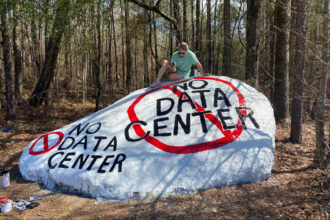
Among the many challenges facing those concerned with curbing carbon emissions is the exponential explosion in planned energy generation and consumption associated with the AI boom. Across the country, communities have come together to oppose the power- and water-hungry data centers that power AI technology as the nation’s tech behemoths dash to secure their place in the race for AI supremacy.
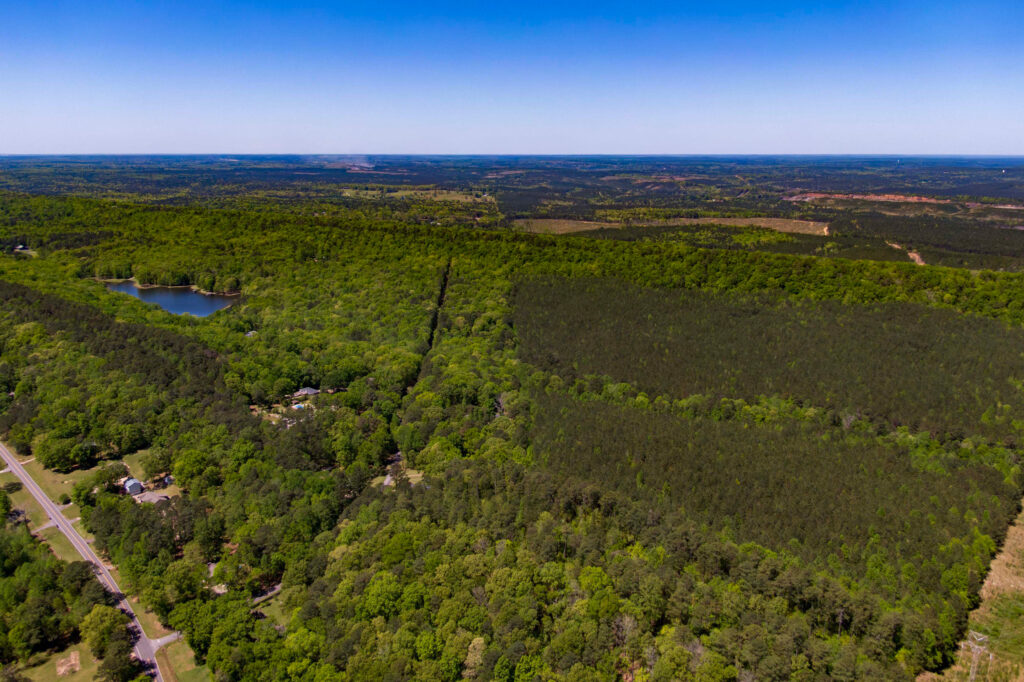
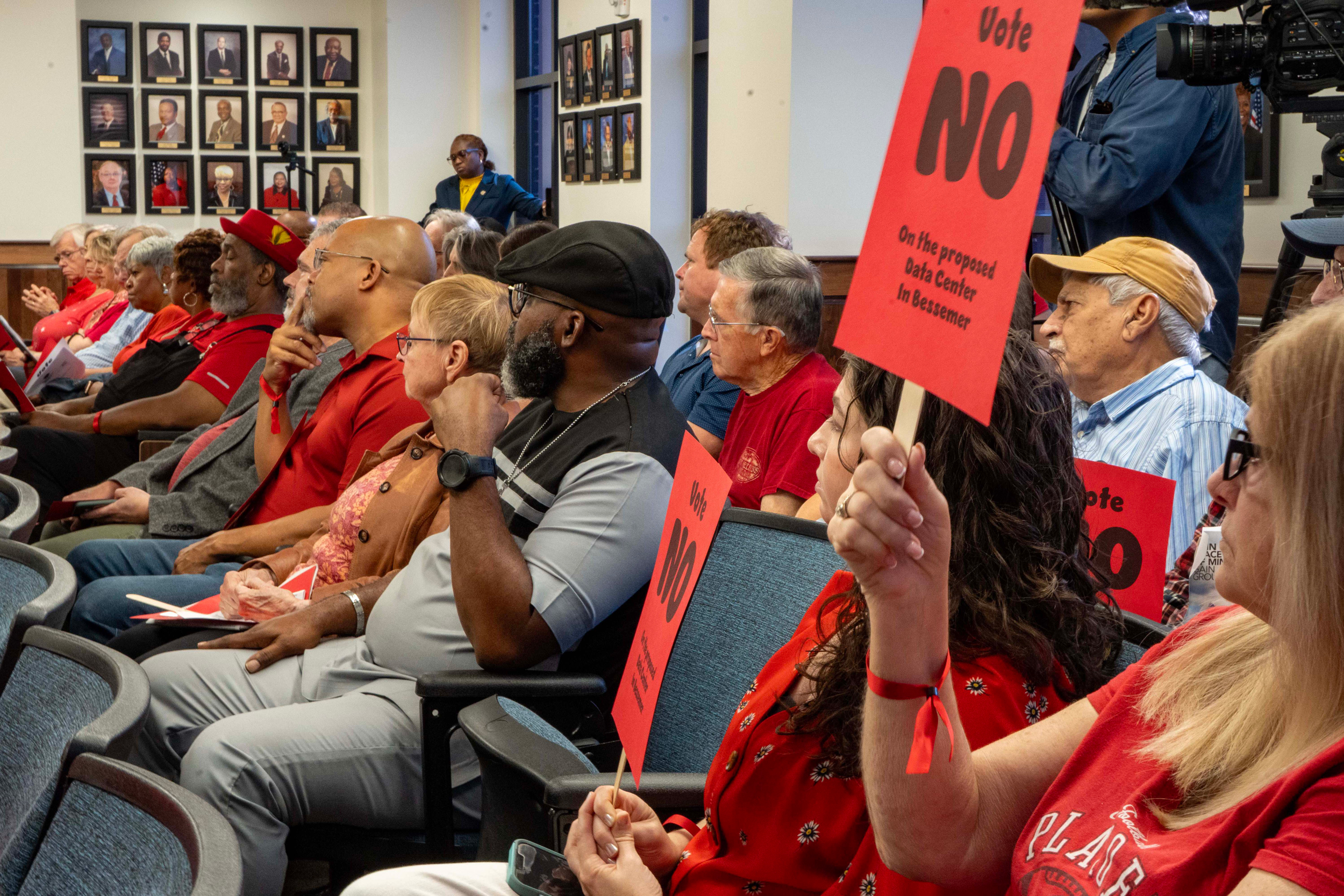
In Alabama, for example, residents have almost universally opposed a data center development called Project Marvel in Bessemer, just outside Birmingham, that would lead to the clearcutting of hundreds of acres of agricultural land and, at full buildout, consume 1,200 megawatts of energy annually—enough electricity to power a million homes. That single development alone, just one of many data center proposals across Alabama, is slated to increase Alabama Power’s demand for energy statewide by as much as 10 percent.
Developments like Project Marvel are worrying, Gore acknowledged.
“I read your reports,” Gore said of Inside Climate News’ reporting from Bessemer. “I think it is a real problem. I think that it’s a problem on a national and global scale that is a cause for deep concern, but not panic.”
Gore, now 78, said he isn’t panicking for a few reasons. First, he said, while utilities in some regions of the U.S. may choose to fuel the data center boom with dirty energy, including Alabama Power, other utilities and some large tech companies themselves have committed to adopting renewables like wind and solar over fossil fuels. In 2025, giant tech companies like Google, Amazon, Microsoft and Meta accounted for about half of clean power purchase agreements globally, according to a report by BloombergNEF, though the report’s authors also noted that corporate demand for clean energy had fallen 10 percent year over year, the first such decline in nearly a decade.
While Gore said considering ways to reduce overall energy consumption is reasonable, it may be difficult to curb the surge in electricity demand fueled by AI data centers.
“Yes, the underlying problem is in part that we are just continuing to use so much energy,” Gore said. “But with this AI revolution, which is unlike any scientific revolution in prior history, it is going to be a real challenge to try and hold that back.”
The construction of AI data centers across the country may be inevitable, Gore suggested, so the goal should be to encourage tech developers to co-locate renewables at data center sites. Gore said he prefers incentivizing the colocation of clean energy production to other strategies, including that of Maine’s legislature, which recently passed a moratorium on new data centers in the state that was later vetoed by Gov. Janet Mills.
And while the demand for energy spurred by AI has already led to significant fossil fuel investment, Gore said he’s hopeful that AI tech can be deployed in specific ways to actually reduce carbon emissions.
Gore pointed to a recent study by researchers at the London School of Economics that concluded widespread adoption of AI tools as a means of reducing emissions could be transformative, potentially outweighing AI’s energy costs. The study considered AI tools that could increase efficiencies in areas like grid management, food production and transportation and found that “the emissions reductions due to AI from just these three sectors alone would more than offset the estimated increase in emissions from all of AI’s activities.”
This story is funded by readers like you.
Our nonprofit newsroom provides award-winning climate coverage free of charge and advertising. We rely on donations from readers like you to keep going. Please donate now to support our work.
Donate NowNicholas Stern, chair of the Grantham Research Institute and the paper’s lead author, has warned, however, that the widespread adoption of AI as an emissions reduction tool is not inevitable. Without appropriate public policy, the energy costs of AI and resulting emissions are unlikely to be mitigated by the technology’s emissions reductions potential.
“Governments have a critical role in ensuring that AI is deployed effectively to accelerate the transition equitably and sustainably,” Stern said. “Without active public policy, the commercial incentives to apply AI in the socially productive areas described may be weak.”
A 2025 report by the International Energy Agency (IEA) was more explicitly skeptical:
“It is vital to note that there is currently no momentum that could ensure the widespread adoption of these AI applications,” the report concluded, referring to the use of renewable energy to power data centers. “Therefore, their aggregate impact, even in 2035, could be marginal if the necessary enabling conditions are not created.”
Gore said he also believes that data center developers may find themselves without the public support necessary for such rapid growth. Recent polling suggests that significantly more Americans say they would oppose the construction of a data center in their neighborhood than say they would support it.
But in places like Alabama, near-universal opposition to data center developments has done little to slow the data center boom. Instead, public officials have glossed over residents’ concerns, often pointing to the promise of tax revenue and job creation as paramount.
Gore said he feels for residents in places like Bessemer who feel their concerns are being entirely dismissed.
“I’m on their side,” he said. “I understand their frustration and anger.”
Ultimately, unresponsive elected officials are a result of an increasingly ineffective system, according to Gore—a system centered around pleasing donors, not representing the interests of the average American.
“We have seen a capture of governmental processes in many areas with money playing way too big a role in the political process,” he said.
Still, Gore said he believes the writing is on the wall when it comes to public sentiment toward the way the Trump administration and many states are handling environmental issues. Since Trump’s election, Gore said Americans have begun to better understand the consequences of the president’s public policy preferences.
“This president campaigned on ‘No more wars in the Middle East. No more rising prices. We’re going to bring inflation down,’” Gore said. “All the things he promised, he’s doing the exact opposite.”
Gore pointed to Trump’s reported April 2024 meeting with oil executives where he asked for $1 billion in campaign funding.
“He said ‘Give me a billion dollars and I will do whatever you want—I’ll get rid of regulations and laws that are not convenient for you,’” Gore said of Trump. “And they gave him the billion dollars, and we’re seeing the transaction completed now.”
Gore spoke faster and louder as he discussed the president’s agenda.
“I’m sorry,” he said. “You triggered me there.”
Americans aren’t naive, Gore said. Come November, he believes Republicans may see the electoral chickens come home to roost. Gore rapped his knuckles on the table in front of him.
“Knock on wood,” he said.
Just two days before ICN’s conversation with Gore, the U.S. Supreme Court’s decision in Louisiana v. Callais had ignited a rush to eliminate majority-minority districts across the South. The day of the interview, state legislatures in Alabama and Tennessee were called into special sessions to solidify any possible advantage for the GOP in November’s midterm elections.
The last-minute election map changes across the country spurred by the high court’s intervention may become an obstacle to adopting sound climate policy.
“I think it’s a problem for democracy,” Gore said. “And in order to solve the climate crisis, we’re going to have to address the democracy crisis. This is a move very much in the wrong direction where democracy is concerned.”
Before the end of the conversation, Gore touched on America’s lurching role in solving the climate crisis. Unfortunately, he said, the Trump administration has eroded our ability to lead on issues of climate. In some ways, the dynamic has left China with more international credibility on the issue than the United States, according to Gore.
“That’s because the United States is led by someone who is profoundly dishonest and is the most corrupt president in all of American history,” Gore said. “Case closed.”
While China’s continued investment in coal is a “demerit” for the country, Gore explained, analysts expect that the Chinese government will continue to lead the world in the buildout of solar and wind capacity.
“Once they [shift away from coal], most expectations are that China’s emissions are going to decline quite dramatically for a long period of time,” he said.
Whether in China or the United States, Gore said that solving the climate crisis remains a challenge but that we have the available technology to get the job done. The barrier remains in the political sphere, where the political influence of the fossil fuel industry continues to put a stranglehold on efforts to quicken a just energy transition.
That barrier is evident now more than ever in the South, Gore said, where legislative majorities are sometimes effectively extensions of the fossil fuel lobby itself.
“The fossil fuel industry is in league with the Trump administration and the governments of a number of southern states in particular,” Gore said. “And they have so much power that they just keep politicians under their thumb and tell them what to do, and they say, ‘Yes, sir,’ and do it.”
But those interested in the future of American democracy—and, for that matter, life on Earth—failure is not an option, Gore said.
“I have 10 grandchildren, but no greats yet,” Gore said, a smile curling on his face. “We have the opportunity to shape the future. I would prefer to shape it into a clean, egalitarian future for everyone.”
Damage—some irreversible—has already been done to the Earth’s climate, Gore said, and worse is yet to come. But the most dire changes aren’t inevitable, either.
“We can still prevent the most catastrophic changes that are feared,” Gore said. “But right now we’re running a reckless risk of crossing the tipping point that would make the future a worse time for our grandchildren. Let’s change that.”
About This Story
Perhaps you noticed: This story, like all the news we publish, is free to read. That’s because Inside Climate News is a 501c3 nonprofit organization. We do not charge a subscription fee, lock our news behind a paywall, or clutter our website with ads. We make our news on climate and the environment freely available to you and anyone who wants it.
That’s not all. We also share our news for free with scores of other media organizations around the country. Many of them can’t afford to do environmental journalism of their own. We’ve built bureaus from coast to coast to report local stories, collaborate with local newsrooms and co-publish articles so that this vital work is shared as widely as possible.
Two of us launched ICN in 2007. Six years later we earned a Pulitzer Prize for National Reporting, and now we run the oldest and largest dedicated climate newsroom in the nation. We tell the story in all its complexity. We hold polluters accountable. We expose environmental injustice. We debunk misinformation. We scrutinize solutions and inspire action.
Donations from readers like you fund every aspect of what we do. If you don’t already, will you support our ongoing work, our reporting on the biggest crisis facing our planet, and help us reach even more readers in more places?
Please take a moment to make a tax-deductible donation. Every one of them makes a difference.
Thank you,

Lee Hedgepeth
Reporter, Alabama
Lee Hedgepeth is Inside Climate News’ Alabama reporter. Raised in Grand Bay, Alabama, a small town on the Gulf Coast, Lee holds master’s degrees in community journalism and political development from the University of Alabama and Tulane University. Lee is the founder of Tread, a newsletter of Southern journalism, and has also worked for news outlets across Alabama, including CBS 42, Alabama Political Reporter and the Anniston Star. His reporting has focused on issues impacting members of marginalized groups, including homelessness, poverty, and the death penalty. His award-winning journalism has appeared in publications across the country and has been cited by the New York Times, the Wall Street Journal and the Washington Post, among others.