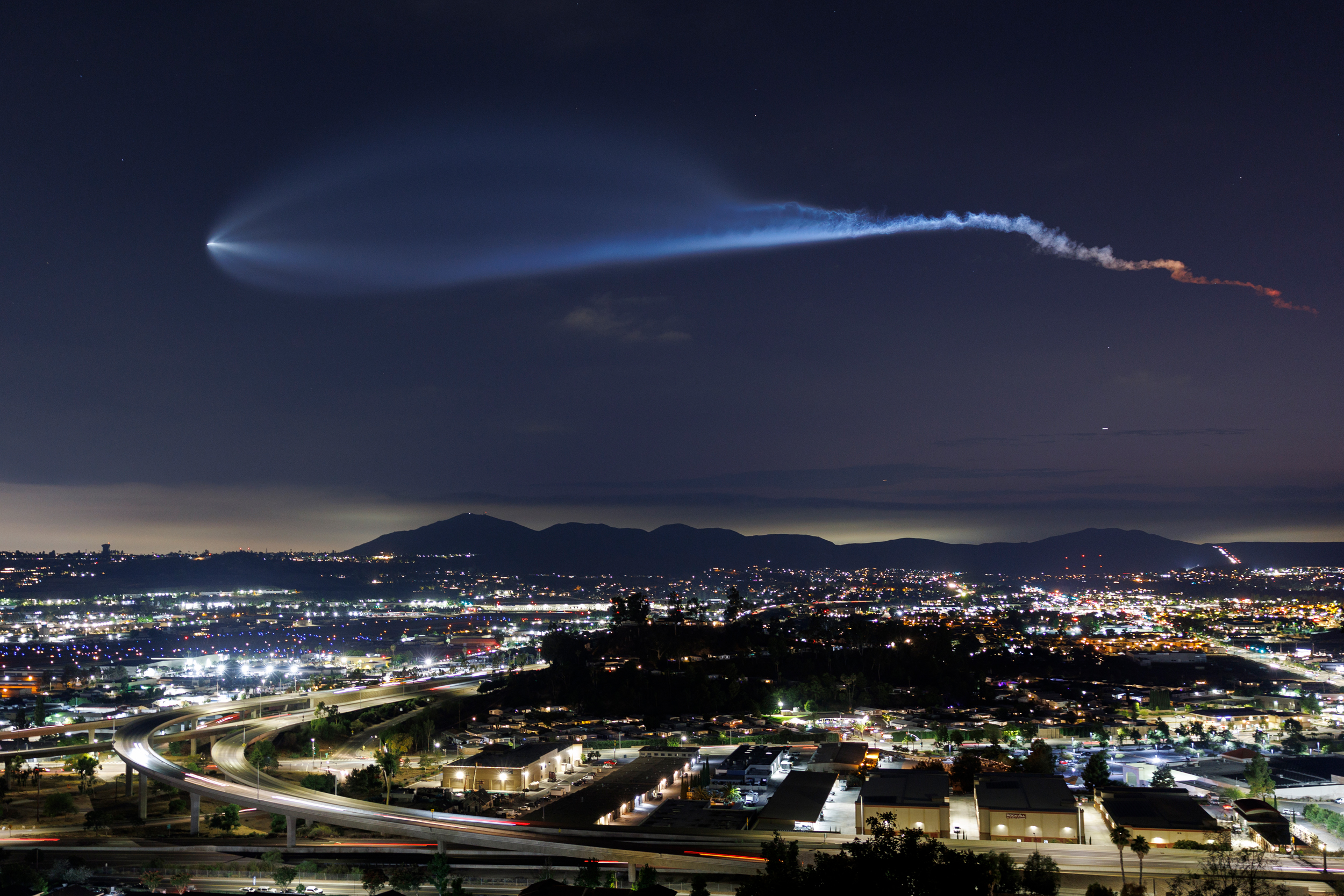


The starry night sky has always anchored humanity’s sense of place in a vast universe. It’s a map guiding travelers, a calendar for migrations and harvests, a wellspring of stories. But a surge of commercial satellite launches into the upper fringes of Earth’s atmosphere threatens the relationship between people and the celestial commons by crowding the night sky and polluting the atmosphere, scientists warn.
Research shows potential impacts on Earth’s climate, including a 2025 paper led by a NASA scientist that found accumulations of metal particles from satellites disintegrating in the upper atmosphere can alter temperatures and wind flows, with ripple effects on surface climate patterns.
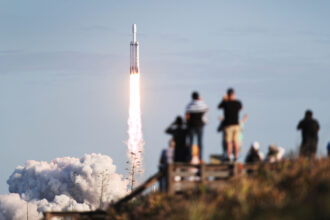
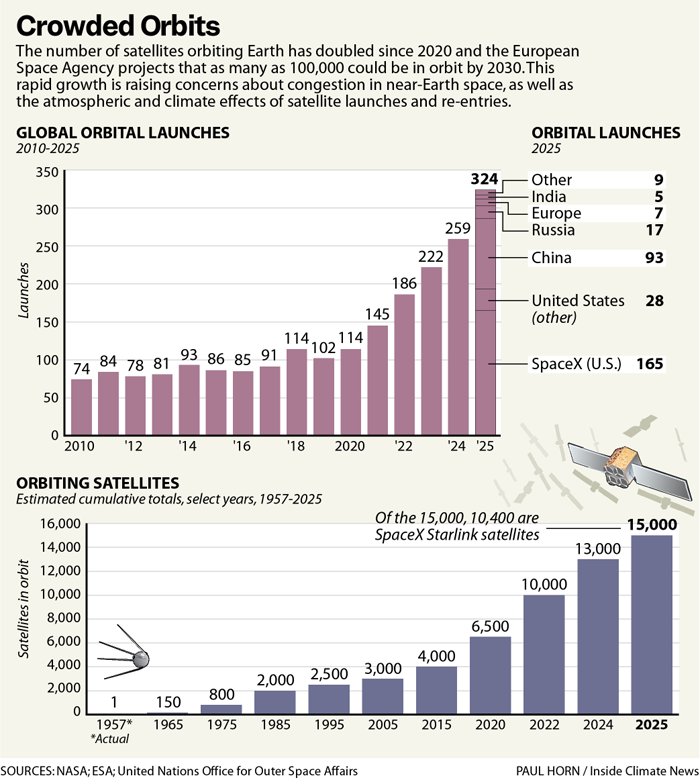
More than 15,000 active and inactive satellites orbit Earth, up from under 1,000 at the start of the century, and scientists estimate that hundreds of them are overhead at any given hour over North America and Europe. Now several companies want to launch huge fleets of satellites over the next 10 to 20 years, pending regulatory approval and financing.
Four companies are pursuing Federal Communications Commission licensing: Reflect Orbital wants to launch mirrored satellites to sell strips of sunlight on Earth. Blue Origin, Starcloud and SpaceX propose deploying hundreds of thousands of data-processing satellites, pushing the AI race into near-Earth orbit. All that, plus the ongoing space tourism industry, with some rides to space costing millions of dollars, and this week’s first public sale of SpaceX stock, shows that commercial space activity is part of a tech investment bubble subject to markets and quarterly earnings expectations.
The proposed satellite fleets would require thousands of launches and re-entries per year, each leaving a trail of soot, greenhouse gases and other industrial pollutants that can deplete ozone and change atmospheric chemistry with uncertain consequences for Earth’s climate and ecosystems.
Because the FCC oversees the radio frequencies and communications licenses used by satellite networks, it is the first regulatory hurdle for U.S. companies developing orbital projects.
Researchers and space governance experts say current agreements like the Outer Space Treaty don’t adequately address stewardship, equity and collective responsibility, required ingredients for a framework that can effectively manage space for the common good.
“We are teetering on the precipice of how the uses of space are changing, and that threatens our ability to use space,” said astronomer and dark sky policy expert John Barentine, who co-founded the Center for Space Environmentalism in 2025.
The center filed formal comments with the FCC on all four satellite-fleet proposals, writing that the deployments are “a massive industrialization of orbit that poses severe collision risks” and that they push the massive energy demands of artificial intelligence into low Earth orbit, threatening its sustainability. And mirroring sunlight to Earth from satellites could threaten ecosystems and disrupt astronomical research, the group added.

A spokesperson for Reflect Orbital, the company that wants to test the idea of space mirrors, said the technology could help provide clean, on-demand energy without increasing fossil fuel use. The company plans a phased testing approach, including environmental studies and consultations with scientists, astronomers, regulators and local communities, and said it would modify or halt deployments if there is evidence of harmful environmental impacts.
SpaceX, Blue Origin and Starcloud didn’t answer questions about environmental impacts and governance. Instead, the companies referred to FCC filings and to public statements outlining their plans. Without pointing to supporting scientific evidence, they claim that new satellite constellations could provide more broadband access and more computing power for AI systems while reducing environmental impacts on Earth.
Public Benefit or Private Control?
The Center for Space Environmentalism argues that the FCC should require full environmental reviews under the National Environmental Policy Act because satellite megaconstellations and other space projects can affect the atmosphere, the night sky, ecosystems and communities, yet are currently approved without a comprehensive analysis of those impacts.
Barentine said his studies of environmental history show that human relationships with the natural world, including starscapes, are powerful forces that have shaped cultural evolution for millennia, making the last 150 years of technological progress the exception, not the norm.
Barentine said people have assumed space is so vast that human actions couldn’t meaningfully change it. That’s remarkably similar to how people once thought about Earth’s atmosphere and oceans before countries adopted science-based international rules.
Right now, he said, international rules and diplomatic efforts to govern off-Earth activities are not slowing the space race and, in some ways, encourage it. And he noted that the space race is driven by a handful of companies and countries and said it’s fair to ask, “Who gives these people the right to do this?”
Absent any mechanism to prevent them from doing so, he said, they’ve simply claimed the right.
Space Justice
The proliferation of light pollution in the sky, including from satellites, is concentrated in the mid-latitudes above industrialized countries, but it has global impacts. A 2020 paper described the brightening of night skies as a human rights violation and a form of cultural erasure because it increasingly disrupts millennia-old traditional practices, stripping people of a resource they’ve known for all their lives.
Prakash Kashwan, an associate professor of environmental studies at Brandeis University who focuses on governance, justice and human rights, said the rush to commercialize space risks repeating an extractive model that has shaped the past 200 years of environmental calamities, including the climate crisis. At this stage, he said, we should be asking if and how we belong in space, not what we can get from mining the moon or asteroids.
This story is funded by readers like you.
Our nonprofit newsroom provides award-winning climate coverage free of charge and advertising. We rely on donations from readers like you to keep going. Please donate now to support our work.
Donate NowSocieties, governments and companies should collectively decide whether certain activities should proceed at all, and who gets to make those decisions, he said. On Earth, people have already devastated entire landscapes and ecosystems with resource extraction for economic growth, technological progress and geopolitical advantage, right up to the destruction of remote ocean islands in nuclear tests.
Those risks are even higher if decision-making and control remain concentrated in a small group of private companies, powerful governments and military institutions, Kashwan said.
Kashwan said many visions of humanity’s future in space are driven by a powerful belief that technology, entrepreneurs and markets will overcome all problems, a mindset rooted in ideals that equate progress with controlling nature, rather than living within ecological limits. He suggested thinking of the area beyond Earth’s boundaries as a global commons, a public good for all of humanity.
“We need to more strongly assert the collective common stake that humanity has in outer space, and it needs to be managed accordingly,” he said.
Will the Space Boom Fizzle?
The current slew of flashy proposals for orbital data networks and space mirrors is part of the search for “the next killer app in space,” following asteroid mining and space tourism, said P.J. Blount, an assistant professor of space law at Durham University in the United Kingdom, and executive secretary of the International Institute of Space Law.
Since the 1980s, U.S. policy has supported commercial space activities, pursued “in lockstep with maintaining safety and maintaining good regulatory authority because it’s required to at the international level,” Blount said. There was a shift during President Donald Trump’s first administration, “which kind of went full bore on what they called light-touch regulation,” he said. The regulations are structured with a presumption of authorization at the end, unless there is an apparent fatal flaw in a proposal, he added.
That means approval of the pending proposals is likely, but whether they are financially viable remains to be seen, he said. At this stage, he added, “all of it is a land grab. It is trying to get these orbits, get these frequencies, get the filings in and push up orbital capacity. There’s an environmental problem happening up there because of this massive increase.”
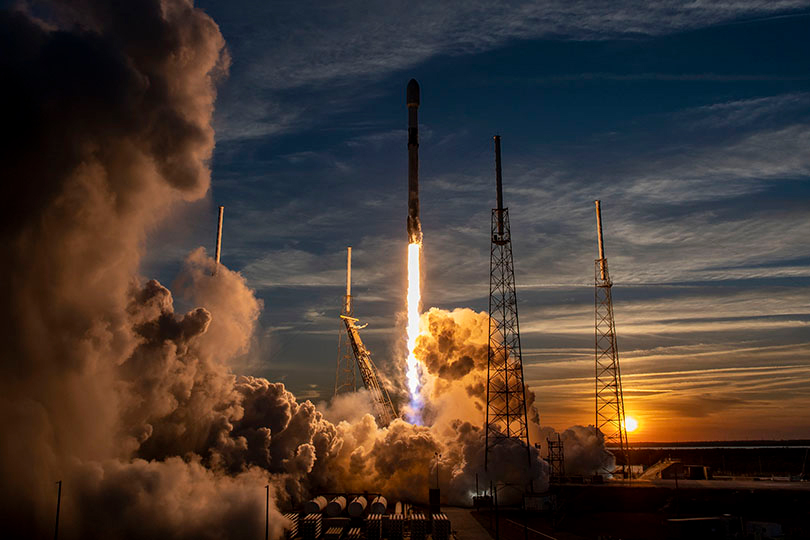
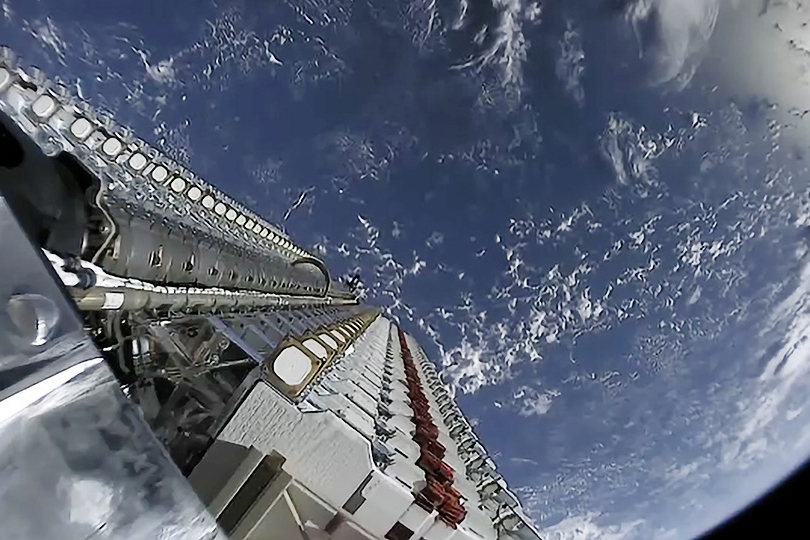
In low-Earth orbit, “where all the action is, right now,” SpaceX’s Starlink is starting to claim a lot of space, he said, adding that other companies have said it can be challenging to find clear paths for their own launches.
The United Nations has a Committee on the Peaceful Uses of Outer Space, formed in 1959, which reviews international space cooperation and studies legal problems arising from space exploration. But international regulation is largely in the hands of the International Telecommunication Union, established by the U.N. to administer applications by 194 member countries, with its operations funded primarily by those nations.
Countries and companies file claims for satellite frequencies and orbital operations through the ITU, creating a first-come, first-served hierarchy that helps prevent interference but also fuels competition for access to space. Those claims are not permanent: Operators must begin deploying their proposed networks within specified deadlines, and regulators continue to debate how many satellites must actually be launched before a constellation is considered operational.
“It’s different from the old days, when bringing it to use was putting one satellite up,” Blount said.
The 1967 Outer Space Treaty is also intended to govern “the Activities of States in the Exploration and Use of Outer Space, including the Moon and Other Celestial Bodies,” but the language is vague enough that countries interpret it in different ways.
Relevant to the current acceleration of commercial space activity is a paragraph in the treaty stating that nations shall not appropriate space by occupation or use, claims of sovereignty or by any other means. But the language, written at the height of the Cold War, remains ambiguous and sometimes contentious.
Blount said commercial mining in space is decades, if not centuries, away, but people still have heated arguments over that language because property rights are at the core of so many legal concepts. In 2015, he added, Congress passed a law stating that the U.S. interprets the treaty “to mean that our citizens can go up there and claim and extract resources and commercially dispose of them,” he said.
The U.N. committee on outer space use now has a working group to address resource rights, but it is not discussing the current rush of applications for megaconstellations. Blount said that might be because “it’s a hell of a lot easier to have a conversation about something that’s not happening right now than it is to deal with the land grab that’s happening in low-Earth orbit.”
In general, states do seem to recognize it’s a problem, but they’re not looking to find a legal answer, he said, adding that the major space powers “kind of like the permissiveness of the status quo,” he said. Regulatory uncertainty is likely driving the current wave of filings by private satellite companies seeking to establish their places in orbit.
Blount said one of his biggest concerns is that space exploration is no longer considered a collective human achievement, symbolized by the Apollo-era ideal of taking “one giant leap for mankind.” Today, he said, that vision is increasingly being displaced by narratives of commercial expansion, strategic advantage and national power, eroding one of the few symbols that once pointed toward a shared future beyond Earth.
“I think that we are seeing space be transformed from something that is about benefits to humanity to something more about national and commercial power,” he said. “Space was a powerful symbol for a long time, and I think that’s eroding.”
About This Story
Perhaps you noticed: This story, like all the news we publish, is free to read. That’s because Inside Climate News is a 501c3 nonprofit organization. We do not charge a subscription fee, lock our news behind a paywall, or clutter our website with ads. We make our news on climate and the environment freely available to you and anyone who wants it.
That’s not all. We also share our news for free with scores of other media organizations around the country. Many of them can’t afford to do environmental journalism of their own. We’ve built bureaus from coast to coast to report local stories, collaborate with local newsrooms and co-publish articles so that this vital work is shared as widely as possible.
Two of us launched ICN in 2007. Six years later we earned a Pulitzer Prize for National Reporting, and now we run the oldest and largest dedicated climate newsroom in the nation. We tell the story in all its complexity. We hold polluters accountable. We expose environmental injustice. We debunk misinformation. We scrutinize solutions and inspire action.
Donations from readers like you fund every aspect of what we do. If you don’t already, will you support our ongoing work, our reporting on the biggest crisis facing our planet, and help us reach even more readers in more places?
Please take a moment to make a tax-deductible donation. Every one of them makes a difference.
Thank you,

Bob Berwyn
Reporter, Austria
Bob Berwyn is an Austria-based reporter who has covered climate science and international climate policy for more than a decade. Previously, he reported on the environment, endangered species and public lands for several Colorado newspapers, and also worked as editor and assistant editor at community newspapers in the Colorado Rockies.