

Three years ago, hydrogen seemed poised for a long-awaited breakthrough. The Biden administration announced $7 billion in federal funding for seven hubs to produce the fuel across the country, and Pennsylvania was set to be a major player in the emerging industry.
Hydrogen has long been heralded as a potential skeleton key to emission reductions: able to power commuter vehicles and mass transportation, as well as hard-to-decarbonize industries like shipping and steel production.
During a 2023 speech at Philadelphia’s Tioga Terminal, President Joe Biden assured the crowd that Pennsylvania’s two hubs—the Mid Atlantic Regional Hydrogen Hub and the Appalachian Hydrogen Hub, commonly known as MACH2 and ARCH2 —would be transformational. The hubs would connect a vast network of hydrogen producers, users, and researchers across Pennsylvania, Delaware, New Jersey, West Virginia and Ohio. They were backed by a bipartisan coalition and designed to bring economic opportunity to red states, with support in Pennsylvania from both Gov. Josh Shapiro and Sen. Dave McCormick. In 2023, Shapiro said the hubs would “ensure Pennsylvania continues to be an energy leader for decades to come.”
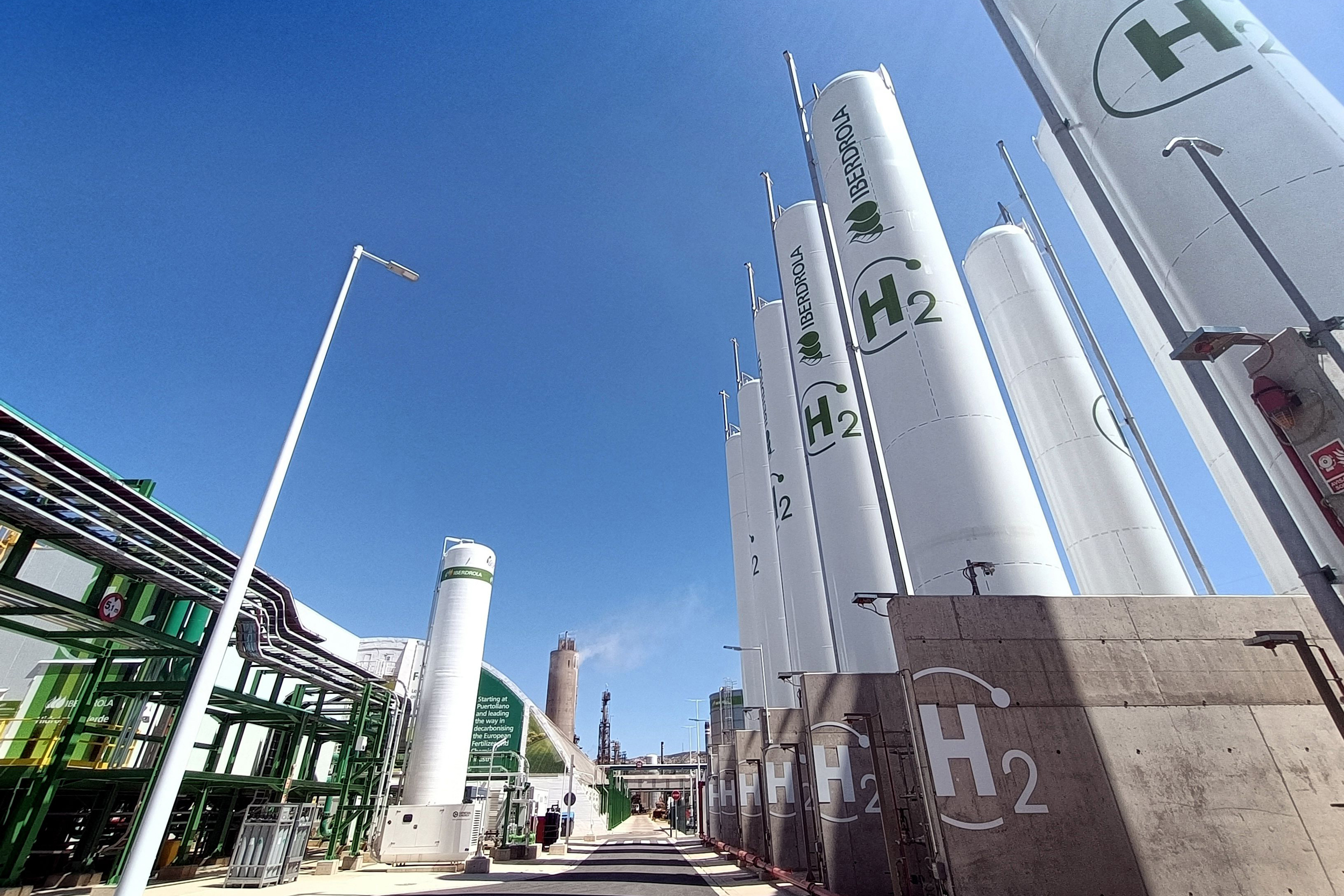
MACH2 promised to bring over 20,000 jobs to the Delaware Valley region alone and lead the way in green hydrogen, produced entirely from clean energy, with a $750 million award from the Department of Energy. ARCH2 would receive $925 million to manufacture blue hydrogen, produced via fossil fuels, with emissions sequestered by carbon capture technology. ARCH2 would be centered on Western Pennsylvania’s steel industry.
Today, that momentum has all but disappeared, one of many clean energy investments facing an uncertain future under the Trump administration. ARCH2 has gone totally dark, with former partners denying involvement or stonewalling media requests, and MACH2 has entered a holding pattern. Experts with knowledge of the hubs say that the federal government has been playing a game of “will they, won’t they”—changing their minds from week to week.
Community groups who initially opposed the hubs say they’ve heard nothing about the projects for months, although Manny Cintron, CEO of MACH2, told Inside Climate News via email that the hub’s “award is active,” but partners “continue to proceed cautiously in light of the current budget uncertainty.” In other words, no one wants to move forward with investment until they have a sense of whether the federal government will continue to fund the hub. As of late September, MACH2 was still circulating a request from January for potential partners to join the hub. The Department of Energy did not respond to repeated requests for comment.
“Until I see significant evidence to the contrary, I just don’t think the hubs are happening,” said Tom Torres, chief of staff at the Ohio River Valley Institute, a think tank focused on Appalachia.
This outcome is exactly what the hydrogen industry feared in the wake of the 2024 election. Losing the funding is going to “harm Pennsylvania,” Shapiro told Axios last year. “It’s going to mean we’re producing less energy. I have no idea why the president of the United States would want to do that.”
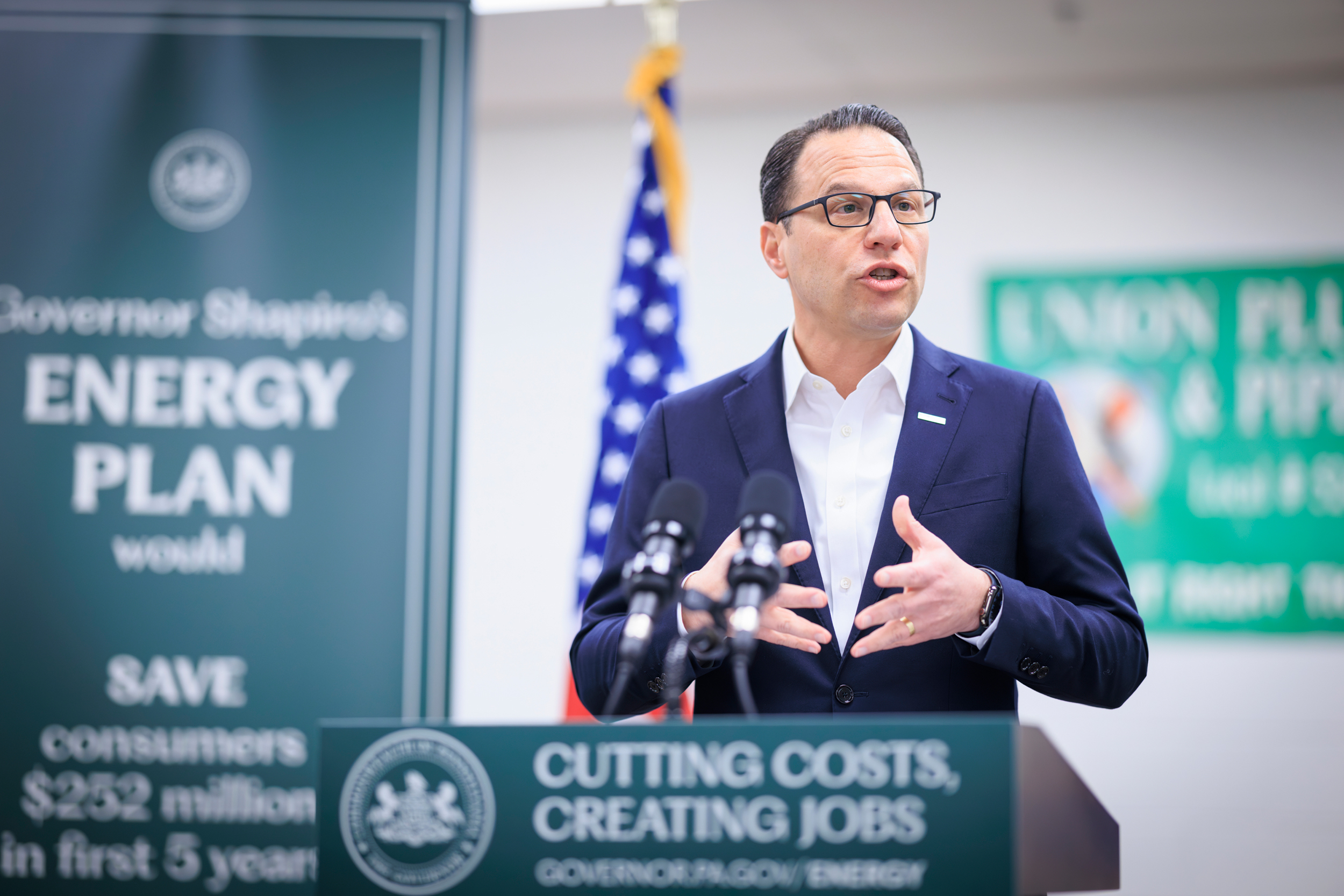
Even before Donald Trump took office, the hubs were facing an uphill battle, held up by a long lobbying fight over who would qualify for the 45V tax credits, which offered producers up to $3 per kilogram of hydrogen produced. Oil and gas proponents wanted more carve-outs for blue hydrogen hubs, like ARCH2; environmentalists wanted to ensure that the subsidies went to hubs running solely off of clean energy, rather than pulling from Pennsylvania’s gas-heavy grid. The debate dragged on nearly until Biden left office, delaying investment and leaving the projects in limbo.
To complicate matters, green hydrogen, which involves using clean energy to produce a different kind of clean energy, is notoriously difficult to produce cost effectively. The fuel is created through a process called electrolysis—essentially, running an electrical current through water, which separates the hydrogen and the oxygen. If you hook a solar panel up to an electrolyzer, about 30 percent of the energy from that panel will be lost just in the process of isolating the hydrogen. By the time you compress it into a fuel cell or liquefy it for transport, then convert it back into electricity, about 70 percent of the energy generated by that original solar panel is gone. And even once you’ve managed to produce it, hydrogen is exceedingly leaky—the smallest element in the periodic table, able to escape even from sealed steel vats.
This is part of why the hubs drew so much pushback from environmental groups, who decried the fuel as a false solution when Biden’s plans were first announced. The United States currently produces about 10 million metric tons of hydrogen per year, almost all of which are made using oil and gas. Clean hydrogen is significantly more expensive, and even with subsidies, experts have warned that it will never be a practical or cost-competitive fuel for public transit, personal vehicles or commercial and residential heating.
But it is critical when it comes to replacing carbon-intensive chemical feedstocks that create products like ammonia, which is used to make fertilizer. Ammonia production alone accounts for roughly 2 percent of global energy consumption and 1.5 percent of greenhouse gas emissions. Green ammonia could also aid in decarbonizing global shipping, which produces another 3 percent of global emissions.
Under the Biden Administration, MACH-2 made a show of partnering with SEPTA, Philadelphia’s public transit system, to test hydrogen-powered buses. In the hub’s application, though, it was made clear that the main offtakers for MACH2 would, at least initially, be area oil refineries—a tough sell for community and environmental justice groups, who were already concerned about hydrogen’s high flammability and its potential to serve as an indirect greenhouse gas, magnifying the effects of methane, ozone and water vapor.
The second Trump administration gutted the Inflation Reduction Act, which invested billions in clean energy and incentives, but most of the hydrogen hubs were spared, at least on paper. Two hubs slated for California and the Pacific Northwest lost funding early on and remain mired in a legal battle, but the generous 45V hydrogen tax credit survived, albeit on a truncated timeline. Although it was initially reported that MACH2 was on the chopping block, Department of Energy Secretary Chris Wright announced that the hydrogen hubs would retain their funding in April—but to what end is entirely unclear.
“What matters in the US more than hub status is whether individual projects are going ahead,” Martin Tengler, head of hydrogen research at BloombergNEF, told Inside Climate News in an email. Producers need to both find customers for their hydrogen and meet the deadlines to claim the 45V green hydrogen tax credit and the 45Q carbon capture credit, in the case of blue hydrogen hubs. “All these have been a challenge, except 45Q,” said Tengler.
Producers now have until December 31, 2027 to begin work before the tax credits expire, rather than the original deadline of 2032. That deadline seems all but impossible to meet, especially given the fact that the DOE does not plan to spend any more on the hubs this year, according to their July apportionment plan. ARCH2 could choose to take advantage of the 45Q tax credits for carbon capture, which don’t expire until 2033, but like MACH2, they’ve only drawn about one fifth of their total Phase One award money, “a drop in the bucket of the overall award,” said Torres.
This story is funded by readers like you.
Our nonprofit newsroom provides award-winning climate coverage free of charge and advertising. We rely on donations from readers like you to keep going. Please donate now to support our work.
Donate NowDespite their funding reprieve, it’s not clear that the hubs will be able to hold on to that money over the next few years. The 2027 President’s Budget Request released in April currently calls for “permanently cancelling” unobligated funding for clean hydrogen programs and repurposing “Green New Scam funding” in favor of baseload power upgrades and spending $1.2 billion on the construction of seven AI supercomputers at Argonne and Oak Ridge National Laboratories.
As a green hydrogen hub, MACH2 was dependent on the development of solar and offshore wind in order to operate. Although some solar projects are still moving forward, the American offshore wind industry has been effectively kneecapped over the last two years by the Trump administration.
Atlantic Shores Offshore Wind and Invenergy backed out of their contracts in 2025 amid delays and regulatory uncertainty, and early-stage products were abandoned after the Trump administration began paying companies out of their leases. In April, the New Jersey Board of Public Utilities announced that they would no longer be building infrastructure to connect offshore wind to the grid. As a blue hydrogen hub, ARCH2 existed largely as a way for oil and gas to continue operating under stricter emissions regulations—somewhat redundant now that the Trump administration has moved to scrap emissions regulations for power plants entirely.
This was always part of the problem with the Biden administration’s initial plans, said Anika Juhn, an energy data analyst at the Institute for Energy Economics and Financial Analysis. Even if the government is willing to temporarily subsidize the production of clean hydrogen, that support won’t be enough unless there are complementary incentives on the demand side.
“The hydrogen story is really an ammonia story, in the U.S. at least,” said Juhn. Without subsidies to offset the increased cost of buying clean fertilizer for farmers, it’s difficult to build up a domestic market—meaning any green ammonia that is produced in the United States will ultimately be shipped overseas.
For the green steel industry, it’s a major setback, said Hilary Lewis, steel director at Industrious Labs. “I think it’s kind of surprising to folks that we still make steel the way that you imagine in your head—big, hot furnaces, with hot metal flying everywhere, dirty coal going in, and lots of pollution,” said Lewis. “That’s still how we do it. It’s how we’ve been doing it for centuries.”
Some indirect progress has been made toward cleaner steel, although not in Pennsylvania. Those old-fashioned furnaces Lewis described are known as blast furnaces: aging, inefficient, and impossible to run in an emissions-friendly way. The more modern furnaces, which are known as direct reduced iron furnaces, are also significantly cleaner. At the moment they run on methane, but a facility like the $5.8 billion steel mill being built by Hyundai in Louisiana, could eventually be converted to green hydrogen. “There are two steps to modernizing Pennsylvania’s iron and steel industry: one is getting clean hydrogen available,” said Lewis. “And the other is building these new furnaces to replace the existing coal-based furnaces.”
In the meantime, Torres said, many former hydrogen hub partners are pivoting to the energy cause du jour—data centers. He pointed to the Adams Fork Energy Project in West Virginia, which was initially conceived as a coal-to-gas facility. In 2023 it joined the ARCH2 hub as a partner with plans to build a massive ammonia hub, but was later dropped from the project. This year, the same company pivoted to constructing gas plants to power a data center. At least four other former ARCH2 partners—Hog Lick Aggregates, EQT, Fidelis New Energy and CNX Resources—have joined them.
“Whenever someone’s reaching out about the hydrogen hub [I assume] something must be happening that I don’t know about,” said Torres. “Because it’s all gas plants and data centers now.”
About This Story
Perhaps you noticed: This story, like all the news we publish, is free to read. That’s because Inside Climate News is a 501c3 nonprofit organization. We do not charge a subscription fee, lock our news behind a paywall, or clutter our website with ads. We make our news on climate and the environment freely available to you and anyone who wants it.
That’s not all. We also share our news for free with scores of other media organizations around the country. Many of them can’t afford to do environmental journalism of their own. We’ve built bureaus from coast to coast to report local stories, collaborate with local newsrooms and co-publish articles so that this vital work is shared as widely as possible.
Two of us launched ICN in 2007. Six years later we earned a Pulitzer Prize for National Reporting, and now we run the oldest and largest dedicated climate newsroom in the nation. We tell the story in all its complexity. We hold polluters accountable. We expose environmental injustice. We debunk misinformation. We scrutinize solutions and inspire action.
Donations from readers like you fund every aspect of what we do. If you don’t already, will you support our ongoing work, our reporting on the biggest crisis facing our planet, and help us reach even more readers in more places?
Please take a moment to make a tax-deductible donation. Every one of them makes a difference.
Thank you,