

SACRAMENTO, Calif.—Farmworkers, their loved ones and advocates lined up out the door of a California state legislative hearing room this week to urge elected officials to hold pesticide regulators accountable for failing to protect their communities from life-threatening chemicals.
Women spoke of being sprayed while working next to fields treated by crop dusters and seeing coworkers caught in drifting pesticide clouds. They spoke of suffering from asthma and liver disease and watching family members die of cancer. They spoke of being exposed to pesticides while pregnant, having children born prematurely, with birth defects, autism, ADHD or other neurodevelopmental problems.
Children of farmworkers described working alongside their parents at age 11, sometimes with even younger kids, to help their families afford food and pay bills.
The details of their challenges differed but converged on a common refrain: California’s pesticide regulatory system is broken.
California pesticide regulators allow growers to use nearly three dozen chemicals that are not approved for use due to health concerns in scores of countries around the world, including nations in the European Union, Asia, Africa and Latin America. They have been “re-evaluating” the fumigant chloropicrin since 2001 after monitors indicated that air levels beyond treated fields and greenhouses could exceed safety thresholds.
Chloropicrin, an industrial chemical so noxious it was deployed as a choking agent during World War I, is banned in more than 40 countries, but agricultural applications of the chemical were implicated in more than 1,000 pesticide-related illnesses in California between 2000 and 2015, according to a 2019 study in the journal Environmental Health.
California growers applied more than 49 million pounds of chemicals banned in other countries in 2023, the most recent publicly available data shows, including more than 8.5 million pounds of chloropicrin and more than 7 million pounds of the cancer-causing fumigant 1,3-dichloropropene, which is banned in 40 countries.
The disconnect between California’s reputation as an environmental leader and its willingness to rely on pesticides many other countries reject as health threats has not gone unnoticed by the assemblymember who chaired the hearing.
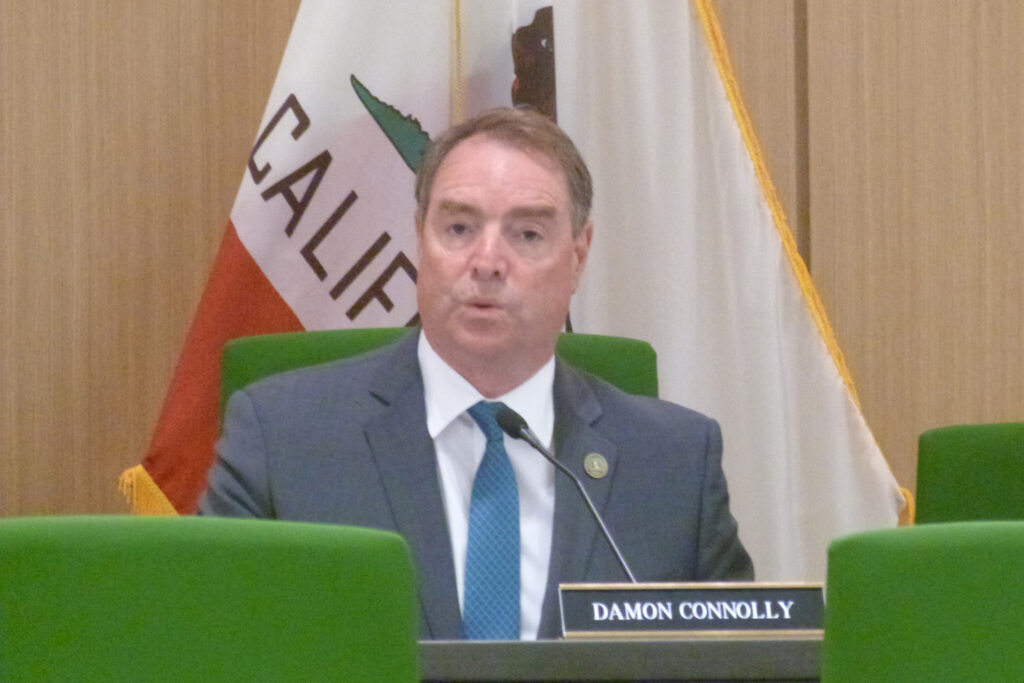
“We’re here today to learn about our state’s pesticide program and hear how the Department of Pesticide Regulation, or DPR as we’ll be calling it, tackles its mission of ensuring that pesticide use doesn’t come at the cost of human health or the environment,” said Assemblymember Damon Connolly, chair of the Assembly Environmental Safety and Toxic Materials Committee, which held the Joint Oversight Hearing with Senate Environmental Quality Committee Chair Sen. Catherine Blakespear.
When the Legislature passed Assembly Bill 2113, it increased funding for the Department of Pesticide Regulation and initiated a process to prioritize and expedite safer products and implement a sustainable pest management program (SPM).
“It’s been two years since A.B. 2113’s enactment, three years since the state released the SPM roadmap and nearly a decade since the last oversight hearing on DPR,” he said. “Now is a great time to review the state’s pesticide program.”
Disproportionate Burdens
DPR rarely removes even the most dangerous chemicals from the market because the lion’s share of its budget comes from fees on pesticide sales, panelists and residents of some of the state’s most productive farming regions told legislators. As a result, they said, California’s predominantly Latino and Indigenous agricultural communities are shouldering the burden of the $60 billion agricultural industry’s heavy reliance on toxic chemicals.
Earlier this week, DPR announced that manufacturers of pesticides containing the weed killer paraquat-dichloride voluntarily withdrew their products’ registration. The agency noted associations between paraquat exposure and impacts and birth defects but ignored the growing body of evidence linking the herbicide to Parkinson’s disease.
Angel Garcia, co-director of the nonprofit Californians for Pesticide Reform, testified that while he welcomed DPR’s announcement of paraquat’s voluntary cancellation, the European Union banned it almost 20 years ago. Garcia also expressed concern that existing stocks could still be used for two more years, citing paraquat’s links to acute poisonings and long-term neurological damage.
Garcia and other policy experts, health professionals and scientists called on regulators to phase out the most toxic pesticides, transition to safer alternatives, identify heightened risks from cumulative exposures and inform residents exactly where growers intend to apply dangerous chemicals so they can protect themselves and their children.
“Exposure to pesticides is universal, and it begins before birth,” said physician and environmental epidemiologist Ana María Mora, referring to what she and her colleagues at the University of California, Berkeley Center for Environmental Research and Community Health found in studies of mothers and children in the Salinas Valley.
The team found pesticide breakdown products in the urine of every pregnant woman at much higher levels than the U.S. average in the CHAMACOS study, which enrolled more than 900 mothers and children in one of the longest-running studies investigating pesticides’ effects on children’s health. They detected the chemicals in 97 percent of breastmilk samples and in nearly all dust collected from participants’ homes.

Mothers with higher exposures during pregnancy bore children with poor working memory by age 12, more traits associated with autism by age 14, poorer lung function and signs of cardiovascular and metabolic disease as young adults.
And the people who are suffering most from these harmful effects are primarily low-income, Spanish-speaking immigrants, Mora said.
Compared with the residents of 25 California counties with the lowest proportion of Latino residents, people living in 11 counties with majority Latino populations were four times more likely to suffer an acute pesticide-related illness, said Jacob Sandoval of the League of United Latin American Citizens at a press conference before the hearing.
“These are people who are experiencing and suffering because of these pesticides,” Sandoval said. “They are farmworkers going to work every day to provide for their families. They are parents worried that their children may be exposed by playing outside.”
Social stresses can exacerbate these harmful health effects, Mora said, pointing to an analysis showing that prenatal exposure to organophosphate pesticides like the insecticide malathion was associated with lower IQs in children facing challenges at home.
“Pesticides and social stress are like a double burden,” Mora said. “And they fall hardest on the children who can least afford them.”
Cumulative Impacts
Legislators also heard from representatives of regulated industries, including manufacturers of consumer and commercial pesticide products, agricultural associations, pest management professionals and small farmers. They raised concerns that the state’s additional layer of scientific review can delay access to safer, more targeted tools for years, leaving businesses and farmers in California at a competitive disadvantage with those in other states.
“Before any insect repellent, disinfectant, or pet flea product reaches a California store shelf, it has already undergone months, often years, of scientific evaluation at the federal level,” said Christopher Finarelli on behalf of the Household and Commercial Products Association. As a result, he said, manufacturers can’t make reliable plans to introduce new products in California.
“Delayed access means delayed environmental and public health benefits too, and unfortunately, the challenges are only going to become even more complex,” said Taylor Triffo, legislative affairs director for the influential lobbying firm Kahn, Soares & Conway.
Community members who flocked to the Capitol from nearly every major agricultural region in the state want to see DPR act faster, but only if it means getting safer products on the market and banning the most dangerous chemicals.

Mora and several other experts emphasized that protecting workers and communities depends on evaluating cumulative exposures to these chemicals.
“We should evaluate these chemicals as classes, but also as mixtures,” Mora said. “Not one molecule at a time.”
California law requires pesticide regulators and county agricultural commissioners to consider the cumulative impacts of pesticide use, said Timothy Malloy, emeritus law professor at the University of California, Los Angeles. While DPR has ample information to identify and prioritize the most harmful cumulative exposures, he said, “it’s not doing that except in very limited circumstances.”
“Our People Are Dying”
At the hearing, DPR’s director, Karen Morrison, said she was “mindful” of community concerns and aimed to demonstrate how the department’s coordinated efforts and recent updates safeguard human health and the environment.
“Effective pest management is critical to protect the health of our urban and rural communities and the environment, provide stability to California’s healthy food supply, and to protect critical infrastructure,” Morrison said.
She said existing resources had limited her agency’s ability to implement sustainable pest management goals but that new investments authorized by A.B. 2113 would allow the agency to “expand the efficiencies, urgency and transparency of our work.”
That transparency does not include telling families exactly where dangerous pesticides are going to be sprayed near homes, schools, playgrounds and other places where children may be at risk. It doesn’t include clear information about how the state coordinates enforcement with county agricultural commissioners to ensure they respond to pesticide drift incidents, levy adequate fines for violations and enforce buffer zones consistently across California.
This story is funded by readers like you.
Our nonprofit newsroom provides award-winning climate coverage free of charge and advertising. We rely on donations from readers like you to keep going. Please donate now to support our work.
Donate NowDemocratic Assemblymember Nick Schultz, who authored a bill to phase out pesticides containing toxic PFAS “forever chemicals,” noted that DPR had identified paraquat as a pesticide of “high concern” in 2011, then only started to review its safety after the Legislature passed a bill two years ago that required it to do so.
Schultz wanted the public to know that DPR requested registrants to submit scientific data by June 2026 to address newly identified gaps in DPR’s human health toxicology database, among other requirements.
“Rather than submit the data to the department as requested, the manufacturers began voluntarily canceling registration of paraquat pesticide products in California,” he said. “I do think we should all be incredibly troubled that some of these folks in industry would not provide the data that’s requested and rather take the product off the market.”
Morrison said she was “very mindful” of the practice.
“In normal life if you gave somebody poison and they died, it would be called murder.”
— Farmworker activist Dolores Huerta
Garcia of Californians for Pesticide Reform urged Connolly and his colleagues to address what he called DPR’s structural conflicts of interest. He recommended higher fees on sales of the most toxic pesticides and reforming a policy that allows pest-control advisors to receive commissions on pesticide sales.
“As long as DPR’s budget depends on pesticide sales, as long as we refuse to account for the true cost to people and the environment and as long as we tolerate conflicted pest management advice, California will remain dangerously behind the curve,” he said.
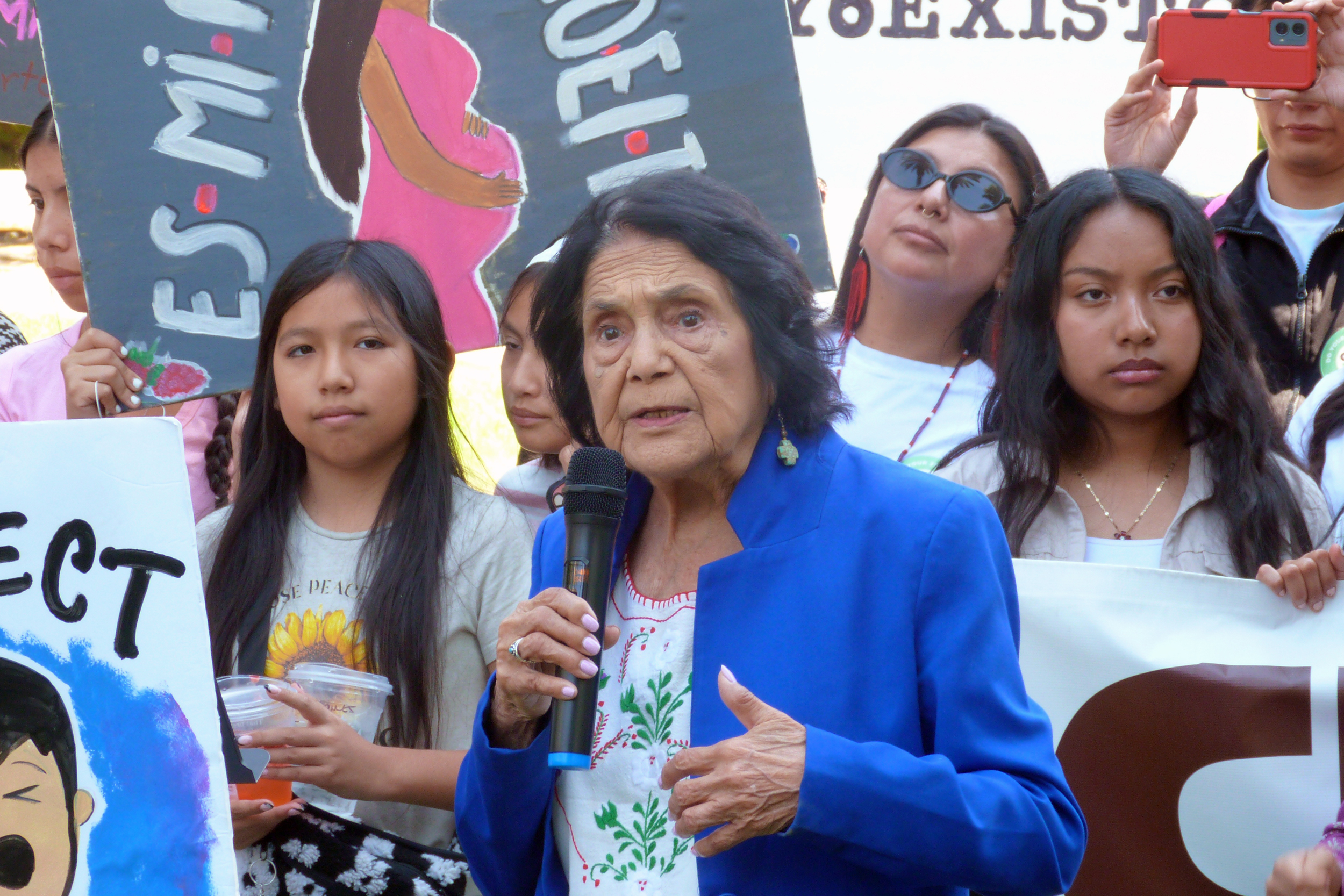
At the press conference before the hearing, legendary farmworker activist Dolores Huerta joined the families urging the DPR to get rid of cancer-causing pesticides.
“In normal life if you gave somebody poison and they died, it would be called murder,” Huerta said.
“Let’s get rid of some of these poisonous pesticides,” she said. “Our people are dying.”
About This Story
Perhaps you noticed: This story, like all the news we publish, is free to read. That’s because Inside Climate News is a 501c3 nonprofit organization. We do not charge a subscription fee, lock our news behind a paywall, or clutter our website with ads. We make our news on climate and the environment freely available to you and anyone who wants it.
That’s not all. We also share our news for free with scores of other media organizations around the country. Many of them can’t afford to do environmental journalism of their own. We’ve built bureaus from coast to coast to report local stories, collaborate with local newsrooms and co-publish articles so that this vital work is shared as widely as possible.
Two of us launched ICN in 2007. Six years later we earned a Pulitzer Prize for National Reporting, and now we run the oldest and largest dedicated climate newsroom in the nation. We tell the story in all its complexity. We hold polluters accountable. We expose environmental injustice. We debunk misinformation. We scrutinize solutions and inspire action.
Donations from readers like you fund every aspect of what we do. If you don’t already, will you support our ongoing work, our reporting on the biggest crisis facing our planet, and help us reach even more readers in more places?
Please take a moment to make a tax-deductible donation. Every one of them makes a difference.
Thank you,

Liza Gross
Reporter, California
Liza Gross is a reporter for Inside Climate News based in Northern California. She is the author of The Science Writers’ Investigative Reporting Handbook and a contributor to The Science Writers’ Handbook, both funded by National Association of Science Writers’ Peggy Girshman Idea Grants. She has long covered science, conservation, agriculture, public and environmental health and justice with a focus on the misuse of science for private gain. Prior to joining ICN, she worked as a part-time magazine editor for the open-access journal PLOS Biology, a reporter for the Food & Environment Reporting Network and produced freelance stories for numerous national outlets, including The New York Times, The Washington Post, Discover and Mother Jones. Her work has won awards from the Association of Health Care Journalists, American Society of Journalists and Authors, Society of Professional Journalists NorCal and Association of Food Journalists.