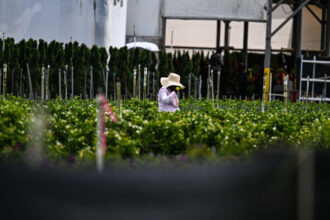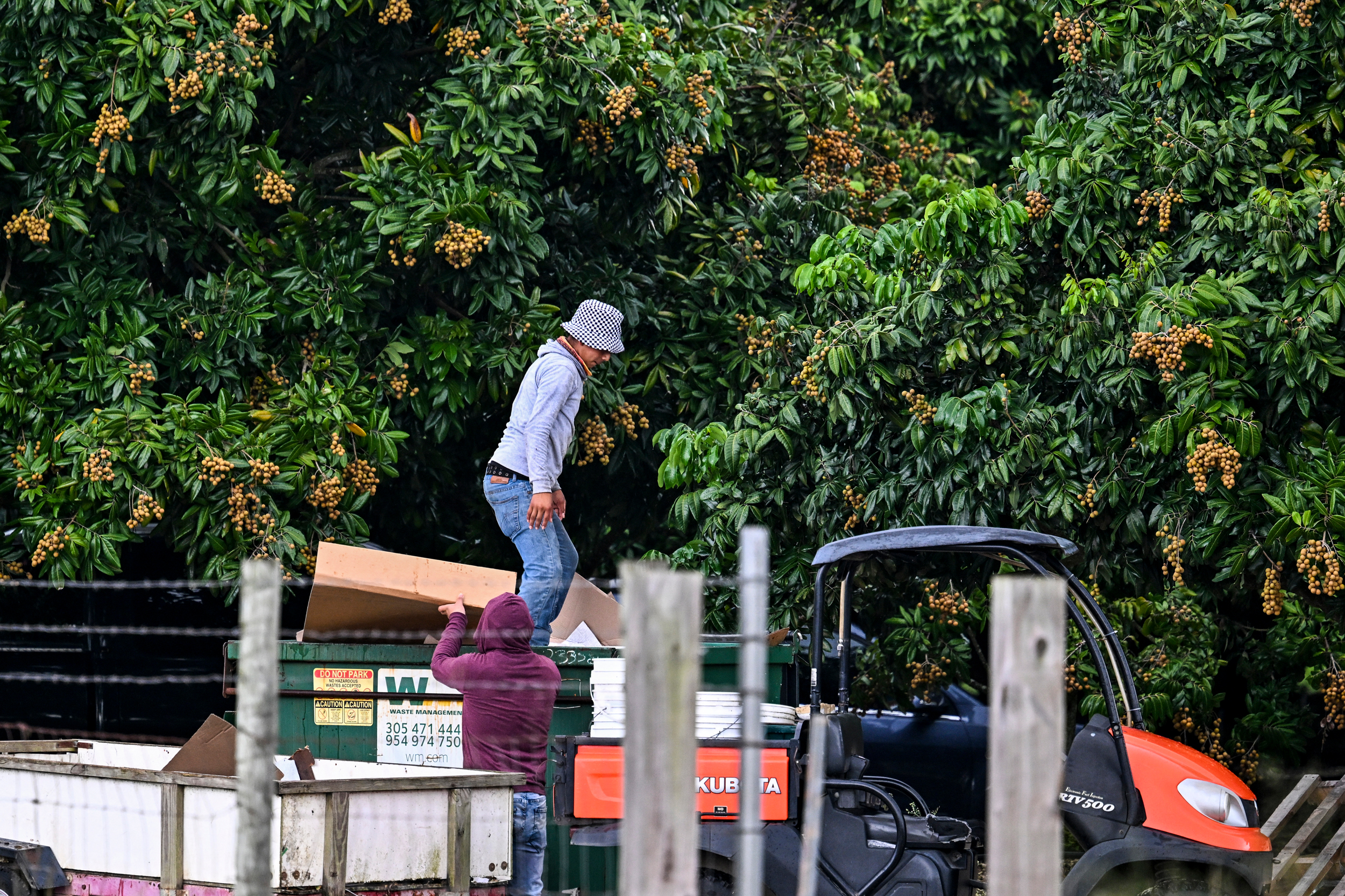


The 28-year-old had arrived with a work visa from Mexico just a day before he collapsed at a Florida farm while placing wooden stakes, supports for bell pepper plants. The farmworker had already voiced symptoms of heat illness: fatigue and leg pain. He was found later that day in a shallow drainage ditch. His death was attributed to the unforgiving heat.
Every year, thousands of U.S. workers suffer heat-related illnesses and injuries. A total of 1,042 deaths related to heat were documented between 1992 and 2022, an average of 34 annually, according to the Occupational Safety and Health Administration (OSHA), citing the Bureau of Labor Statistics.
But for the nation’s roughly 32 million outdoor laborers, including farmworkers, construction workers and landscapers, there are few federal or state heat-related safeguards. In Florida, the farmworker’s death was one of three such fatalities in 2023, according to an affidavit Earthjustice, a nonprofit group that litigates environmental issues, submitted to OSHA. The man’s employer eventually was fined between $15,000 and $30,000 after OSHA determined he had not been provided with sufficient water, rest and shade, among other problems. (Most private sector employers are required to inform OSHA of workplace fatalities or severe injuries.)
Recognizing the absence of a federal regulation to protect workers, OSHA in 2024 proposed a new standard that would more clearly define employer obligations and require employers to evaluate and control heat hazards in their workplaces. The standard would apply to all employers engaged with indoor and outdoor work, including those involved in the agricultural, maritime and construction industries. Two years later, the proposal is moving forward but slowly; at the same time, workers are more vulnerable as the global climate warms.
The federal agency indicated this month it intends to publish a revised proposal by the end of the year, with expectations for a finalized standard by October 2027. However, the deadlines are not mandatory, said Danielle McManamon, associate attorney at Earthjustice. She characterized the issue of heat for workers as a crisis.
“This is a worsening issue, and the longer we put it off,” she said, “workers will remain at risk.”
She added: “Outdoor workers really need access to clean, suitable water, shade, paid rest breaks, so they are encouraged to take the breaks that their bodies need and not work through it necessarily. That is where you really see instances of illness and injury and death in some cases.”
Dominique O’Connor, climate justice coordinator at the Farmworker Association of Florida, characterized the proposed standard as a good start but worried the proposal, developed during the Biden administration, would be weakened under the Trump administration.
“All of the federal agencies have been gutted, and enforcement was lacking before the current administration, so there are not a lot of positive feelings,” she said. “It’s really awful what people are being exposed to, but it’s amazing to think that in this lifetime you have to have money or power to not be exposed to things that could kill you. It should just be a general right to not have to work in 115-degree weather.”
Heat is the leading weather-related killer in the United States. Excess heat affects the body’s ability to regulate its internal temperature, which can lead to heat cramps, heat exhaustion and heatstroke. Hotter temperatures can also exacerbate nervous system, respiratory, cardiovascular and diabetes-related conditions and even affect children’s ability to learn. For outdoor laborers, symptoms such as fatigue and dizziness especially can be hazardous when the work involves dangerous conditions or equipment.
Not only are laborers enduring hotter temperatures; they also are exposed to a rising number of hot days each year. Underserved communities and communities of color particularly are at risk. Some 70 percent of U.S. agricultural workers were born in other nations, and 78 percent identify as Hispanic, according to the affidavit Earthjustice submitted to OSHA as part of the rulemaking process.
This story is funded by readers like you.
Our nonprofit newsroom provides award-winning climate coverage free of charge and advertising. We rely on donations from readers like you to keep going. Please donate now to support our work.
Donate Now“It’s hard to describe what people are experiencing because it’s just like hell. The heat is so extreme,” O’Connor said. “You have farmworkers, for instance, that are mainly from immigrant backgrounds, Black and brown communities. And also farmwork in this country, its roots are in slavery, and it’s done very little to evolve from that model.”
Without a specific federal heat regulation, OSHA has relied on the general duty clause of the Occupational Safety and Health Act of 1970 to cite employers for heat-related hazards. The clause requires employers to provide a workplace free of “recognized hazards” that can cause “death or serious physical harm.”
Between 1986 and 2023, the federal agency issued at least 348 hazardous heat-related citations under the general duty clause. “However, a standard specific to heat-related injury and illness prevention would more clearly set forth enforceable employer obligations and the measures necessary to effectively protect employees from hazardous heat,” OSHA said in 2024.
“Farmwork in this country, its roots are in slavery, and it’s done very little to evolve from that model.”
— Dominique O’Connor, Farmworker Association of Florida
“OSHA is currently reviewing comments from the public hearings on the Heat Injury and Illness Prevention in Outdoor and Indoor Work Settings,” according to a statement provided by the Department of Labor to Inside Climate News. “As we await rulemaking, OSHA continues to provide compliance assistance to employers regarding heat illness prevention and how to keep employees safe.”
California, Colorado, Maryland, Minnesota, Nevada, Oregon and Washington have implemented state-level heat protections. But some states, including Florida and Texas, have prohibited the protections at the local level. In 2024, Florida lawmakers banned local governments from establishing any such protections for outdoor workers. The legislation came after commissioners in Miami-Dade County considered a proposal that would have required construction and agricultural companies to provide water and rest breaks when the heat index hit at least 95 degrees. The proposal also would have required training in heat illness and first aid.
O’Connor said it was hard to predict how a federal regulation might affect Florida workers.
“It would be interesting what that would mean,” she said, “and whether it would be lip service and being used as an excuse not to pass stronger protections at the state level.”
About This Story
Perhaps you noticed: This story, like all the news we publish, is free to read. That’s because Inside Climate News is a 501c3 nonprofit organization. We do not charge a subscription fee, lock our news behind a paywall, or clutter our website with ads. We make our news on climate and the environment freely available to you and anyone who wants it.
That’s not all. We also share our news for free with scores of other media organizations around the country. Many of them can’t afford to do environmental journalism of their own. We’ve built bureaus from coast to coast to report local stories, collaborate with local newsrooms and co-publish articles so that this vital work is shared as widely as possible.
Two of us launched ICN in 2007. Six years later we earned a Pulitzer Prize for National Reporting, and now we run the oldest and largest dedicated climate newsroom in the nation. We tell the story in all its complexity. We hold polluters accountable. We expose environmental injustice. We debunk misinformation. We scrutinize solutions and inspire action.
Donations from readers like you fund every aspect of what we do. If you don’t already, will you support our ongoing work, our reporting on the biggest crisis facing our planet, and help us reach even more readers in more places?
Please take a moment to make a tax-deductible donation. Every one of them makes a difference.
Thank you,

Amy Green
Reporter, Florida
Amy Green covers the environment and climate change from Orlando, Florida. She is a mid-career journalist and author whose extensive reporting on the Everglades is featured in the book MOVING WATER, published by Johns Hopkins University Press, and podcast DRAINED, available wherever you get your podcasts. Amy’s work has been recognized with many awards, including a prestigious Edward R. Murrow Award and Public Media Journalists Association award.