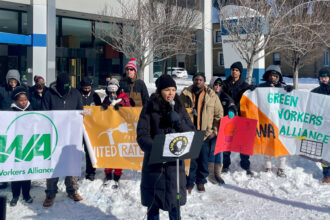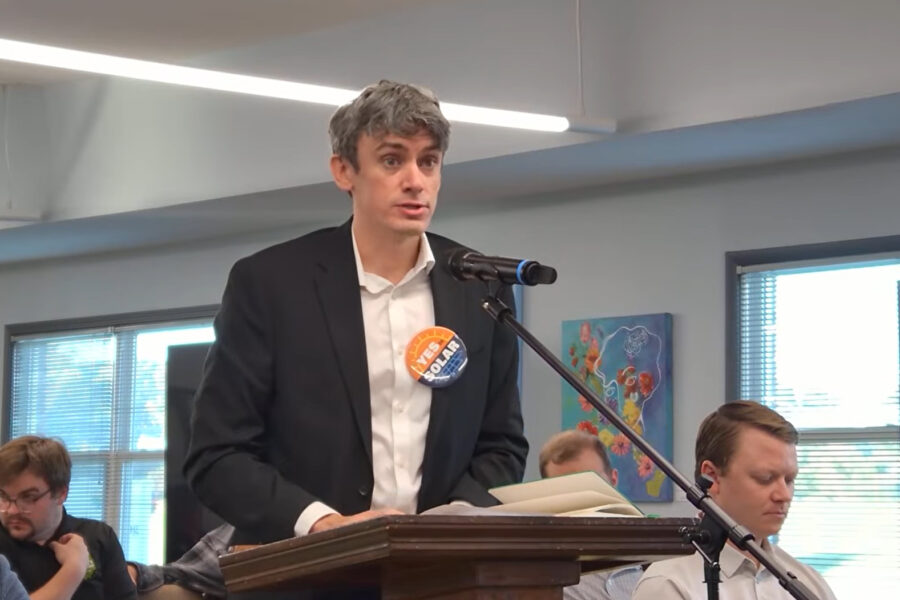


SACRAMENTO—Not long into Ellie Cohen’s opening remarks at the California Climate Policy Summit this week, the crowd erupted in boos—at her request.
The CEO of the Santa Rosa-based Climate Center had been noting widening climate threats and thanked the state and Gov. Gavin Newsom for lawsuits against the Trump administration, then shifted her tone.
Taking aim at Newsom.
“His audience now seems to be the purple states and the people who vote in those purple states,” said Cohen. “He’s stepping back from his climate championship, his climate leadership.”
In the 2025 legislative session, she said, the governor rejected a slew of bills meant to bolster virtual power plants across the state. One such bill, AB 740, passed with broad, bipartisan support.
“He vetoed that,” said Cohen. “And then a bill that actually got enacted, many of you will remember this: SB 237. Anybody remember what that bill does? Boo, let’s hear it … loud. ”
The boos ensued.
Senate Bill 237 expanded oil and gas drilling in California’s Kern County by streamlining permitting processes. While the fossil fuel industry touted the bill as a way to lower gas prices, experts argue that the bill will not move the needle on affordable gas, since petroleum prices are set by a global market.
Now, with the war on Iran in its seventh week, driving gas prices upwards, hundreds of policymakers and advocates were left grappling with how to think about California’s “mid-transition,” a period when renewables must coexist with fossil fuels to drive the state toward a zero-carbon energy grid. The conference centered the revived push for virtual power plants and the creation of equitable pathways for decarbonization, all while balancing state political goals.
While Newsom wasn’t present, California Natural Resources Secretary Wade Crowfoot, in delivering the event’s keynote address, responded to Cohen. Praising her advocacy, Crowfoot also called for realism:
“We are a model across the world, but there are forces in the United States that are working to make us the cautionary tale,” he said. “Yes, drive forward and hold us accountable to continue to make progress, but ensure that ambition is pragmatic because we are on a transition and we are demonstrating to the world how to get this done.”
An Equitable Energy Transition
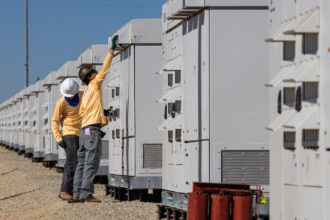
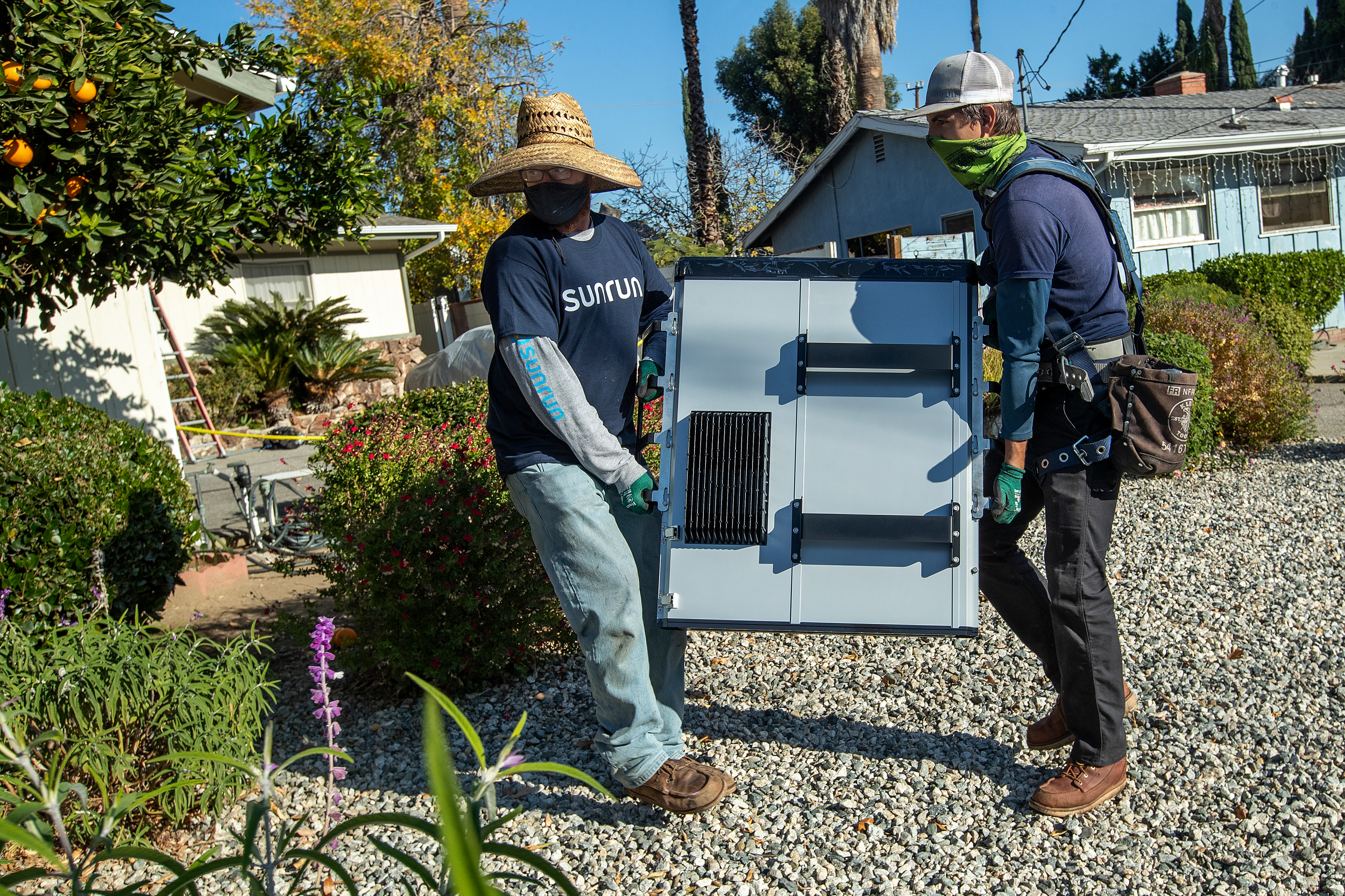
While AB 740 was vetoed by the governor, a renewed push for virtual power plants—networks of small, distributed energy resources like solar panels, batteries and EV chargers tied together by software to act as a single power plant—is well underway.
“So much of our climate policy depends on electrification, electrifying transportation, electrifying homes and buildings,” said state Sen. Josh Becker, a Democrat representing parts of San Mateo and Santa Clara counties.
This story is funded by readers like you.
Our nonprofit newsroom provides award-winning climate coverage free of charge and advertising. We rely on donations from readers like you to keep going. Please donate now to support our work.
Donate NowA new bill backed by Becker, SB 913, “Resource Adequacy for Affordable Electricity,” would aggregate the capacity of home batteries and smart technologies or “distributed energy resources” to meet energy grid requirements, instead of fossil fuels. Distributed clean energy resources would act as a power plant in itself.
“The more we have of separate sources of [renewable] energy, the more resilient we’ll be, whether it’s to political shock, like the Iranian war, a dramatic increase in a very short period of time in global gas prices, or it could be a heat wave or a wildfire or a flood,” said Cohen.
Virtual power plant systems have shown success in California. California’s Demand Side Grid Support Program already offers incentives for electric customers providing backup generation to the grid in the event of an extreme event.
“ It’s one gigawatt of everybody’s batteries and smart thermostats and EV charging all looped together so that when the grid hits that peak day … we can get everybody to respond together and bring down that demand,” said Leah Stokes, an associate professor of political science at the University of California, Santa Barbara. “What does that mean? It means that that is delivering the cheapest, cleanest power to our grid.”
Stokes participates in the program herself. “I’m a nerd and I have a battery, and so I’ll sign up for everything,” she said. According to Stokes, data from the California Energy Commission indicates that participants tend to be lower income and earn around $300 a year for their contribution to the grid.
“That makes a much bigger difference to you if you are living in Central Valley and you’re struggling to pay your electricity bills, and so that’s exactly the kind of people that we’re supporting for this program,” she said.
But its funding bottomed out in September 2025, and shortly thereafter, Newsom vetoed AB 740, the virtual power plant bill. While SB 913 is a renewed chance at bolstering the virtual power plant grid in California, getting the bill through the legislature and signed by the governor will require a delicate dance.
“In light of things that happened last year,” Cohen said, “ we’re trying to be strategic but still move the needle forward.”
About This Story
Perhaps you noticed: This story, like all the news we publish, is free to read. That’s because Inside Climate News is a 501c3 nonprofit organization. We do not charge a subscription fee, lock our news behind a paywall, or clutter our website with ads. We make our news on climate and the environment freely available to you and anyone who wants it.
That’s not all. We also share our news for free with scores of other media organizations around the country. Many of them can’t afford to do environmental journalism of their own. We’ve built bureaus from coast to coast to report local stories, collaborate with local newsrooms and co-publish articles so that this vital work is shared as widely as possible.
Two of us launched ICN in 2007. Six years later we earned a Pulitzer Prize for National Reporting, and now we run the oldest and largest dedicated climate newsroom in the nation. We tell the story in all its complexity. We hold polluters accountable. We expose environmental injustice. We debunk misinformation. We scrutinize solutions and inspire action.
Donations from readers like you fund every aspect of what we do. If you don’t already, will you support our ongoing work, our reporting on the biggest crisis facing our planet, and help us reach even more readers in more places?
Please take a moment to make a tax-deductible donation. Every one of them makes a difference.
Thank you,

Claire Barber
Fellow
Claire Barber is a fellow at Inside Climate News and a master’s in journalism student at Stanford University. She is an environmental and outdoor journalist, reporting primarily in the American Southwest and the West. Her writing has appeared in The San Francisco Chronicle, Outside, Powder Magazine, Field & Stream, Trails Magazine and more. She loves to get lost in the woods looking for a hot spring, backpacking to secluded campsites and banana slugs.