

Every three days someone is killed for defending nature.
In 2025, watchdog group Global Witness documented 124 such deaths worldwide, a toll researchers say is likely only a fraction of the total number because repression and armed conflict make many deaths impossible to verify.
The victims included Indigenous people, small-scale farmers and community organizers peacefully protecting forests, farmlands, waterways and other ecosystems from harm posed by companies, criminal syndicates and governments, according to the report released on Tuesday.
Mining was once again the industry most often linked to the killings. Global Witness also identified alleged links to organized crime or contract killings in more than a third of the cases.
In some regions, extractive industries and organized crime target the same territories.
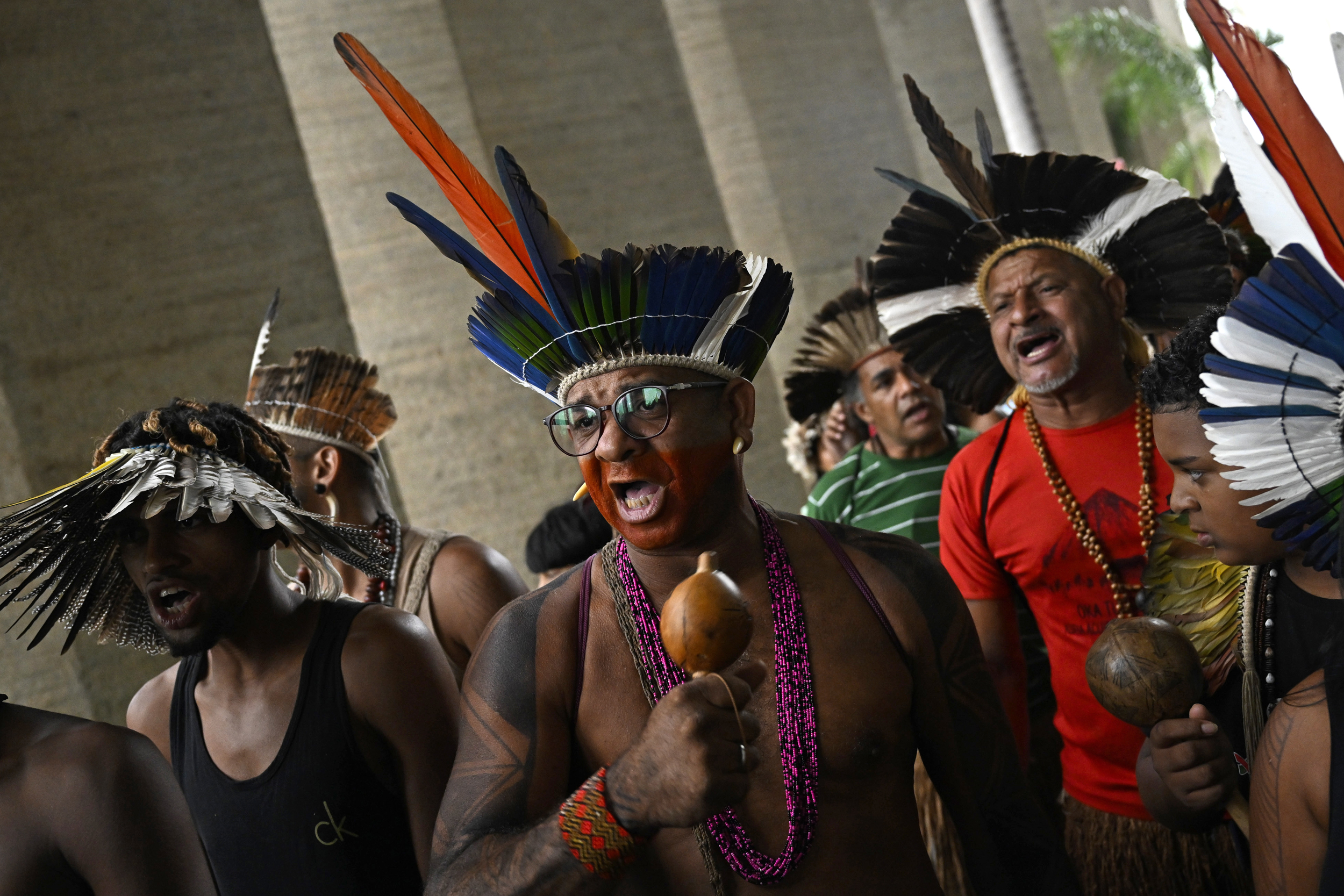
That’s playing out in parts of Colombia, according to the report, which was also released in Spanish. It remained the deadliest country for environmental defenders, with 39 people killed. Nearly half were Indigenous people, and another 15 were small-scale farmers. Many of those victims were caught in conflicts over land, illegal mining and cultivation of the coca plant grown for cocaine. The report pointed to suspected links to organized crime in 17 cases and to contract killings in five more.
The epicenter of the violence was in Colombia’s biodiverse Cauca region, located near the Ecuadorian border and Pacific cocaine-trafficking routes. Coca production there has increased fivefold over the past decade, according to Global Witness, while armed groups are driving deforestation, illegal mining and the destruction of rivers.
Colombia has topped Global Witness’ rankings for several years. But researchers cautioned that the high number is in part a reflection of the nation’s relatively open society, making it easier to track and verify killings compared to more repressive countries such as China, which doesn’t appear on the list at all.
Brazil was the second-deadliest country in 2025, recording 26 killings, double the number reported the year before. All but one case stemmed from land conflicts. Researchers said half of the attacks occurred in the Amazonian states of Rondônia and Pará, where the “agricultural and extractive frontiers continue to encroach on small-scale farming communities, with illegal loggers, miners and cattle ranchers driving incursions, land grabs and lethal violence.”
Brazilian officials’ failure to demarcate and recognize Indigenous land rights has also contributed to the escalating violence, researchers said.
Next on the list are the Philippines and Honduras, which each recorded 12 killings, followed by Mexico with 10, Guatemala with eight, Peru with four and Nicaragua and Ecuador with three each.
In Honduras, 10 of the defenders killed were small-scale farmers. All of those murders were linked to organized crime, while corporate interests were implicated in eight of them, according to the report.
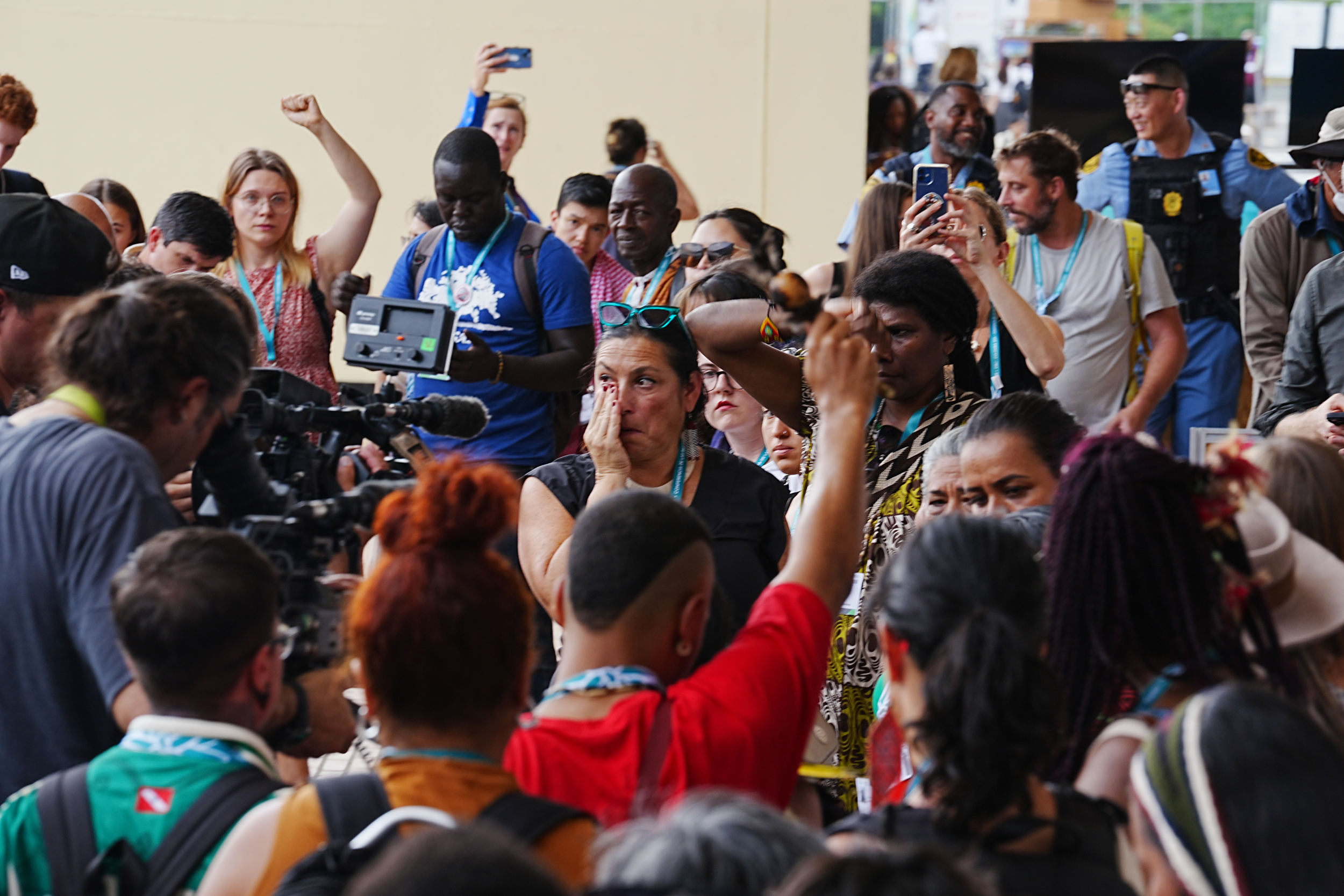
Global Witness has tracked the killings and disappearances of environmental defenders since 2012. The 2025 figures bring the total number of killings documented since then to 2,375. That figure, too, is widely considered a vast undercount.
Environmental defenders are a subset of human rights defenders, people acting peacefully to protect fundamental freedoms and rights. Many environmental defenders resist mega-projects imposed on their communities—such as mines, dams, industrial farming, logging and oil and gas operations—without meaningful consultation or consent. Many communities’ land claims remain unrecognized or are disrespected, setting the stage for conflict.
Global Witness highlighted the case of the Indigenous Dayak peoples, who have lived for centuries in West Kalimantan, a biodiverse Indonesian region of rainforests, peatlands and mangroves. Yet, only a fraction of this area larger than New York state is formally recognized, or in the process of being recognized, as Dayak territories, according to Yetno Budi Wibowo, of Lingkaran Advokasi & Riset Borneo, a nonprofit focused on environmental and human rights issues in West Kalimantan.
Corporations have seized, cleared and in some cases burned Dayak land and property—including endangered orangutan habitat and sacred ritual sites, according to the report. Indonesian officials have made allegations or brought criminal charges against some Dayak defenders who resist those land grabs.
One Dayak defender faces the possibility of a nine-year prison sentence for extortion charges after seeking $900 in reparations from a pulpwood company that cleared his community’s farmland, according to the report. Another Dayak defender told researchers that, for years, her “body trembled with fear of people” from that company.
Neither the Indonesian embassy in Washington, D.C., nor its Ministry of Energy and Mineral Resources responded to requests for comment. Embassy officials and other representatives of governments mentioned in this report also did not respond to requests for comment.
Repression, Militarization and Conflict
Governments are increasingly using authoritarian tactics and hardline security policies, enabling killings and other attacks on defenders, researchers said.
Two-thirds of the countries where killings were documented are considered “repressed” or “closed” by a civic freedom tracker from the civil society alliance CIVICUS.
This story is funded by readers like you.
Our nonprofit newsroom provides award-winning climate coverage free of charge and advertising. We rely on donations from readers like you to keep going. Please donate now to support our work.
Donate NowToby Hill, a Global Witness investigator, pointed to Nicaragua as the most extreme example. There, President Daniel Ortega has dismantled democratic checks on his power while forging close ties with business elites. In July, Ortega said Nicaragua would “never, never, never” hold elections again.
The country has “slammed into a very hardline dictatorship,” Hill said, making it extremely difficult both to document attacks on defenders and for defenders to access justice. The three documented killings in Nicaragua last year were all linked to agribusiness.
Ecuador, researchers said, illustrates how organized crime and hardline security policies can combine to put defenders at risk. President Daniel Noboa has held power since 2023, winning support with a tough-on-crime approach after coastal regions became key cocaine transport hubs and violence surged.
But Noboa’s response has facilitated “repressive crackdowns on defenders, including in contexts where there was demand for land from extractive industries,” said Hill.
That includes a series of laws used to restrict the rights and funding of environmental and Indigenous organizations and leaders. The “Social Transparency Law,” for example, allows the government to freeze defenders’ bank accounts, which has happened to prominent anti-mining activists in the country, inhibiting their work and ability to make basic transactions to buy food and support their families.
Ecuadorian anti-mining activists told Inside Climate News they’ve had terrorism and money laundering investigations pending against them for nearly a year, and fear the government could decide to arrest them at any time, even without filing formal charges.
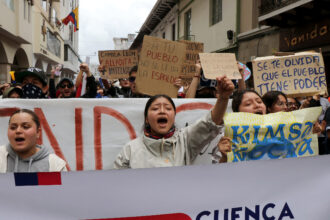
Last fall, Noboa deployed the military to suppress nationwide protests against his policies, including oil and mining expansion. Two Indigenous defenders were killed during the demonstrations. One was Efraín Fueres, 46, who was gunned down during a protest march. Military officers then approached Fueres, who was lying in the street with a companion kneeling over his body. Armed officers surrounded the men and began repeatedly kicking the companion, video posted to social media shows.
Across the Pacific Ocean, five of the 12 killings of environmental defenders in the Philippines allegedly involved the military, according to the report. Philippine-based human rights organization Karapatan also documented the use of terrorism-related charges against 227 human rights defenders in 2025.
Such non-lethal attacks—from criminalization to threats and smear campaigns—are used to intimidate and silence defenders, researchers said. Social media is increasingly a battleground to discredit activists, according to the report.
Global Witness researchers said cuts to international aid under the Trump administration significantly reduced funding for organizations working on human rights and environmental protection worldwide, contributing to a 23 percent fall in global development aid. That’s the largest drop on record, according to the Organisation for Economic Co-operation and Development.
President Donald Trump’s 2025 dismantling of the U.S. Agency for International Development, which supported Indigenous land protection, also had serious implications for defenders, Global Witness said.
“In parallel with these aid cuts, the Trump administration has shown a growing disregard for the principle of an international rules-based order and the human rights frameworks underpinning it,” the report said.
Asked about that, White House spokeswoman Taylor Rogers said in an email to Inside Climate News, “For years, the Dumocrats, radical globalist organizations, and climate extremists have replaced commonsense energy dominance with the ‘Green New Scam’ by making bogus ‘climate change’ claims that we are destroying the planet. The only things being destroyed, however, are the countries that transitioned away from reliable, affordable, and secure energy, countries that are now experiencing blackouts and sky-high prices. President Trump has been clear: he will not allow the United States’ economic and national security to be jeopardized by nonsense from climate alarmists.”
A spokesperson for the U.S. Department of State said in a written statement that the Trump administration’s foreign policy prioritizes efficiency, effectiveness and partnerships. The spokesperson also alleged without offering details that previously foreign aid was spent “in direct contradiction to or with no coordination with the foreign policy of the administration,” “perpetuated the problems it claimed to solve,” and funded “a corrupt NGO industrial complex.”
Rights defenders and other individuals persecuted by governments often look to international human rights systems—like the United Nations Human Rights Council, which Trump withdrew from in 2025—as a last resort to put pressure on national officials.
As protections and support for defenders have weakened around the world, armed conflicts and struggles to secure access to minerals have increased.
In the Democratic Republic of the Congo, journalist Fiston Wilondja Mazambi was found dead in Bukavu with a rope around his neck, the report said. Wilondja Mazambi had been investigating allegations of illegal gold mining by the Rwanda-backed M23 rebel group, which took control of the city in 2025.
Global Witness has documented 79 killings of environmental defenders in the DRC since it began tracking the issue in 2012, making it the deadliest country in Africa, according to its data. Mineral wealth has turned parts of eastern DRC into zones of prolonged conflict, devastating ecosystems and driving violence against Indigenous peoples and local communities, the report said.
The two other killings documented on the African continent this year were in Tanzania.
The report also highlights repeated failures by governments to protect people already facing threats. In Mexico, two defenders who were supposed to be under state protection were murdered. In Honduras, five members of a small-scale farming cooperative were killed despite the Inter-American Commission on Human Rights ordering the Honduran government to give them protective measures.
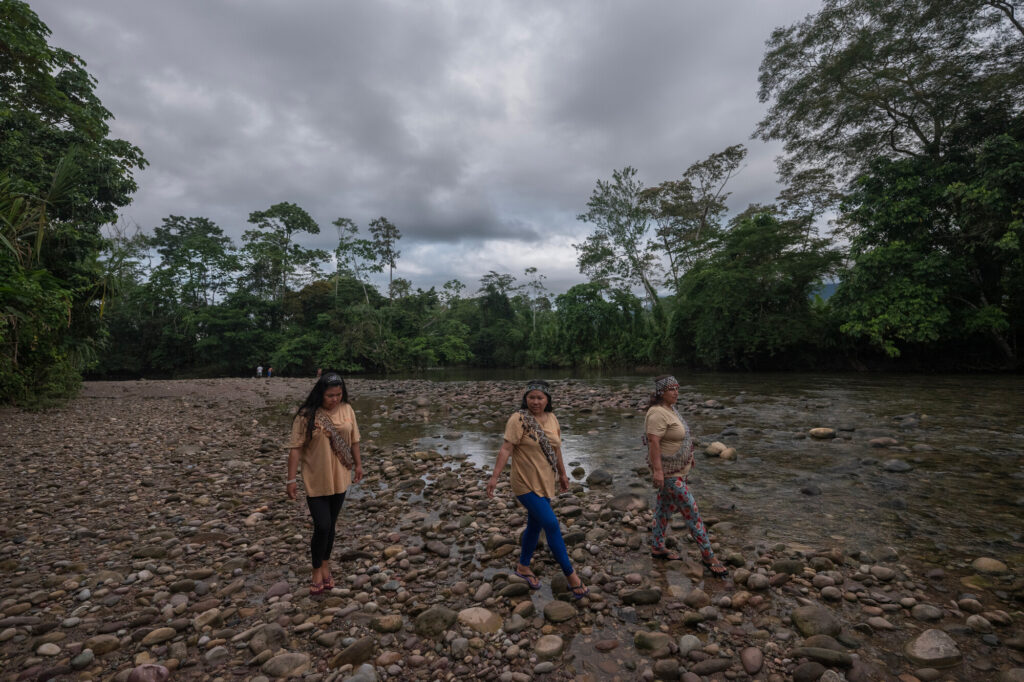
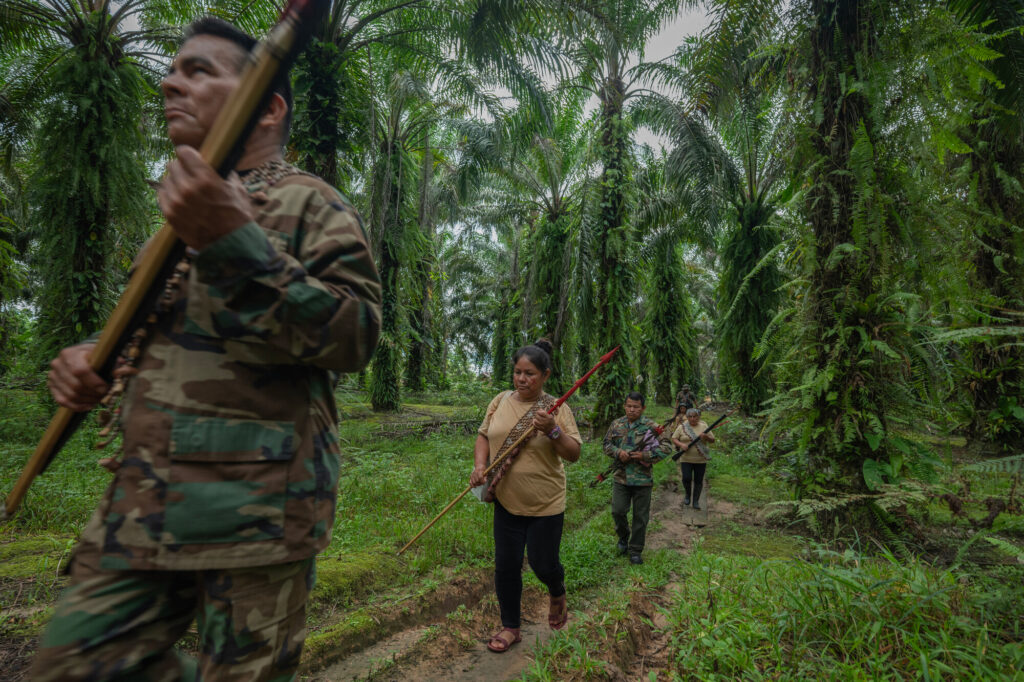
In the community of Yamino, Peru, the Kakataibo people celebrate the fifth anniversary of the “Guardia Indígena del Pueblo Kakataibo.” Credit: Leslie Searles/Global Witness
Lacking government support, some communities have organized their own territorial patrols to protect themselves and their lands. The Kakataibo people in Peru established the “Guardia Indígena del Pueblo Kakataibo” after facing a wave of killings of their leaders amid an organized crime expansion.
“In our culture, the work of defending our resources and territory is taught from an early age. But for this next generation coming up, the work is more dangerous than ever,” Segundo Ispón, commander of that Kakataibo Indigenous guard, said in a press release about the report.
The authors called on governments to move beyond individualized security measures and invest in collective protections for defenders and their communities. They also recommended specialized investigative units to combat the problem of impunity for killings and ensure victims and their families can access justice.
Hill of Global Witness noted that thousands of defenders work every day to protect ecosystems around the world, and that attacks on them reflect larger struggles over Earth’s resources.
“Defenders are the world’s eyes and ears on the ground,” Hill said. “It’s thanks to them that we know when ecosystems are being destroyed, where forests are being cleared or rivers polluted.”
This story was updated Sept. 16, 2026, with a late comment from the U.S. Department of State.
About This Story
Perhaps you noticed: This story, like all the news we publish, is free to read. That’s because Inside Climate News is a 501c3 nonprofit organization. We do not charge a subscription fee, lock our news behind a paywall, or clutter our website with ads. We make our news on climate and the environment freely available to you and anyone who wants it.
That’s not all. We also share our news for free with scores of other media organizations around the country. Many of them can’t afford to do environmental journalism of their own. We’ve built bureaus from coast to coast to report local stories, collaborate with local newsrooms and co-publish articles so that this vital work is shared as widely as possible.
Two of us launched ICN in 2007. Six years later we earned a Pulitzer Prize for National Reporting, and now we run the oldest and largest dedicated climate newsroom in the nation. We tell the story in all its complexity. We hold polluters accountable. We expose environmental injustice. We debunk misinformation. We scrutinize solutions and inspire action.
Donations from readers like you fund every aspect of what we do. If you don’t already, will you support our ongoing work, our reporting on the biggest crisis facing our planet, and help us reach even more readers in more places?
Please take a moment to make a tax-deductible donation. Every one of them makes a difference.
Thank you,