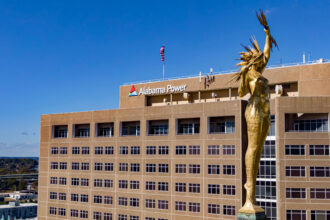


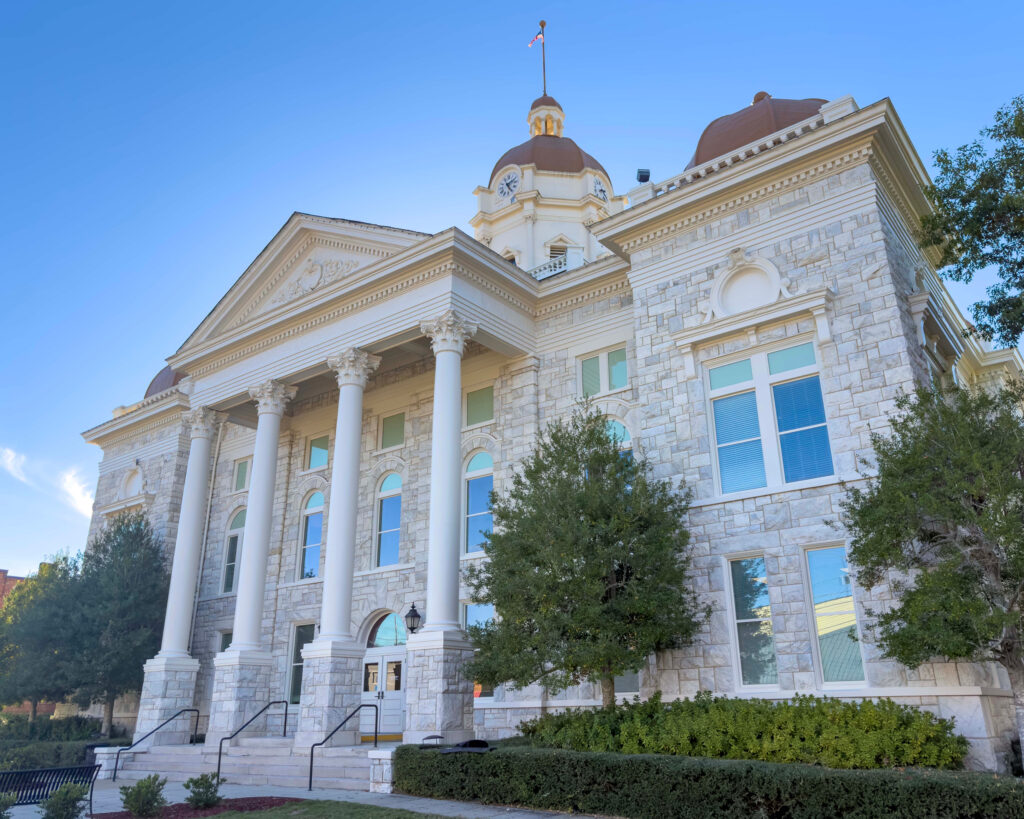
COLUMBIANA, Ala.—Attorneys for Alabama Power didn’t mince words about Fenn Church in a Shelby County courthouse Monday afternoon.
“Mr. Church—over and over again—has said he wants to be arrested,” Alabama Power attorney Jim Byram told Circuit Court Judge Jonathan Spann. “He wants to be run over by a bulldozer. All this kind of ridiculous stuff.”
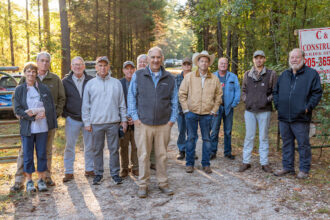
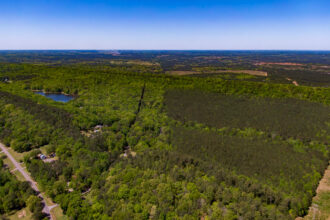
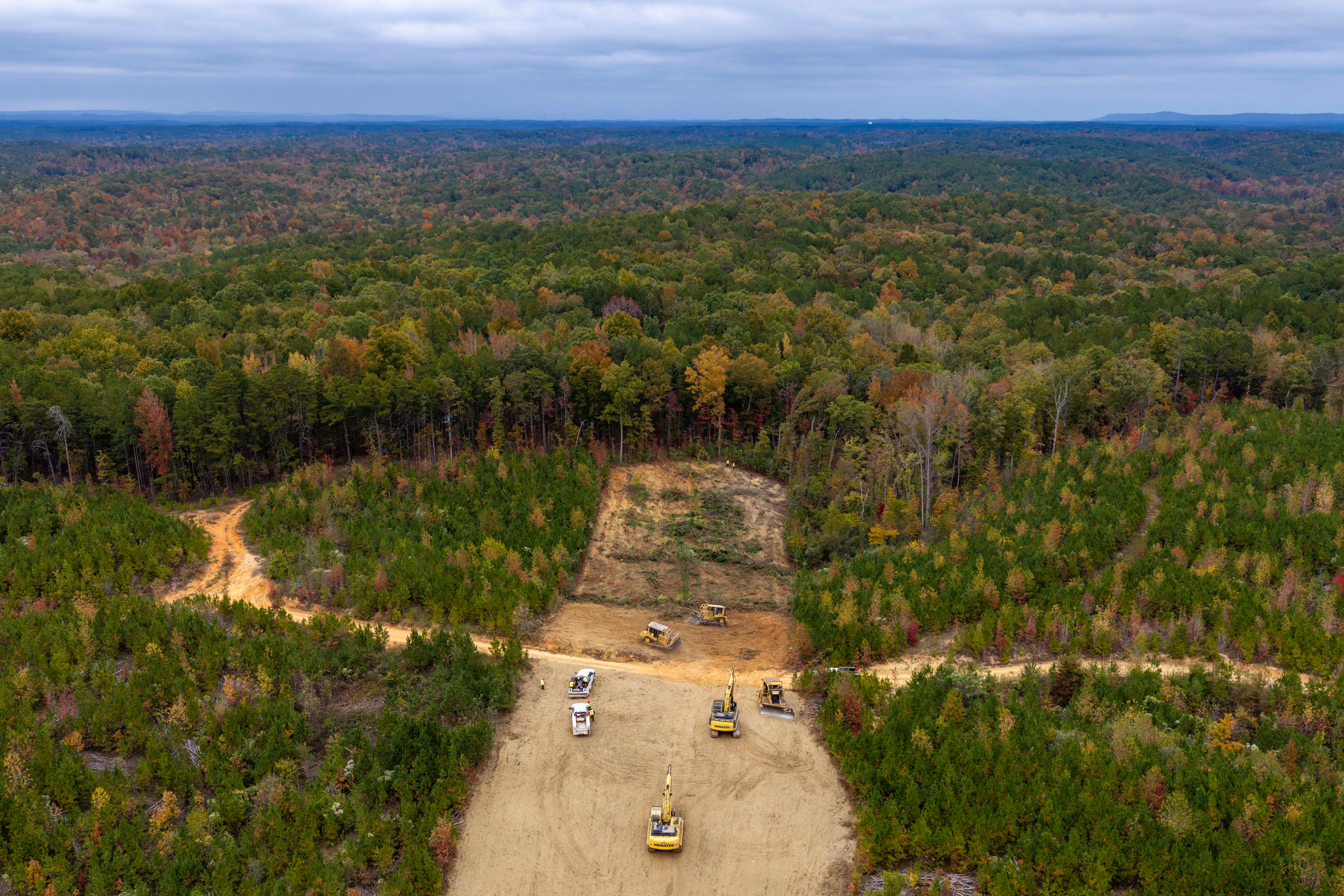
Fenn Church, a local property owner who runs a trucking company, has fought for months against Alabama Power’s effort to lay a major transmission line across his rural property.
Church, 60, has said that while he understands the need for eminent domain for public use, Alabama Power’s construction of a transmission line across his property—a supply line he believes will support data center infrastructure—should be routed through locations where property owners have agreed to the construction. The enjoyment of his property, Church has said, shouldn’t be trumped by what Spann previously ruled was Alabama Power’s likely arbitrary and capricious location of the line across his wooded land.
“I’m going to stand in front of that gate and say, ‘This is my home, and I’m not letting you drive through that gate,’” Church told Inside Climate News in October. “And then if they want to arrest me, they can handcuff me and take me to jail or run me over. But this is where I take my stand.”
But Church, the man’s lawyers argued during Monday’s hearing, has no desire to defy a court order or be run over by a bulldozer. He simply feels he’s entitled to stand on his property’s edge and protect his property.
“Mr. Church has stood on the property line and said he’s ‘not going to let Alabama Power come onto my property,’” Church’s lawyer, Martin Evans, told the judge. “That’s a fact.”
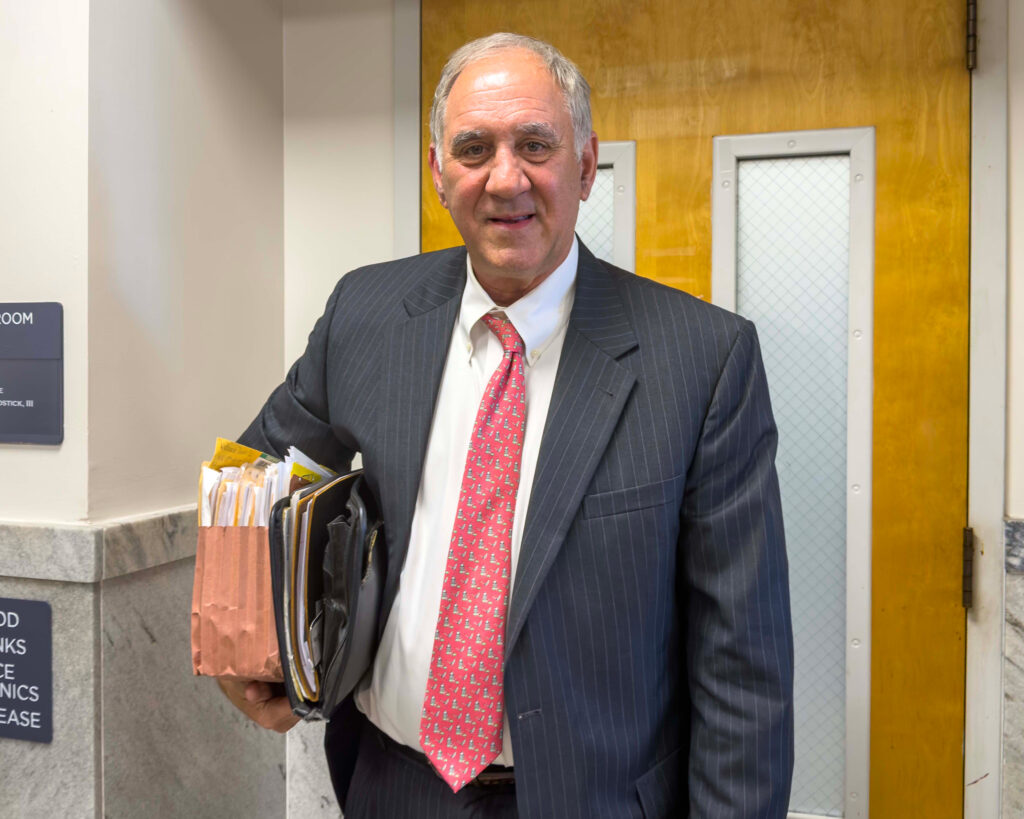
Byram, the company’s lawyer, refused to comment after Monday’s hearing, but Alabama Power provided the following statement via email.
“As a result of Mr. Church’s refusal to maintain a safe distance while crews are working, Alabama Power is seeking a temporary restraining order to keep him and others out of the work zone to ensure Mr. Church, visitors and our crews remain safe as work continues,” a company spokesperson wrote. “We will continue to respect the legal process as we responsibly pursue the infrastructure investments necessary to provide reliable service to customers across the state.”
Spann, the judge who presided over Monday’s hearing, had previously ruled in Church’s favor in the case, issuing a preliminary injunction last month preventing Alabama Power from accessing Church’s property.
In his ruling, Spann found that Alabama Power had failed to follow the necessary procedures for condemnation of Church’s land outlined in state law. Church was likely to succeed on the merits of his case, and without a preliminary injunction, he would be irreparably harmed, the judge wrote.
Then, on Oct. 21, the Alabama Supreme Court stayed Spann’s preliminary injunction without providing any written reasoning.
By Nov. 3, Alabama Power crews had cleared the land up to Church’s property line. There, under what remained of the Alabama pines, an Alabama Power worker confronted Church.
“Mr. Church, the crews are ready to proceed with the clearing,” the worker told him. “If you and your group could step back 300 feet.”
“I’m not stepping past my line right here,” Church told the Alabama Power representative. “Y’all can have me arrested. “
“That’s all I needed to know,” the worker replied. “Thank you.”
Lawyers for Alabama Power described the incident in its filing requesting the restraining order against Church.
During Monday’s hearing, Church’s lawyers stipulated that without a court order, Church doesn’t plan to allow Alabama Power workers access to his property. The state Supreme Court’s stay “doesn’t give Alabama Power the right of entry” to Church’s property, Evans argued.
Evans said Spann should also dismiss Alabama Power’s lawsuit on procedural grounds: The issues at hand should have been part of his previous cause of action, not a new lawsuit altogether. Evans suggested that the utility’s filing of an additional suit may have been an effort to be assigned a different judge.
This story is funded by readers like you.
Our nonprofit newsroom provides award-winning climate coverage free of charge and advertising. We rely on donations from readers like you to keep going. Please donate now to support our work.
Donate NowByram said Alabama Power’s suit was a proper mechanism for enforcing the Alabama Supreme Court’s decision in the case, citing case law as he argued that the suit should not be dismissed.
“You can find a case saying Pontius Pilate was a Jew if you try hard enough,” Church’s lawyer replied.
At one point, the judge pushed back on Alabama Power lawyers, who had argued that the Alabama Supreme Court effectively settled the issue at hand by lifting his preliminary injunction.
“How am I to enter a restraining order against the defendant when the underlying issue in the condemnation case is still being litigated in the Supreme Court?” Spann asked.
Issuing a restraining order against Church in the case would be engaging in “speculation and surmise” about how the Alabama Supreme Court may ultimately decide on the merits of the case, the judge said.
“If the Supreme Court was willing to wait and see what happened, they wouldn’t have stayed the preliminary injunction,” Byram told the judge.
“He’s asking you to overrule the Supreme Court and stay the stay,” Byram said of Church. “It’s ridiculous.”
“It sounds like he’s asking me to wait on the Supreme Court to issue a ruling in this case,” the judge said.
The meeting became contentious when lawyers for Church asked to enter into evidence a memo from the U.S. Army Corps of Engineers related to the project. Alabama Power’s lawyers objected, arguing that the letter amounted to inadmissible hearsay.
Spann did not admit the memo into evidence, but a copy provided to Inside Climate News by Church is signed by D. Lee Forsgren, a “senior official performing the duties of the Assistant Secretary of the Army.”
The letter discusses stream crossings present on the Church property and directed the commanding general of the Corps of Engineers to temporarily “pause evaluation” of an Alabama Power permit related to the project.
Church said that memo came partly as the result of the intervention of John Rich, a country music star and a Trump-appointed, special envoy for American landowners, who pledged support for Church’s cause.
After hearing arguments from both Alabama Power and Church’s lawyers, Spann said he plans to issue a decision “quickly.”
After the hearing, Church said he felt good about what he heard in the courtroom.
“I think the judge is on my side,” Church said. “But we’ll just have to wait and see.”
About This Story
Perhaps you noticed: This story, like all the news we publish, is free to read. That’s because Inside Climate News is a 501c3 nonprofit organization. We do not charge a subscription fee, lock our news behind a paywall, or clutter our website with ads. We make our news on climate and the environment freely available to you and anyone who wants it.
That’s not all. We also share our news for free with scores of other media organizations around the country. Many of them can’t afford to do environmental journalism of their own. We’ve built bureaus from coast to coast to report local stories, collaborate with local newsrooms and co-publish articles so that this vital work is shared as widely as possible.
Two of us launched ICN in 2007. Six years later we earned a Pulitzer Prize for National Reporting, and now we run the oldest and largest dedicated climate newsroom in the nation. We tell the story in all its complexity. We hold polluters accountable. We expose environmental injustice. We debunk misinformation. We scrutinize solutions and inspire action.
Donations from readers like you fund every aspect of what we do. If you don’t already, will you support our ongoing work, our reporting on the biggest crisis facing our planet, and help us reach even more readers in more places?
Please take a moment to make a tax-deductible donation. Every one of them makes a difference.
Thank you,

Lee Hedgepeth
Reporter, Alabama
Lee Hedgepeth is Inside Climate News’ Alabama reporter. Raised in Grand Bay, Alabama, a small town on the Gulf Coast, Lee holds master’s degrees in community journalism and political development from the University of Alabama and Tulane University. Lee is the founder of Tread, a newsletter of Southern journalism, and has also worked for news outlets across Alabama, including CBS 42, Alabama Political Reporter and the Anniston Star. His reporting has focused on issues impacting members of marginalized groups, including homelessness, poverty, and the death penalty. His award-winning journalism has appeared in publications across the country and has been cited by the New York Times, the Wall Street Journal and the Washington Post, among others.