

The Senate Committee on Energy and Natural Resources heard testimony Wednesday on the Energy Efficiency Reform Act. The new bill would make it much more difficult for the Department of Energy to update energy efficiency standards for home appliances like dishwashers, washing machines and boilers. It would also set a path for the department to backslide on existing energy efficiency mandates.
Through the federal Appliance and Equipment Standards Program, which was authorized under the Energy Policy and Conservation Act, the Department of Energy sets binding minimum efficiency standards for electricity and water consumption for a variety of home and industrial products. The department reviews an appliance’s standards every six years at a minimum. The standards are intended to provide uniform requirements across the country and “to promote grid resiliency and reliability by reducing peak demand,” according to a factsheet the Department of Energy released last year.
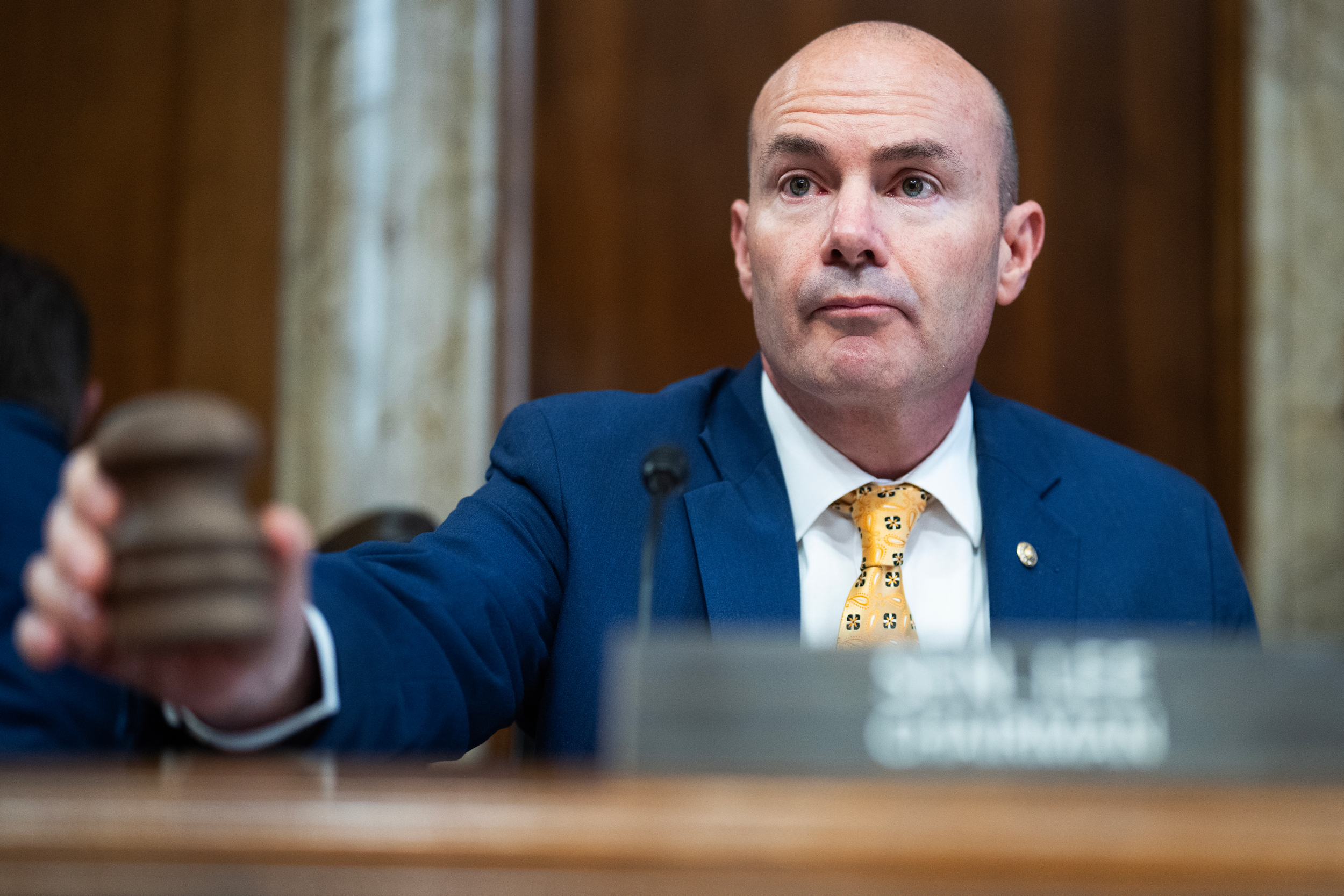
Sen. Mike Lee (R-Utah), with the backing of the Department of Energy, wants to make sweeping changes to this program, establishing significant hurdles to setting new efficiency standards.
“At the end of the day, it’s about giving Americans the choice—the freedom to choose what works best for them and their family,” said Lee, the bill’s sponsor, during the hearing.
Despite acknowledging the cost savings of past efficiency standards, Lee said the new law would provide consumers with more flexibility and freedom of choice when it comes to prices—points which were echoed by Associate Deputy Secretary of Energy Alex Fitzsimmons. He also said current policies force standards reviews “even when there may be few efficiency gains left to squeeze out of the product after it’s already been improved.”
Congressional Democrats argued, in an August letter to Secretary of Energy Chris Wright concerning other rollbacks to efficiency standards policies, that the law, as written, “already requires proving that new product standards yield significant energy- and cost-savings without imposing strict consumer choice limitations.”
The Appliance Standards Awareness Project, a nonprofit that works to advance new appliance standards, estimates American households have saved an average of $6,000 on their utility bills over the past decade because of these standards. According to the Lawrence Berkeley National Laboratory, these standards are estimated to have saved what amounts to 6.5 percent of total U.S. energy consumption in 2024 alone.
“Our view is that technology keeps improving, and the job of the efficiency standards program is to ensure that technologies that can reduce costs for consumers show up in the full range of products in the marketplace,” said Andrew deLaski, the executive director of the Appliance Standards Awareness Project.
Lee’s bill would create more obstacles to setting a new efficiency standard, like adding more steps to the process of approving a new standard, and making the energy department’s periodic review of a product’s standards voluntary.
Sen. Angus King (I-Maine), who caucuses with Democrats, said changes to the existing law could end up costing Americans by making them miss out on savings at a time when energy bills are stubbornly high.
The new bill doesn’t just make it harder to establish new standards, it also makes it easier to cancel old ones—a big concern for manufacturers’ associations.
In a statement, the National Electrical Manufacturers Association said the current rules that prevent backsliding on efficiency standards means manufacturers make long-term investments to meet them. If these standards can be more easily repealed, the statement said, that could limit consumer utility bill savings and strand manufacturer investments.
The ranking member of the Senate committee, Martin Heinrich (D-N.M.), said the repeal of efficiency standards could undermine domestic manufacturing, allowing Chinese manufacturers to sell less efficient, cheaply made products in the American market.
The Appliance and Equipment Standards Program has had mostly bipartisan support since 1975. But during his first term, President Donald Trump changed the process through which the Department of Energy establishes new efficiency standards. President Joe Biden reversed most of the new policies—and now the Department of Energy is trying to reinstate them, and adding even more changes to “permanently end home green new scam appliance mandates.”
The bill now before the Senate committee would codify the changes to the process, making it more difficult for a future administration to reverse them.
“They’re putting up so many hurdles and barriers to new standards that they’re making them all but impossible,” said deLaski. “I would argue they’re essentially impossible.”
About This Story
Perhaps you noticed: This story, like all the news we publish, is free to read. That’s because Inside Climate News is a 501c3 nonprofit organization. We do not charge a subscription fee, lock our news behind a paywall, or clutter our website with ads. We make our news on climate and the environment freely available to you and anyone who wants it.
That’s not all. We also share our news for free with scores of other media organizations around the country. Many of them can’t afford to do environmental journalism of their own. We’ve built bureaus from coast to coast to report local stories, collaborate with local newsrooms and co-publish articles so that this vital work is shared as widely as possible.
Two of us launched ICN in 2007. Six years later we earned a Pulitzer Prize for National Reporting, and now we run the oldest and largest dedicated climate newsroom in the nation. We tell the story in all its complexity. We hold polluters accountable. We expose environmental injustice. We debunk misinformation. We scrutinize solutions and inspire action.
Donations from readers like you fund every aspect of what we do. If you don’t already, will you support our ongoing work, our reporting on the biggest crisis facing our planet, and help us reach even more readers in more places?
Please take a moment to make a tax-deductible donation. Every one of them makes a difference.
Thank you,

Lauren Dalban
Reporter, New York City
Lauren Dalban is a New York City-based reporter with a background in local journalism. A former ICN fellow, she now covers environmental issues in all five boroughs. Originally from London, she earned a B.A. in History and English from the University of Virginia, and an M.S. from Columbia Graduate School of Journalism.