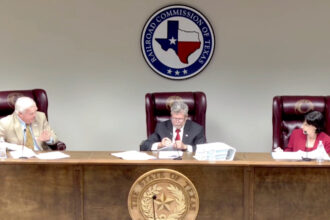


AUSTIN, Texas—A chair with Railroad Commissioner Wayne Christian’s name on it sat empty Tuesday in the hearing room of the Texas House Committee on Energy Resources.
Committee Chairman Drew Darby had called Christian to testify before the panel, which oversees the Railroad Commission, regulator of the state’s powerful oil and gas industry. Christian failed to appear before the committee and wrote in a letter that he had a scheduling conflict.
Darby, a Republican from San Angelo, opened the committee meeting with stern words for the commissioner.
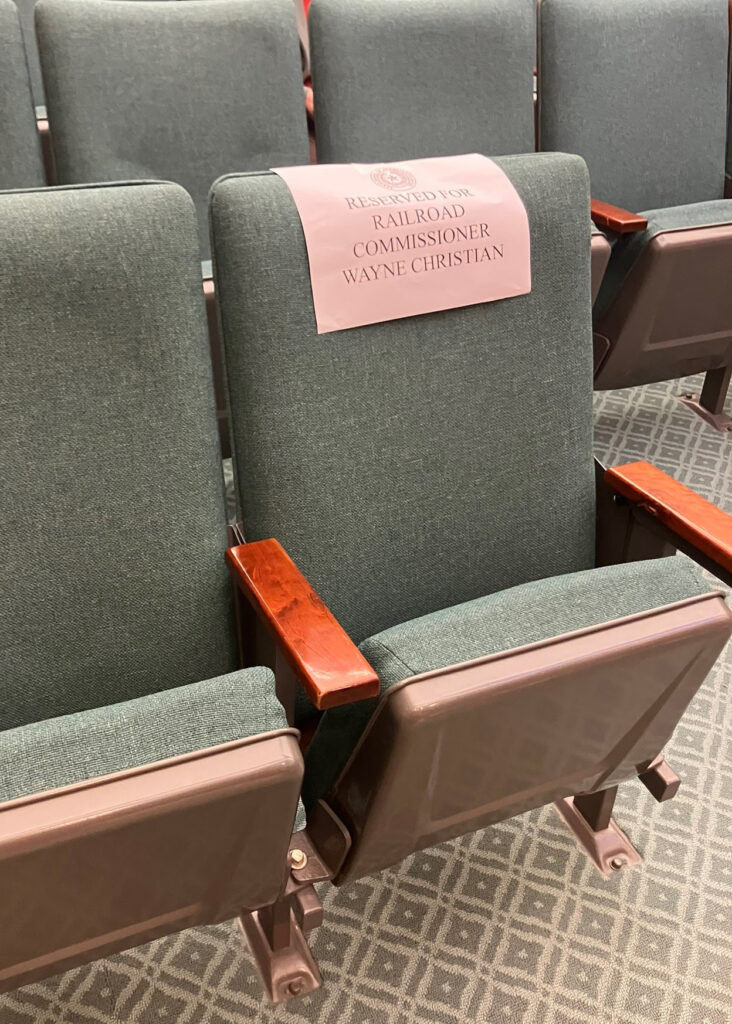
“I do not recall my request for his presence as being optional,” he said. “It is beyond clear that Commissioner Christian has willfully chosen to defy this committee.”
Disagreement over a change in the Railroad Commission’s public participation policy threatens to spill over into a larger dispute between the oversight committee and the oil and gas overseer, whose three members are elected statewide.
The tensions come as Texas faces a growing backlog of abandoned oil and gas wells it’s on the hook to plug, and large volumes of oilfield wastewater injected underground are causing blowouts and leaks. Meanwhile, Republican Bo French and Democrat Jon Rosenthal are locked in an unusually close race for a seat on the Railroad Commission.
Christian has doubled down on the new public participation policy that he introduced last month at a commission meeting, as first reported by Inside Climate News. The new policy increases the frequency of listening sessions but leaves it to the discretion of the commissioners whether there will be a public comment period at each meeting, which previously had been standard. Darby had criticized the new policy and called on Christian to testify.
In written testimony provided to the House committee, Christian wrote that the policy should be judged by its results over time. He also called out the nonprofit Commission Shift, which advocates for reforms to oil and gas oversight in Texas, for accepting funding from national foundations that support climate activism.
Also on Tuesday, before the committee’s hearing, the Railroad Commission hosted an open meeting, the first since the policy change last month. The room was packed with residents who had traveled hundreds of miles from Southeast Texas and the Permian Basin to give comments to the elected officials leading the agency.
Christian and the commission’s other two elected members chose, under the new public participation policy, to add an agenda item for public comment. They also heard public comments regarding an ExxonMobil carbon capture and sequestration permit in Jefferson County before voting on it.
When it was the turn of Virginia Palacios, executive director of Commission Shift, to provide public comment, she reiterated that residents need opportunities to speak directly to the elected commissioners.
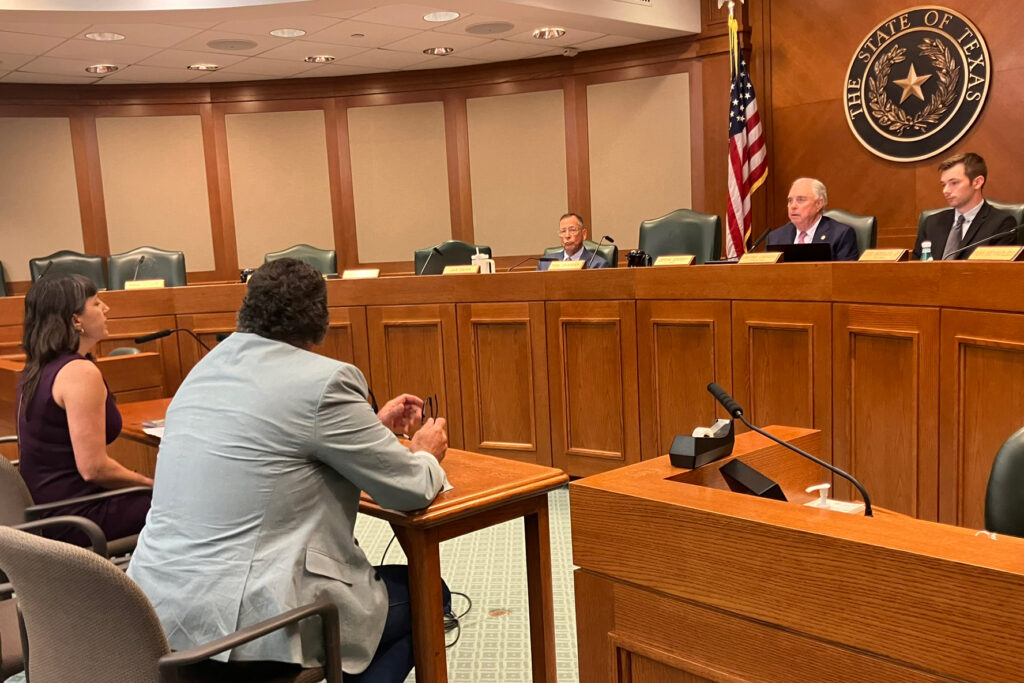
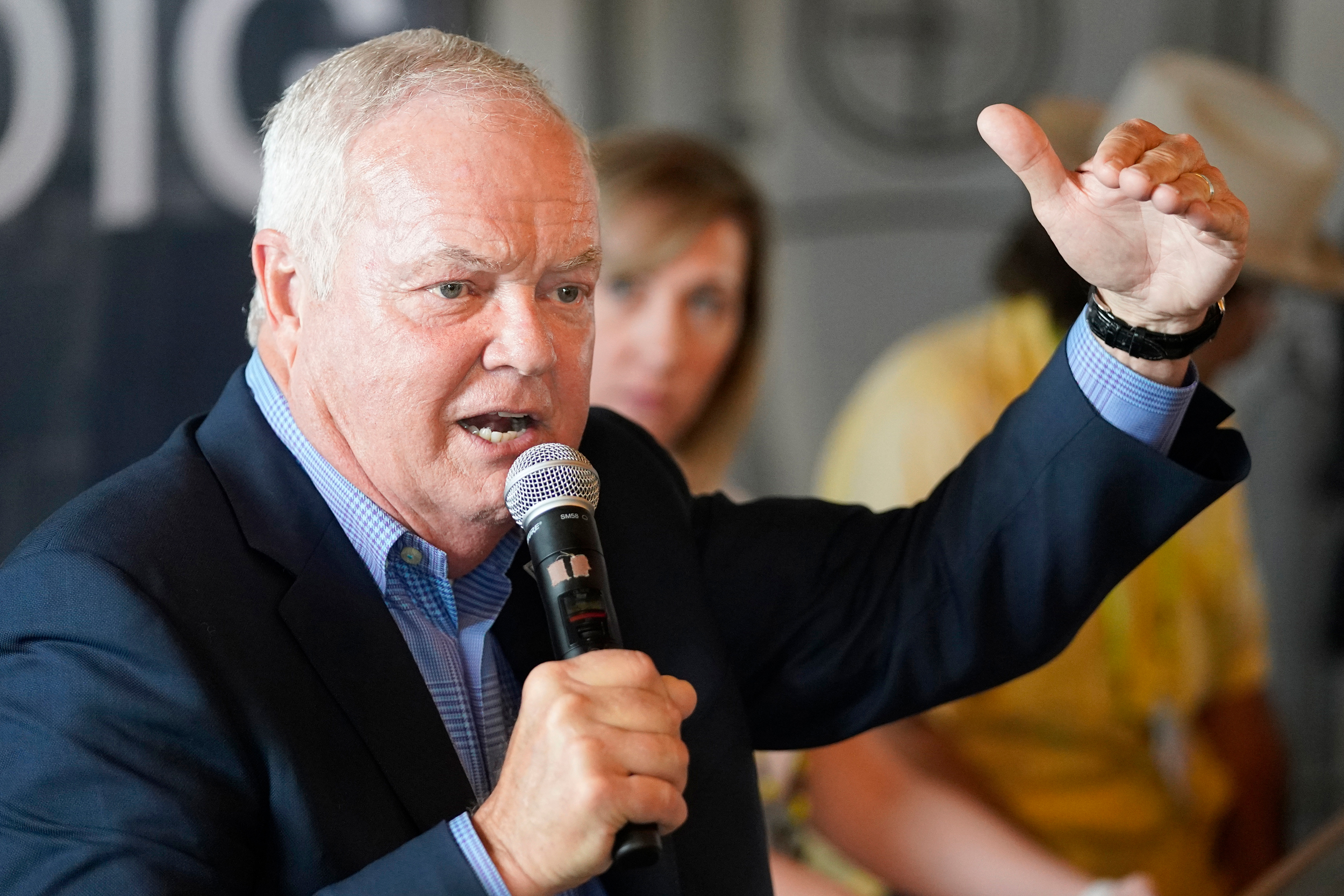
Christian began grilling Palacios, accusing her of presenting a “false premise” to state legislators when speaking out against the new policy.
“How dare you come here,” he told Palacios. “You can’t come here today and do anything but bitch some more.
He added, “You ain’t in it for the good of the people, you’re in it for stirring up stink.”
When Palacios tried to respond, Chairman Christi Craddick cut her off, saying her allotted three minutes was over.
“Your time is now up,” Craddick said. “We’ll be happy to escort you out, but I happen to agree with Commissioner Christian.”
“It was difficult to watch an elected official act in such an unprofessional manner,” Commission Shift later wrote in a blog post.
“Commissioner Christian believes that his written testimony speaks for itself,” his staff wrote in response to questions from Inside Climate News.
Not long after, the House Committee on Energy Resources heard testimony on the Railroad Commission. While Christian was a no-show, Craddick appeared to testify on orphan well plugging and inactive wells.
Several individuals gave testimony on the importance of public input at the Railroad Commission.
This story is funded by readers like you.
Our nonprofit newsroom provides award-winning climate coverage free of charge and advertising. We rely on donations from readers like you to keep going. Please donate now to support our work.
Donate Now“Texans across the state have lost trust in the Railroad Commission,” said Hawk Dunlap, a well-control specialist who lives in the Permian Basin. “The public comment is the only way they have to get their point across.”
Dunlap said that when he has encouraged landowners to raise issues at the Railroad Commission open meetings, their response has been that “they do not want to go and be chastised.”
Darby, the committee chairman, later said that he would call another hearing in order to receive testimony from Christian. Rep. Eddie Morales, a Democrat from Eagle Pass, asked about using the committee’s subpoena power to bring the commissioner to testify.
“We’re exploring all options with our parliamentarians,” Darby responded.
The Railroad Commission has drawn attention this week as the race to replace outgoing Commissioner Jim Wright heats up. Over the weekend, French, the Republican nominee, posted a photo of students of South Asian descent cheering on the Texas Longhorns, saying it was a “problem.”
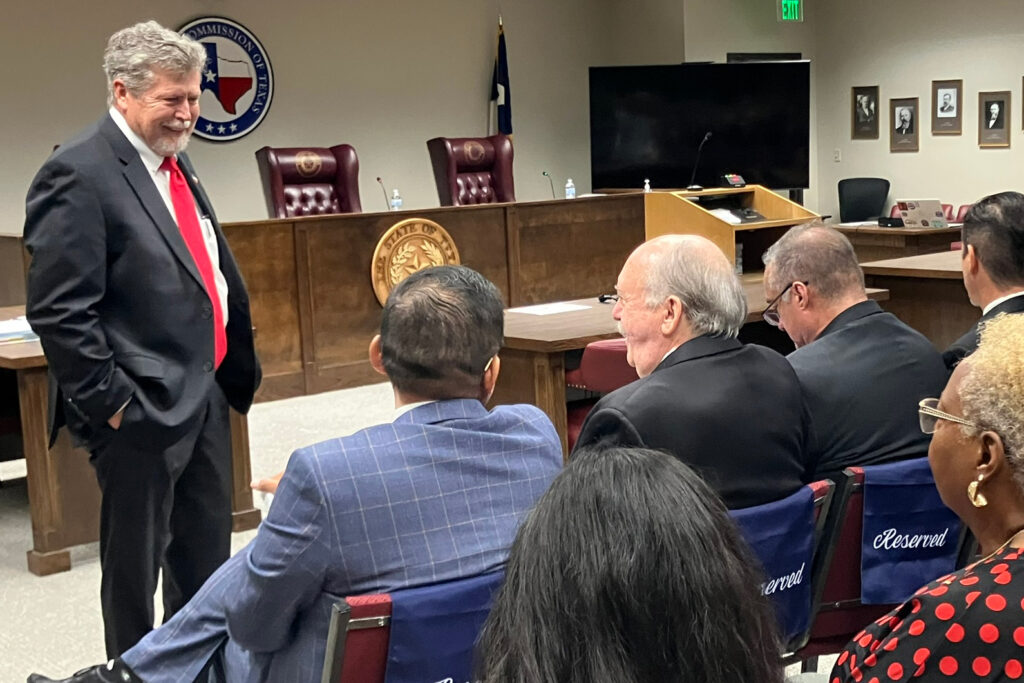
French, a former Tarrant County GOP chairman, had come under fire from Republican party leadership before beginning his campaign for the Railroad Commission for posting a poll on X asking whether Jewish or Muslim people posed “a bigger threat to America.”
He has called for Republicans to openly embrace Islamophobia and supports deporting 100 million people, a total that would include legal residents and citizens.
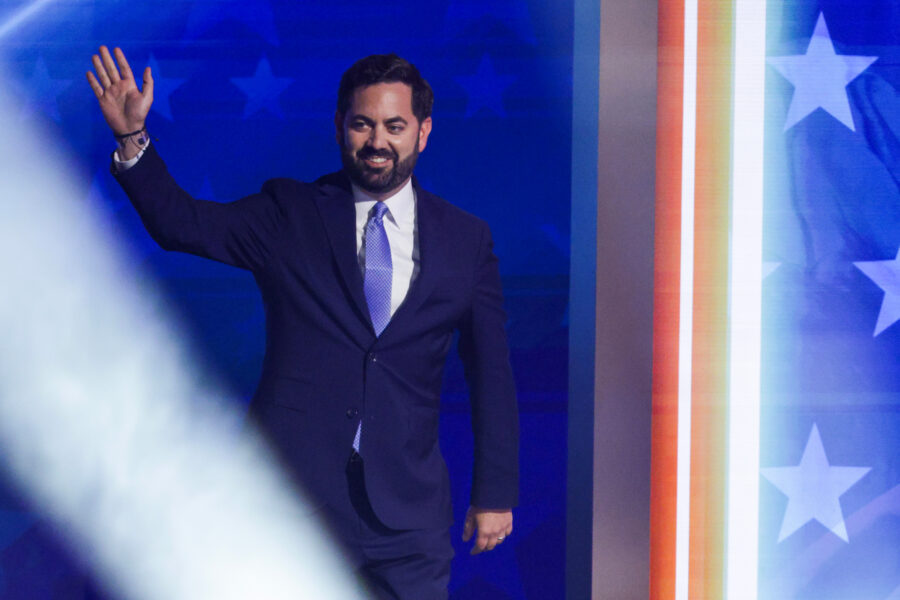
Many Texas Republicans have criticized French this week. His opponent, Rosenthal, the only Jewish member of the Texas House, reported raising more than $100,000 in less than three days. During the first six months of the year, he had raised $167,000. Rosenthal, from Houston, sits on the House Committee for Energy Resources.
Rosenthal issued a statement following Christian’s failure to appear before the committee.
“Transparency is one of our strongest safeguards against corruption, conflicts of interest, and abuse of power,” he said. “Texans should never have to chase their elected officials for answers. Commissioner Christian owes the people of Texas an explanation, and he should provide it publicly and on the record.”
About This Story
Perhaps you noticed: This story, like all the news we publish, is free to read. That’s because Inside Climate News is a 501c3 nonprofit organization. We do not charge a subscription fee, lock our news behind a paywall, or clutter our website with ads. We make our news on climate and the environment freely available to you and anyone who wants it.
That’s not all. We also share our news for free with scores of other media organizations around the country. Many of them can’t afford to do environmental journalism of their own. We’ve built bureaus from coast to coast to report local stories, collaborate with local newsrooms and co-publish articles so that this vital work is shared as widely as possible.
Two of us launched ICN in 2007. Six years later we earned a Pulitzer Prize for National Reporting, and now we run the oldest and largest dedicated climate newsroom in the nation. We tell the story in all its complexity. We hold polluters accountable. We expose environmental injustice. We debunk misinformation. We scrutinize solutions and inspire action.
Donations from readers like you fund every aspect of what we do. If you don’t already, will you support our ongoing work, our reporting on the biggest crisis facing our planet, and help us reach even more readers in more places?
Please take a moment to make a tax-deductible donation. Every one of them makes a difference.
Thank you,

Martha Pskowski
Reporter, El Paso, Texas
Martha Pskowski covers climate change and the environment in Texas from her base in El Paso. She was previously an environmental reporter at the El Paso Times. She began her career as a freelance journalist in Mexico, reporting for outlets including The Guardian and Yale E360. Martha has a B.A. in Environmental Studies from Hampshire College and a master’s degree in Journalism and Latin American Studies from New York University. She is a former Fulbright research fellow in Mexico. Martha can be reached on Signal at psskow.33.